

How Do I Improve Heavy Clay Soil in California?
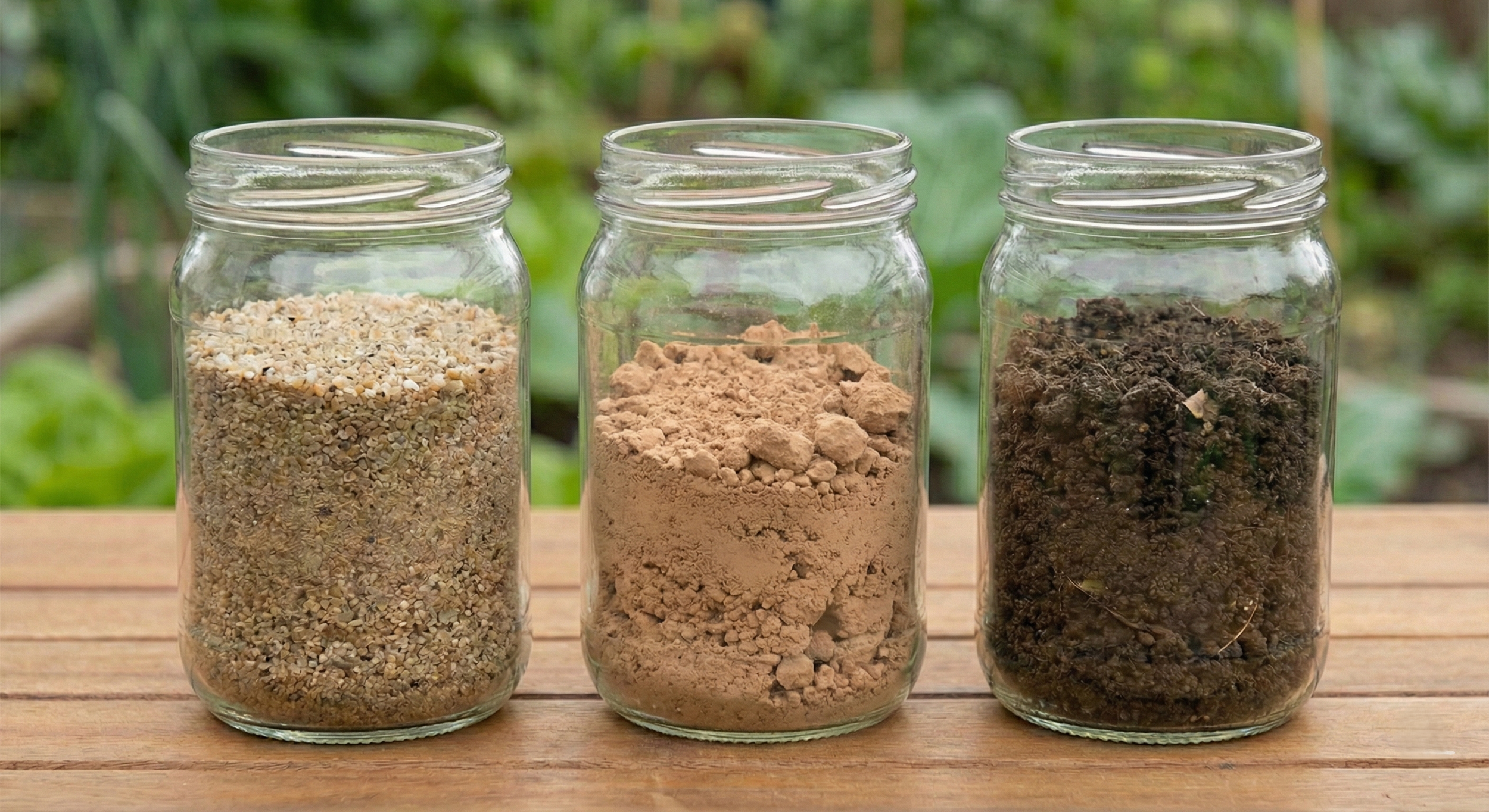
If your spade bounces off the ground in late summer and comes up carrying a sticky slab after winter rain, you are probably gardening in clay. The fix is steady rather than dramatic: add compost, keep the surface mulched, and give the soil time. Santa Cruz County clay can be frustrating to work, but it can also become rich, productive garden soil.
Start with a handful of soil
Before you dig, squeeze a handful. If it forms a sticky ball, wait a few dry days. If it crumbles when you press it, the soil is ready to work. This matters because wet clay smears and compacts. Digging it then can leave persistent hard clumps.
Soil can change even within one yard, especially where construction has moved or compacted it. Judge the bed you are working, rather than assuming its texture from the town or neighborhood.
Why compost helps clay
The most useful amendment is organic compost. For an initial amendment, work compost into the upper soil when it is dry enough to crumble. Compost creates spaces among the fine clay particles, which gives water, air, and roots more room to move.
Sand is a tempting shortcut, but a little sand mixed into clay can leave a denser soil. The UC Master Gardener Program of Contra Costa County recommends organic matter instead of trying to change clay with small additions of sand.
Give the change a season
Clay improves a little at a time. For routine maintenance, start with about an inch of compost on the surface rather than repeating a large initial amendment every year. UC Master Gardeners of San Mateo and San Francisco Counties distinguish maintenance additions from the larger, one-time work a compacted bed may need. Keep the bed mulched so the surface stays protected.
This week: Do the squeeze test in the bed you want to improve. If the soil crumbles, begin improving that bed with compost. If it sticks, leave it alone and try again after several dry days.
When a raised bed makes more sense
Some clay stays waterlogged despite careful amending. In that situation, a raised bed filled with a quality planting mix may be the practical way to grow vegetables while you improve the native soil over time.
Gypsum is also sold as a clay cure, but it is not a universal fix. UC ANR explains that gypsum can improve water infiltration in sodium-affected soils. It cannot break up an existing compacted hardpan. Let a soil test establish whether sodium is a problem before buying it.
Frequently Asked Questions
What is the single best amendment for heavy clay soil?
Compost is the reliable starting point. Add it when the soil is dry enough to crumble, then use smaller maintenance additions. It creates air spaces, improves drainage, and gives roots an easier path through the clay.
Should I add sand to break up clay?
No, not by itself. A small amount of sand can make clay heavier and denser. Add compost and surface mulch instead.
When should I avoid working clay?
Leave it alone while it is wet. A sticky ball in your hand means the bed needs more drying time. Working wet clay damages its structure and can create persistent hard clumps.
Will gypsum break up clay soil?
Only in certain conditions. Gypsum can loosen sodic clay, where sodium is the underlying problem, but it does little on its own for clay without a sodium problem. Build structure with compost unless a soil test points to a sodium problem.
More help for your garden
The free Beginner's Garden Checklist covers the soil work that comes before planting. For more detail, use the California garden soil amendments guide.
Your soil is only one part of the planting decision. Use the guide to finding your garden's microclimate to understand the sun and temperature around the bed. Then choose a place to begin with five dependable vegetables for new Santa Cruz gardeners, winter lettuce and greens, or the local guide to coastal frost protection.
