

Do I Need to Protect My Plants from Frost on the California Coast?
This guide includes affiliate links. If you buy through one, Ambitious Harvest may earn a commission at no extra cost to you. As an Amazon Associate, we earn from qualifying purchases. Read our full disclosure.
Yes, tender plants on the California coast can need frost protection. Check the forecast for your location, know which plants are vulnerable, and have covers ready before a cold evening arrives. The sheltered pot by a wall and the seedling in an open bed may experience quite different nights.
Watch your cold spots, not just the town name
Cold air settles in low places. UC Marin's frost guidance describes how elevation, nearby structures and other features affect exposure. That matters across Santa Cruz County's varied terrain, including coastal gardens and inland valleys.
On a clear, calm night, leaves can lose enough heat to become colder than the surrounding air. A forecast slightly above freezing can still deserve attention in a frost-prone bed. UC IPM explains this difference between frost and freezing.
Keep a record of where frost appears in your yard, alongside the forecast and your own thermometer readings. Our guides to finding your microclimate and understanding local frost dates help turn those observations into a planting plan.
Protect the plants that need it most
Start with tender plants, young growth and newly planted specimens. Citrus, avocados and tender succulents deserve a check of the particular species or variety's cold tolerance. Many established cool-season vegetables tolerate some frost, but young seedlings, flowers and fresh leaves can be more vulnerable.
How long the cold lasts matters alongside the lowest temperature. A brief frost and a prolonged freeze call for different expectations. Move manageable pots to a suitable sheltered location ahead of the cold, and use the plant's hardiness information when deciding what can stay outside.
Make a cover that includes warmth from the ground
Use frost cloth or a row cover intended for frost protection. Check its instructions and weight; insect netting and different grades of cover do different jobs.
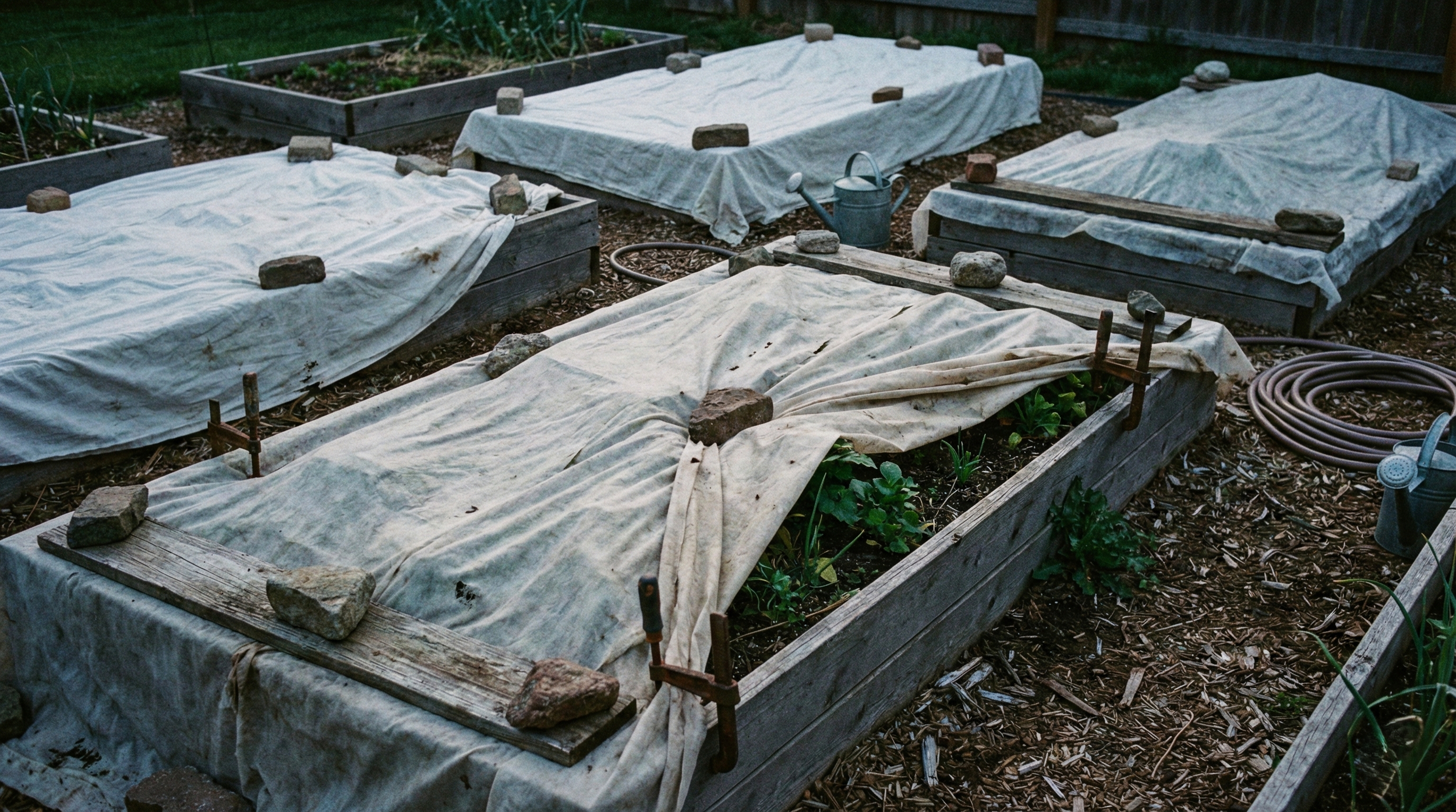
Set up hoops or a frame before sunset, with room to protect delicate foliage from the cover's weight. Let the material reach the ground and secure its edges against wind. Keep the soil beneath the tent connected to the enclosed space rather than cinching the cover around the plant's trunk: stored ground heat is part of the protection. Close openings like the exposed corner in the photo before the cold arrives.
Sheets and blankets should come off when the morning warms and frost has thawed. Some breathable commercial frost fabrics can stay on longer according to their instructions and the weather. UC Contra Costa distinguishes these cover types. Check underneath rather than leaving a plant enclosed through a warm spell.
Cloth is the simpler choice for this temporary setup. Plastic used in a supported structure needs careful ventilation and must stay off the leaves. A cover alone offers limited help during a sustained freeze; it isn't a guarantee that a tender plant will survive.
Check soil moisture ahead of the cold
Moist soil stores heat better than dry soil, but a wet winter bed needs drainage, not another soaking. UC IPM recommends irrigating dry topsoil at least three days before expected cold. Plan ahead, check what is already moist and follow the plant's needs. Succulents need particular care with winter moisture.
Keep this separate from spraying water over plants during a freeze. Continuous sprinkler protection is a specialized commercial practice, and stopping or applying it incorrectly can make matters worse. For a home garden, concentrate on suitable plants, sensible siting and correctly fitted covers.
After a frosty night
Darkened leaves don't always show the full extent of injury immediately. Allow time for damage and new growth to become clear before pruning, while dealing promptly with any dangerous broken limb. UC IPM recommends waiting until spring or summer growth reveals what has survived.
Do my winter vegetables all need covering?
Check the crop, its age and the expected cold. Our winter greens guide and January planting guide can help with seasonal choices.
Are fruit-tree chill hours the same as frost damage?
No. Winter chilling helps suitable dormant fruit trees prepare for growth; freezing can injure vulnerable tissue. See chill hours for Santa Cruz fruit trees for that separate planting consideration.
This week: choose the plants you'll protect first and test-fit their covers in daylight. Browse Your Garden Toolkit for planning resources. For more detail on cold injury, use UC IPM's frost and freezing guidance.
