

What Is a Microclimate and How Do I Figure Out Mine?
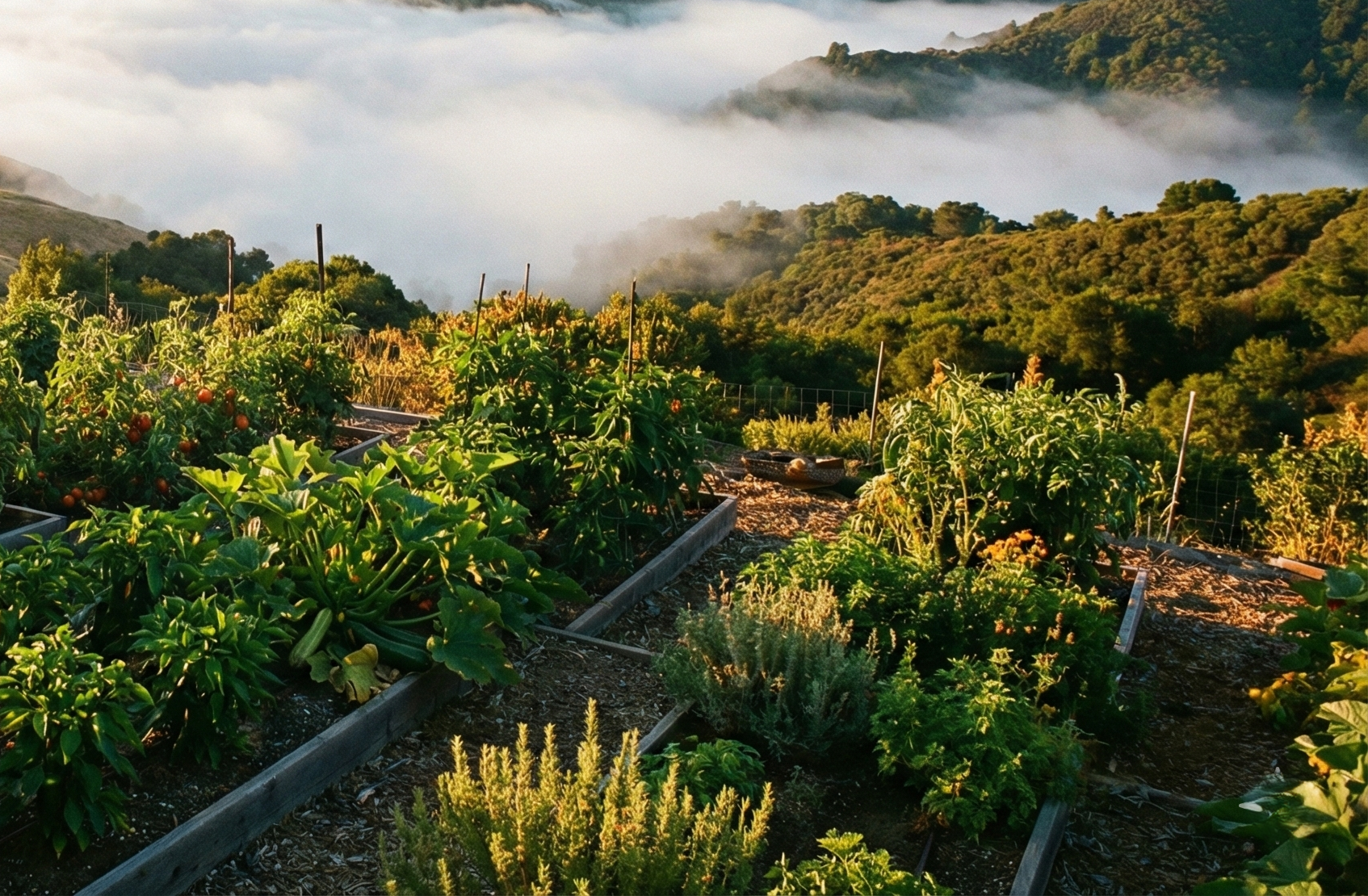
Stand beside a sunny wall, then step into the shade by the fence. Those two planting spots can offer different conditions even though they share an address. That's a microclimate: a small area with conditions that differ from the space around it. Getting to know yours helps you choose where each crop has the best chance.
In Santa Cruz County, the coast, hills, and tree cover shape the broad picture. Your own yard adds another layer. A south-facing wall can hold warmth; a north-facing fence can leave a bed cool and shaded. UC Marin Master Gardeners' microclimate assessment guide explains how sun, wind, slopes, structures, and soil create these differences. You don't need to memorize the terms to start noticing them.
Start with a slow walk through the garden in the morning, at midday, and in late afternoon. Where does the sun arrive first? Which bed is still in shadow? After rain, notice where water lingers. On a cold night, compare temperatures in different spots rather than assuming the whole yard matches the forecast. The UC Real Dirt blog explains why walls, slopes, and low spots can make neighboring planting areas behave differently.
Then use what you find. Give heat-loving crops the warmer, sunnier spots and try leafy greens in the cooler areas with enough light. On the Westside of Santa Cruz or in coastal Aptos, that may mean making more room for greens instead of filling every bed with tomatoes. Keep your sketch and check it again as the seasons change. The sunny corner you marked today may look different in winter.
This week: Sketch your yard and mark the sun and shade at three times of day. Add notes about wind and lingering puddles as you notice them. One page is enough to get started.
Use our free Microclimate Worksheet if you'd like a printable place to keep those notes. Our guide to gardening in Santa Cruz's microclimates helps you connect what you see in your yard with the wider local conditions.
Keep Reading
Frequently Asked Questions
What is a microclimate?
A microclimate is a small area whose conditions differ from those around it. In a garden, a wall, tree, slope, or patch of soil can change the sun, temperature, wind, or moisture a plant experiences.
How do I figure out the microclimates in my own yard?
Start by watching the sun and shade in the morning, at midday, and in late afternoon. Add notes about wind, temperatures, and where water collects. Treat that first day's map as a starting point, then check it in other seasons as the sun and weather change.
How does this affect what I plant in Santa Cruz?
It helps you choose a planting spot as well as a crop. Reserve warmer, sunnier pockets for heat lovers such as tomatoes, and consider leafy greens for cooler areas with enough light. A local growing guide is useful, but your own observations help you apply it to the bed in front of you.
