

Can You Grow Blackberries in a Pot?
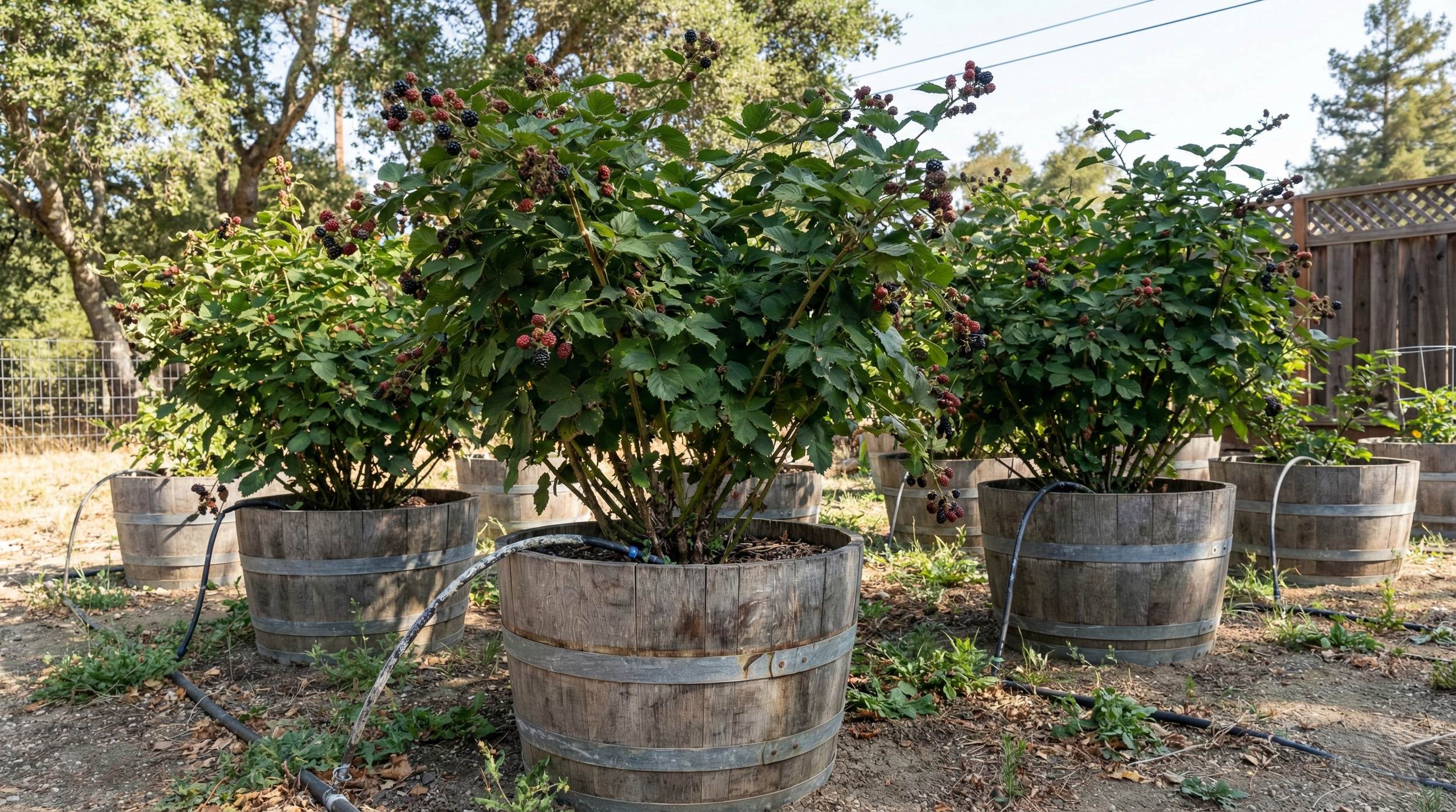
A few ripe blackberries within reach of the patio chair is a manageable kind of fruit growing. You do not need a whole berry row, but you do need room for the plant above the pot as well as roots below it.
Yes, blackberries can grow in containers. A compact variety, a sunny position, and a watering routine you can maintain make the project easier. The important choice comes before the pot: find out how large the variety grows and which canes will carry its fruit.
A few links in this article are affiliate links. If you purchase through them, we may earn a commission at no extra cost to you. As an Amazon Associate, we earn from qualifying purchases. Read our full disclosure.
Choose a blackberry that fits the space
Thornless does not necessarily mean small. Baby Cakes is a dwarf, thornless blackberry developed for patio containers, with a listed mature height of 3 to 4 feet. Its producer also lists 400 chill hours and hardiness zones 4 through 8. Before buying it for a mild coastal Santa Cruz garden, ask a knowledgeable local nursery about performance in your winter conditions. Compact growth alone does not establish a local match.
Prime-Ark Freedom is a thornless, erect, primocane-fruiting variety, but it is not a dwarf replacement for Baby Cakes. It needs more space and a pruning plan. For a narrow patio, measure the available width and decide where canes can grow without catching on a walkway or leaning into the next container.
Compare our blackberry variety guide with the plant's current nursery information. Buy healthy nursery stock rather than digging a cane from an unidentified roadside patch.
Match the pot to the plant
For standard container-grown blackberries, Oregon State Extension describes a 20- to 30-gallon container at least 2 feet deep, with pruning to control plant size. Dwarf selections have different recommendations: Baby Cakes care guidance starts at 16 inches across and 12 inches deep. Use the guidance for the actual variety rather than treating one gallon figure as a rule for every blackberry.
Choose drainage holes that remain open and a stable pot you can reach for watering and harvest. Fill it with a quality container potting mix, not a potful of garden soil. Check whether the mix already contains fertilizer before adding more. UC's container-gardening guidance explains these basics.
Set a nursery-grown plant at its existing soil level and water it in. If the variety needs support, plan that now while there is room to work. A container helps manage spreading roots, but keep trailing canes from reaching nearby soil and check around the pot as it grows.
Find the sun without baking the pot
Aim for a position with at least six hours of direct sun. On a foggy coastal patio, look for the brightest open spot rather than assuming any south-facing wall will solve the light problem. Inland, notice whether reflected afternoon heat makes the container dry unusually quickly.
UC IPM's caneberry growing advice emphasizes sun, moisture, and drainage. A good site still needs a locally suited variety. Fog does not guarantee poor fruiting, and a sunny wall does not guarantee a crop.
Water by checking the mix
Check the pot frequently during active growth, especially as berries fill and ripen. Water when needed to moisten the root zone thoroughly, allowing excess water to drain. Daily watering may be necessary in warm weather, but a cool spell can change that. Keep the roots supplied with moisture without leaving the pot standing in water.
A DIG ML50 raised-bed irrigation kit is one source of drip components, though its included layout is for raised beds. Check what your container needs before choosing a kit. A timer can repeat your schedule; inspect the pot to confirm that water reaches the root ball and adjust as conditions change.
Feed according to the cultivar's care guidance and the fertilizer label's container rate. Baby Cakes' producer suggests a balanced liquid fertilizer in spring. Account for fertilizer already in the mix, and investigate drainage or watering problems before treating yellow leaves as a request for more food.
Identify the cane before cutting it
The plant's roots live for years, but individual canes have a shorter cycle. New first-year canes are called primocanes; second-year canes are floricanes. Our blackberry growth-stage guide can help you follow them through the season.
- Summer-bearing varieties: Remove spent second-year canes after their crop is finished, preserving healthy new canes for the following season.
- Primocane-fruiting varieties: A cane can fruit near its tip in its first year, then crop on its remaining lower portion the next year. For two crops, retain that live lower portion and remove the spent tip. Removing every cane that has carried a berry would discard potential fruiting wood.
- A single primocane crop: Cutting all canes back during dormancy is an option for an appropriate primocane-fruiting variety, but it gives up the earlier crop. Confirm the variety before choosing this approach.
For Baby Cakes specifically, follow the producer's instructions to retain live canes and identify dead ones as growth resumes in spring. Larger erect varieties may also need summer tipping and thinning; use a variety-appropriate pruning guide before shortening every cane to match.
Start with a plant label and a tape measure
Before ordering, write down the variety, mature dimensions, fruiting habit, and recommended container size. Then measure the sunny space you have. That leaves you with a planting plan you can maintain, rather than a small pot trying to hold a large bramble.
For a longer walkthrough, read growing blackberries in containers. The free Beginner Checklist can help organize the setup. If you also grow blueberries, our guide to yellowing blueberry leaves addresses that different crop's root and soil needs. UC IPM's caneberry pest guidelines provide a reference when a specific pest or disease needs identification.
If you are planning the rest of a small food garden, see vegetable raised-bed depth and raised-bed drip setup. For a separate berry question, read strawberries and coffee grounds.
Common questions
How large should the container be?
Choose it for the variety's mature roots and growth habit. A dwarf patio blackberry and a full-sized erect variety do not need the same setup. Check depth as well as volume, and leave room for watering and supporting the canes.
Will it fruit in coastal fog?
It can, with a suitable variety and enough light. Compare winter chill needs and local performance before buying. A sheltered, bright position helps, but fruiting time and yield will vary with the plant and site.
Should I remove every cane after it fruits?
No. That approach fits spent floricanes, but a primocane that fruited at its tip can still have productive wood below. Identify the fruiting type and keep track of which canes grew this year before pruning.
