

Growing Southern Highbush Blueberries in the Pajaro Valley
A few of the product links in this guide are affiliate links. If you buy through one, Ambitious Harvest may earn a small commission at no extra cost to you, which helps keep these guides free. We only point to gear we would use in our own Santa Cruz garden. As an Amazon Associate, we earn from qualifying purchases. Read our full disclosure.
Watsonville and Corralitos grow blueberries commercially by the acre, so the home garden version absolutely works here. The Pajaro Valley just runs warmer and richer than blueberries prefer, so your job is managing heat, moisture, and pH.
Quick verdict: Workable but warmer. The county's hottest microclimate has deep fertile ag soil that is not naturally acidic, plus summer heat that stresses a shallow-rooted plant. Acidify the soil, mulch heavily, water consistently, and give afternoon shade in the warmest spots, and you will get fine fruit.
A rich-soil, warm-summer microclimate
The Pajaro Valley is the warm end of Santa Cruz County. Fog burns off sooner, inland heat reaches farther, and the famous deep loam that makes Watsonville a berry and vegetable powerhouse is fertile but close to neutral, not the acidic ground blueberries crave. So you face two jobs at once: bring the pH down to the 4.5 to 5.5 range blueberries need, and protect a cool-climate plant from real summer heat. Neither is hard, but skipping either is where home plantings fail here. The upside is that the same long warm season that stresses the roots also ripens sweet, abundant fruit when the plant is kept comfortable.
Managing the heat
Blueberry roots are shallow, fibrous, and intolerant of hot dry soil, so heat management is the heart of growing them in the valley.
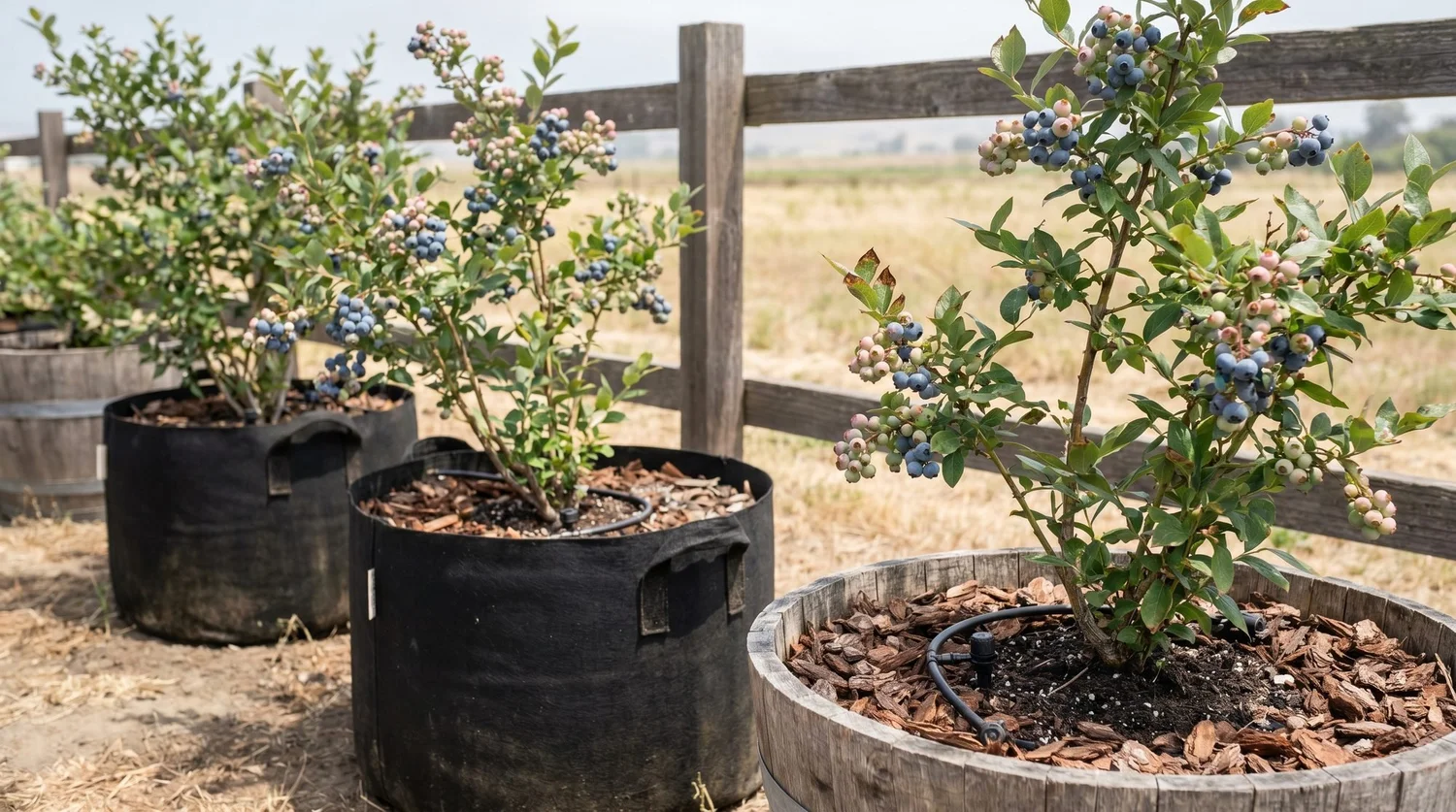
- Mulch heavily: Keep a thick three to four inch layer of coarse acidic mulch over the entire root zone to hold moisture and keep soil temperatures down. This matters more here than in any other county microclimate.
- Water consistently: During hot inland-influenced stretches, never let the root zone dry out. Drip irrigation on a steady schedule beats occasional deep soaks for a shallow-rooted plant.
- Afternoon shade: In the hottest, most exposed sites, a little afternoon shade in midsummer spares the plant from heat stress and scorched fruit. Morning sun with shelter from the worst afternoon heat is a good compromise.
Fixing the soil pH
The valley's prized ag loam is fertile but typically near neutral, so acidifying is non-negotiable. Test first, then bring the pH down with elemental sulfur worked in ahead of planting, and dig in peat moss to both lower pH and improve the texture around the roots. Maintain the level with an acidic, ammonium-based fertilizer formulated for blueberries or azaleas, and keep that acidic mulch refreshed. If your soil reads stubbornly high, growing in large containers of acidic mix gives you full control and is a common workaround. The full method is in the step-by-step guide linked below.
Best low-chill varieties for the warm valley
Even as the county's warmest pocket, the valley still gets cool nights and enough winter chill for low-chill Southern Highbush, which need roughly 150 to 500 hours depending on the variety. Stick with heat-tolerant low-chill types:
- Sunshine Blue: Compact, semi-evergreen, partly self-fertile, and tolerant of a slightly higher pH, which helps in this soil.
- Misty: Vigorous and very productive, an early heavy bearer well suited to warm low-chill California.
- O'Neal: Early and richly flavored. Pair with another Southern Highbush for the strongest fruit set.
Plant two varieties together. Cross-pollination raises both yield and berry size, which is worth the small extra space.
Common problems and fixes
- Wilting or scorched leaves on hot afternoons: heat and dry roots. Deepen the mulch, tighten the watering schedule, and add afternoon shade.
- Yellow leaves with green veins: pH has risen and iron is locked out, very common in this loam. Re-acidify with sulfur and feed an acid-loving plant food.
- Soft, sunburned berries: too much hot direct sun at ripening. Shade cloth over the hottest weeks protects the fruit.
- Strong leaves but few berries: a single variety or heat at bloom. Add a pollination partner and keep plants cool and watered through flowering.
Local tip: Think like the commercial growers down the road. They keep blueberry roots cool and evenly moist with heavy mulch and steady drip irrigation, and they choose low-chill heat-tolerant varieties. Copy that at backyard scale, mulch thick, water on a schedule, and shade the hottest afternoons, and the valley's warmth becomes an asset for sweetness instead of a liability.
Frequently asked questions
Is the Pajaro Valley too hot for blueberries?
No, but it is the county's warmest pocket, so you manage the heat actively. Heavy mulch, consistent water, low-chill heat-tolerant varieties, and afternoon shade in the hottest spots keep the plants comfortable.
Do I have to acidify this good farm soil?
Yes. The valley's loam is fertile but near neutral, and blueberries need a pH of 4.5 to 5.5. Test, then lower it with elemental sulfur and peat, or grow in containers of acidic mix for full control.
How much water do blueberries need here in summer?
More than in the fog belt. Their shallow roots must stay evenly moist through warm inland-influenced spells, so steady drip irrigation and a thick mulch are the reliable combination.
Should I give blueberries shade in Watsonville?
In the hottest, most exposed sites, yes. A little afternoon shade in midsummer prevents heat stress and sunburned fruit. Morning sun with shelter from harsh afternoon heat is ideal.
