

The Blueberry Varieties That Actually Fruit in Santa Cruz
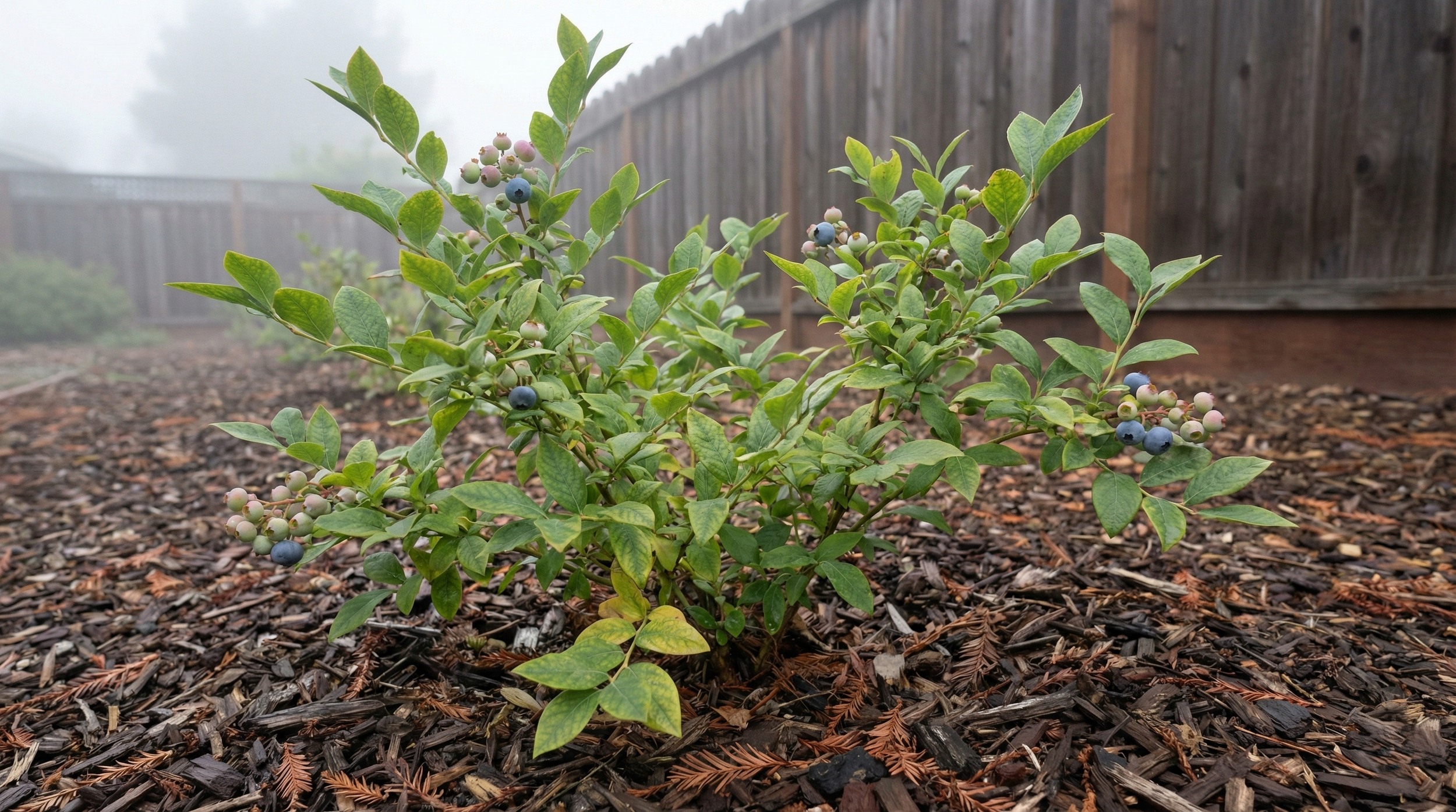
The best blueberry varieties for Santa Cruz County are Misty, O'Neal, Sunshine Blue, and Jubilee, all Southern highbush types that require fewer winter chill hours than traditional Northern highbush varieties. According to UC Agriculture and Natural Resources, Southern highbush blueberries need only 150 to 400 chill hours, which matches the 400 to 800 chill hours Santa Cruz County's coastal areas typically accumulate between November and February.
The good news: plant breeders have developed excellent Southern Highbush varieties specifically for mild-winter climates like ours. These combine the fruit quality of traditional blueberries with chill requirements as low as 150 hours, making reliable production possible even in our coastal gardens.
This guide profiles the best blueberry varieties for Santa Cruz County, with specific recommendations based on your microclimate, growing situation, and what you want from your plants.
How Do You Choose the Right Blueberry Varieties?
Chill Hours Matter Most
Every blueberry variety needs a certain number of chill hours (hours between 32°F and 45°F during winter) to properly break dormancy, flower, and fruit. Traditional Northern varieties need 800 to 1,000+ hours. Southern Highbush varieties range from 150 to 500 hours, matching our local conditions.
Approximate typical ranges for Santa Cruz County:
MicroclimateTypical Chill HoursMaximum Variety RequirementCoastal (Aptos, Capitola, Santa Cruz)A few hundred, variableChoose 300 hours or lessSan Lorenzo ValleyVariable, often higherChoose 500 hours or lessPajaro Valley (Watsonville)Variable, often higherChoose 500 hours or lessScotts Valley, inlandVariable by siteChoose 400 hours or less
Important: Chill hours vary significantly year to year, and warm winters can markedly reduce accumulation. Choose varieties requiring fewer hours than your average for consistent production.
Pollination Needs
Most Southern Highbush blueberries are at least partially self-fertile, meaning a single plant can produce some fruit. However, research confirms that cross-pollination between different varieties dramatically improves:
Fruit size
Total yield
Fruit quality
Earlier ripening
Best practice: Plant at least two different varieties that bloom at similar times. Even "self-fertile" varieties benefit significantly from a pollination partner.
Bloom Time Matching
For cross-pollination to work, varieties must bloom at the same time. Blueberry varieties are categorized as:
Early: Bloom in late winter/early spring
Mid-season: Bloom in mid-spring
Late: Bloom in late spring
Choose at least one early-to-mid and one mid-to-late variety for extended bloom overlap and extended harvest season.
Which Varieties Work Best for Each Situation?
Which Southern Highbush Varieties Perform Best?
Sunshine Blue
The California Gardener's Choice
Why it works in Santa Cruz County: Sunshine Blue is the most recommended variety for California gardeners, and for good reason. Its ultra-low chill requirement (about 150 hours) means it produces reliably even in our mildest coastal winters. It tolerates higher soil pH (up to 6.0-6.5) better than most blueberries, making it more forgiving of our alkaline conditions. The compact size makes it ideal for containers, and its self-fertility means you can grow a single plant if space is limited.
Pros:
Lowest chill requirement of common varieties
Most pH-tolerant Southern Highbush
Compact, container-friendly size
Self-fertile (though benefits from cross-pollination)
Attractive ornamental qualities
Reliable producer
Cons:
Medium-sized berries (not the largest)
Flavor good but not the best
Best for: Beginners, container growers, coastal gardens, anyone wanting a reliable producer.
Misty
Early Fruit, Stunning Appearance
Why it works in Santa Cruz County: Misty is one of the earliest-ripening varieties, often producing fruit in May before other varieties begin. Its low chill requirement (around 300 hours) makes it reliable for most of our microclimates. The berries have a distinctive sky-blue color and sweet-spicy flavor profile that many find appealing.
Pros:
Very early ripening (May harvest)
Beautiful sky-blue fruit color
Low chill requirement
Good vigor and productivity
Unique sweet-spicy flavor
Cons:
Benefits from cross-pollination
Can be susceptible to disease in humid conditions
May bloom too early in frost-prone inland areas
Best for: Gardeners wanting early fruit, coastal locations, pairing with mid/late varieties for extended harvest.
Sharpblue
The Adaptable Producer
Why it works in Santa Cruz County: Sharpblue is considered one of the most adaptable Southern Highbush varieties, tolerating a range of conditions while producing consistently. In very mild climates, it can produce fruit almost year-round, with primary harvest in early summer and lighter crops at other times.
Pros:
Very adaptable to different conditions
Very low chill requirement
Vigorous, healthy growth
Can produce multiple crops in mild climates
Classic blueberry flavor
Cons:
Medium-sized berries
Benefits from cross-pollination
Vigorous growth requires more pruning
Best for: Any Santa Cruz County microclimate, gardeners wanting an easy, adaptable variety.
O'Neal
The Flavor Champion
Why it works in Santa Cruz County: If flavor is your priority, O'Neal is worth the extra care. Many blueberry enthusiasts consider it the best-tasting Southern Highbush variety available, with complex sweetness and excellent texture. Its higher chill requirement (400-500 hours) limits it to inland and mountain locations in our county.
Pros:
Outstanding flavor (possibly best of any SHB)
Large berries
Excellent fresh eating quality
Good productivity when properly pollinated
Cons:
Higher chill requirement - marginal for coastal gardens
Performs best with cross-pollination (pair with Misty)
Early bloom can be damaged by late frost
Best for: San Lorenzo Valley, Pajaro Valley, inland locations with higher chill accumulation. Gardeners prioritizing flavor over ease.
Pollination partner: Misty (overlapping bloom time, complementary chill requirements)
Jewel
The Reliable Producer
Why it works in Santa Cruz County: Jewel combines low chill requirements with excellent productivity, making it a reliable choice for most of our microclimates. The tangy flavor profile appeals to those who prefer less sweet berries.
Pros:
Low chill requirement
Very productive
Pleasant tangy flavor
Moderate size
Cons:
Some find flavor too tangy
Benefits from cross-pollination
Best for: Gardeners wanting reliable heavy production, those who prefer tangy berries.
Emerald
Big Berries, Low Chill
Why it works in Santa Cruz County: Emerald produces some of the largest berries of any Southern Highbush variety, which is appealing for fresh eating. Its low chill requirement (under 250 hours) makes it suitable for most of our microclimates.
Pros:
Very large fruit size
Low chill requirement
Good fresh eating quality
High yields
Cons:
Mild flavor (some find it less interesting)
Benefits significantly from cross-pollination
Best for: Gardeners prioritizing berry size, pairing with Jewel or Misty for pollination.
Legacy
Late Season, Excellent Quality
Why it works in Santa Cruz County: Legacy extends the harvest season into late summer when other varieties are finished. Its moderate chill requirement means it's better suited to inland and mountain locations in our county, though some coastal gardeners report success. The flavor is excellent, and plants offer beautiful fall color.
Pros:
Late ripening extends harvest season
Excellent flavor
Outstanding fall color
Reliable producer when chill requirements are met
Cons:
Moderate to higher chill requirement - experimental for coastal gardens
Later fruit may coincide with hot weather
Benefits from cross-pollination
Best for: San Lorenzo Valley, Pajaro Valley, extending harvest into July-August. Experimental for coastal areas.
Biloxi
Ultra-Low Chill for Coastal Gardens
Why it works in Santa Cruz County: Biloxi has the lowest chill requirement of any commonly available blueberry, sometimes described as functioning with near-zero chill in warm climates. This makes it ideal for our warmest coastal areas and years with very mild winters when other varieties fail to get enough chill.
Pros:
Ultra-low chill requirement
Reliable in warmest locations
Good flavor
Consistent producer
Cons:
Medium-sized berries
Benefits from cross-pollination
Best for: Warmest coastal locations, years with mild winters, gardeners wanting maximum reliability.
What About Rabbiteye Varieties for Heat-Tolerant Growing?
Pink Lemonade
Ornamental and Edible
Why it works in Santa Cruz County: Pink Lemonade is as ornamental as it is edible, producing unique pink berries that are conversation starters. It's a Rabbiteye type, so it's more heat and drought tolerant than Southern Highbush. While considered reliably self-fertile, it performs best with another Rabbiteye variety for pollination. Note that it's not a good pollinator for Northern Highbush varieties.
Pros:
Unique pink berries
Excellent ornamental value
Heat and drought tolerant
Good fall color
Self-fertile
Cons:
Berries sweeten only when fully ripe
Larger plant needs more space
Not a good pollinator for other blueberry types
Best for: Gardeners wanting ornamental value, those with space for larger plants, San Lorenzo Valley and inland locations.
Which Pollination Partner Combinations Work Best?
How Many Plants Do You Need and How Should You Arrange Them?
Recommended Minimum
Plant at least 2 to 3 varieties for cross-pollination benefits and extended harvest season. Even self-fertile varieties like Sunshine Blue produce better with a partner nearby.
Spacing Guidelines
Compact varieties (Sunshine Blue, Top Hat): 3 to 4 feet apart
Standard Southern Highbush (Misty, Sharpblue, O'Neal, Jewel): 4 to 6 feet apart
Larger varieties (Emerald, Legacy): 5 to 6 feet apart
Rabbiteye (Pink Lemonade): 6 to 8 feet apart
Layout Suggestions
For containers: Group pots within 30 to 50 feet of each other (bee flight distance)
For in-ground: Alternate varieties in a row, or plant pairs side by side
For small spaces: Two containers of different varieties on a sunny patio
How Long Do Blueberry Bushes Last?
Expected Lifespan
Well-cared-for blueberry bushes can produce abundantly for 20+ years. This makes variety selection even more important, as you're making a long-term commitment.
Signs a Bush Is Past Prime
Declining yields despite good care
Increasing pest and disease problems
Many dead or unproductive canes
Weak new growth
Managing Your Collection Over Time
Consider planting a new variety every few years to:
Maintain continuous production as older plants decline
Experiment with new varieties as they become available
Extend your harvest season with different ripening times
Where Can You Find These Varieties Locally?
Low-chill blueberry varieties can be hard to find at general nurseries, which often stock varieties suited for colder climates.
Local nurseries to check:
San Lorenzo Garden Center (Santa Cruz) - Often stocks edibles; call ahead for variety availability
Dig Gardens (Santa Cruz & Aptos) - Focuses on adapted plants; may have unusual varieties
Mountain Feed & Farm Supply (Ben Lomond) - Good edible plant selection
Mail-order specialists (best selection):
Four Winds Growers (Winters, CA) - Specializes in low-chill blueberries for California. Excellent variety selection including Sunshine Blue, O'Neal, and others.
Raintree Nursery (Morton, WA) - Good selection including Sunshine Blue and Pink Lemonade; ships bare-root
One Green World (Portland, OR) - Unusual edibles including many blueberry varieties
Best time to buy: Nursery availability peaks in late winter/early spring (January through March). Mail-order nurseries often sell out of popular varieties, so order early (fall for spring shipping).
What Are the Top 3 Picks for Santa Cruz County?
1. Sunshine Blue
Best for most gardeners. Ultra-low chill, pH tolerant, compact, self-fertile, reliable. If you're new to blueberries or want one variety that's most likely to succeed, this is it.
2. Misty
Best for early fruit. Low chill, beautiful fruit, excellent productivity. Pair with Sunshine Blue for cross-pollination and extended harvest.
3. Sharpblue
Best all-around performer. Very low chill, adaptable to all our microclimates, classic blueberry flavor, reliable production. An excellent second variety for cross-pollination.
Honorable mention for flavor enthusiasts (inland locations only): O'Neal - the best-tasting Southern Highbush, worth the extra care if you have enough chill hours.
Frequently Asked Questions
Can I grow just one blueberry plant?
Yes, especially if you choose a self-fertile variety like Sunshine Blue. However, you'll get significantly larger berries and higher yields with two different varieties for cross-pollination. The plants don't need to be immediately adjacent; within 30 to 50 feet is sufficient for bee transfer.
Which variety is easiest to grow?
Sunshine Blue is the most forgiving variety for California conditions. It tolerates higher soil pH than other varieties, has very low chill requirements, is compact enough for containers, and produces reliably even with minimal experience.
Do I need to match varieties from the same type?
For cross-pollination, varieties must bloom at similar times, but they don't need to be the same type. Southern Highbush varieties generally pollinate each other well. Note that Pink Lemonade (Rabbiteye) is self-fertile but is not a good pollinator for Southern Highbush varieties.
Which variety has the biggest berries?
Emerald produces some of the largest berries, though flavor is mild. O'Neal and Legacy also produce large berries with more complex flavor.
What if I want berries over the longest possible season?
Plant an early variety (Misty or Sharpblue), a mid-season variety (Sunshine Blue or Jewel), and a late variety (Legacy). This combination can provide fruit from May through August.
Are there any truly dwarf blueberries for small spaces?
Top Hat stays under 2 feet and produces well, though berries are smaller. Several "Bushel" series varieties (Blueberry Glaze, etc.) are also very compact. These are best for containers or small garden spots.
How do I know if a variety will get enough chill hours in my location?
Check the variety's chill requirement against your microclimate's typical accumulation (see our microclimate table). Choose varieties requiring fewer hours than your average to account for warm winters. Coastal gardeners should stick to varieties needing 300 hours or less.
What's the difference between Southern Highbush and Rabbiteye?
Southern Highbush varieties were bred for mild winters and produce higher-quality fruit. Rabbiteye varieties are more heat and drought tolerant but need more chill hours (usually 350+) and produce slightly grittier berries. For most Santa Cruz County gardeners, Southern Highbush is the better choice.
Start Building Your Blueberry Collection
The best approach for Santa Cruz County blueberry success is to start with proven performers and expand from there. Begin with Sunshine Blue and Misty as a reliable pair that will cross-pollinate each other and provide an extended harvest from May through July. Once you've mastered the basics of pH management and care, consider adding Sharpblue for even more production or O'Neal if you garden inland and want exceptional flavor.
Remember that blueberries are a long-term investment. A well-chosen variety planted today could be producing abundant harvests for your family twenty years from now. Take time to select varieties matched to your microclimate, prepare your soil properly, and you'll be rewarded with one of the most delicious fruits you can grow in a California garden.
Free Gardening Resources
Know Your Microclimate Worksheet: Understand your specific Santa Cruz County growing conditions
Seasonal Planting Calendar: Month-by-month guidance for Santa Cruz County
Water-Wise Gardening Guide: Strategies for managing water in our Mediterranean climate
Related Articles
| Variety | Type | Chill Hours | Size | Fruit | Flavor | Self-Fertile | Best For |
|---|---|---|---|---|---|---|---|
| Sunshine BlueTop Pick | S. Highbush | ~150 | 3-4 ft | Medium | ★★★ Sweet | Yes | Beginners, containers, coastal |
| MistyTop Pick | S. Highbush | ~300 | 4-6 ft | Med-Large | ★★★ Sweet-spicy | Partial | Early harvest, all zones |
| SharpblueTop Pick | S. Highbush | ~150-200 | 4-6 ft | Medium | ★★★ Classic | Partial | All-around performer |
| Biloxi | S. Highbush | ≤150 | 4-5 ft | Medium | ★★★ Sweet | Partial | Ultra-low chill reliability |
| Jewel | S. Highbush | ~200-300 | 4-5 ft | Med-Large | ★★★ Tangy | Partial | Heavy production |
| Emerald | S. Highbush | <250 | 5-6 ft | Very Large | ★★ Mild | Partial | Largest berries |
| O'Neal | S. Highbush | 400-500 | 4-6 ft | Large | ★★★★★ Best! | Partial | Flavor enthusiasts (inland) |
| Legacy | Hybrid | 400+ | 5-6 ft | Med-Large | ★★★★ Excellent | Partial | Late season, fall color |
| Pink Lemonade | Rabbiteye | ~300 | 6-8 ft | Medium | ★★★ Sweet (ripe) | Yes* | Ornamental, pink berries |
