

Gardening in Watsonville & the Pajaro Valley: Making the Most of Our Warmest Microclimate
A few of the product links in this guide are affiliate links. If you buy through one, Ambitious Harvest may earn a small commission at no extra cost to you, which helps keep these guides free. We only point to gear we would use in our own Santa Cruz garden. As an Amazon Associate, we earn from qualifying purchases. Read our full disclosure.
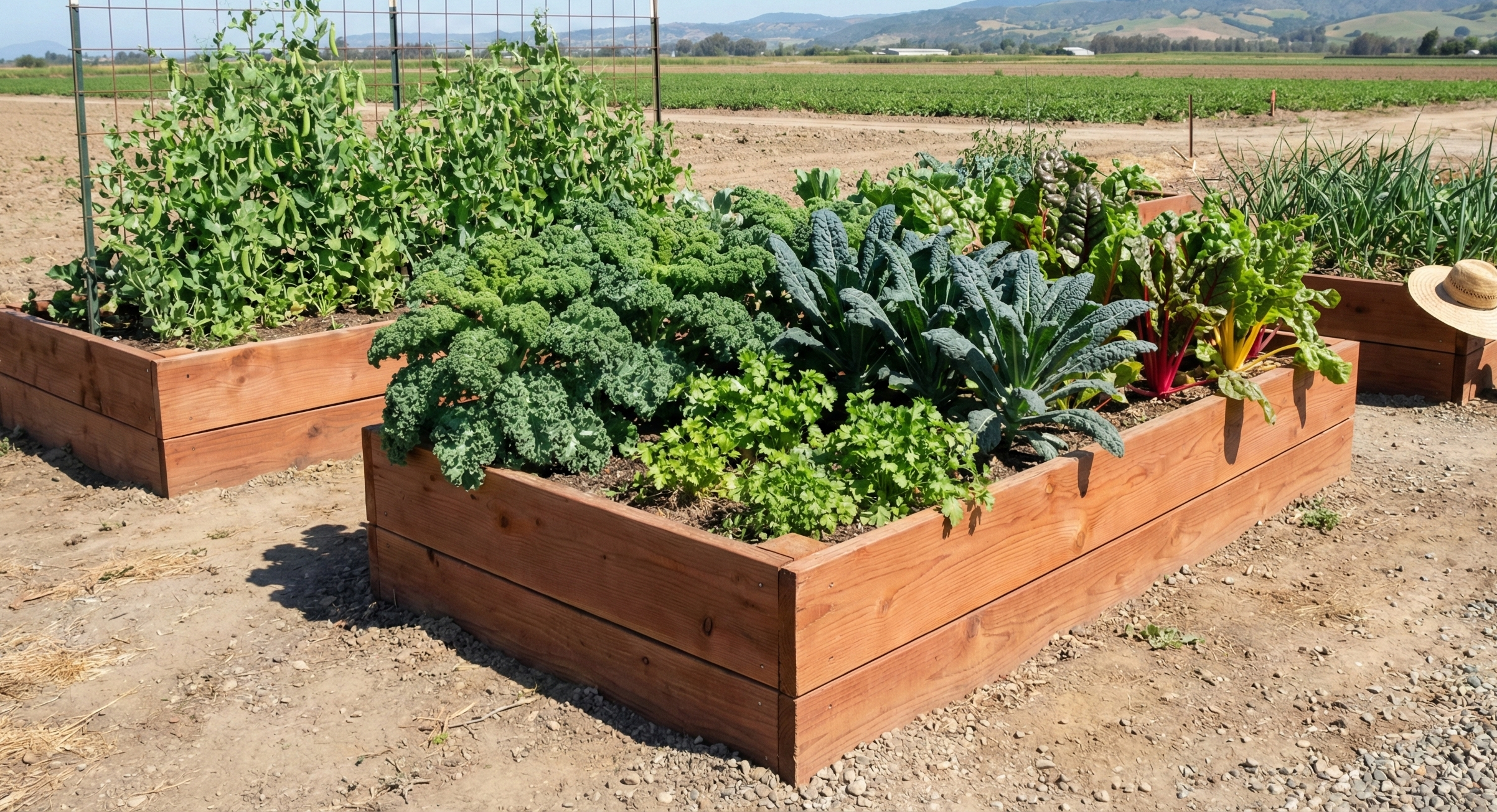
If you garden in Watsonville, Freedom, Aromas, or anywhere in the Pajaro Valley, you won the Santa Cruz County growing lottery.
You have the warmest temperatures, the longest season, the most sunshine, and the most flexibility of anywhere in the county. While coastal gardeners struggle to ripen tomatoes and mountain gardeners deal with extreme heat swings, you have Goldilocks conditions: warm enough for heat-lovers, cool enough for greens, and sunny enough for just about everything.
There's a reason this area is the agricultural heart of Santa Cruz County. Your growing conditions are exceptional.
| Feature | Pajaro Valley | Coast (Aptos / Capitola) | Hot mountains (SLV ridges) |
|---|---|---|---|
| Summer highs | Often upper 70s to mid-80s. | Mostly 60s to low-70s. | Frequently 80s–90s; hotter during heat waves. |
| Winter lows | Rarely below freezing. | Rarely below the upper 30s. | More frost pockets, especially in valleys. |
| Fog | Less fog than the immediate coast. | Frequent marine layer, especially mornings. | Minimal fog influence. |
| Growing season | Very long; warm conditions from roughly May through November. | Cool overall; shorter and gentler warm-season window. | Warm but with higher heat stress and irrigation demand. |
What Makes the Pajaro Valley Special for Growing?
Temperature Sweet Spot
Summer: Upper 70s to mid-80s (warm but not extreme, with some days reaching high 80s or low 90s)
Winter: 50s-60s (mild, rarely freezing)
Day/night swings: Moderate (15-20°F)
Frost: Rare (maybe 2-3 nights per winter)
Sunshine
More sun than coastal areas (less fog)
Less extreme than inland mountains
Consistent, reliable sunshine
Long, warm growing days
Growing Season
Longest in the county
Warm-season crops: May through November
Cool-season crops: September through May
Year-round production possible for many crops
Agricultural Infrastructure
Commercial farming in the area
Excellent nurseries and farm supply
Soil amendment suppliers
Agricultural expertise available
Other Characteristics
Fertile valley soils (often clay-loam)
Good drainage in most areas
Agricultural water access in rural areas
| Crop type | Pajaro Valley verdict |
|---|---|
| Tomatoes (early, mid, heirloom) | Excellent; full range possible with a long, warm season and extended fall harvest. |
| Peppers, eggplant, melons | Reliable performers with sufficient heat and season length. |
| Summer & winter squash, corn, beans | Very good; multiple successions often possible. |
| Strawberries & caneberries | Ideal conditions; region supports strong commercial production. |
| Brassicas, lettuce, root crops (cool-season) | Strong fall through spring performance; some summer success with shade or careful timing. |
What Thrives in the Pajaro Valley?
The answer: Almost everything
Warm-Season Crops (Your Strength)
Strawberries (The Commercial Crop)
There's a reason Watsonville is the "Strawberry Capital":
Perfect conditions for strawberries
Commercial varieties available
Plant September through November
Harvest March through October
Try: Albion, San Andreas, Monterey
Tomatoes (All Varieties)
Early varieties: April planting, June through October harvest
Late varieties: May through June planting, August through November harvest
Heirlooms: Brandywine, Cherokee Purple, Black Krim
Hybrids: Big Beef, Celebrity, Better Boy
Cherry: Sungold, Sweet 100
Extended season:
Tomatoes often produce through November
Late-planted tomatoes (June) still ripen
Your warm fall extends harvest
Peppers (Hot and Sweet)
Excellent production for both:
Sweet bells: California Wonder, Jimmy Nardello
Hot peppers: jalapeño, serrano, habanero
Plant May, harvest July through October
Good yields, quality fruit
Summer Squash and Zucchini
Prolific production
Succession plant for continuous harvest
Try: Romanesco, Cocozelle, Yellow Crookneck
Winter Squash
Butternut, acorn, delicata all excellent
Plant May through June, harvest September through November
Stores well for winter eating
Try: Butternut, Delicata, Spaghetti Squash
Cucumbers
Grow well with consistent watering
Slicing and pickling varieties both work
Try: Marketmore, Lemon, Armenian
Melons
You're one of the few places in Santa Cruz County that can reliably grow melons:
Cantaloupe: Hale's Best
Honeydew: Earlidew
Watermelon: Sugar Baby (smaller varieties work best)
Need consistent water and heat (you have both)
Eggplant
Good production in your heat
Japanese and Italian varieties both work
Try: Black Beauty, Ichiban
Beans
Bush and pole varieties thrive
Succession plant May through August
Try: Provider, Blue Lake, Romano
Corn
Grows tall and strong in your heat
Succession plant for extended harvest
Try: Golden Bantam, Peaches and Cream
Basil
Loves your summer heat
Multiple successions possible
Try: Genovese, Thai, Purple
Cool-Season Crops (Excellent)
Brassicas
Fall-planted for winter and spring harvest:
Broccoli, cauliflower, cabbage, kale, Brussels sprouts
Plant August through September
Harvest November through April
Try: DiCicco broccoli, Snow Crown cauliflower
Lettuce and Greens
Fall through spring (September through May)
Summer possible with shade
Succession plant for continuous harvest
Try: Buttercrunch, Red Sails, Merlot
Peas
Fall and spring crops both possible
Plant October for spring harvest
Plant February for spring harvest
Try: Sugar Snap, Oregon Giant
Root Vegetables
Carrots, beets, radishes, turnips
Fall through spring
Sweet flavor from cool weather
Try: Scarlet Nantes carrot, Detroit Dark Red beet
Onions and Garlic
Plant October for summer harvest
Garlic does well here
Onions from sets or transplants
Try: California Early garlic, Red Wethersfield onion
Perennial Crops
Artichokes
Grow well as perennials
Less ideal than coast but still produce
Try: Green Globe
Asparagus
Warm spring weather equals good asparagus
Perennial crop, 20+ year production
Try: Jersey Knight, Purple Passion
Fruit Trees
Your warm, sunny conditions are excellent for:
Stone fruits: peaches, plums, apricots, nectarines
Citrus: lemons, oranges, mandarins (some microclimates)
Persimmons: Asian and American varieties
Figs: Black Mission, Brown Turkey
Check chill hours for stone fruit varieties (you get 400-600 hours).
What Does a Pajaro Valley Growing Calendar Look Like?
January through March: Cool Season
Direct seed: lettuce, greens, peas, carrots, beets
Transplant: onions from sets
Harvest: winter greens, brassicas
Start indoors: tomatoes, peppers (February through March)
April through May: Main Planting Season
Transplant: tomatoes, peppers, eggplant (April through May)
Direct seed: beans, corn, squash, cucumbers (May)
Harvest: last of cool-season crops, spring peas
Maintain: set up irrigation, mulch beds
June through August: Peak Summer
Succession plant: beans, corn (through July)
Harvest: tomatoes, peppers, squash, cucumbers, melons
Maintain: water deeply 2-3 times per week, side-dress heavy feeders
Start: fall brassicas indoors (late July through August)
September through October: Extended Season and Fall Planting
Direct seed: cool-season crops for fall and winter
Transplant: fall brassicas
Harvest: late tomatoes (often through October), peppers, squash
Plant: garlic (October), strawberries (September through October)
November through December: Mild Winter
Direct seed: greens, peas, fava beans
Harvest: fall brassicas starting to produce
Maintain: reduced watering, winter cleanup
Plan: next year's garden
What Growing Strategies Work Best in the Pajaro Valley?
Take Advantage of Your Extended Season
Succession planting is key:
Tomatoes: Plant early varieties in April, late varieties in May through June
Beans: Every 2-3 weeks through July
Corn: Every 2-3 weeks through June
Lettuce: Every 2-3 weeks fall through spring
Push the boundaries:
Late tomato plantings (June) still ripen in your warm fall
Melons are possible where they fail elsewhere
Extended harvest through November for many crops
Manage Summer Heat (Manageable, Not Extreme)
Irrigation:
Drip irrigation recommended
Deep watering 2-3 times per week in summer
More frequent for containers and new transplants
Clay soils retain moisture well
Mulching:
3-4 inches organic mulch (not as critical as inland mountains but still helpful)
Conserves moisture
Moderates soil temperature
Suppresses weeds
Heat management:
Most crops handle your heat well
Afternoon shade helpful for transplanting brassicas in August
Generally less dramatic than inland mountain areas
Soil Management
Pajaro Valley soils:
Often clay-loam (fertile but can be heavy)
Good nutrient retention
Drainage can be issue in some areas
May need organic matter amendment
Amendments:
Compost annually (2-4 inches)
Gypsum for clay soils (improves structure)
Cover crops in winter (fava beans excellent)
pH: Usually 6.0-7.0 (good for vegetables)
Frost Protection (Minimal Need)
Frost is rare but possible:
2-3 nights per winter might frost
Usually light frost only
Most damage to tender crops (tomatoes, basil, peppers)
Protection strategies:
Row covers for tender fall plantings
Don't plant tomatoes until April (frost risk over)
Most crops don't need protection
Pest and Disease Considerations
Gophers: Major issue in agricultural areas
Wire baskets for valuable plants
Trapping programs
Raised beds with hardware cloth bottom
Deer: Less pressure than mountain areas but present
Fencing if needed
Deer-resistant crops
Aphids: Common on brassicas and other crops
Spray off with water
Beneficial insects
What you don't deal with:
Less slug pressure than coastal and shaded areas
Less extreme heat stress than inland mountains
Minimal frost damage
What Varieties Are Recommended for the Pajaro Valley?
Tomatoes (Anything Works)
Early:
Early Girl (52 days)
Fourth of July (49 days)
Mid-season:
Celebrity (70 days)
Better Boy (70 days)
Heirlooms:
Brandywine (80 days): you can ripen these!
Cherokee Purple (80 days)
Black Krim (75 days)
Cherry:
Sungold (57 days)
Sweet 100 (65 days)
Peppers
Sweet:
California Wonder: bell
Jimmy Nardello: Italian frying
Carmen: sweet Italian
Hot:
Jalapeño
Serrano
Habanero (needs your heat)
Squash
Summer:
Romanesco zucchini
Cocozelle
Yellow Crookneck
Winter:
Butternut
Delicata
Acorn
Melons
Hale's Best cantaloupe
Sugar Baby watermelon
Earlidew honeydew
Local Resources for Pajaro Valley Gardeners
Nurseries and Supplies
Sierra Azul Nursery (2660 E. Lake Avenue, Watsonville) is the go-to resource for Pajaro Valley gardeners with extensive vegetable starts, California natives, and expert local advice.
San Lorenzo Garden Center (235 River Street, Santa Cruz) carries a full range of vegetable starts, seeds, and amendments.
Dig Gardens (Santa Cruz and Aptos locations) offers vegetable starts and gardening supplies.
Seeds
Renee's Garden Seeds is based in Felton and specializes in varieties suited to our regional conditions.
Kitazawa Seed Company offers excellent Asian vegetable varieties.
Education and Community
UC Master Gardeners of Monterey Bay offers classes, garden tours, and a help line for troubleshooting.
Santa Cruz County RCD provides resources on irrigation, soil health, and sustainable growing practices.
Watsonville Farmers Market (Fridays at the downtown plaza) often has plant starts and local growers who can share regional advice.
How Do You Make the Most of Watsonville and Pajaro Valley?
Your advantages:
Warmest temps: heat-lovers thrive
Longest season: extended harvests
Most flexibility: can grow almost anything
Best tomato conditions: all varieties work
Commercial infrastructure: supplies, expertise, nurseries
Reliable sunshine: consistent growing conditions
Your best crops:
Strawberries (commercial production quality)
Tomatoes (all varieties, extended season)
Peppers (hot and sweet)
Summer squash
Melons (rare for Santa Cruz County)
Beans (succession plant for continuous harvest)
Smart strategies:
Succession plant for continuous harvest
Grow heat-loving crops coastal gardeners can't
Extend season into November for tomatoes and peppers
Plant cool-season crops for winter production
Take advantage of agricultural resources in area
Frequently Asked Questions About Gardening in Watsonville and Pajaro Valley
Why is Watsonville good for gardening?
Watsonville and Pajaro Valley have the warmest temperatures (summer upper 70s to mid-80s), longest growing season, most sunshine, and rarest frost (only 2-3 nights per winter) in Santa Cruz County. You get warm enough conditions for heat-lovers like tomatoes and melons, cool enough winters for greens and brassicas, and consistent sunshine for reliable production. This is why the area is the agricultural heart of Santa Cruz County and home to commercial strawberry production.
Can I grow melons in Watsonville?
Yes! Watsonville and Pajaro Valley are among the few places in Santa Cruz County where melons grow reliably. You have the consistent heat and sunshine melons require. Try cantaloupe (Hale's Best), honeydew (Earlidew), or smaller watermelon varieties (Sugar Baby). Plant after soil warms in May, provide consistent water, and harvest when fragrant and slip easily from the vine.
What tomatoes grow best in Watsonville?
You can grow any tomato variety. This is your superpower. Early varieties (Early Girl, Fourth of July) work for quick harvests. Mid-season hybrids (Celebrity, Better Boy) are reliable producers. And you're one of the few Santa Cruz County areas where long-season heirlooms (Brandywine, Cherokee Purple, Black Krim) actually ripen properly. Your warm fall often extends tomato harvest through November.
When should I plant tomatoes in Watsonville?
Transplant tomatoes in April through early May after frost danger passes. You can also plant a second round in late May or even June for extended fall harvest since your warm conditions allow late-planted tomatoes to ripen. Start seeds indoors in February through March if growing from seed. Your warm fall means tomatoes often produce through October or November.
Why are strawberries so successful in Watsonville?
Watsonville is called the "Strawberry Capital" because conditions are ideal: mild winters (plants don't die back), warm but not extreme summers, consistent sunshine, and excellent agricultural soils. Plant strawberries September through November for spring-through-fall harvest (March through October). Commercial varieties like Albion, San Andreas, and Monterey perform well. You can achieve commercial-quality production in home gardens.
What's the best planting calendar for Pajaro Valley?
Spring (April through May): Transplant tomatoes, peppers, eggplant. Direct seed beans, corn, squash, cucumbers. Summer (June through August): Succession plant beans and corn. Harvest warm-season crops. Start fall brassicas indoors. Fall (September through October): Direct seed cool-season crops. Plant garlic and strawberries. Harvest late tomatoes. Winter (November through February): Harvest brassicas, plant greens and peas, plan next year's garden.
Do I need to worry about frost in Watsonville?
Minimal worry. Frost is rare (2-3 nights per winter) and usually light when it occurs. Most damage affects only tender crops like tomatoes, basil, and peppers. Don't plant tomatoes until April when frost risk is over. For fall plantings of tender crops, have row covers ready just in case. Most winters you won't need any frost protection at all. Focus your energy on other concerns like gophers and irrigation.
What are the main challenges for Pajaro Valley gardeners?
Gophers are a major issue in agricultural areas (use wire baskets, trapping, or hardware cloth under raised beds). Clay-loam soils may need organic matter amendment for better drainage and structure. Summer irrigation is essential (drip systems work well). Deer are present in some areas. But overall, you have fewer challenges than other Santa Cruz County microclimates since you avoid extreme heat stress, heavy fog, and significant frost damage.
For a deeper look at how your neighborhood fits into the county's growing zones, see our guide to Santa Cruz microclimates.
With your warm conditions, tomatoes thrive. Our guide to growing tomatoes in Santa Cruz has variety picks and timing for your area.
Free Pajaro Valley Gardening Resources
Download these free guides for gardening in Watsonville and Pajaro Valley:
Know Your Microclimate Worksheet - Assess your specific garden conditions including sun exposure, frost risk, and temperature patterns. Even within Pajaro Valley, microclimates vary by elevation and exposure.
Tomato Variety Selector - With your warm conditions, you can grow any tomato variety. This guide helps you choose between early, mid-season, heirloom, and cherry types based on your goals.
Seasonal Planting Calendar - Month-by-month planting guide for Santa Cruz County. Use the warm-season timing for Watsonville and take advantage of your extended harvest season.
Gopher Control Guide - Gophers are a major challenge in agricultural Pajaro Valley. Learn what actually works for trapping, exclusion, and protecting your garden.
Additional Resources
What Is the Bottom Line for Pajaro Valley Gardeners?
Watsonville and Pajaro Valley have the most versatile, productive growing conditions in Santa Cruz County. You can grow heat-loving crops that fail at the coast and cool-season crops that bolt inland.
This is the agricultural heart of the county for a reason. Use it.
Your warm, sunny, long-season conditions are perfect for almost everything. The question isn't "what can I grow?" It's "what do I want to grow?"
The answer: pretty much anything.
