

Can One Goose Protect a Backyard Flock?
A few of the product links in this guide are affiliate links. If you buy through one, Ambitious Harvest may earn a small commission at no extra cost to you, which helps keep these guides free. We only point to gear we would use in our own Santa Cruz garden. As an Amazon Associate, we earn from qualifying purchases. Read our full disclosure.
Can One Goose Protect a Backyard Flock?
A goose can serve as an effective alarm system, but it cannot reliably defend your flock against most predators. According to the Livestock Conservancy, geese have been used as guardians for centuries due to their loud vocalizations and territorial behavior, but their protective ability has limits, especially against the predators common in Santa Cruz County.
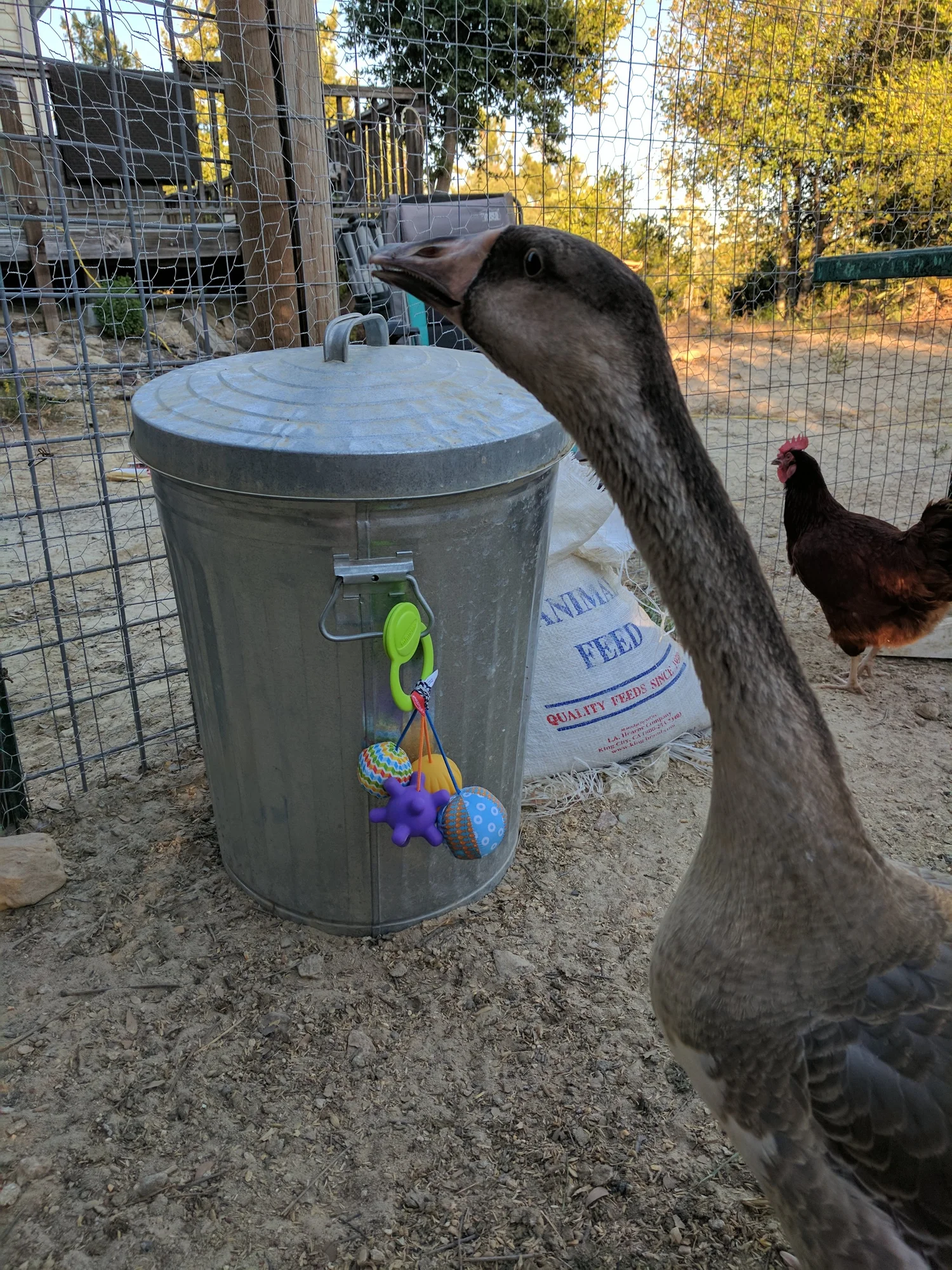
Geese are excellent watchdogs. They notice things other poultry miss, and they are vocal about it. My Toulouse goose alerts the entire flock (and the entire neighborhood) when something unusual approaches our run in Boulder Creek. That early warning is genuinely valuable. It gives the chickens and ducks time to take cover, and it gives me time to investigate.
Geese can also be physically imposing to smaller threats. A goose charging with wings spread and hissing can deter a stray cat, a curious dog, or a hawk making a first pass. Their size and aggressive posture can make a predator hesitate.
But geese are not equipped to fight off a raccoon, fox, coyote, or bobcat. These predators are faster, stronger, or more agile than a domestic goose, and they hunt with intent. A raccoon will not be bluffed more than once or twice. A coyote or bobcat outweighs most geese and can kill one quickly. Relying on a goose as your primary predator defense puts the goose at serious risk along with the rest of your flock.
There is also the social question. Geese are highly social birds. The American Poultry Association and most waterfowl resources recommend keeping geese in pairs or groups rather than alone. A single goose housed with chickens and ducks may bond with them, but it does not have the same social fulfillment as being with at least one other goose. That said, plenty of mixed flocks include a single goose that lives a content and healthy life, especially if it has been raised with the flock from a young age.
In our mixed flock of chickens, ducks, and one Toulouse goose, the goose is the first to sound the alarm when a hawk circles or when something rustles along the fence line at dusk. That alert system is a real asset. But the actual protection comes from our 35-by-15-foot enclosed run with hardware cloth on all sides and top, predator-proof latches on every door, and a buried wire apron around the perimeter.
Think of a goose as the alarm, not the lock.
This week: If you are considering adding a goose for protection, make sure your physical barriers (hardware cloth, latches, covered run) are solid first. A goose adds a valuable alert layer, but it is not a substitute for a secure enclosure.
Keep Reading
- Keeping a Goose: Single Goose Flocks
- Keeping a Mixed Flock: Chickens, Ducks, and Geese Together
- Predator-Proofing Your Flock in Santa Cruz County
Frequently Asked Questions
Can a goose actually protect my chickens from predators?
Think of a goose as the alarm, not the lock. Its loud calls and territorial behavior give early warning and may intimidate small threats like stray cats or hawks, but it cannot fight off raccoons, foxes, coyotes, or bobcats.
Is it okay to keep just one goose?
Geese are highly social, so keeping a single goose raises welfare concerns, and pairs or small groups are generally recommended. A solo goose can adapt in a mixed flock, especially if it was raised alongside other birds from a young age.
What should I rely on instead for real protection?
Physical security comes first: hardware cloth enclosures, predator-proof latches, and buried wire around the perimeter. Only after those are in place should a goose be added as an extra layer of alertness.
