

Growing Southern Highbush Blueberries in the Coastal Fog Belt
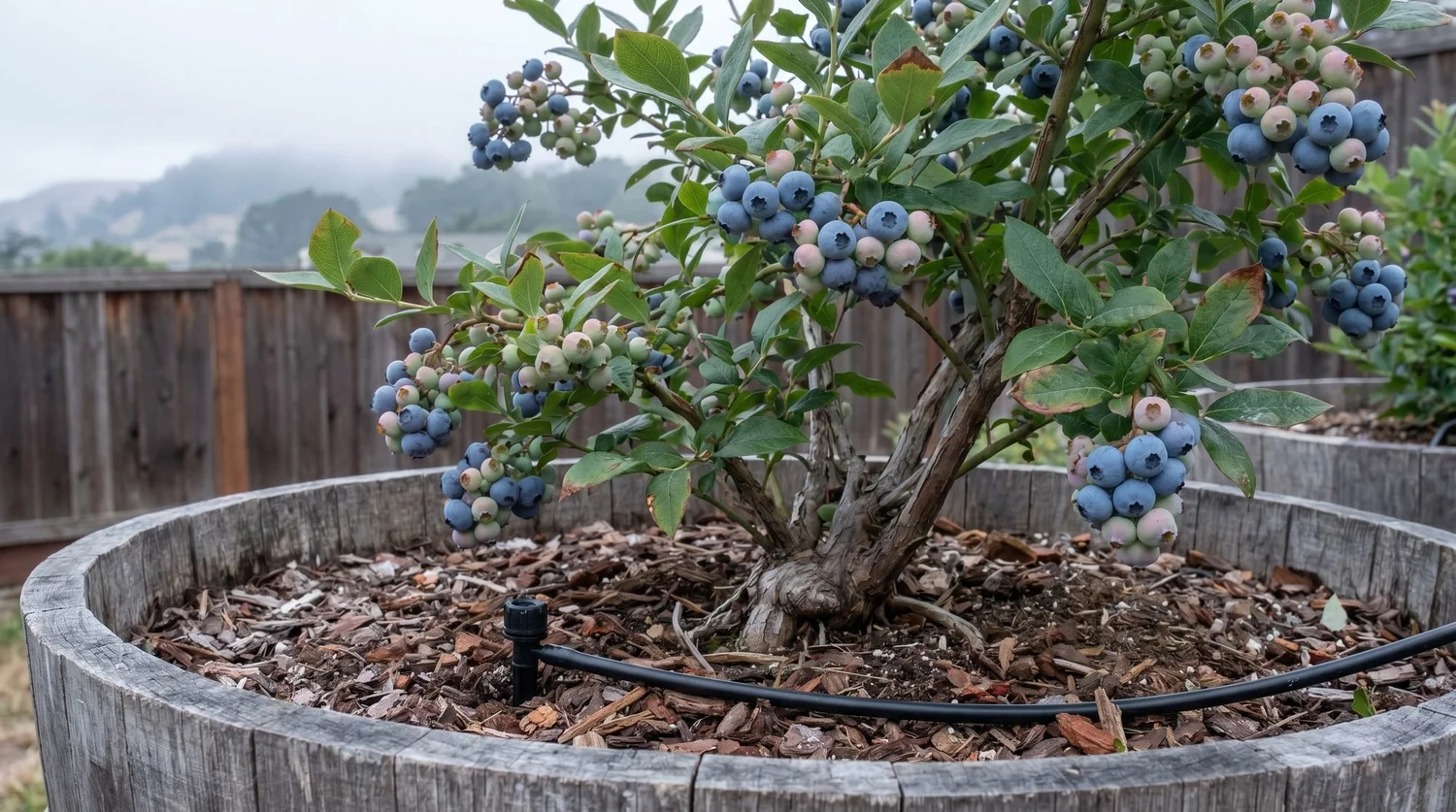
Along the Santa Cruz, Capitola, and Aptos coast, the cool mild air is exactly what blueberries like. The one thing the fog does not give you is acidic soil, so this is a good blueberry climate that asks you to fix the ground first.
Quick verdict: A genuinely good fit for the plant, with one condition. The marine climate suits blueberries and the mild winters still supply enough chill for low-chill Southern Highbush, but coastal soils are not naturally acidic the way redwood ground is. Plan to acidify, and a container is the easiest way to do it.
Why the climate works but the soil does not
Blueberries are a cool-climate plant at heart, so the fog belt's mild summers and the absence of brutal heat actually suit them better than most of inland California. Steady ocean-moderated temperatures keep the shallow roots cool and slow to dry. The catch is underground. Unlike the acidic duff under the redwoods just a few miles inland, the soils along the coastal terrace tend toward neutral, and some carry salt or alkalinity from sea air and old marine deposits. Blueberries want a pH of 4.5 to 5.5, so without correction they sit hungry in soil that locks up the iron they need. The work here is not climate, it is chemistry.
The container or amended-bed approach
Because the native soil is the weak link, the simplest coastal strategy is to control the soil entirely rather than fight it in the ground.
- Containers: A half-barrel or 15 to 20 gallon pot filled with a peat-based, acidic potting mix lets you set the pH from the start. Containers also dodge any coastal salinity. This is the most reliable route for most fog-belt gardeners.
- Amended beds: If you plant in the ground, dig in plenty of peat moss, then bring the pH down with elemental sulfur applied ahead of planting, and maintain it with an acidic, ammonium-based fertilizer and an acidic mulch.
Either way, water with rainwater or filtered water when you can, since hard coastal tap water nudges the pH back up over time.
Best low-chill varieties for the coast
Mild coastal winters give you enough chill for low-chill Southern Highbush, but not enough for the high-chill Northern Highbush types. The immediate coast gets the least winter chill in the county, so lean toward the lowest-chill varieties. Reliable choices here:
- Sunshine Blue: Compact, semi-evergreen, and the best container blueberry. Partly self-fertile and a touch more forgiving of pH drift.
- Misty: Early, sweet, and heavy-bearing, well proven in cool coastal California.
- O'Neal: Early season with rich flavor. Grow it alongside another Southern Highbush for the best set.
Plant at least two varieties close together to improve fruit size and yield through cross-pollination.
Light, moisture, and fog
Light: Give blueberries the sunniest spot you have. Persistent summer fog already trims the available sun on the coast, so unlike hotter inland gardens you rarely need to shade them. The more bright light you can find, the better the crop.
Moisture: The fog helps here, keeping humidity up and soil cooler, but it is not irrigation. Roots are shallow and should stay evenly moist, never soggy and never bone-dry. A thick coarse mulch holds that balance.
Salt air: Right at the bluff edge, salt spray can scorch leaf margins. Site plants with a little shelter from direct onshore wind, which is another point in favor of growing in movable containers.
Common problems and fixes
- Yellow leaves with green veins: the most common coastal complaint, caused by pH that is too high to release iron. Re-acidify with sulfur and feed with an acid-loving plant food.
- Slow, stalled growth in the ground: usually unamended neutral soil. Move to a container or seriously rework the bed with peat and sulfur.
- Crisp brown leaf edges near the shore: salt burn from sea spray. Shelter the plant or move the pot back from the wind.
- Light fruit set: a single variety, or too little sun under heavy fog. Add a partner variety and chase the brightest spot.
Local tip: Treat soil pH as a maintenance habit, not a one-time fix. Coastal tap water and neutral native soil both pull the pH upward over the seasons, so test once or twice a year, keep an acidic mulch topped up, and grow in a container if you want the least fuss. The climate is already on your side, so all you are really managing is the chemistry.
Frequently asked questions
Can I grow blueberries straight in my coastal garden soil?
Usually not without correcting the pH first. Coastal soils tend to be neutral, so amend the bed heavily with peat and sulfur, or grow in an acidic potting mix in a container, which is simpler and more reliable.
Is the fog a problem for blueberries?
No, it is mostly a help. The cool moist marine air suits a shallow-rooted cool-climate plant. Just give them your sunniest spot, because the fog already limits how much sun they get.
Do mild coastal winters give enough chill?
Yes, for low-chill Southern Highbush types like Sunshine Blue and Misty, which fruit on roughly 150 to 300 chill hours. O'Neal wants a bit more chill, so it does best in the warmer-soil sites just back from the immediate shore. Avoid high-chill Northern Highbush varieties bred for colder climates.
Will salt air hurt my plants?
It can right at the bluff edge, showing up as scorched leaf margins. Shelter plants from direct onshore wind, or grow in pots you can move back from the spray.
