

Growing Sugar Snap Peas in the Santa Cruz Coastal Fog Belt
A few of the product links in this guide are affiliate links. If you buy through one, Ambitious Harvest may earn a small commission at no extra cost to you, which helps keep these guides free. We only point to gear we would use in our own Santa Cruz garden. As an Amazon Associate, we earn from qualifying purchases. Read our full disclosure.
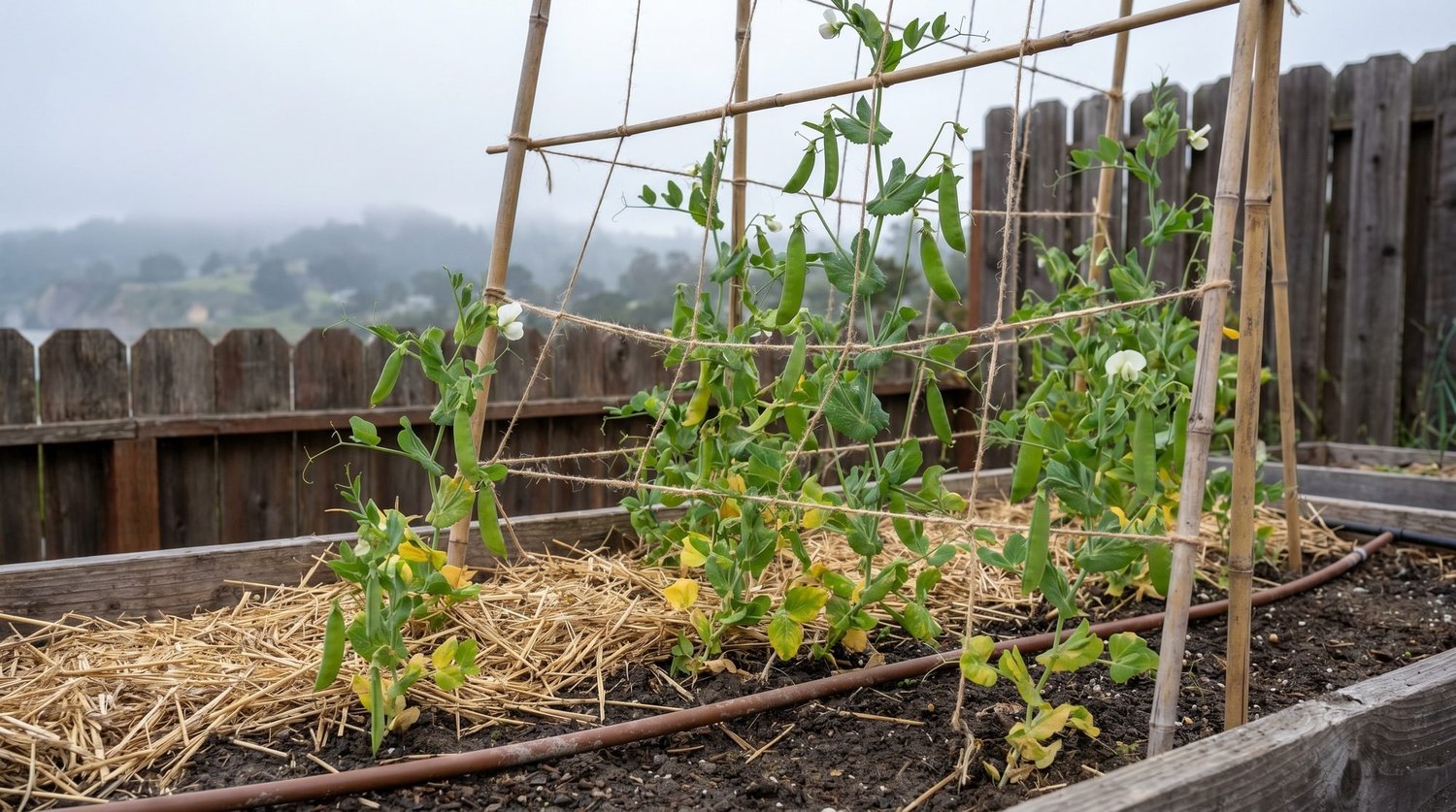
If you garden in Santa Cruz, Capitola, Aptos along the water, or out toward Davenport, the fog belt is about the best place in the county to grow sugar snap peas. The cool, mild, drawn-out season is exactly what they want.
Quick verdict: Excellent fit. Peas are a cool-season crop, and the fog belt hands you a long, gentle cool season with rare frost. You get two reliable sowing windows and a harvest that can stretch for weeks. Your real work is managing mildew in the damp air and protecting young seedlings from a heavy slug and snail population.
Why the fog belt is ideal for snap peas
Sugar snap peas hate heat. Once afternoons climb past the low 80s, flowering slows, pods turn tough and starchy, and the plants quit. The coastal fog belt almost never gets there. Cool foggy mornings, mild afternoons, and chilly nights keep peas in their happy range for months at a stretch. The same marine layer that frustrates tomato growers is a gift to peas. You can grow sweet, crisp pods here through stretches of the year when inland gardens have long given up, and the plants rarely bolt or burn out from a single warm spell.
When to plant in the fog belt
Frost reference: hard frost is rare right along the coast, so a fall sowing usually grows on through a mild winter and gives you pods from late winter into spring. The late-winter sowing extends the season into early summer. Direct sowing beats transplanting here because peas resent root disturbance and germinate well in cool, moist coastal soil.
Sun, water, and the fog factor
Sun: Give peas the sunniest spot you have. In the fog belt, light is the limiting factor, not heat. A bed that gets full morning sun once the fog lifts will outproduce a shadier corner every time.
Water: Foggy mornings deposit real moisture, so you water less here than almost anywhere else in the county. Let the top inch dry between waterings to discourage mildew and root rot. Avoid overhead watering late in the day, since leaves that stay wet overnight in cool damp air are an open invitation to fungal disease.
Microclimate notes
The fog belt is wetter on the leaf surface than its rainfall suggests. Drizzle and condensation keep foliage damp, which is why powdery and downy mildew are the signature pea problems here, not heat or drought. Space plants generously, run your rows so the prevailing sea breeze can move through them, and choose mildew-resistant varieties like Sugar Sprint or Cascadia. Salt air near the immediate shoreline can lightly scorch tender new growth on the windiest days, so a low fence or hedge on the seaward side helps in exposed Davenport and West Cliff gardens. For more on the local microclimates, see our coastal Aptos, Capitola and Santa Cruz guide and the Santa Cruz microclimates explainer.
Sugar snap variety traits
- Edible plump pod eaten whole, sweeter and crunchier than snow peas.
- Vining types (Sugar Snap, Super Sugar Snap) climb 5 to 6 feet and crop longest, which suits the long fog-belt season.
- Bush types (Sugar Ann, Cascadia) stay under 3 feet, good for small or windy coastal beds.
- For wet coastal air, lead with mildew-tolerant picks: Cascadia, Sugar Sprint, Super Sugar Snap.
Common pests in this zone
- Slugs and snails: The number one threat in the fog belt. They mow down pea seedlings overnight in the damp. See our foggy-garden slug and snail control guide.
- Birds: Sparrows and finches pull up just-sprouted peas. Lay row cover or netting until plants are a few inches tall.
- Aphids: Cluster on tender new tips in spring. A strong spray of water or a few resident ladybugs usually handles them.
Common problems and fixes
- Powdery or downy mildew (white or fuzzy patches on leaves): the classic fog-belt issue. Improve airflow, water at the base in the morning, and grow resistant varieties.
- Seeds rotting before they sprout: cold, soggy coastal soil can drown seed. Sow into a raised bed or mounded row, and do not overwater until plants are up.
- Poor germination from chilly soil: if a cold snap stalls things, wait it out. Peas come up fine once soil holds at 45F.
Companion crops
Peas pair beautifully with cool-season crops that share the fog belt: lettuce, spinach, carrots, and radishes all thrive alongside them. As legumes, peas gently feed the soil for the leafy crop that follows. Keep them away from onions, garlic, and other alliums, which can stunt pea growth.
Harvesting
Pick sugar snaps when the pods are plump and round but the seeds inside are still small, usually about 7 to 10 days after a flower opens. Taste one straight off the vine: it should snap and taste sweet. In the mild fog belt the harvest window is generous, but pick every two or three days. Frequent picking tells the plant to keep flowering, and a long cool spring can keep a vine producing for many weeks.
Local tip: Lean into the long season with a fall sowing as your main crop. While inland gardeners are fighting heat to squeeze in a spring planting, you can sow in October and harvest sweet pods through a mild coastal winter into spring, then sow again in late winter for a second wave. Two crops a year is normal here, not ambitious.
Where to get seeds: For varieties that do well in our climate, we like Seeds Now, a California company selling non-GMO, open-pollinated, and heirloom seed. (Affiliate link, see our disclosure.)
Frequently asked questions
Can I really grow peas through a Santa Cruz coastal winter?
Yes. Right along the coast, hard frost is rare, so a fall sowing usually grows on through winter and gives you pods from late winter into spring. A light frost will not kill an established pea plant.
Why do my coastal pea leaves keep getting a white powder?
That is powdery mildew, the most common pea problem in the damp fog belt. Space plants for airflow, water at the base in the morning, and switch to mildew-resistant varieties like Cascadia or Sugar Sprint.
My seedlings vanish overnight. What is eating them?
Almost certainly slugs and snails, which are heavy in foggy coastal gardens. Protect seedlings with a barrier or bait, and hand-pick at night until plants are a few inches tall.
Do snap peas need full sun in the fog belt?
Give them as much sun as you can. Heat is not your enemy here, light is. The sunniest bed will produce far more than a shaded one in this microclimate.
