

Bean and Pea Troubleshooting Guide
A few of the product links in this guide are affiliate links. If you buy through one, Ambitious Harvest may earn a small commission at no extra cost to you, which helps keep these guides free. We only point to gear we would use in our own Santa Cruz garden. As an Amazon Associate, we earn from qualifying purchases. Read our full disclosure.
Why Are Your Beans and Peas Struggling in Santa Cruz?
Bean and pea problems in Santa Cruz County typically fall into three categories: pest damage, fungal or bacterial diseases, and environmental stress from our unique coastal growing conditions. According to UC Integrated Pest Management, correctly identifying the pest is key to knowing whether it is likely to become a problem and to choosing the best management strategy. Learning to distinguish between a pest chewing your leaves, a fungal pathogen discoloring them, and a nutrient deficiency yellowing them will save you both crops and frustration.
Santa Cruz gardens face a particular mix of challenges that differs from warmer inland areas. Our fog moisture promotes fungal diseases, our moderate temperatures favor certain pest populations, and our variable microclimates mean that a problem common in the hills above Santa Cruz may never appear in a Watsonville garden. This guide walks you through the most common issues, how to identify them accurately, and what to do about them using approaches grounded in UC research.
How Do You Tell the Difference Between Pest, Disease, and Environmental Problems?
Before reaching for any treatment, step back and observe. The pattern of damage tells you which category of problem you are dealing with, and this matters because the responses are entirely different.
Pest damage clues:
- Irregular holes in leaves (chewing insects)
- Stippling or tiny dots on leaf surfaces (sucking insects like spider mites)
- Sticky residue on leaves (aphid honeydew)
- Visible insects on or under leaves, or on stems and pods
- Damage that appears on scattered leaves rather than uniformly across the plant
- Trails, frass (insect droppings), or webbing near damaged areas
Disease damage clues:
- Spots, patches, or discoloration that spread outward from a starting point
- Powdery, fuzzy, or slimy growth on leaf or stem surfaces
- Wilting despite adequate soil moisture (suggests root disease)
- Damage that follows a pattern (lower leaves first, or one side of the plant)
- Lesions on stems, especially at or near the soil line
- Yellowing that progresses upward from the base of the plant
Environmental stress clues:
- Uniform yellowing across all leaves (nutrient deficiency or overwatering)
- Leaf edges browning and curling (heat stress, wind burn, or salt damage)
- Blossom drop without insect damage (temperature extremes)
- Stunted growth affecting the entire plant uniformly
- Problems that appeared suddenly after a weather event (frost, heat wave, heavy rain)
Take a few minutes to examine the plant carefully, including the undersides of leaves where many pests hide. Look at the soil surface and dig gently around the root zone if you suspect root problems. This observation, ideally done on a dry morning when conditions are clearest, is more valuable than any product you can buy.
What Common Pests Attack Beans and Peas in Santa Cruz?
Our coastal climate supports a specific set of pest populations. Here are the ones you are most likely to encounter, in order of frequency.
Aphids
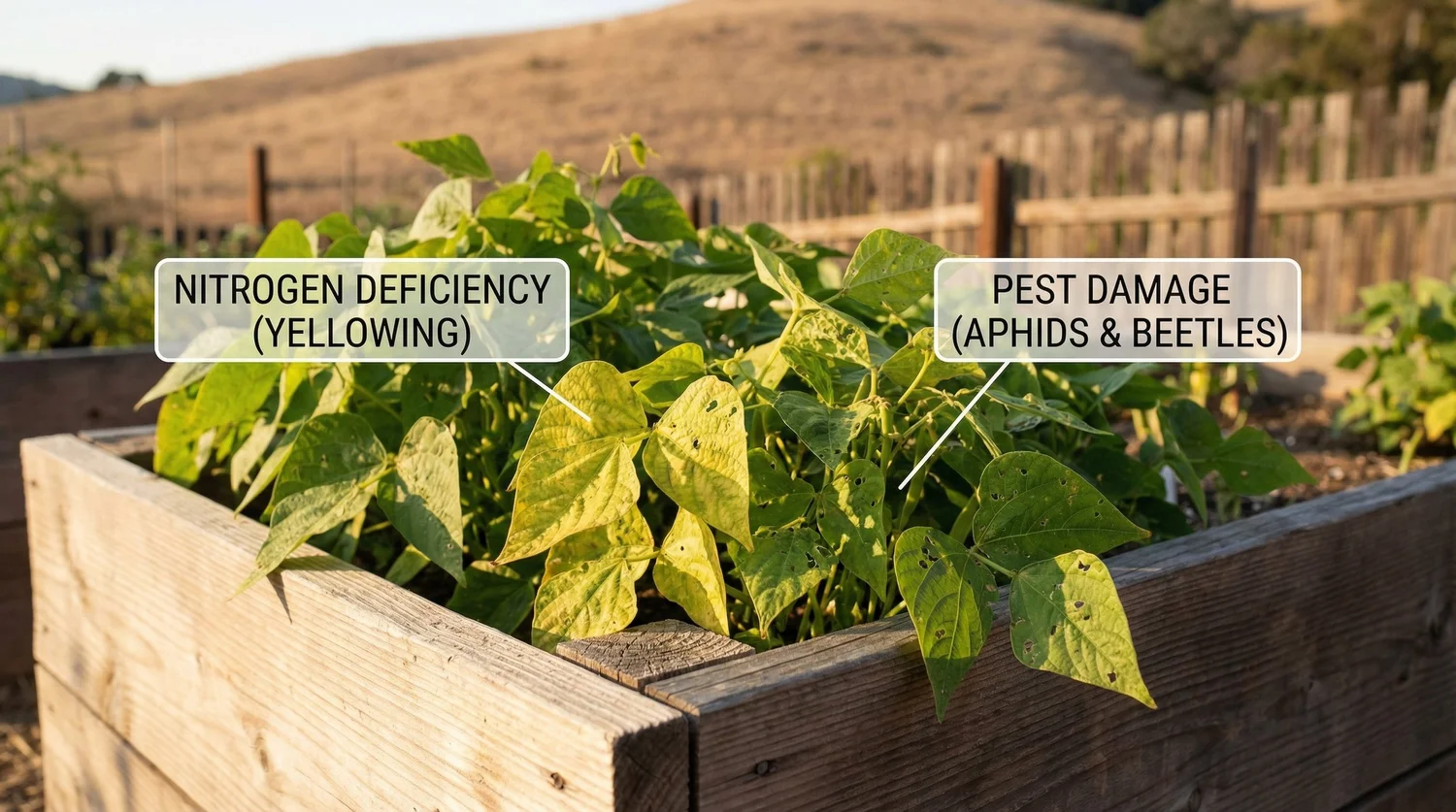
Aphids are far and away the most common pest on legumes in Santa Cruz. Green peach aphids affect both beans and peas, while black bean aphids are particularly drawn to fava beans. These small, soft-bodied insects cluster on tender growing tips, undersides of young leaves, and developing pods, sucking plant sap and excreting sticky honeydew.
Identification: Look for clusters of small (1 to 2 mm), pear-shaped insects on growing tips. Green, black, or pink depending on species. Honeydew (shiny, sticky residue) on lower leaves. Black sooty mold may develop on honeydew deposits.
Management:
- Start with a strong water spray to knock aphids off plants. Repeat every 2 to 3 days during heavy infestations.
- Encourage beneficial insects. Ladybugs, lacewing larvae, and syrphid fly larvae are voracious aphid predators. Avoid broad-spectrum insecticides that kill these allies.
- Pinch off heavily infested growing tips (especially on fava beans).
- For persistent infestations, insecticidal soap applied directly to aphid clusters is effective. Coverage must be thorough because it works only on contact.
- Reflective mulch (silver-colored plastic mulch) deters aphids from landing, according to UC IPM.
Resist the urge to spray at the first sighting. A small aphid population attracts beneficial insects, and in most Santa Cruz gardens, the natural predator-prey balance establishes itself within a few weeks.
Cucumber Beetles
Despite their name, cucumber beetles (both spotted and striped species) feed on many garden plants, including beans. They chew small, round holes in leaves and can damage flowers and young pods. More concerning, they can transmit bacterial wilt disease.
Identification: Small (1/4 inch) beetles, either yellow-green with black spots (spotted cucumber beetle) or yellow with black stripes (striped cucumber beetle). Look for round, shothole-like damage on leaves.
Management:
- Floating row covers placed over young plants exclude beetles entirely. Remove covers when plants begin to flower (beans are self-pollinating but benefit from pollinator access).
- Hand-pick beetles in early morning when they are sluggish. Drop into soapy water.
- Yellow sticky traps near plants catch adult beetles and help you monitor population levels.
- Keep garden beds clean of plant debris where beetles overwinter.
Spider Mites
Spider mites become a problem during warm, dry periods, particularly in inland Santa Cruz locations with less fog. These tiny arachnids feed on leaf undersides, causing stippling (tiny yellow dots) that progresses to bronzing and webbing. To identify them, hold white paper under a stippled leaf and tap sharply. Mites appear as tiny moving dots. A strong water spray directed at leaf undersides is the most effective control. According to UC IPM, spider mite outbreaks in home gardens are almost always triggered by broad-spectrum insecticides that eliminate natural predators.
Slugs and Snails
In foggy coastal Santa Cruz, slugs and snails are persistent pests on young bean and pea seedlings, feeding at night and leaving large, ragged holes with silvery slime trails. Hand-pick at night with a flashlight, use iron phosphate baits (Sluggo and similar products, safe for food crops), and remove daytime hiding spots near vegetable beds.
What Diseases Commonly Affect Beans and Peas Here?
Our fog, mild temperatures, and winter rains create conditions that favor several fungal and bacterial diseases. Prevention through cultural practices is almost always more effective than treatment.
Powdery Mildew
Powdery mildew is the single most common disease on peas in coastal Santa Cruz, and it affects beans as well, though less severely. It appears as white, powdery patches on leaf surfaces and stems.
Conditions that promote it: Warm days (70 to 85 degrees) followed by cool, humid nights. This describes much of our spring and fall weather perfectly. Unlike most fungal diseases, powdery mildew does not require free water on leaves, only high humidity.
Prevention and management:
- Choose resistant varieties. Oregon Sugar Pod II (snow peas) and Super Sugar Snap (snap peas) have good powdery mildew resistance. Among beans, many modern varieties carry resistance.
- Space plants adequately for air circulation. Crowded plantings stay humid between plants even when the surrounding air is dry.
- Water at the soil line, not overhead. While powdery mildew does not need leaf moisture to establish, wet leaves promote other diseases and create conditions that compound problems.
- Remove and discard (do not compost) heavily affected leaves to slow spread.
- According to UC IPM, potassium bicarbonate sprays can help manage powdery mildew on vegetables when applied early and reapplied every 7 to 10 days.
Root Rot (Pythium and Fusarium Species)
Root rot is a serious and often fatal disease that thrives in poorly drained, waterlogged soils. It is particularly common in Santa Cruz's heavier clay soils during wet winters and in gardens with poor drainage.
Symptoms: Wilting despite adequate (or excessive) soil moisture. Yellowing leaves starting at the base of the plant. Stunted growth. When you pull the plant and examine roots, they appear brown, mushy, and may have an unpleasant odor instead of being white and firm.
Prevention (there is no effective treatment once established):
- Ensure good drainage. Raised beds are excellent insurance against root rot in heavy clay soils.
- Avoid overwatering. Let the soil surface dry slightly between waterings.
- Rotate crops. Do not plant beans or peas in the same bed more than once every three years.
- Plant in warm soil. Cold, wet soil slows seed germination and root growth, giving pathogens more time to attack.
- Use disease-free seed from reputable sources.
Root rot follows wet soil. UC IPM notes that the pathogens need high soil moisture to infect roots, and that good water management is the most important factor in reducing the threat of root and crown rot.
Bean Rust
Bean rust appears as small, reddish-brown pustules on leaf undersides, eventually causing leaf yellowing and drop. Choose rust-resistant varieties, avoid overhead watering, remove infected leaves promptly, and rotate crops. According to UC IPM, sulfur-based fungicides provide some control when applied preventively.
Bacterial Blight
Bacterial blight causes water-soaked spots on leaves that dry to brown, papery patches with a yellow halo. Never work among bean or pea plants when foliage is wet, as this is the primary way blight spreads. Use disease-free seed (blight can be seed-borne), rotate crops on a three-year cycle, and remove infected plants. There are no effective chemical treatments for bacterial diseases in home gardens.
What Nutrient Problems Look Like on Beans and Peas?
Nutrient issues can mimic disease symptoms, so understanding the common deficiency patterns helps you avoid misdiagnosis.
Nitrogen deficiency: Overall pale green or yellow color, starting with older (lower) leaves. Less common in legumes because they fix their own nitrogen, but it occurs before nodules establish or when soil pH drops below 6.0. Check for nodules by gently uprooting a small plant. Healthy nodules are pink inside; white or green nodules indicate poor nitrogen fixation.
Phosphorus deficiency: Purplish discoloration on leaf undersides, slow growth, and delayed flowering. A light application of bone meal at planting provides slow-release phosphorus.
Potassium deficiency: Brown scorching of leaf edges, starting with older leaves. Less common in Santa Cruz soils but can occur in heavily cropped, unamended beds.
For persistent nutrient issues, a soil test through the UC Master Gardener program provides specific recommendations. Building soil organic matter through regular composting addresses most nutrient imbalances over time.
How Do You Diagnose Problems on Pea Plants Specifically?
Peas face some challenges that are less common or absent on beans, particularly because they grow during our cool, moist season when fungal conditions are favorable.
Pea enation mosaic virus: Causes translucent, blister-like growths on pods and distorted, mottled leaves. Spread by aphids. There is no treatment. Remove and destroy infected plants. Choose enation-resistant varieties for future plantings. According to UC IPM, pea enation mosaic is one of two common pea viruses in California, and like pea streak it is spread by aphids, so aphid pressure is what drives it.
Fusarium wilt of peas: Causes one-sided yellowing and wilting, with vascular browning visible when stems are cut lengthwise. The pathogen persists in soil for years. Resistant varieties (look for "wilt resistant" or "FW" on seed packets) are the only reliable management. Rotate pea beds on at least a five-year cycle once fusarium is established.
Downy mildew: Unlike powdery mildew, downy mildew appears on leaf undersides as a grayish-purple fuzz, with corresponding yellow patches on the upper surface. It thrives in cool, wet conditions, exactly our late fall and winter weather. Improve air circulation and avoid overhead watering. Copper-based fungicides provide some preventive control.
If you are growing sugar snap and snow peas, choosing disease-resistant varieties is the single most impactful preventive step you can take for our climate.
How Do You Diagnose Problems on Bean Plants Specifically?
Beans face their own set of common issues, especially during our warmest months when they are actively growing.
Blossom drop: Flowers fall without setting pods. In Santa Cruz, the most common cause is cool temperatures (below 55 degrees during bloom) rather than heat stress, though both can cause it. There is no treatment; the plant typically resumes pod production when temperatures moderate.
White mold (Sclerotinia): A cottony white fungal growth on stems and pods, favored by cool, moist conditions. Remove infected plants immediately. This pathogen survives in soil for years, so avoid planting beans or peas in that location for at least three to four years.
Sunscald on pods: White, papery patches on pods exposed to intense sun. Not a disease but a physiological response to UV damage. Harvest affected pods promptly; the beans inside are usually fine.
What Cultural Practices Prevent Most Bean and Pea Problems?
The majority of bean and pea issues in Santa Cruz gardens are preventable through consistent cultural practices. These are not glamorous, but they work better than any reactive treatment.
- Rotate crops: Never plant legumes in the same bed more than once every three years. This single practice prevents the buildup of soilborne pathogens more effectively than any other approach.
- Water at soil level: Drip irrigation or soaker hoses keep foliage dry, which is critical for preventing most fungal and bacterial diseases. Morning watering is second-best, giving leaves time to dry before evening.
- Space for airflow: Follow the spacing recommendations on seed packets. Crowded plants create humid microclimates that favor disease. In our foggy climate, err on the side of wider spacing.
- Do not work when wet: Never harvest, prune, or handle bean and pea plants when foliage is wet from rain, fog, or irrigation. Your hands and tools spread bacterial and fungal pathogens between plants.
- Remove spent plants promptly: When a crop is finished, pull the plants and clear the bed. Leaving decaying plant material in the garden provides habitat for pests and disease organisms.
- Build healthy soil: Compost, cover crops, and organic matter create biologically active soil that supports plant health and suppresses many soilborne diseases naturally.
- Start with quality seed: Disease-free seed from reputable companies is worth the investment. Several bean and pea diseases are seed-borne, meaning infected seed introduces pathogens directly into your garden.
Cultural practices are the first line of disease prevention: start with clean seed, rotate susceptible crops where practical, avoid working plants when foliage is wet, water at soil level, provide airflow, remove heavily diseased material, and identify the problem before choosing a treatment. For broader soil-building strategies, our guide to composting techniques covers methods that build disease-suppressive soils.
Frequently Asked Questions
Why are my bean leaves turning yellow from the bottom up?
Bottom-up yellowing on beans typically indicates either nitrogen deficiency or fusarium wilt. Check for root nodules by gently uprooting a small plant. If nodules are absent or white inside (rather than pink), the plant is not fixing nitrogen, and inoculating future plantings will help. If you see brown discoloration inside the stem when you cut it lengthwise, fusarium wilt is likely. According to UC IPM, Fusarium solani produces brick red lesions on belowground stems and tap roots, so lifting a plant and looking at the roots is what separates a soilborne disease from a nitrogen problem.
What causes white powder on my pea leaves?
White powder on pea leaves is almost certainly powdery mildew, the most common disease on peas in coastal California. It thrives in conditions with warm days and cool, humid nights, which describes much of our spring weather. Choose resistant varieties (Oregon Sugar Pod II, Super Sugar Snap), improve air circulation, and remove heavily affected leaves. According to UC IPM, powdery mildew on peas is a cosmetic issue in mild cases but can significantly reduce yields when severe, making resistant variety selection the best defense.
Are the holes in my bean leaves from slugs or beetles?
Check for clues. Slugs leave silvery slime trails and feed at night, creating large, irregular holes, often starting from leaf edges. Beetles feed during the day, creating smaller, more rounded holes scattered across the leaf surface. Go out after dark with a flashlight to look for slugs, or inspect plants during warm afternoon hours when beetles are active. According to UC IPM, correct pest identification is essential because slug baits are useless against beetles, and insecticides do not control slugs.
Can I save seeds from a plant that had powdery mildew?
Yes, in most cases. Powdery mildew is generally not seed-borne for beans and peas, meaning the pathogen does not contaminate the seeds inside the pods. Allow pods to dry fully on the vine (or finish drying indoors), then shell and store seeds normally. However, if the plant was severely weakened by disease, the seeds may be smaller or less vigorous than seeds from healthy plants. According to UC Agriculture and Natural Resources, seed quality is best from vigorous, healthy plants, so save seeds from your strongest performers when possible. Our seed saving guide covers the full process.
Why did my entire bean planting suddenly wilt and die?
Sudden, widespread wilting of an entire planting usually points to root rot (from waterlogged soil), severe bacterial wilt (spread by cucumber beetles), or occasionally herbicide drift or contaminated compost. Check the roots: brown and mushy means root rot. Check the stems: brown vascular streaking means bacterial wilt. If roots and stems look normal, consider whether any herbicide was applied nearby or whether you used a new compost source. UC ANR weed science reports that compost carrying plant growth regulator herbicide residue turns up with regularity in samples from Central Coast growers and home gardeners, and that clopyralid residue from treated turf clippings has survived composting and damaged the next crop.
Is neem oil effective for bean and pea pests?
Neem oil has moderate effectiveness against aphids and some other soft-bodied pests when applied as a thorough foliar spray, but it is not a silver bullet. It works best as a repellent and growth disruptor rather than a fast-acting killer. Apply in early morning or evening (never in direct sun, which causes leaf burn), and reapply every 7 to 10 days. According to UC IPM, neem oil is less effective than insecticidal soap for direct aphid control but provides broader activity against multiple pest types.
Should I use copper fungicide on my beans and peas?
Copper-based fungicides provide preventive (not curative) control of some bacterial and fungal diseases on beans and peas. They must be applied before infection occurs to be effective. Copper can accumulate in soil with repeated use, so use it judiciously and only when cultural practices alone are insufficient. UC IPM does not recommend a fungicide for these diseases in home gardens: for downy mildew on peas it advises freely circulating air, letting plants dry between irrigations, and keeping leaves as dry as possible.
Why do my green beans have lots of flowers but no pods?
Beans commonly drop their blossoms in a heat spell, since sustained temperatures above the mid-80s interfere with pollination and pods fail to form. Too much nitrogen also pushes leafy growth at the expense of pods. Water evenly, hold off on rich fertilizer, and pod set usually resumes once temperatures ease. UC ANR covers bean growing at ucanr.edu.
Keep Your Beans and Peas Healthy
Most bean and pea problems in Santa Cruz gardens are preventable, and the ones that are not preventable are usually manageable with early detection and appropriate response. Build the habit of spending a few minutes each day observing your plants closely, and you will catch problems when they are still small and treatable. The investment in cultural practices (rotation, drainage, spacing, soil building) pays off season after season, compounding over the years into a garden that resists problems naturally.
For more growing guides, pest management resources, and seasonal advice for Santa Cruz County, visit Your Garden Toolkit.
Keep Reading:
- Growing Sugar Snap and Snow Peas in Santa Cruz
- Growing Fava Beans: Winter Cover Crop and Food
- Saving Bean and Pea Seeds
Editor’s note, July 2026: This article was reviewed and materially updated against current primary sources. Earlier wording was removed or corrected. Source links and the review date are included so readers can verify the guidance.
