

Growing Sugar Snap and Snow Peas in Santa Cruz
A few of the product links in this guide are affiliate links. If you buy through one, Ambitious Harvest may earn a small commission at no extra cost to you, which helps keep these guides free. As an Amazon Associate, we earn from qualifying purchases. Read our full disclosure.
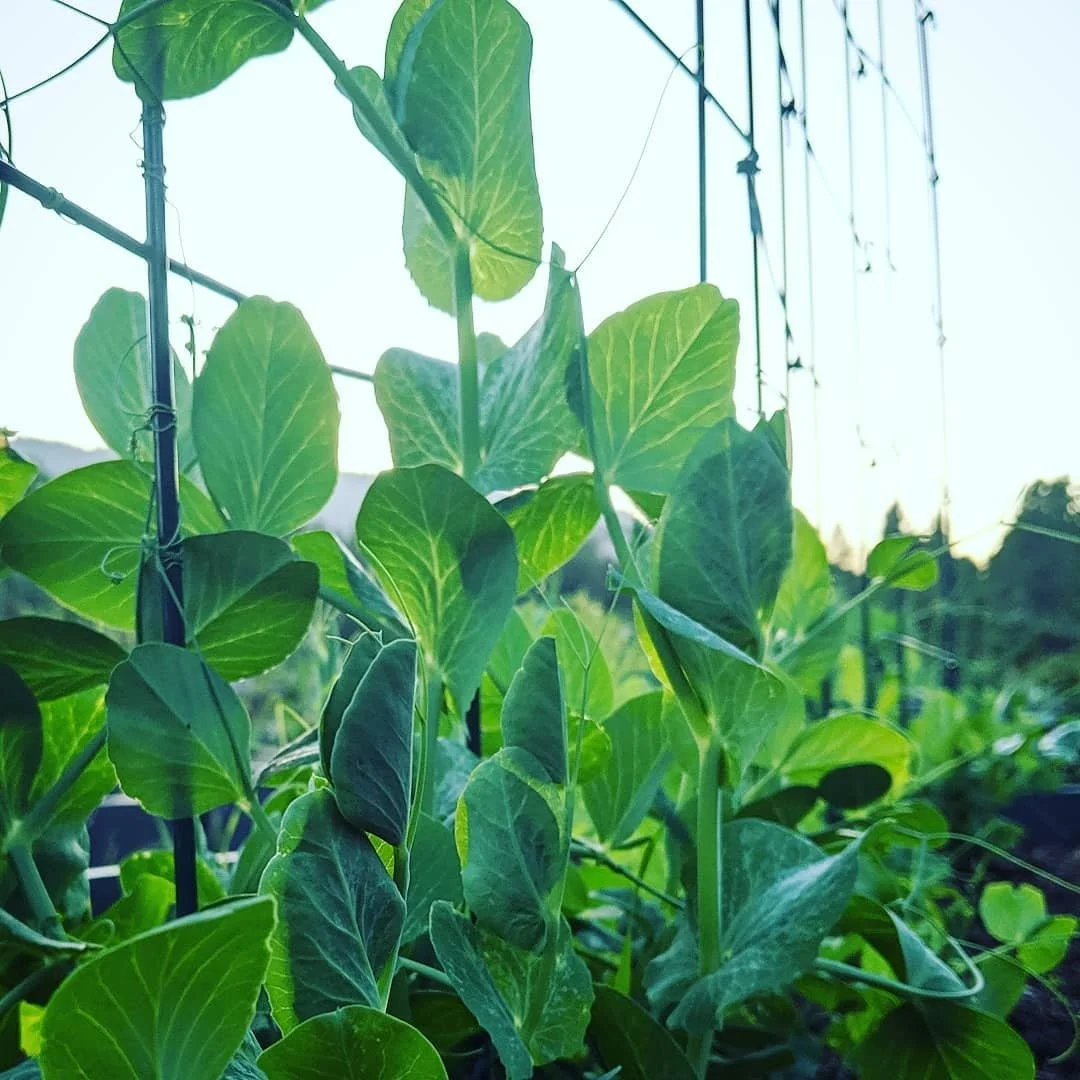
A pea pod can hide in plain sight. Turn a leaf and there it is, flat and tender enough for tonight's stir-fry, or rounded out into a sugar snap. Growing peas is partly a matter of noticing that moment. Start them in cool weather, give their tendrils something to hold, and visit often once the flowers appear.
Santa Cruz County gives many gardeners a fall planting opportunity as well as a late-winter or spring one. Your own bed's drainage, sunshine, and exposure to heat decide how much of those windows you can use. A sunny coastal patio and a cold valley-bottom bed need different timing, even when the seed packet is the same.
Choose the pod you'll want to pick
Both sugar snaps and snow peas have edible pods. The difference is when you pick them. A sugar snap is ready when the pod has filled out but is still crisp and tender. A snow pea is picked flatter, before its seeds make conspicuous bulges.
For sugar snaps, consider the tall original Sugar Snap, Super Sugar Snap, or compact Sugar Ann. A shorter plant is easier to fit beside a path or in a container; a tall variety puts more of the crop up a trellis. Check the current packet for height and disease resistance, because the variety name alone doesn't tell you how to build its support.
Snow-pea choices include Oregon Sugar Pod II, Mammoth Melting Sugar, and Oregon Giant. They differ in vine height and pod size. Choose mildew resistance by the particular variety, rather than assuming every snow pea is more resistant than every sugar snap.
- For fresh crunch: Pick sugar snaps while plump and tender, before the pod turns fibrous.
- For a quick stir-fry: Pick snow peas while the pods are flat and flexible.
- For limited space: Look for a compact variety, then check how much support it still needs.
If you like both, sow a short labeled row of each. Keeping the names visible makes it easier to learn the harvest stage instead of waiting for every pod to look alike.
Plant into the cool part of the year
UC Integrated Pest Management lists September through October and January through April as approximate pea-planting periods for the North and North Coast region, which includes Monterey County northward. Treat those as a starting range. The same guidance cautions that local conditions vary substantially.
In fall, watch for the bed to cool after hot weather. In late winter, wait until saturated soil has drained and you can prepare it without smearing it into clods. Peas can germinate in soil around 45 degrees Fahrenheit, but being able to germinate does not mean every cold, wet bed is ready.
Near the ocean, cool spring weather may extend the picking season. In a warmer inland pocket, aim to have plants established before sustained heat arrives. Avoid a rigid town-by-town cutoff or the idea that one afternoon above 75 degrees switches production off. The trend through flowering matters more than one reading.
Keep a few notes: sowing date, first flowers, first harvest, and when quality starts slipping. Those dates give your next planting a useful local reference. The UC Cooperative Extension in Santa Cruz County is another place to seek advice when your site doesn't fit a general calendar.
Sow where the vines will grow
Direct sow into a prepared bed. A depth of about one to two inches and roughly two inches between seeds is consistent with UC's basic guidance; follow the packet where it gives more specific directions for your variety and planting arrangement. Set the support in place first so you won't be pushing posts through young roots later.
Peas are commonly direct-sown because it avoids disturbing roots. If you use starts, handle the root ball gently and plant before it becomes tangled in the pot. Check for slugs, snails, and birds while seedlings are small. A row that appeared yesterday can suffer a lot of feeding before the next weekend.
Soaking is optional rather than a requirement. UC Master Gardeners of Riverside County recommends an overnight soak. If you use that method, plant promptly into a bed with suitable moisture; don't leave swollen seed waiting while you finish building the trellis. Cold, waterlogged soil still needs drainage, not a longer soak.
Give the tendrils a usable trellis
Peas grip with fine, curling tendrils. A broad smooth pole gives them little to catch, while mesh, string, and small twigs put handholds within reach. Even a short variety can benefit from support that keeps pods off the soil.
- Jute or twine netting: String it firmly between supports. Check that the material is actually compostable before putting it into the compost pile.
- Reusable garden mesh: Choose openings that let you reach through to pick. Secure loose edges so they don't collapse onto the vines.
- Garden wire mesh: It provides plenty of gripping points, although untangling dry vines at season's end takes patience.
- Branchy prunings: Small, sturdy twigs can support a short row. Avoid thorny material where your hands will be reaching for pods.
Match the height to the mature vine listed on the packet. A compact variety might need only a low support, while a climbing Sugar Snap or Mammoth Melting Sugar needs a taller structure. Once vines fold over the top, harvest and airflow become harder to manage.
Leave access on both sides where you can. Choose the orientation for actual sun and neighboring plants, rather than assuming one compass direction guarantees a bigger crop. A trellis also casts shade, which matters if lettuce or another short crop is beside it.
Check the posts before the vines fill in. A leafy trellis catches coastal wind; use suitable anchors and braces for its height and your soil. Check the finished support for wobble before the first vines reach it.
Prepare soil for roots, not just vines
Peas need drainage as well as moisture. Work in finished compost where the bed needs organic matter, but wait until wet clay is workable. A raised planting area can help where water lingers. Our composting basics explains how to make and use that amendment.
In sandy soil, pay closer attention to drying between waterings. In heavier soil, check before adding more water just because the surface looks dry. Soil texture changes the routine, and a neighborhood name doesn't tell you the texture of a particular bed.
If growth has been poor or you are considering a substantial amendment, a laboratory soil analysis is more useful than guessing. A mail-in soil test is one option. Compare what the laboratory measures and follow its sampling instructions so the results describe the bed you intend to plant.
Peas can form a nitrogen-fixing partnership with compatible bacteria. UC Agriculture and Natural Resources describes that relationship. It doesn't make every bed self-fertilizing or guarantee a nitrogen surplus after harvest. Base fertilizer additions on soil information, plant growth, and product directions. Supply nutrients when the bed needs them, and check that an amendment addresses the deficiency you are trying to correct.
Where peas haven't grown before, ask about an inoculant labeled for peas and follow its storage and application directions. Availability changes, so contact Scarborough Gardens or another nursery before making a trip. A product intended for a different legume isn't automatically interchangeable.
Keep moisture steady as flowers turn to pods
Check the root zone rather than watering to a fixed weekly number. Seedlings have small root systems, a crowded pot dries differently from a garden bed, and a cool foggy week may need less irrigation than a windy one. Aim for moist, aerated soil, not repeated cycles of wilting and flooding.
A raised-bed drip kit or a soaker hose can make it easier to deliver water near the roots. Check that the linked DIG kit fits your bed layout and water connection. Check the emitters along the whole row, particularly at the far end. Leaves can look similar when roots are too dry or struggling in saturated soil, so feel the soil before increasing water.
As flowering begins, pay attention to changes in weather and moisture. Water stress can affect the developing crop, but adding fertilizer isn't the first answer to every stalled vine. The practical starting checks are the soil, the weather, and the plant's overall condition.
Harvest with two hands
Hold the vine with one hand and detach the pod with the other, or snip its stem. Pulling hard on a hanging pod can tear a tender vine away from its support. Once you're picking regularly, this small habit saves a lot of broken growth.
For sugar snaps, look for plump pods that still snap cleanly. For snow peas, pick before the seeds make large bumps. Sample the texture as you learn a new variety, and look under leaves as well as at the outside of the trellis.
Visit several times a week during production, more often when warm weather speeds development. Remove ready pods so they don't stay on the plant maturing unnoticed. If you want seed for another season, set that intention aside from the eating harvest; our guide to saving bean and pea seeds explains the different end point.
Refrigerate pods promptly and use them while they're fresh. For freezing, choose the blanching method for the size and development stage of your pods. The National Center for Home Food Preservation's edible-pod instructions distinguish small and large flat pods and direct you to different instructions once peas develop. Follow the method appropriate to the harvest you have.
Growing a patio crop
A container at least a foot deep is a useful starting size; a larger volume is easier to keep evenly moist. Use potting mix and unobstructed drainage holes. A compact variety keeps the support manageable, while tall vines need a securely anchored trellis that won't pull a light pot over.
Watch the pot through the day before deciding where to leave it. A bright winter spot may become shaded as the sun changes position or a neighboring tree leafs out. For pod production, give peas the best available light without putting the pot where it repeatedly overheats.
Check moisture frequently and use the potting mix and fertilizer labels to guide feeding. A fixed half-strength dose every few weeks doesn't account for fertilizer already in the mix. Our square foot gardening guide offers more ways to organize a small growing space.
Read the leaves before reaching for a treatment
UC Integrated Pest Management provides a useful starting point for pea pest identification. Aphids gather on tender growth; look for natural enemies before deciding an infestation needs treatment. Water can dislodge accessible colonies. Broad-spectrum insecticides can remove the predators you want to keep.
A white powdery coating may be powdery mildew. Check that the appearance matches the disease, choose resistant varieties where available, and give vines room for air movement. Mildew is not inevitable in every coastal garden, and damp leaves are not a complete explanation of its biology.
Yellowing and wilting in wet soil call for a root-zone check. Improve drainage and avoid moving suspect soil or plant material into a new bed. Rotation can help, but the length and usefulness depend on the problem identified. See our bean and pea troubleshooting guide when symptoms don't fit a simple answer.
Where to get seeds: Seeds Now offers pea seed options. Check each variety's current description for size, maturity, and resistance. This is an affiliate link; see our disclosure. Our pea growth stages guide follows the crop from sowing through its final pods.
Frequently asked questions
Can I grow peas year-round?
Plan them as a cool-season crop. Some sheltered coastal gardens get a long season, but neither continuous sowing nor continuous harvest is guaranteed. UC IPM notes that warm weather shortens the harvest period.
What if my garden gets less than six hours of sun?
Try the brightest usable spot and expect results to depend on the amount and quality of light. The UC Master Gardeners of Placer County guide discusses vegetables for reduced sun; its advice about leafy and root crops isn't proof that a shaded pea vine will crop as well as one in good light.
Why are there flowers but few pods?
Check recent heat, moisture stress, and the age of the planting before buying a treatment. Peas normally self-pollinate. A few dropped flowers don't identify one cause, so look at the whole plant and conditions around it.
Can beans use the trellis next?
Often, yes, once the pea crop is finished and conditions suit the bean variety. Remove old vines, check the support, and consider any disease problems before reusing the bed. Our guide to succession planting beans covers planning a bean harvest.
Does a white leaf coating always mean mildew?
No. Compare the pattern with reliable identification photos rather than treating from a color alone. UC Integrated Pest Management links to the crop's pests and diseases.
How long until the first harvest?
Use the packet's maturity figure as an estimate, then allow for slower development in short, cool winter days. UC Integrated Pest Management describes the crop's cultural needs; a single fixed day count won't cover every Santa Cruz planting.
Start with a row you can reach easily. Put up the support, label the variety, and leave yourself a little time to look under the leaves. When the first pods arrive, you'll already know where to find them. Seasonal planning resources are in Your Garden Toolkit.
Related guides: Growing Fava Beans: Winter Cover Crop and Food; Succession Planting Beans for Continuous Harvest; Bean and Pea Troubleshooting Guide.
Choose a Pea Variety Before Building the Support
Sugar snaps
Super Sugar Snap, Sugar Ann, and Cascadia offer different plant sizes. Check the current packet for height, support, maturity estimate, and resistance to a named disease.
Snow peas
Oregon Sugar Pod II and Mammoth Melting Sugar differ in height and pod size. Even shorter vines can benefit from support that keeps pods off the soil.
Shelling peas
Green Arrow and Lincoln are options when you want peas to shell. They are not interchangeable with edible-pod varieties at harvest.
A variety’s maturity estimate changes with growing conditions. Avoid treating “disease resistant” as protection from every local problem.
Ambitious Harvest · Santa Cruz County
Pick the Pea at the Stage You Want to Eat
Sugar snap peas
Pick rounded, filled pods while they are still crisp and tender. Eat the edible pod and peas together.
Snow peas
Pick tender flat pods before the seeds form large bulges. Check beneath leaves so pods do not mature unnoticed.
Shelling peas
Remove the peas from the fibrous pod. Keep shelling varieties separate from edible-pod types when labeling the bed.
Visit often during harvest. Refrigerate promptly; use the NCHFP instructions linked in the article for freezing the type and stage you picked.
Ambitious Harvest · Santa Cruz County
Plan Peas Around Cool Conditions
Fall sowing
UC IPM lists September–October as an approximate North and North Coast planting period. Wait for suitable conditions in the bed; hot or saturated soil can change the plan.
Late winter and spring
UC IPM also lists January–April. Check drainage and local weather. Germination is possible around 45°F, but cold wet soil can still cause problems.
Growth and harvest
Install support before vines need it. Check moisture rather than relying on rain alone. Harvest timing depends on variety and conditions, and warm weather shortens the season.
These are regional starting ranges, not guaranteed harvest dates. Source: UC IPM, Cultural Tips for Growing Peas.
Ambitious Harvest · Santa Cruz County
