

Powdery Mildew on Squash: Prevention and Treatment for Santa Cruz Gardens

Powdery Mildew on Squash: Prevention and Treatment for Santa Cruz Gardens
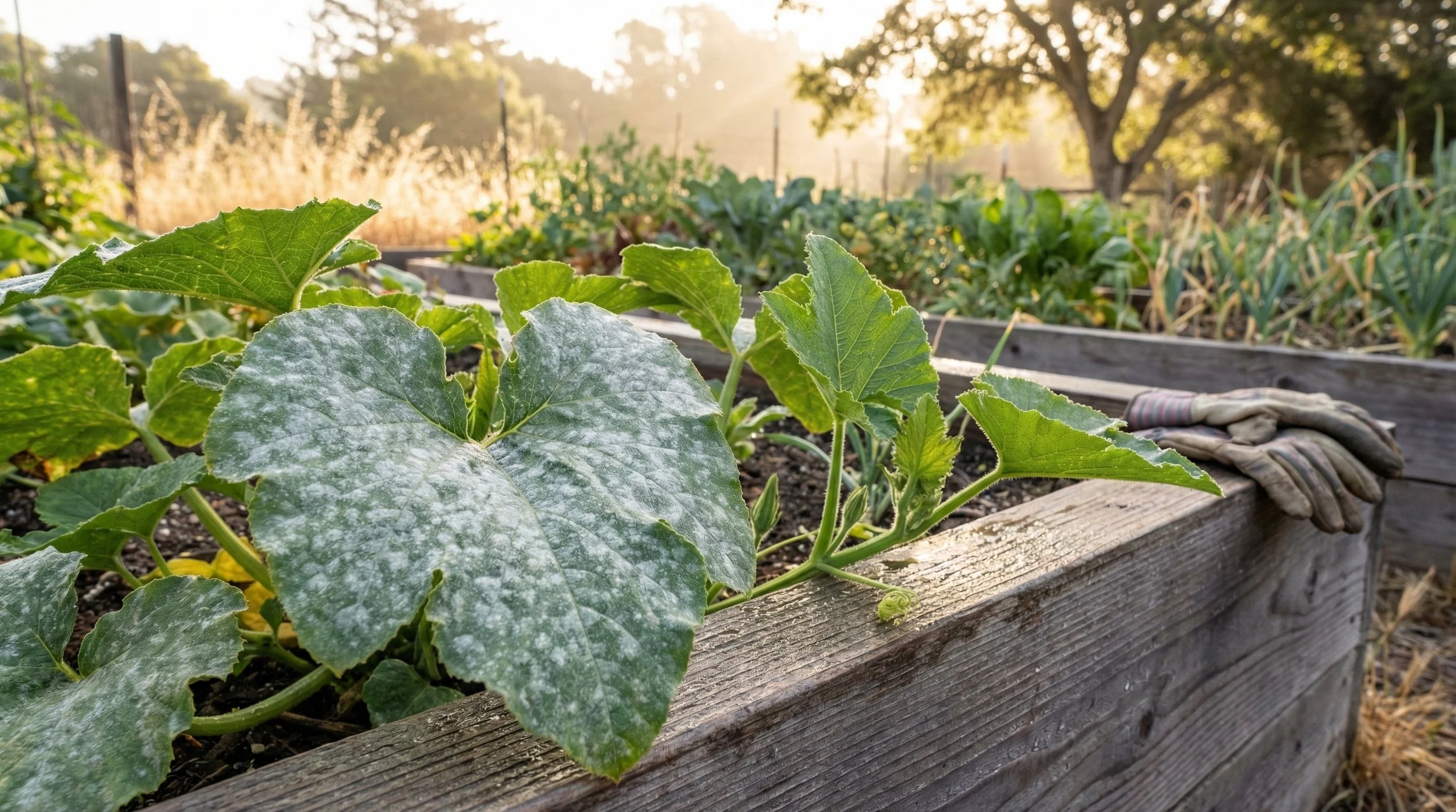
If you grow squash in Santa Cruz County, you will encounter powdery mildew. This fungal disease is nearly universal in our coastal climate, appearing as white, powdery patches on leaves that eventually cover entire plants if left unchecked. The combination of our cool nights, morning fog, and moderate humidity creates ideal conditions for this frustrating disease.

The good news is that powdery mildew is manageable. With proper prevention strategies, you can significantly delay its onset and maintain productive squash plants through the harvest season. And even plants with significant mildew infection can often continue producing if managed properly.

Understanding Powdery Mildew

Unlike most fungal diseases, powdery mildew thrives in our coastal conditions, not despite the moderate humidity but because of it. Understanding how it works helps with management.

What Causes Powdery Mildew

Powdery mildew on cucurbits is caused by the fungus Podosphaera xanthii (and less commonly Erysiphe cichoracearum). According to UC IPM, the conditions that favor powdery mildew include moderate temperatures (68-80°F), high relative humidity (but not necessarily wet leaves), shaded conditions and poor air circulation, and stressed or crowded plants.

This explains why powdery mildew is so common in Santa Cruz County. Our summer temperatures sit right in the optimal range, our marine layer keeps humidity elevated, and dense garden plantings often lack adequate airflow.

Life Cycle

Spores spread on wind currents and can travel significant distances. They germinate and infect leaves within hours when conditions are favorable. The fungus grows on leaf surfaces (unlike many fungi that enter plant tissue), forming the distinctive white powdery coating of spores and fungal structures. New spores are produced continuously, allowing rapid spread.

Which Plants Are Affected

All cucurbits are susceptible, though some more than others. Summer squash (zucchini, yellow squash) is highly susceptible. Pumpkins and winter squash are highly susceptible. Cucumbers are moderately susceptible (some varieties are resistant). Melons are moderately susceptible.

Identifying Powdery Mildew on Squash
Visual Symptoms
Early Stage Small, white, circular spots on upper leaf surfaces, often starting on older leaves
Spreading White patches expand and merge, covering more leaf surface; may spread to stems and leaf undersides
Advanced Leaves turn yellow, then brown; heavily infected leaves die and drop; plant vigor declines
Distinguishing from Other Problems
Powdery Mildew White, powdery coating on leaf surfaces; wipes off with finger (leaving green underneath initially)
Downy Mildew Yellow patches on upper leaves with fuzzy gray/purple growth underneath; does not wipe off
Spider Mites Stippled, yellow leaves with fine webbing; tiny mites visible with magnification

Prevention Strategies

Prevention is far more effective than treatment. Starting with good cultural practices can delay powdery mildew onset by weeks or even prevent it entirely in mild years.

Choose Resistant Varieties

The most effective prevention is planting varieties bred for powdery mildew resistance. Modern breeding has produced varieties with significantly improved tolerance.

Squash with good resistance: 'Dunja' zucchini (intermediate resistance), 'Success PM' straightneck squash, 'Multipik' zucchini, 'Payroll' zucchini.

Cucumbers with good resistance: 'Marketmore 76' (moderate), 'Diva' (good), 'Tasty Green' (good).

Note that "resistant" does not mean immune. Resistant varieties will eventually develop mildew under high pressure, but they delay onset and maintain vigor longer.

Maximize Air Circulation

Powdery mildew thrives in stagnant, humid air. Improving airflow around plants significantly reduces disease pressure.

Space plants generously (at least 3-4 feet between summer squash, 6-8 feet between vining squash). Avoid planting in corners or against walls where air stagnates. Trellis cucumbers and remove lower leaves to improve airflow at soil level. Prune excess foliage on vigorous plants (carefully, as leaves also provide energy).

Water Wisely

While powdery mildew does not require wet leaves to spread (unlike many fungal diseases), water management still matters.

Water at soil level, not overhead. Morning watering allows excess moisture to dry before evening. Drip irrigation or soaker hoses are ideal. Maintain consistent moisture because stressed plants are more susceptible.

Maintain Plant Health

Healthy, vigorous plants resist disease better than stressed ones.

Provide adequate fertility (but avoid excessive nitrogen, which promotes succulent growth susceptible to infection). Maintain consistent watering. Mulch to keep soil moisture even. Monitor for and manage other pests.

Start Fresh Each Season

Powdery mildew can overwinter on plant debris. Remove and destroy (do not compost) all cucurbit plant material at season end. Clean tools between uses. Start with fresh soil or rotate planting locations.

Powdery Mildew Treatment Options
Organic and conventional approaches for Santa Cruz gardens
Treatment Type How It Works When to Use Notes
Neem Oil Organic Disrupts fungal growth and prevents spore germination Prevention and early treatment Apply every 7-14 days; avoid heat of day
Potassium Bicarbonate Organic Raises leaf surface pH, killing fungal spores Prevention and early treatment More effective than baking soda; commercial products available
Baking Soda Spray Organic Raises pH on leaf surfaces Mild prevention only 1 tbsp per gallon water + dish soap; less effective than potassium bicarb
Sulfur Organic Contact fungicide that kills spores Prevention and treatment Highly Effective Do not apply when temps exceed 90°F; avoid with oil sprays
Milk Spray Organic Proteins create antiseptic effect; mechanism not fully understood Prevention and early treatment 40% milk to 60% water; spray in sunlight for best effect
Horticultural Oil Organic Suffocates fungal growth Prevention and early treatment Apply in cool conditions; avoid sulfur combinations

Treatment Options

Once powdery mildew appears, treatment can slow its spread and extend plant productivity.

Neem Oil

Neem oil is an effective organic option that works as both fungicide and insecticide. It disrupts fungal growth and prevents spore germination.

How to use: Mix according to label directions (typically 2-4 tablespoons per gallon of water). Add a few drops of dish soap as a spreader-sticker. Spray all leaf surfaces thoroughly, including undersides. Apply every 7-14 days as prevention, or weekly when disease is present.

Important notes: Apply in early morning or evening, never in hot sun (can burn leaves). Begin applications before you see symptoms for best results.

Potassium Bicarbonate

More effective than baking soda, potassium bicarbonate raises the pH on leaf surfaces, creating an inhospitable environment for fungal spores.

Commercial products: Kaligreen, MilStop, and Armicarb are available at garden centers or online.

How to use: Mix according to label directions. Spray all leaf surfaces. Apply every 7-14 days.

Baking Soda Spray

The old home remedy has some effect but is less effective than potassium bicarbonate.

Recipe: 1 tablespoon baking soda, 1 gallon water, and a few drops of liquid dish soap (as spreader). Some gardeners add 1 tablespoon vegetable oil.

How to use: Spray all leaf surfaces thoroughly. Apply weekly. Best used as prevention rather than treatment.

Sulfur

Sulfur-based fungicides are effective against powdery mildew and approved for organic gardening. According to UC IPM, sulfur is one of the most effective treatments for powdery mildew on cucurbits.

How to use: Apply as dust or wettable sulfur spray according to label directions. Begin applications before symptoms appear or at first sign of infection. Repeat every 7-14 days.

Important notes: Never apply sulfur when temperatures exceed 90°F (causes leaf burn). Do not use within 2 weeks of oil sprays (the combination causes plant damage). Sulfur can irritate skin and eyes; wear protection when applying.

Milk Spray

Research has shown that milk spray can be surprisingly effective against powdery mildew. The exact mechanism is not fully understood, but proteins in milk appear to have antiseptic properties when exposed to sunlight.

Recipe: Mix 40% milk (any type, including skim) with 60% water.

How to use: Spray all leaf surfaces in morning sunlight. The UV light activates the milk's antifungal properties. Apply weekly.

Removing Infected Leaves

For moderate infections, removing heavily infected leaves can slow disease spread and improve air circulation. Prune on a dry day, disinfect pruners between cuts (rubbing alcohol or 10% bleach solution), dispose of infected material in trash (not compost), and do not remove more than 25% of leaves at once.

Managing Through the Season

Even with prevention and treatment, powdery mildew will likely appear at some point in Santa Cruz County gardens. The goal is management, not elimination.

Early Season Strategy

Start preventive sprays before symptoms appear (typically by mid-June). Choose resistant varieties. Maximize spacing and air circulation. Monitor plants weekly for early signs.

When Mildew First Appears

Remove heavily infected leaves immediately. Increase spray frequency to weekly. Ensure plants are well-watered and healthy. Continue harvesting to encourage production.

Late Season Management

Accept that some mildew is inevitable. Focus on keeping enough healthy foliage to ripen existing fruit. Winter squash and pumpkins can tolerate significant leaf damage once fruit is well-developed. Consider succession planting to have fresh plants as older ones decline.

When to Give Up

Plants with severe infection (more than 50% of leaves affected), stunted growth, or dramatically reduced production may not be worth saving. Remove and destroy them to reduce spore load for remaining plants.

Powdery Mildew Management Calendar
Season-long strategy for Santa Cruz County
May-June
Planting: Choose resistant varieties. Space plants generously for air circulation. Set up drip irrigation to avoid overhead watering.
Mid-June
Prevention Begins: Start preventive sprays (neem oil, sulfur, or potassium bicarbonate) before symptoms appear. Apply every 10-14 days.
July
Early Detection: Scout weekly for first signs of white patches. Remove infected leaves immediately. Increase spray frequency to weekly if mildew appears.
August
Active Management: Peak mildew pressure. Continue weekly treatments. Prioritize keeping enough healthy foliage for fruit ripening. Consider succession plantings.
September
Late Season: Focus on ripening existing fruit. Winter squash and pumpkins can tolerate significant leaf damage. Continue treatments on productive plants.
October
Cleanup: Remove and destroy all cucurbit debris. Do not compost infected material. Clean tools and supports for next season.

Common Questions About Powdery Mildew

Does Powdery Mildew Spread to Other Plants?

The powdery mildew that affects cucurbits (squash, cucumbers, melons) is specific to the cucurbit family. It will not spread to tomatoes, peppers, beans, or other unrelated plants. However, it will readily spread between all cucurbit crops in your garden.

Can I Eat Squash from Infected Plants?

Yes. Powdery mildew affects leaves and does not make fruit unsafe to eat. Fruit quality may decline as plant vigor decreases, but the squash itself is not contaminated. Wash fruit as usual before eating.

Will Infected Plants Recover?

Plants will not "recover" in the sense of becoming mildew-free, but they can continue producing with proper management. The goal is slowing disease progression and maintaining enough healthy foliage to support fruit development.

Should I Remove All Infected Leaves?

Remove heavily infected leaves to slow spread and improve air circulation, but do not remove more than 25% of the plant's foliage at once. Leaves provide the energy for fruit production, so balance disease management with maintaining plant vigor.

Is Powdery Mildew the Same as Downy Mildew?

No. Despite similar names, these are different diseases caused by different organisms. Powdery mildew appears as white, powdery coating on leaf surfaces. Downy mildew appears as yellow patches on upper leaves with gray or purple fuzzy growth underneath. Downy mildew is more destructive and requires different management.

Powdery mildew is an inevitable part of growing squash in Santa Cruz County, but it does not have to ruin your harvest. Accept that you will see some mildew, focus on prevention and early management rather than elimination, and your plants can remain productive despite the white patches on their leaves. Start preventive sprays before symptoms appear, choose resistant varieties when possible, and remove heavily infected leaves to slow the spread. Most importantly, remember that your goal is harvesting squash, not maintaining perfect foliage. Plants with significant mildew can still produce abundantly, especially winter squash and pumpkins that have time to develop fruit before the disease peaks. Approach powdery mildew as a challenge to manage rather than a battle to win, and you will find squash growing much less stressful.

Frequently Asked Questions

Why do my squash plants always get powdery mildew? Santa Cruz County's climate is ideal for powdery mildew: moderate temperatures, high humidity from marine influence, and cool nights. The combination creates perfect conditions for this fungal disease. Prevention and management are possible, but complete avoidance is very difficult in our area.

When should I start spraying for powdery mildew? Start preventive sprays in mid-June, before symptoms appear. Once you see white patches, the disease has already established. Prevention is much more effective than treatment.

What is the best organic treatment for powdery mildew? Sulfur-based fungicides are generally most effective for established infections. For prevention, neem oil and potassium bicarbonate work well. Milk spray is a good home remedy option. Consistent application every 7-14 days is more important than which product you choose.

Can powdery mildew survive winter? The fungus can overwinter on plant debris and in soil. Thorough cleanup of all cucurbit material in fall helps reduce spore load for the following season. Crop rotation also helps.

Does powdery mildew affect fruit quality? Not directly (the fungus does not infect fruit), but severe infections reduce plant vigor, which can result in smaller fruit, reduced yields, and earlier plant death. Managing the disease helps maintain fruit production.

Should I spray in the morning or evening? For most treatments, early morning is best. This allows leaves to dry before nightfall (wet leaves overnight encourage other diseases) and avoids the heat of midday. For milk spray specifically, morning application in sunlight is important because UV light activates its antifungal properties.

Are there squash varieties immune to powdery mildew? No variety is truly immune, but some have significant resistance. 'Dunja' zucchini, 'Success PM' straightneck, and 'Marketmore 76' cucumber all show good resistance. Resistant varieties still benefit from good cultural practices and may eventually develop mildew under high pressure.

Can I prevent powdery mildew with proper watering? Watering practices help but cannot completely prevent powdery mildew. Unlike many fungal diseases, powdery mildew does not require wet leaves to spread; it thrives in humid air. However, watering at soil level (not overhead) and keeping plants healthy with consistent moisture both reduce susceptibility.

Free Downloadable Resources

Garden Troubleshooting Guide - Quick reference for common pest and disease problems. Download PDF

Santa Cruz County Seasonal Planting Calendar - Plan succession plantings to replace mildew-affected crops. Download PDF

Powdery Mildew Prevention Timeline

Stay ahead of the #1 squash disease in Santa Cruz

When Action Why
At Planting Choose resistant varieties (Dunja, Tromboncino) Genetics are your first and best defense.
At Planting Space plants 3-4 ft apart minimum Airflow is critical. Crowding guarantees mildew.
Early Summer Begin preventive neem oil or potassium bicarbonate spray Start BEFORE you see mildew. Every 10-14 days.
Ongoing Water at base only, never overhead Wet leaves = mildew invitation. Use drip or soaker hose.
At First Signs Remove affected leaves immediately Trash them (not compost). Slows spread to healthy tissue.
Late Season Accept some mildew; protect fruit Late-season mildew is inevitable. As long as fruit is maturing, the plant has done its job.
Santa Cruz reality check: Our coastal fog creates ideal mildew conditions. You will likely get some mildew no matter what you do. The goal is delay and management, not elimination.
ambitiousharvest.com
Previous
Previous

Fruit Tree Troubleshooting: Why Your Tree Won't Fruit and How to Fix It

Next
Next

Mulch and Soil Health: The Hidden Irrigation System in Your Santa Cruz County Garden
