

Growing Sugar Snap Peas in the Santa Cruz Banana Belt
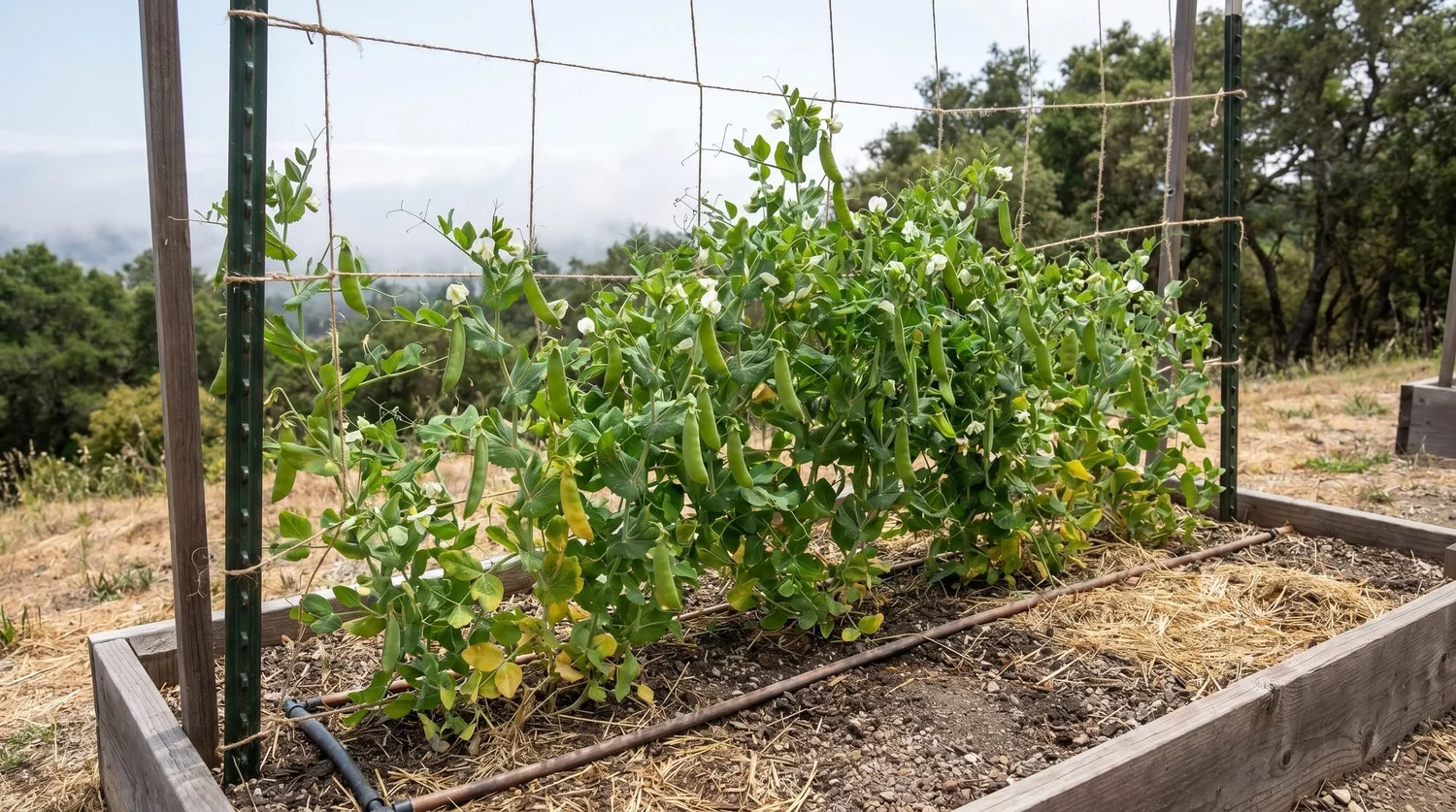
In the warm, sunny pockets above the fog, peas grow beautifully too. The one difference that matters is heat. Time your sowings to dodge the late-spring warm spell and the banana belt gives you a clean, productive crop.
Quick verdict: Good fit. The banana belt is sunnier and warmer than the fog belt, which means faster growth and excellent flavor, but a shorter spring window before warm afternoons shut pod set down. Fall and winter sowings are where this microclimate shines for peas.
Why peas work here, with one caveat
The banana belt sits above the marine layer in the sun belts and hills of Santa Cruz, Soquel, and Aptos. It collects more heat and light than the fog belt while keeping the county's mild nights, which makes it the best all-round growing pocket in the area. Peas respond to that warmth with quick, vigorous growth and sweet pods. The caveat is the same warmth: this microclimate gets a late-spring warm spell that the fog belt mostly escapes. Once afternoons settle into the upper 70s and 80s, pea flowers stop setting pods and the plants fade. So you plan your pea season to be finishing up, not just starting, when that heat arrives.
When to plant in the banana belt
Frost reference: light frost is possible on clear, still nights in the hill pockets, more so than on the immediate coast, but it is brief and rarely damages established peas. The bigger date to watch is the front end of the warm season. A March sowing here cuts it close, because the plants must mature and crop before the late-spring heat. Move your main planting to fall and you sidestep the problem entirely. For frost timing, see understanding frost dates in Santa Cruz County.
Sun, water, and managing the heat
Sun: Full sun is fine through fall and winter. For any late planting that will run into warm weather, a spot with some afternoon shade buys you extra productive days before the heat ends pod set.
Water: With more sun and less fog drip than the coast, banana belt beds dry faster. Keep peas evenly moist, especially once they start flowering, because heat stress plus dry soil is what turns pods tough and stringy. Mulch helps hold moisture and keeps roots cool as spring warms up.
Microclimate notes
The banana belt's gift is heat units and sun; its catch for a cool-season crop is that same warmth arriving sooner in spring. Because mildew pressure is lower here than in the fog belt (less standing leaf moisture), you have more variety freedom and can grow the long-vining types that crop for weeks. The trade is that a hot, dry afternoon wind can stress flowering peas, so consistent water matters more than it does on the coast. Treat fall as your prime pea season, when warm soil gives fast germination and the crop matures into the mild heart of winter. For the full picture of this pocket, read our Santa Cruz banana belt guide and the microclimates explainer.
Sugar snap variety traits
- Plump edible pod eaten whole, the sweetest of the pea types.
- The warmer banana belt lets long-vining Super Sugar Snap reach full 6-foot size and crop heavily over a long fall.
- For a late spring planting that races the heat, fast bush types like Sugar Ann (about 56 days) finish before the warm spell.
- Mildew pressure is lower here, so disease resistance matters less than days to maturity.
Common pests in this zone
- Aphids: The main banana belt pea pest, especially on warm spring growth tips. Blast with water or release ladybugs before colonies build.
- Birds: Finches and jays target fresh sprouts. Net or cover until plants are established.
- Slugs and snails: Present but lighter than the fog belt, mostly an issue after rain. See our guide to what actually controls slugs.
Common problems and fixes
- Flowers but no pods in late spring: the warm-spell signature. Heat above the upper 70s stops pod set. Plant earlier or, better, shift your main crop to fall.
- Tough, stringy pods: heat and dry soil during pod fill. Keep water steady and pick young.
- Sudden fade in May: normal end of the spring crop as warmth arrives. This is your cue that peas are a fall and winter crop in the banana belt.
Companion crops
Peas grow well next to carrots, lettuce, spinach, and radishes, all of which suit the banana belt's cool months. As legumes they leave the soil richer for a leafy or fruiting crop to follow in the warm season. Avoid planting peas with onions, garlic, or shallots, which compete poorly with them.
Harvesting
Harvest sugar snaps when the pods are full and round but still bright and crisp, roughly a week after the flower opens. In the banana belt's warmth they fill fast, so check daily once they start. Pick often to keep the plant flowering, and prioritize getting the crop in before a warm stretch, because heat turns the last pods starchy quickly. Pods that have gone tough are still fine shelled and cooked.
Local tip: Make fall your main pea planting and treat spring as a bonus. Sow in late September into still-warm soil for fast germination, and you will harvest through the mild winter while the plants enjoy the season they want. Any spring sowing should go in by early March so it crops before the late-spring warm spell shuts pod set down.
Where to get seeds: For varieties that do well in our climate, we like Seeds Now, a California company selling non-GMO, open-pollinated, and heirloom seed. (Affiliate link, see our disclosure.)
Frequently asked questions
Why do my banana belt peas flower but never make pods?
Almost always heat. When afternoons climb into the upper 70s and 80s, pea flowers stop setting pods. Plant earlier in spring, or shift your main crop to fall when the season cools instead of warms.
Is fall or spring the better time to plant peas here?
Fall, clearly. A late-September sowing germinates fast in warm soil and matures into mild winter, while a spring crop is racing the late-spring heat. Spring works only if you sow by early March.
Do I get less mildew than coastal gardeners?
Generally yes. Above the fog, leaves stay drier, so powdery mildew is a smaller problem and you have more freedom to grow long-vining varieties.
Should I give peas afternoon shade in the banana belt?
Only for a late planting that will run into warm weather. Through fall and winter, full sun is ideal. A touch of afternoon shade buys a spring crop a few extra productive days before the heat.
