

Quick-Harvest Vegetables for Impatient Santa Cruz Gardeners
A few of the product links in this guide are affiliate links. If you buy through one, Ambitious Harvest may earn a small commission at no extra cost to you, which helps keep these guides free. We only point to gear we would use in our own Santa Cruz garden. As an Amazon Associate, we earn from qualifying purchases. Read our full disclosure.
One of the hardest parts of gardening is waiting. You plant seeds, water faithfully, watch tiny sprouts emerge, and then wait some more. For new gardeners especially, those long weeks between planting and harvest can feel endless.
The good news for Santa Cruz County gardeners: our mild, Mediterranean climate lets us grow some of the fastest vegetables around, and we can grow them nearly year-round. While your tomatoes are still setting fruit, you can be harvesting salads.
These seven vegetables go from seed to harvest in 60 days or less (many much faster). They're perfect for beginning gardeners who need early wins, late-season planting when you realize it's already July, filling gaps between slower crops, and getting kids excited about gardening.
1. Radishes: The 25-Day Wonder
Days to harvest: 22 to 30 days
Radishes actually prefer our cool coastal conditions. They get spicy and bolt quickly in hot weather, but in Aptos, Santa Cruz, and other foggy areas, you can grow them almost year-round.
Radishes are the ultimate beginner vegetable. They germinate in 3 to 5 days (instant gratification), grow visibly larger every day (kids love this), and are ready to harvest before most other crops have even hit their stride.
Best Varieties for Speed
Cherry Belle: Classic round red radish, ready in 22 days (source)
French Breakfast: Oblong, mild flavor, 25 days
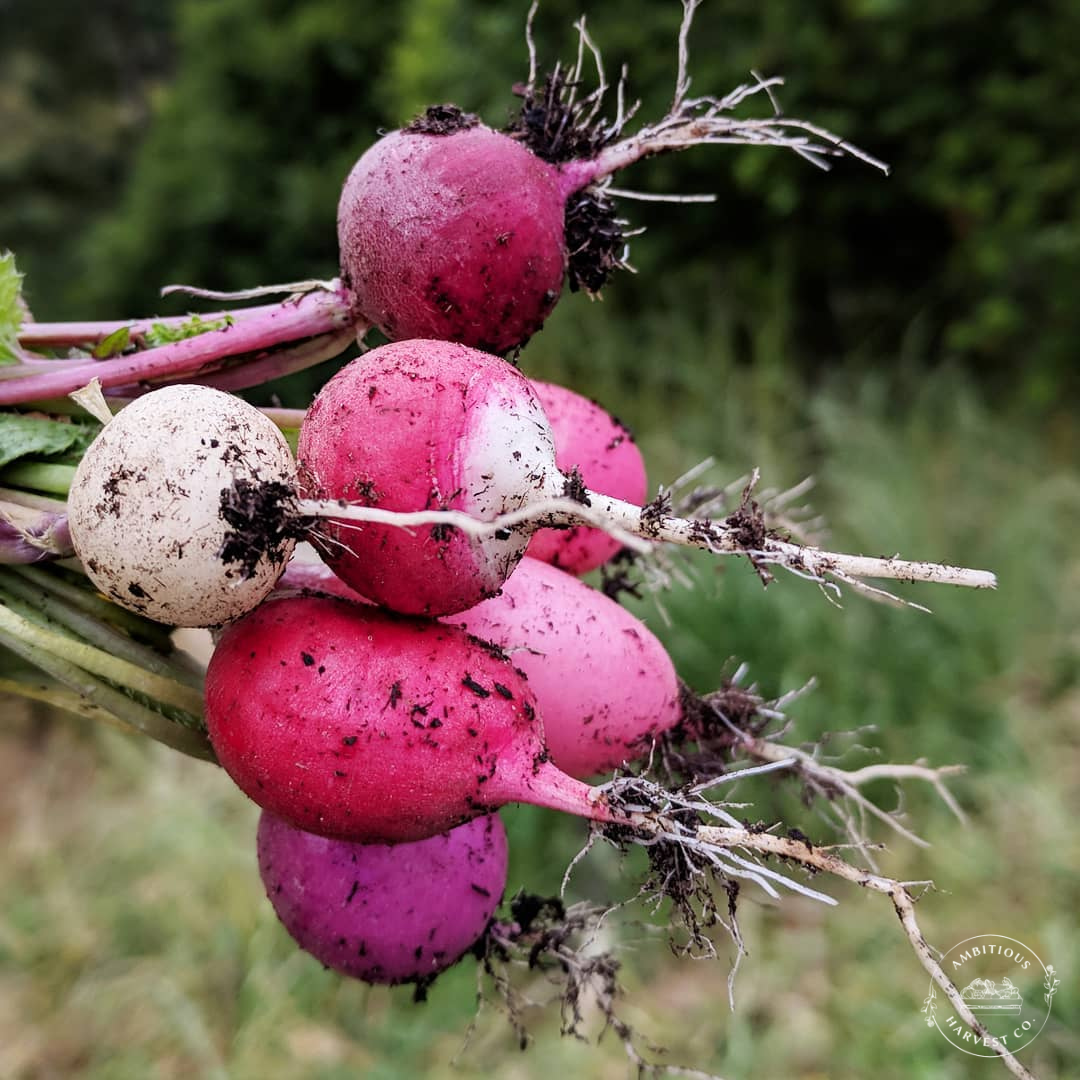
Easter Egg: Mix of colors, 28 days (Johnny's Seeds)
Growing Tips
Sow seeds directly in the garden about half an inch deep and 1 inch apart. Thin to 2 inches apart once seedlings emerge (eat the thinnings in salads). Keep soil consistently moist for the best texture. Harvest promptly when roots reach golf-ball size, as they turn woody and hollow if left too long.
Local timing: Plant radishes from September through May in coastal areas. Inland gardeners in Watsonville and Scotts Valley should avoid the hottest summer months.
2. Arugula: Peppery Greens in 30 Days
Days to harvest: 21 to 40 days (baby leaves to full size)
Arugula thrives in cool weather and tolerates our coastal fog beautifully. According to DripWorks growing guides, arugula can be harvested about 30 to 45 days after planting, with baby greens ready in 3 to 4 weeks. It's one of the few salad greens that actually has flavor, adding a peppery kick to otherwise bland salad mixes.
You can start harvesting baby arugula leaves at just 21 days. Let plants grow larger for more substantial harvests, or keep cutting and they'll keep producing for weeks.
Best Varieties for Speed
Astro: Fast-growing, mild when young, ready in 21 days for baby leaves
Rocket (standard arugula): Classic peppery flavor, 30 to 40 days
Sylvetta (wild arugula): Slower but more heat-tolerant, deeply lobed leaves
Growing Tips
Direct sow seeds a quarter inch deep, scattered or in rows. Thin to 4 to 6 inches for full-size plants, or leave closer for baby leaf harvests. Cut outer leaves and let the center continue growing for multiple harvests. Succession plant every 2 to 3 weeks for a continuous supply.
Local timing: Best from September through May. In foggy coastal areas like Aptos and Santa Cruz, you can push into early summer. Bolt-resistant varieties extend the season.
3. Lettuce: Custom Salads in 30 to 45 Days
Days to harvest: 21 days (baby leaf) to 45 to 60 days (full heads)
Our coastal fog zone is basically lettuce paradise. While inland gardeners fight bolting in summer heat, coastal Santa Cruz County can grow lettuce nearly year-round.
Leaf lettuces are fastest, letting you harvest baby leaves in just three weeks. Head lettuces take longer but are still relatively quick compared to fruiting vegetables.
Best Varieties for Speed
Salad Bowl (leaf): Ready in 28 days for baby leaves, looseleaf type
Black Seeded Simpson: Light green, frilly leaves, baby in under 30 days (Heirloom Organics guide)
Little Gem (romaine): Small, sweet heads, 45 to 50 days
Buttercrunch (butterhead): Tender heads, 55 days
Growing Tips
Start seeds indoors or direct sow. For baby lettuce, scatter seeds thickly and harvest with scissors when leaves are 3 to 4 inches tall. For heads, thin to 8 to 12 inches apart. Keep soil consistently moist. Mulch to keep roots cool in warmer weather.
Local timing: Plant September through April for easiest growing. In coastal fog zones, you can grow lettuce through June or even July with shade cloth and consistent water.
4. Spinach: Nutrient-Dense in 40 Days
Days to harvest: 25 to 45 days
Spinach loves cool weather and hates heat, making our foggy coast ideal. According to UNH Extension, Bloomsdale Long Standing spinach matures in 40 to 48 days. It's packed with more nutrients than lettuce, giving you more nutritional bang for your garden space.
True spinach grows best in our cooler months. For summer spinach alternatives, try New Zealand spinach or Malabar spinach (not true spinach but taste similar and handle heat).
Best Varieties for Speed
Bloomsdale Long Standing: Classic savoy type, 28 to 45 days
Space: Smooth leaves, good for baby spinach, 25 to 40 days
Tyee: Bolt-resistant, 35 to 45 days
Growing Tips
Direct sow half an inch deep, 1 inch apart. Thin to 4 to 6 inches for full-size plants. Harvest outer leaves continuously or cut the whole plant. Succession plant every 2 to 3 weeks. Very cold tolerant and can overwinter in Santa Cruz County.
Local timing: Best from September through April. Plant in part shade for the longest season. Bolts quickly once days get long and warm.
5. Green Onions (Scallions): 60 Days from Seed
Days to harvest: 50 to 60 days from seed, or instant from sets or transplants
Green onions grow year-round in our mild climate. They're one of the few crops that does well in both summer and winter, though they grow faster in the warmer months.
A quick hack: Buy a bunch of green onions from the grocery store, use the green tops, and plant the white root ends in your garden. They'll regrow and give you multiple harvests. According to Seedphony's growing guide, regular harvesting encourages new growth.
Best Varieties
Evergreen Hardy White: Standard bunching onion, 60 days
Tokyo Long White: Longer white stems, 60 to 80 days for full size
Red Beard: Red-tinged variety, 60 days
Growing Tips
Start from seed (slow but cheapest), transplants (faster), or grocery store roots (fastest). Plant in clusters of 4 to 6 for bunching. Harvest by pulling whole plants or cutting green tops and letting them regrow. Extremely low maintenance once established.
Local timing: Plant year-round in Santa Cruz County. Growth slows in winter but plants survive and resume growing in spring.
6. Asian Greens: Bok Choy, Tatsoi, and Mizuna in 30 to 45 Days
Days to harvest: 21 days (baby) to 45 days (full size)
Asian greens are fast, productive, and perfectly suited to our cool coastal climate. According to Canberra Organic Growers, baby leaves can be harvested as early as 3 to 4 weeks after sowing, while mature plants typically take 30 to 60 days. They're a nice change from standard lettuce and work great in stir-fries, soups, and salads.
These greens bolt quickly in heat, so they're best for fall through spring planting. Baby harvests are fastest and most tender.
Best Varieties
Tatsoi: Spoon-shaped leaves, 21 days baby, 45 days full
Mei Qing Choi (baby bok choy): Compact, 30 to 35 days
Mizuna: Feathery leaves, mild flavor, 21 days baby
Komatsuna: Spinach-like, very cold tolerant, 35 days
Growing Tips
Direct sow or transplant. For baby greens, plant thickly and harvest young. For full-size heads, thin to 6 to 8 inches apart. Keep soil moist. Very cold tolerant, making them perfect for fall and winter gardens.
Local timing: Plant August through March for best results. Some varieties can handle light frost, extending the season even further.
7. Bush Beans: 50 to 60 Days to Fresh Beans
Days to harvest: 50 to 60 days
While not quite as fast as greens, bush beans are the quickest path to a substantial vegetable harvest. They don't need trellising, produce heavily for several weeks, and actually improve your soil by fixing nitrogen.
Bush beans are warm-season crops, so they're your fast option when it's too hot for the cool-season speedsters above.
Best Varieties
Provider: Very reliable, 50 days, tolerates cool soil
Contender: Heat and cold tolerant, 50 days
Royal Burgundy: Purple beans (turn green when cooked), 55 days
Dragon Tongue: Beautiful streaked beans, 50 to 60 days
Growing Tips
Direct sow after soil warms to 60°F (mid-April inland, May coastal). Plant 1 inch deep, 3 inches apart, in rows or blocks. Don't presoak seeds. Harvest regularly to keep plants producing. Each plant produces for about 3 weeks, so succession plant for longer harvests.
Local timing: Plant April through July for summer harvests. In warmer areas like Watsonville, you can push into August for a fall crop. Coastal gardens may struggle with beans; try the warmest, sunniest spot you have.
Creating a Continuous Quick-Harvest Garden
The fastest path to a constant supply of homegrown vegetables is succession planting: starting new batches every 2 to 3 weeks rather than planting everything at once.
Every 2 weeks (fall through spring): Radishes (small patch), arugula or lettuce (small patch)
Every 3 weeks (summer): Bush beans (short row), green onions (small cluster)
Monthly (fall through spring): Asian greens, spinach
This approach means you're always harvesting something, never drowning in more radishes than you can eat, and keeping your garden continuously productive.
Where to Buy Seeds and Starts Locally
For the freshest seeds and local advice on what grows best in your specific microclimate, visit these Santa Cruz County nurseries:
San Lorenzo Garden Center in Santa Cruz carries a great selection of vegetable seeds and starts
Dig Gardens in Santa Cruz is excellent for organic starts and local growing advice
Renee's Garden Seeds is based right here in Felton and offers seeds bred for flavor and home gardens
Mountain Feed & Farm Supply in Ben Lomond carries organic seeds and supplies for San Lorenzo Valley gardeners
Check our Garden Events Calendar for upcoming seed swaps and plant sales where you can find unique varieties.
Frequently Asked Questions About Quick-Harvest Vegetables
What's the absolute fastest vegetable I can grow?
Radishes and arugula baby leaves tie for fastest, both harvestable in about 21 to 25 days. Microgreens (not covered here) are even faster at 7 to 14 days but require more specific setup.
Can I grow quick vegetables in containers?
Absolutely. Radishes, lettuce, arugula, spinach, Asian greens, and green onions all grow well in containers. Use at least 6 inches of depth for radishes, 4 to 6 inches for greens. Bush beans need larger containers (at least 12 inches deep).
I planted in July and nothing is growing fast. What went wrong?
Most quick-harvest vegetables are cool-season crops that struggle in summer heat. If you're planting in summer, focus on bush beans (which like warmth) and wait until September to restart your greens.
Why do my radishes taste bitter and woody?
They're either too old (harvest at golf-ball size, not larger) or stressed from inconsistent watering or excessive heat. In summer, grow them in part shade and keep soil consistently moist.
Can I grow these vegetables year-round in Santa Cruz?
Most quick vegetables prefer cool weather, so they grow best from fall through spring. Green onions are the exception, growing year-round. In foggy coastal areas, you can extend the lettuce and greens season into early summer.
How do I know when radishes are ready to harvest?
Look for the top of the radish shoulder pushing above the soil line. When it's about 1 inch in diameter, pull one to check. They should be firm and crisp, not spongy.
What if I want quick-harvest vegetables but also want tomatoes?
Plant both! Quick vegetables make excellent use of space between slow-growing plants. Plant lettuce around your tomato transplants; you'll harvest the lettuce before the tomatoes need the space. See our Companion Planting Guide for more interplanting ideas.
Which quick vegetables grow best in shady areas?
Lettuce, spinach, arugula, and Asian greens actually prefer some shade, especially in warmer weather. They'll grow a bit slower but are less likely to bolt. Bush beans need full sun. If you're gardening under redwoods, check out our guide to Growing Under the Redwoods.
Free Gardening Resources
Download these guides from our Garden Toolkit to help plan your quick-harvest garden:
Seasonal Planting Calendar (PDF) Know exactly when to plant each quick vegetable in Santa Cruz County
Vegetables by Season Chart (PDF) Plan your quick-harvest crops around the seasons
Find all our free guides in Your Garden Toolkit.
Your First Harvest Is Closer Than You Think
You don't have to wait all summer for homegrown vegetables. With these quick-harvest crops, you can be eating from your garden in less than a month. Start with radishes and arugula for the fastest wins, then build out your quick-harvest repertoire from there.
The confidence you gain from these early successes will carry you through the longer waits for tomatoes and peppers. Fresh-picked radishes and homegrown salad might become your favorites anyway.
Check today's conditions on our Garden Conditions Dashboard to see if it's a good day to get planting.
