What to Plant Together (and What to Keep Apart) in Raised Beds
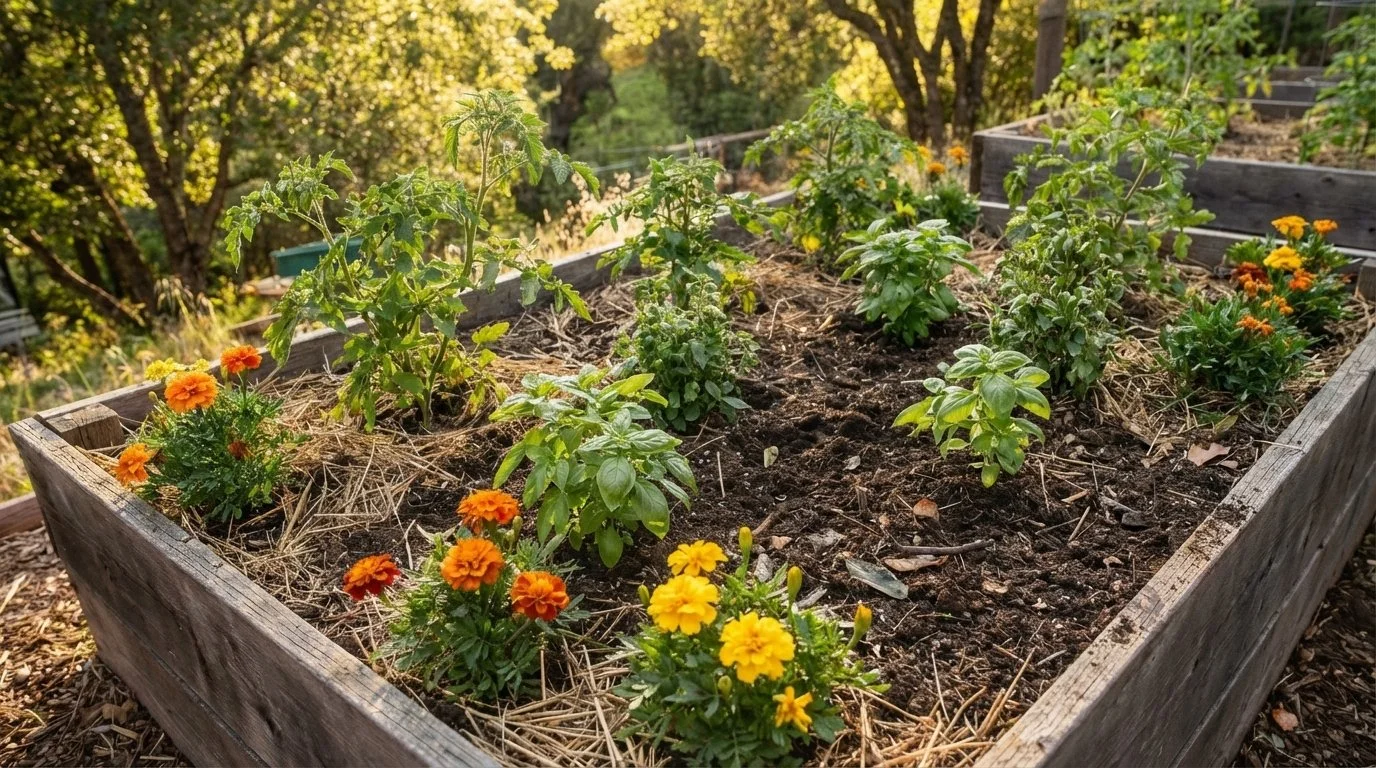
Raised beds are the most popular way to grow vegetables in Santa Cruz County, and for good reason. They give you control over soil quality, improve drainage, warm up faster in spring, and keep your garden organized. But the limited space in a raised bed also means that every plant is growing in close proximity to its neighbors, which makes companion planting both more important and more impactful than it is in a sprawling in-ground garden.
Companion planting in raised beds is about putting the right plants next to each other so they help (or at least do not hinder) one another. Some combinations improve pest resistance, share nutrients efficiently, or make better use of vertical and horizontal space. Other combinations compete for the same resources or actively inhibit each other's growth. This guide covers the best pairings and the combinations to avoid, all tailored for the raised bed context and our coastal California growing conditions.
Key Takeaway: In a raised bed, every square foot matters. Good companion planting increases your yield per square foot while reducing pest and disease pressure. Bad pairings waste space and create problems.
How Does Companion Planting Work in Raised Beds?
Companion planting works through several mechanisms, and understanding them helps you make your own pairing decisions rather than relying solely on charts.
Space Sharing
Plants with different growth habits can share the same bed without competing. A tall, upright plant (like tomatoes on a stake) leaves ground-level space open for a low-growing companion (like basil or lettuce). A deep-rooted crop (like tomatoes or carrots) does not compete with a shallow-rooted neighbor (like lettuce or radishes) because they access nutrients from different soil depths.
Pest Confusion
Research from UC Davis has shown that diverse plantings confuse pest insects that locate their host plants by sight or smell. A UC Master Gardeners review of companion planting science confirms that polyculture plantings reduce pest pressure compared to monocultures. A bed containing a mix of crops is harder for specialized pests to find than a bed of a single crop. Aromatic herbs (basil, cilantro, dill) planted among vegetables can mask the scent signals that attract pest insects to their preferred hosts.
Beneficial Insect Attraction
Flowering companion plants draw beneficial insects into the bed where they prey on garden pests. Sweet alyssum, cilantro, and dill are especially effective at attracting syrphid flies, parasitic wasps, and lacewings when planted directly alongside vegetables. The UC Master Gardener Program of Contra Costa County recommends interplanting flowering herbs with vegetables to build beneficial insect habitat directly in the bed.
Nutrient Sharing
Legumes (beans, peas) fix atmospheric nitrogen through symbiotic bacteria in their root nodules. While the nitrogen is not directly available to companion plants during the growing season (a common myth), it becomes available when legume roots decompose. UC Marin Master Gardeners note that legume cover crops, vetch above all, are the best choice for fixing nitrogen in a vegetable bed.
Allelopathy
Some plants release chemical compounds that inhibit the growth of nearby plants. This is called allelopathy, and it is the reason certain combinations should be avoided. Black walnut trees are the most well-known allelopathic plant (their roots produce juglone, which is toxic to many vegetables), but some common garden plants have milder allelopathic effects that matter in the close quarters of a raised bed.
What Are the Best Companion Planting Combinations for Raised Beds?
Tomatoes + Basil + Sweet Alyssum
This is the classic raised bed trio and it works for good reasons. Basil planted at the base of staked tomatoes fills the ground-level space that would otherwise grow weeds. The aromatic oils in basil may help confuse or repel some tomato pests (though the evidence for this is more anecdotal than scientific). Sweet alyssum planted along the bed edges attracts syrphid flies and parasitic wasps that prey on aphids and tomato hornworms.
Spacing tip: Plant one basil plant between every two tomato plants, 6 to 8 inches from the tomato stem. Line the bed edges with alyssum, planting it 6 inches apart.
Lettuce + Radishes + Carrots
This cool-season trio takes advantage of different growth rates and root depths. Radishes germinate and mature quickly (25 to 30 days), marking the row and loosening the soil before they are harvested. Carrots are slow to germinate and deep-rooted. Lettuce fills the spaces between rows with its shallow roots, shading the soil to keep it cool and moist for the slower crops.
Spacing tip: Sow radishes and carrots in alternating rows, 2 to 3 inches apart. Plant lettuce in the spaces between rows, 8 to 10 inches apart.
Beans + Corn + Squash (The Three Sisters)
The Three Sisters is a traditional Native American planting system that works beautifully in a large raised bed (at least 4 feet by 8 feet). Corn provides a trellis for pole beans. Beans fix nitrogen. Squash covers the ground, suppressing weeds and shading the soil to retain moisture. According to UC ANR, this polyculture system can produce more total food per square foot than any of the three crops grown alone.
Spacing tip: Plant corn in a block of at least 4 rows (for adequate pollination) spaced 12 inches apart. Plant beans 4 to 6 inches from corn stalks after the corn is 6 inches tall. Plant squash at the edges of the bed, giving it room to spread.
Coastal note: On the foggy side of Santa Cruz, corn may not get enough heat to mature reliably. In cooler locations, substitute a sturdy trellis for the corn and grow pole beans on the trellis instead, keeping the squash as the ground cover.
Brassicas + Dill + Onion Family
Broccoli, kale, cabbage, and cauliflower benefit from two types of companions. Dill (and other umbelliferous herbs like cilantro) attracts parasitic wasps that prey on cabbage worms and aphids. Onion family plants (onions, garlic, chives) planted nearby may help repel some brassica pests through their strong scent, though the evidence is primarily observational rather than experimental.
Spacing tip: Plant one dill or cilantro plant at each corner of the bed. Interplant green onions or chives between brassica plants, 4 to 6 inches from the brassica stems.
Peppers + Carrots + Oregano
Peppers are upright and somewhat compact, leaving room at ground level for a companion. Carrots are deep-rooted and do not compete with peppers' shallow to moderate root system. Oregano, planted at the bed edges, provides ground cover, attracts beneficial insects when flowering, and thrives in the same warm, well-drained conditions that peppers prefer.
Cucumbers + Sunflowers + Nasturtiums
Sunflowers provide a natural trellis for climbing cucumber varieties and attract pollinators essential for cucumber fruit set. Nasturtiums planted at the bed edges serve as a trap crop for aphids (aphids preferentially colonize nasturtiums over cucumbers) and their trailing habit covers bare soil.
Which Plants Should You Not Plant Together in Raised Beds?
Some plant combinations either compete too directly or actively harm each other. In the close quarters of a raised bed, these negative interactions are amplified.
Tomatoes and Brassicas
Tomatoes and brassicas (broccoli, cabbage, cauliflower, kale) are both heavy feeders that compete aggressively for the same nutrients, especially nitrogen. They also attract different pest complexes, and managing pests on one can interfere with the other. In a small raised bed, the competition is intense enough to reduce yields of both crops. Give them separate beds.
Beans and Onion Family
Alliums (onions, garlic, shallots, leeks) inhibit the growth of beans and peas. The mechanism is not fully understood, but the effect is well-documented. According to multiple university extension sources, beans and peas should not be planted directly adjacent to onions, garlic, or other alliums. Keep them in separate beds or at opposite ends of a long bed with other crops between them.
Fennel and Most Vegetables
Fennel is allelopathic to many common vegetables, including tomatoes, beans, and brassicas. It releases compounds from its roots that inhibit the growth of nearby plants. Grow fennel in its own container or in a dedicated spot away from your vegetable beds. This is one of the most reliable negative companion planting interactions and applies to raised beds especially because roots are in such close proximity.
Potatoes and Tomatoes
Both are in the nightshade family (Solanaceae) and share the same diseases, including early blight, late blight, and verticillium wilt. Planting them in the same bed or adjacent beds increases disease pressure on both crops. UC IPM advises against planting tomatoes in the same ground year after year, since rotating to a nonhost crop can significantly reduce pest populations, and its rotation table calls for one to three years in nonsolanaceous crops depending on the disease.
Dill and Carrots
Despite both being in the carrot family (Apiaceae), dill and carrots should not be planted close together. Dill can cross-pollinate with carrots if both go to flower, producing off-type seed. More practically, they compete for the same nutrients and root space. If you want both in the same bed, keep them at least 2 to 3 feet apart or grow the dill in a container nearby.
Multiple Squash Family Plants in One Bed
Squash, cucumbers, and melons are all in the cucurbit family and are heavy feeders with extensive root systems and large leaves. Planting multiple cucurbits in the same raised bed leads to intense competition for nutrients, water, and light. They also share pests and diseases (powdery mildew, cucumber beetles, squash vine borers). Give each cucurbit its own bed, or limit a bed to one variety with non-cucurbit companions.
Seasonal Raised Bed Layouts for Santa Cruz County
Companion planting is most effective when planned as part of a seasonal succession. Here are sample layouts for a standard 4-foot by 8-foot raised bed through the coastal growing year.
Spring (March through May): Cool-Season Bed
Center: 2 broccoli or cauliflower plants, spaced 18 inches apart
Between brassicas: 2 to 3 cilantro plants (for beneficial insect attraction)
One end: Snap peas on a short trellis
Other end: Mixed lettuce and radishes in rows
Edges: Green onions or chives, 4 inches apart
Summer (May through September): Warm-Season Bed
Back row (north side): 3 to 4 tomatoes on stakes or cages, spaced 24 inches apart
Front of tomatoes: Basil plants between each tomato, 8 inches from stems
Bed edges: Sweet alyssum, planted 6 inches apart along all edges
One corner: 1 dill plant (let it flower for beneficial insects)
Fall (September through November): Transition Bed
Center: Kale plants, spaced 18 inches apart (these will produce through winter)
Between kale: Garlic cloves planted in October (harvest the following June)
Open spaces: Lettuce and spinach for fall salads
Edges: Calendula (blooms through mild winters, attracts early-season beneficials)
Winter (November through February): Cover Crop or Overwintering Bed
Option A: Sow a cover crop of fava beans and crimson clover over the entire bed. This fixes nitrogen, prevents erosion, and suppresses weeds. Chop and turn in 3 to 4 weeks before spring planting.
Option B: Continue harvesting kale, chard, and overwintering lettuce. Fill any empty spaces with a cover crop mix.
Companion Planting Tips for Small Raised Beds
If your beds are smaller than 4 by 8 feet (which is common in Santa Cruz yards, patios, and small lots), space is even more limited. Here is how to make companion planting work in tight spaces.
Think Vertically
Trellised crops (pole beans, cucumbers, peas) use vertical space and leave ground-level room for low-growing companions. A trellis on the north side of the bed provides vertical growing space without shading the rest of the bed.
Use Edges and Corners
The edges and corners of raised beds are prime real estate for companion plants that do not need much space: herbs (basil, cilantro, chives), small flowers (alyssum, calendula, marigolds), and green onions. These plants would waste space in the center of the bed but are perfectly useful along the perimeter.
Succession Plant
In a small bed, temporal companions (plants that grow in the same space at different times) are as important as spatial companions. Plant quick crops (radishes, baby lettuce, green onions) between slower-growing plants (tomatoes, peppers, squash) that have not yet filled their space. By the time the main crop needs the room, the quick crop has already been harvested.
Do Not Overcrowd
The biggest companion planting mistake in small beds is cramming in too many plants. Crowded plants compete for light, water, and nutrients, and poor air circulation encourages disease. It is better to grow fewer plants well than to pack in extra plants that all underperform. Follow the spacing recommendations on seed packets and plant tags, even when it feels like you are wasting space. Mature plants will fill in.
Where to get seeds: For varieties that do well in our climate, we like Seeds Now, a California company selling non-GMO, open-pollinated, and heirloom seed. (Affiliate link, see our disclosure.)
Frequently Asked Questions
Do marigolds really repel pests?
French marigolds (Tagetes patula) have some documented pest-suppressive effects, but the evidence is more nuanced than the popular claim that "marigolds repel everything." UC research has shown that marigold roots suppress certain soil nematodes when the plants are grown as a cover crop and tilled in. As a companion plant, marigolds attract beneficial insects and may help confuse some flying pests through scent masking, but they are not a reliable standalone pest control strategy. Plant them for their beneficial insect attraction rather than as a pest repellent.
Can I grow herbs and vegetables in the same raised bed?
Absolutely. Most culinary herbs (basil, cilantro, dill, parsley, chives, oregano) make excellent companion plants for vegetables. They attract beneficial insects, use relatively little space, and many thrive in the same growing conditions as vegetables. The exceptions are mint (too aggressive; grows in containers only) and fennel (allelopathic to most vegetables; grow separately).
How close do companion plants need to be to have an effect?
For pest confusion and beneficial insect attraction, companion plants need to be within 2 to 3 feet of the crop they are supporting. In a raised bed, this distance is almost always covered. For allelopathic effects (like fennel), the zone of influence can extend several feet through the soil, which is why problematic plants should be kept in entirely separate beds.
Does companion planting really work, or is it just gardening folklore?
Some companion planting claims are well-supported by research (like sweet alyssum attracting syrphid flies that reduce aphid populations, or the Three Sisters polyculture improving total yields). Others are based on tradition and observation with limited scientific evidence. The most reliable companion planting strategies are those backed by university research, particularly UC and land-grant university extension publications, which is what this guide focuses on.
What is the best companion planting reference for California?
UC ANR publications and UC IPM are the most reliable sources for California-specific companion planting information. The Xerces Society has excellent resources on using plants to attract beneficial insects. Be cautious of popular companion planting charts that circulate online without citations, as many repeat unverified claims.
Plan Your Best Raised Bed Garden
Related Reading
The Complete Guide to Companion Planting in California Gardens
Container Gardening: Growing Vegetables, Herbs, and Flowers in Pots
For free printable garden planning resources, visit Your Garden Toolkit.