

Cut Flowers for Pollinators: Beauty That Gives Back
A few of the product links in this guide are affiliate links. If you buy through one, Ambitious Harvest may earn a small commission at no extra cost to you, which helps keep these guides free. We only point to gear we would use in our own Santa Cruz garden. As an Amazon Associate, we earn from qualifying purchases. Read our full disclosure.
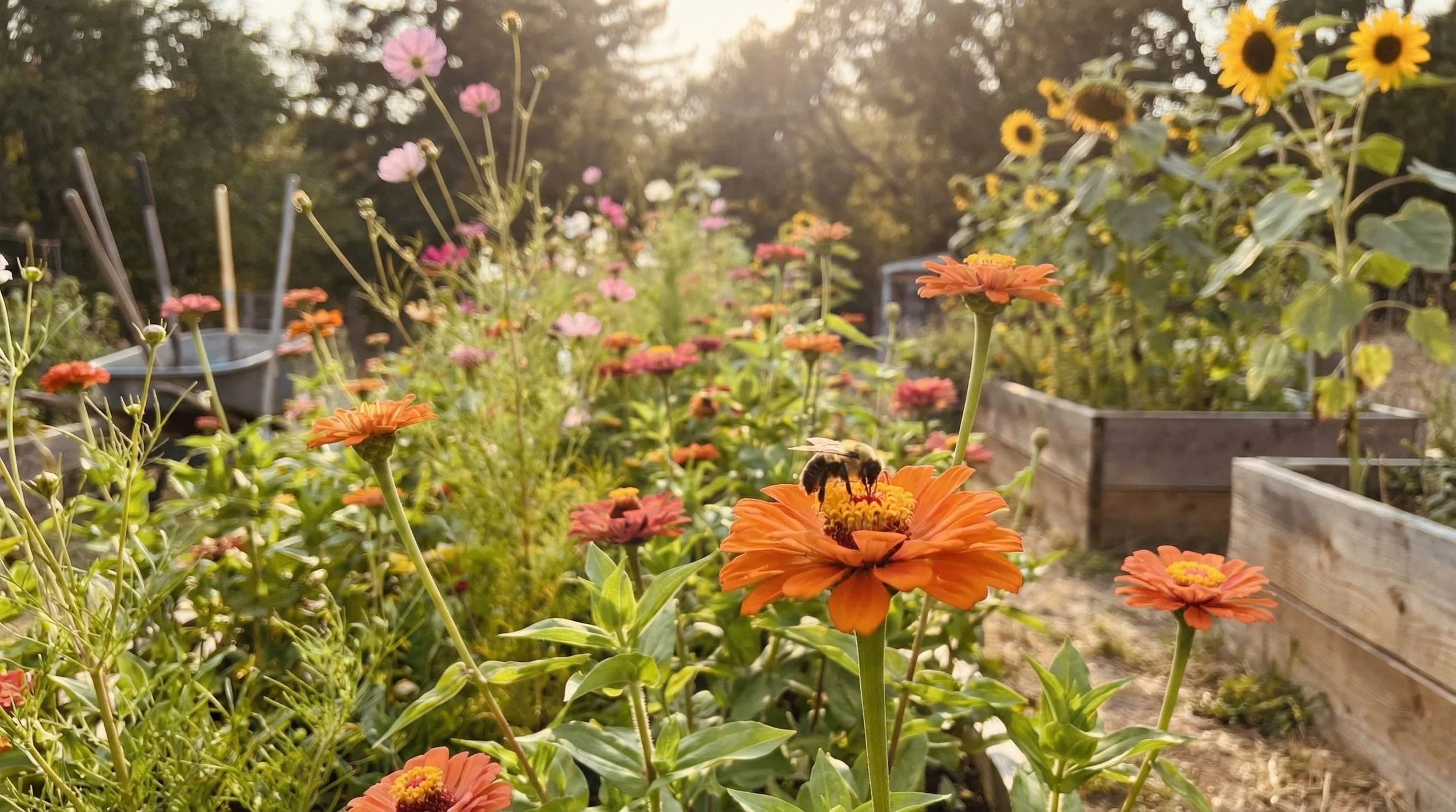
A cutting garden can do double duty: filling your vases with beautiful blooms while supporting bees, butterflies, and other pollinators. In fact, many of the best cut flowers are also pollinator magnets, creating a garden that's both productive and ecologically valuable.
For Santa Cruz County gardeners, growing pollinator-friendly cut flowers is particularly meaningful. Our region supports diverse native bees, monarch butterflies, and other important pollinators that need forage throughout the year. If you are new to pollinator-friendly gardening in California, start with the basics before we get to cut flower varieties.
According to UC ANR Publication 8498, roughly 75% of the world's flowering plants depend on animal pollinators, making pollinator-supporting gardens an essential part of California horticulture.
This guide covers cut flowers that pollinators love, strategies for supporting pollinator health while maintaining bouquet production, and how to create a garden that serves both purposes beautifully.
Why Combine Cut Flowers and Pollinator Support?
Mutual benefits:
Most cut flowers produce nectar and pollen that pollinators need
Regular cutting keeps plants blooming longer (more food for pollinators)
Diverse flower plantings provide varied forage
Cutting gardens often include flowers throughout the growing season
The key insight: You don't have to choose between bouquets and bees. The same flowers often serve both purposes. The trick is growing enough to share.
Cosmos (Cosmos bipinnatus)
Bees and butterflies adore cosmos. The open, daisy-like flowers make nectar and pollen easily accessible. Single-flowered varieties are better for pollinators than doubles.
Pollinators attracted: Bees, butterflies, hoverflies
Pollinator-friendly tip: Let some flowers go to seed for late-season forage
Sunflowers (Helianthus annuus)
Major pollinator draw, especially for bees. A single sunflower head can feed hundreds of bees as the tiny florets open progressively across the face.
Pollinators attracted: Bees (many species), birds (seeds)
Pollinator-friendly tip: Choose pollen-rich varieties, not pollen-free cutting types
Zinnias (Zinnia elegans)
Butterflies particularly love zinnias. The flat landing platforms are perfect for their feeding style. Single and semi-double flowers provide better access than fully double types.
Pollinators attracted: Butterflies, bees
Pollinator-friendly tip: Plant a mix of single and double varieties
Scabiosa/Pincushion Flower (Scabiosa spp.)
One of the best pollinator flowers, period. The pincushion center is covered with tiny florets that bees and butterflies work enthusiastically.
Pollinators attracted: Bees, butterflies, especially bumble bees
Pollinator-friendly tip: Annual and perennial forms available; both excellent
Yarrow (Achillea spp.)
Flat-topped flower clusters provide landing pads for many pollinators. Native to California; supports native bees especially well.
Pollinators attracted: Native bees, wasps, beneficial insects
Pollinator-friendly tip: Allow some to bloom in place (not cut) for longer pollinator access
Dahlias (Dahlia spp.)
Single and collarette dahlia forms are excellent for pollinators. The open centers expose pollen and nectar. Fully double "ball" types are less useful for pollinators.
Pollinators attracted: Bees, bumble bees, hoverflies
Pollinator-friendly tip: Choose open-centered varieties; leave some flowers for pollinators
Coneflowers (Echinacea spp.)
Native prairie flowers beloved by bees and butterflies. The prominent cone provides abundant nectar and pollen as florets open from outside in.
Pollinators attracted: Bees, butterflies, birds (eat seeds)
Pollinator-friendly tip: Leave spent flowers for seed; perennial so returns each year
Asters (Symphyotrichum spp.)
Critical late-season forage when little else is blooming. Our native California asters support specialist native bees.
Pollinators attracted: Native bees, butterflies (especially late-season migrating monarchs)
Pollinator-friendly tip: Don't cut all the flowers; asters bloom when pollinators need them most
Bachelor's Buttons/Cornflowers (Centaurea cyanus)
Simple, open flowers that bees love. Easy to grow and produces abundantly.
Pollinators attracted: Bees, butterflies
Pollinator-friendly tip: Let some self-sow for next year
Sweet Peas (Lathyrus odoratus)
Bumble bees are particularly adept at working sweet pea flowers. The closed flower structure requires strong pollinators to access nectar.
Pollinators attracted: Bumble bees
Pollinator-friendly tip: Fragrant heirloom varieties produce more nectar than many modern types
California Native Cut Flowers
Our native flowers support native pollinators that evolved alongside them:
California poppies (native bees, especially mining bees)
Clarkia/farewell-to-spring (specialist bees depend on these)
Gilia (tiny native bees)
Buckwheat (supports 100+ native bee species, per UC Marin Master Gardeners)
Flowers to Avoid (or Modify) for Pollinator Gardens
Pollen-free varieties: Many cut flowers have been bred without pollen to prevent staining. These are useless to bees that collect pollen. Examples include many commercial sunflowers, some lilies, and various "enhanced" varieties.
What to do: Choose pollen-rich alternatives, or grow some pollen-free for cutting and some pollen-rich for pollinators.
Fully double flowers: Heavy double flowers often have no accessible pollen or nectar. The extra petals replace the reproductive parts.
What to do: Include single and semi-double varieties alongside doubles. Double zinnias are okay for butterflies (they probe into the center), but single forms are better for bees.
Balancing Bouquets and Bees
The 70/30 approach: Cut 70% of blooms; leave 30% for pollinators. This provides plenty of flowers for arranging while ensuring pollinators have continuous forage.
Timing matters:
Cut flowers in early morning before pollinators are active
Leave freshly opened flowers for at least a day before cutting
Never cut the only blooming flower of a variety; leave some for bees
Succession planting bonus: Succession planting for continuous bouquets also provides continuous pollinator forage. Your staggered plantings mean something is always blooming.
Pollinator patches: Consider a "pollinator patch" you don't cut from, planted with the flowers bees love most. This guarantees forage even when you're cutting heavily from other areas.
Let some go: At season's end, stop cutting some plants and let them bloom freely. Late-season forage is crucial for bees preparing for winter.
Pollinator-Friendly Practices
Avoid pesticides:
Use no insecticides in your cutting garden if possible
Bee-toxic pesticides (neonicotinoids, pyrethroids) kill pollinators even in tiny amounts. The UC Master Gardeners recommend eliminating all insecticide use in pollinator gardens
"Bee-safe" pesticides applied to flowers can still harm bees
Use physical pest control (hand-picking, water spray) or organic options (insecticidal soap, neem) as last resorts, applied in evening when bees aren't foraging
Provide water: Pollinators need water, especially on hot days:
A shallow dish with pebbles (so bees don't drown)
A dripping faucet
Wet sand or mud (butterflies "puddle" for minerals)
Provide habitat:
Leave some bare ground for ground-nesting bees
Leave hollow stems standing over winter (bee nesting sites)
Provide brush piles for bumble bee nests
Plant host plants for butterflies (milkweed for monarchs, fennel for swallowtails)
Year-round forage: Plan for flowers throughout the year:
Winter/early spring: Calendula, hellebores (early bee forage when little is available)
Spring: Sweet peas, poppies, larkspur
Fall: Asters, late dahlias, marigolds
Supporting Monarchs
Monarch butterflies migrate through Santa Cruz County and overwinter nearby. Supporting monarchs while growing cut flowers:
Plant milkweed:
Milkweed is the only food source for monarch caterpillars
Native narrow-leaf milkweed (Asclepias fascicularis) is best for our area
Tropical milkweed (A. curassavica) can disrupt migration patterns; avoid or cut back in fall
Provide nectar flowers: Adult monarchs need nectar. Good choices that also make cut flowers:
Zinnias
Cosmos
Lantana
Mexican sunflower (Tithonia)
Asters (critical fall forage for migrating monarchs)
Avoid pesticides: Monarchs are particularly sensitive to pesticides. A butterfly-friendly garden must be chemical-free.
Creating a Pollinator-Friendly Cutting Garden Plan
Sample layout (200 sq ft):
Dedicated pollinator section (not for cutting):
Coneflowers (perennial)
Native California buckwheat
Asters
California poppies
Shared cutting/pollinator section:
Zinnias (cut 70%, leave 30%)
Cosmos
Sunflowers (mix pollen-free for cutting, pollen-rich for bees)
Scabiosa
Bachelor's buttons
Heavy cutting section:
Dahlias (choose open-centered varieties)
Snapdragons
Sweet peas
Where to get flower seeds: For cut-flower and pollinator varieties that do well here, we like Seeds Now, a California company selling non-GMO, open-pollinated, and heirloom seed. (Affiliate link, see our disclosure.)
Frequently Asked Questions
Do cut flowers support pollinators?
Yes, as long as you leave some flowers for them and choose varieties with accessible pollen and nectar. Most traditional cut flowers are also pollinator flowers.
Are pollen-free sunflowers bad for bees?
Pollen-free sunflowers still produce nectar, so they're not useless, but they provide no pollen, which bees need for protein. Grow both pollen-free (for cutting) and pollen-rich (for bees) varieties.
How do I keep bees from bothering me when I cut flowers?
Cut in early morning before bees are active, or in evening when they're returning to their hives. Move slowly and calmly around foraging bees. Bees on flowers rarely sting.
Will cutting flowers hurt pollinator populations?
Not if you leave enough flowers for them. A garden with many flowers being partially harvested supports more pollinators than a lawn. Just don't take everything.
What about neonicotinoid-treated plants from nurseries?
Plants treated with systemic neonicotinoids can harm bees for months or years. Buy from organic nurseries, start from seed, or ask nurseries about their practices.
Do pollinators prefer native flowers?
Some native pollinators have specialized relationships with native flowers. However, many generalist pollinators (honey bees, most bumble bees, many butterflies) happily visit non-native garden flowers. Include both for broadest support.
Free Resources
Download these guides for pollinator-friendly gardening:
Seasonal Planting Calendar: Year-round bloom planning
Companion Planting Guide: Plants that support each other
Visit our Garden Toolkit for more downloadable resources.
Related Articles
Growing a Cut Flower Garden in Santa Cruz County: A Complete Guide
Growing Cosmos in Santa Cruz County
California Natives for Your Garden
