

How to Grow a Sunflower Fort (A Living Playhouse for Kids)
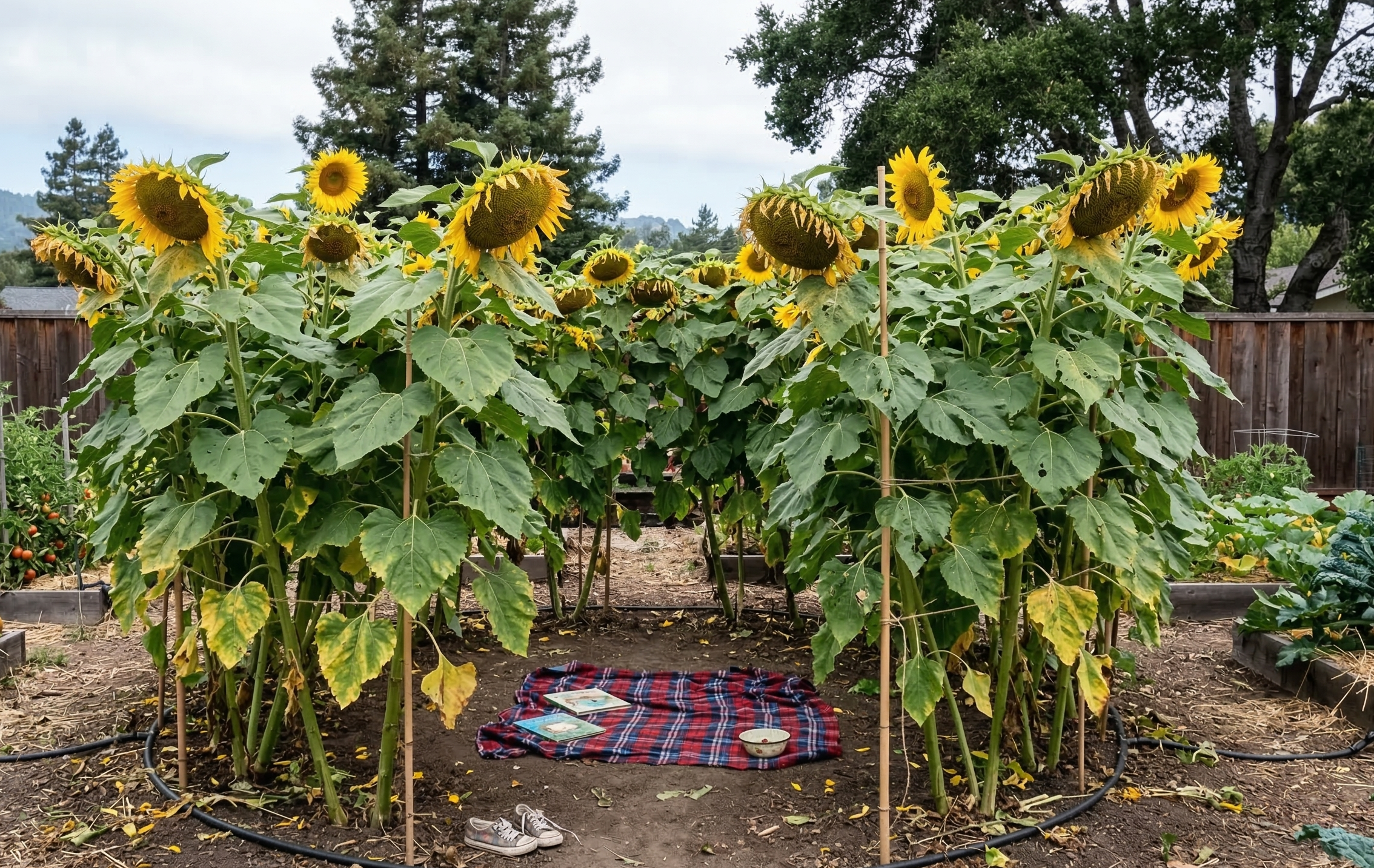
A sunflower fort is exactly what it sounds like: a ring (or square) of tall sunflowers that grow to form the "walls" of a living outdoor room. Kids can sit inside, read books, have picnics, or simply be surrounded by flowers taller than they are. It is one of the most dramatic garden projects you can do with children, and it requires nothing more than seeds, sun, water, and 8 to 10 weeks of patience.
The concept is ancient (gardeners have been creating living structures for centuries), but it is newly popular thanks to its sheer kid appeal. When sunflowers hit 8 to 10 feet tall and the heads are bigger than dinner plates, the fort feels like a secret room made of gold and green. For kids in the 4-to-10 age range, it is genuinely magical.
This guide covers the basic sunflower fort, plus three variations: a bean teepee, a gourd tunnel, and a mini corn maze. All of them grow beautifully in California's warm summers, and all of them give kids a living structure they built themselves. If you are new to gardening with kids, a sunflower fort is one of the best places to start.
Key Takeaway: A sunflower fort takes about 10 weeks from seed to full-sized living playhouse. It uses inexpensive seeds, needs only sun and water, and creates one of the most memorable summer experiences a kid can have in the garden.
How Do You Build a Sunflower Fort?
Choose Your Variety
Not all sunflowers work for a fort. You need tall, single-stem varieties that grow to at least 8 feet. Multi-branching dwarf varieties are beautiful in a flower garden but too short and bushy for a fort. The UC Master Gardener Program of Sonoma County offers a helpful overview of annual and perennial sunflower types, including cultivar recommendations for California gardens.
'Mammoth' (also called 'Russian Mammoth') - The classic. Grows 10 to 14 feet tall with flower heads up to 12 inches across. Single stem per plant. This is the standard choice for sunflower forts.
'American Giant' - Similar to Mammoth but sometimes slightly taller. Massive heads.
'Kong' - Can reach 14 to 16 feet in ideal conditions. The tallest commonly available variety. Thick stems that resist wind.
'Skyscraper' - Grows 10 to 12 feet. Bright yellow petals, dark center. Reliable for fort-building.
A single packet of Mammoth sunflower seeds (about $3 to $4) contains more than enough seeds for a full-sized fort. For more on growing sunflowers in our area, see our guide to growing sunflowers in Santa Cruz.
Plan the Layout
A sunflower fort is planted in a circle, square, or U-shape, with an opening left for the "doorway." Here are the dimensions that work best.
Circle fort (recommended): 6 to 8 feet in diameter. This creates a cozy interior room about 4 to 6 feet across, big enough for 2 to 3 kids to sit comfortably inside.
Square fort: 6 by 6 feet. Easier to lay out than a circle. Same interior space.
U-shape or L-shape: Open on one or two sides. Less enclosed but easier for younger kids to enter and exit.
Doorway: Leave a 2 to 3 foot gap in the ring (on the south or east side, so kids inside get some sun). This is the entrance.
Step-by-Step Planting Instructions
Choose the location. Full sun (at least 8 hours). The sunniest spot in your yard. Sheltered from strong wind if possible (tall sunflowers can lean or snap in heavy wind). Good access to a hose for watering.
Prepare the soil. Loosen the soil to 12 inches deep. Mix in 2 to 3 inches of compost. Sunflowers are heavy feeders and grow tallest in rich, well-drained soil.
Mark the fort outline. Use a stake and string (for a circle) or stakes and string (for a square). Mark where each seed will go along the perimeter, spacing them 6 to 8 inches apart. For a 6-foot circle, you will need about 25 to 30 seeds.
Plant the seeds. Push each seed 1 inch deep into the soil and cover. Water gently but thoroughly. Sunflower seeds are large and easy for kids to handle, making this a great planting day activity for all ages.
Thin the seedlings. When seedlings are 4 to 6 inches tall, thin to one plant every 10 to 12 inches. This gives each plant enough room to develop a thick stem.
Water and wait. Water deeply 2 to 3 times per week (more in hot inland areas, less on the foggy coast). Sunflowers grow fast, sometimes 2 to 3 inches per day during peak growth. Kids can measure the height weekly and mark it on a chart.
Add a "roof" (optional). When the sunflowers are 6 to 8 feet tall, gently tie the tops of adjacent plants together with soft twine to create arches. This closes the top of the fort and creates a more enclosed feeling. Do this carefully to avoid snapping stems.
How Can You Make the Sunflower Fort Even Better?
Plant Morning Glories Between the Sunflowers
Direct-sow morning glory seeds only after the sunflowers are established if the added vine fits the way children will use the fort. UC ANR identifies morning-glory seeds as poisonous and recommends keeping children and pets from eating them. Store packets and leftover seed out of reach, supervise young children, and teach that garden seed is for planting, not eating. If ingestion is suspected, contact Poison Control online or at 1-800-222-1222 rather than waiting for symptoms.
Add Low-Growing Flowers Inside the Fort
Plant a carpet of low-growing flowers inside the fort circle for a colorful "floor." Good options: sweet alyssum ('Carpet of Snow'), dwarf marigolds ('Lemon Gem'), or nasturtiums. These bloom while kids are using the fort and add to the magical feel.
Create a Sitting Area
Place a blanket, a couple of outdoor cushions, or upturned 5-gallon buckets inside the fort. Add a weatherproof basket of books. The sunflower fort becomes a summer reading nook, a snack spot, or a place for quiet play.
String Lights or Fabric
For a festive touch, hang battery-powered string lights or strips of fabric from the sunflower stems inside the fort. Kids can decorate the interior to make it feel like their own space.
How Do You Build a Bean Teepee?
A bean teepee is a living play structure made from a frame of tall bamboo poles covered in climbing bean vines. It is faster to establish than a sunflower fort (beans grow and cover the frame within 6 to 8 weeks) and provides a genuinely useful structure that also produces food. For more on growing beans in our area, see our guide to growing beans and peas in Santa Cruz County.
What You Need
6 to 8 bamboo poles, each 8 to 10 feet long
Strong twine or wire
Runner bean seeds: 'Scarlet Runner' (red flowers, attract hummingbirds), 'Painted Lady' (pink and white flowers), or 'Blue Lake' pole beans (green beans for eating)
A garden bed or large circle of prepared soil, 4 to 6 feet in diameter
How to Build It
Set the poles. Push the bottom of each pole 6 to 8 inches into the soil, evenly spaced around a 4 to 6-foot circle. Leave one gap (between two poles) for the doorway.
Tie the tops together. Gather the tops of all poles and tie them tightly with twine, creating a teepee frame. The top should be 7 to 8 feet off the ground.
Add horizontal supports (optional). Wrap twine around the teepee in a spiral from bottom to top, connecting the poles. This gives the bean vines more to grab onto and creates a denser wall.
Plant beans. Sow 2 to 3 bean seeds at the base of each pole, 1 inch deep. Water well.
Train and wait. As the bean vines grow, gently guide them onto the poles and twine. Within 6 to 8 weeks, the vines will cover the frame, creating a leafy green teepee with flowers and (eventually) beans hanging inside.
A scarlet runner bean teepee in full bloom, with bright red flowers attracting hummingbirds while kids sit inside, is one of the most joyful things you can create in a summer garden.
How Do You Build a Gourd Tunnel?
A gourd tunnel is a living archway made from a metal or wood frame covered in gourd or squash vines. Kids can walk through it, and the gourds hang overhead in fantastic shapes and sizes. This is a more ambitious project but produces a structure that lasts for 3 to 4 months and yields decorative gourds for fall crafts.
What You Need
A sturdy archway or tunnel frame. Options: a cattle panel (16-foot livestock panel, available at feed stores, about $25) bent into an arch and secured with T-posts, or a DIY frame made from PVC pipe and wire mesh. The arch should be about 6 feet tall and 3 to 4 feet wide.
Gourd or squash seeds: birdhouse gourds, luffa gourds, or small ornamental gourds are the most fun. For edible options, use 'Tromboncino' squash (long, curved, Italian zucchini) or small pumpkins ('Jack Be Little').
Compost and mulch
How to Build It
Set up the frame. Secure the arch or tunnel frame in the garden with T-posts, rebar, or deep stakes. It needs to be strong enough to support the weight of heavy vines and gourds.
Plant gourds at the base. Sow 2 to 3 seeds at the base of each side of the arch, 1 inch deep, after soil has warmed to 65 degrees (May in coastal California).
Train the vines. Guide vines up and over the frame as they grow. Gourds are vigorous climbers and will cover a frame in 8 to 10 weeks.
Enjoy and harvest. Walk through the tunnel as gourds dangle overhead. Harvest decorative gourds after they harden on the vine (typically September through October in California).
Can You Grow a Mini Corn Maze?
Yes, and it is simpler than you might think. A mini corn maze works best in a space at least 10 by 10 feet, but even a smaller planting of corn creates a "lost in the jungle" feeling for small kids.
How to Do It
Choose a tall variety. 'Silver Queen' or 'Peaches and Cream' sweet corn grows 6 to 8 feet tall. 'Painted Mountain' or 'Glass Gem' (ornamental) reaches similar heights with stunning multicolored ears.
Plan a simple path. On paper, draw a grid of the planting area. Mark a simple path (one turn or two at most). Leave the path unplanted. Plant corn in the rest of the grid, spacing seeds 8 to 10 inches apart in rows 24 to 30 inches apart.
Plant in blocks. Corn is wind-pollinated and needs to be planted in blocks (not single rows) for good ear formation. A 10-by-10-foot block with a path through the middle is the minimum for both a navigable maze and good pollination.
Wait for it to grow. Corn takes 70 to 100 days from seed to maturity. By midsummer, the stalks will be taller than most kids, creating real "walls" that block their view.
A corn maze is especially fun if you add surprises along the path: a treasure chest of garden snacks (cherry tomatoes, sugar snap peas), a hidden note, or a small table with lemonade at the exit.
When Do You Plant Living Structures in California?
All of these projects are warm-season. Here is the timing for the Santa Cruz and central coastal area. Inland valley gardeners can plant 2 to 3 weeks earlier.
April (Coast) / March (Inland)
Direct-sow sunflower seeds. Soil temperature should be at least 50 degrees (sunflowers are tough).
Direct-sow corn in blocks.
Set up the bean teepee frame and sow bean seeds after last frost.
May
Direct-sow gourd and squash seeds (they need warmer soil, at least 65 degrees).
Sow morning glory seeds at the base of established sunflowers.
Plant low-growing flowers inside the sunflower fort circle.
June through August
Rapid growth period. Water consistently.
Measure sunflower heights weekly (the growth chart is a beloved activity).
Begin harvesting beans from the teepee.
Walk through the corn maze once stalks are over 5 feet.
September through October
Sunflower fort reaches peak. Harvest sunflower seeds for roasting or bird feeding.
Harvest decorative gourds from the tunnel.
Harvest ornamental corn ears for fall decorations.
Compost spent plants and plan next year's living structure.
What Materials Do You Need and What Does It Cost?
Sunflower Fort
1 to 2 packets of Mammoth sunflower seeds: $3 to $8
Compost (1 bag): $5 to $8
Optional: morning glory seeds ($3), sweet alyssum seeds ($3)
Optional: blanket, cushions, book basket for interior
Total: $10 to $25
Bean Teepee
6 to 8 bamboo poles (8-foot): $12 to $20
1 packet runner bean seeds: $3 to $5
Twine: $3
Total: $18 to $28
Gourd Tunnel
Cattle panel or PVC frame: $25 to $40
T-posts or stakes: $10 to $15
Gourd seeds: $3 to $5
Total: $38 to $60
Mini Corn Maze
2 to 3 packets of corn seed: $6 to $12
Compost: $5 to $8
Total: $11 to $20
Where to get flower seeds: For cut-flower and pollinator varieties that do well here, we like Seeds Now, a California company selling non-GMO, open-pollinated, and heirloom seed. (Affiliate link, see our disclosure.)
Kids love tracking the plants week by week; our sunflower growth stages guide shows what happens at each step.
Frequently Asked Questions
How long does it take for a sunflower fort to grow?
From seed to full-height (8 to 12 feet), about 8 to 10 weeks. You will see sprouts within 7 to 10 days, and the rapid growth phase (where you can practically watch them grow) happens in weeks 4 through 8. Flower heads appear around week 8 to 10 and last 2 to 3 weeks. The fort is "usable" as a play space by week 6 to 7, when the plants are taller than most children.
Will the sunflower fort survive wind?
Mammoth sunflowers have thick, woody stems, but they can lean or snap in strong wind. Planting in a sheltered spot (near a fence or building on the windward side) helps. You can also stake the tallest plants with bamboo stakes and soft ties. In coastal Santa Cruz, our prevailing northwest wind is the main concern. Plant the fort on the south or east side of a windbreak if possible.
Can I do this in containers?
A bean teepee works in a large raised bed or a cluster of big pots. A sunflower fort is challenging in containers because the plants need deep, rich soil to reach their full height. If containers are your only option, use the largest you have (at least 10-gallon per plant) and choose a slightly shorter variety like 'Skyscraper' (10 to 12 feet) rather than 'Kong.'
What do I do with the sunflowers when the fort is done?
Harvest the seeds for roasting (soak in salt water overnight, then bake at 325 degrees for 25 to 30 minutes), save seeds for next year's fort, or leave the heads on the stalks as bird feeders (goldfinches and chickadees love sunflower seeds). After the seeds are gone, cut the stalks at the base and compost them. The root systems improve your soil structure. The UC Master Gardener Napa Column on sunflowers covers the full lifecycle from planting through seed harvest.
Can I plant multiple living structures for a whole "garden village"?
Absolutely. A sunflower fort, a bean teepee, a gourd tunnel, and a mini corn maze together create an entire garden adventure course that kids will spend hours exploring. Space them 3 to 4 feet apart and connect them with stepping-stone paths. This is a summer project that keeps giving for months.
Are sunflower forts safe for young children?
A sunflower fort is not risk-free simply because sunflower seeds are also used as food. Do not let children eat unidentified seed or seed sold for planting, which may be treated, and supervise for choking hazards, bees or wasps around blooms, and leaning or broken stems. Morning-glory seeds are poisonous; UC ANR advises supervising children and pets around morning glory. Store the seeds out of reach, and contact Poison Control at 1-800-222-1222 if an exposure is suspected.
How do I grow sunflowers with a toddler?
Keep it simple and hands-on. Have your toddler poke a seed into a paper cup of damp potting mix, set it on a sunny windowsill, and let them water it with a small cup every couple of days. Once the seedling is a few inches tall and the weather has warmed, move it into a sunny garden bed together. Toddlers love the daily check-in, so make watering their special job.
Why Should You Build Something That Grows?
There is something deeply satisfying about building a structure out of living plants. Unlike a wooden playhouse or a plastic fort, a sunflower fort grows, changes, blooms, and eventually returns to the soil. It teaches kids that everything in nature has a season, that patience produces spectacular results, and that the best toys are sometimes the ones you grow yourself.
If you are looking for more ways to get kids involved in the garden, try a butterfly garden for exploring pollination or a pizza garden for growing ingredients they can eat. Each project builds on the same skills: planning, planting, patience, and the joy of watching something grow.
Planning a summer garden with your family? Visit our Your Garden Toolkit page for free planting guides, seasonal checklists, and garden planning worksheets designed for California families.
Get Your Free Garden Resources
