

How to Build a Fairy Garden with Real Plants (California Guide)
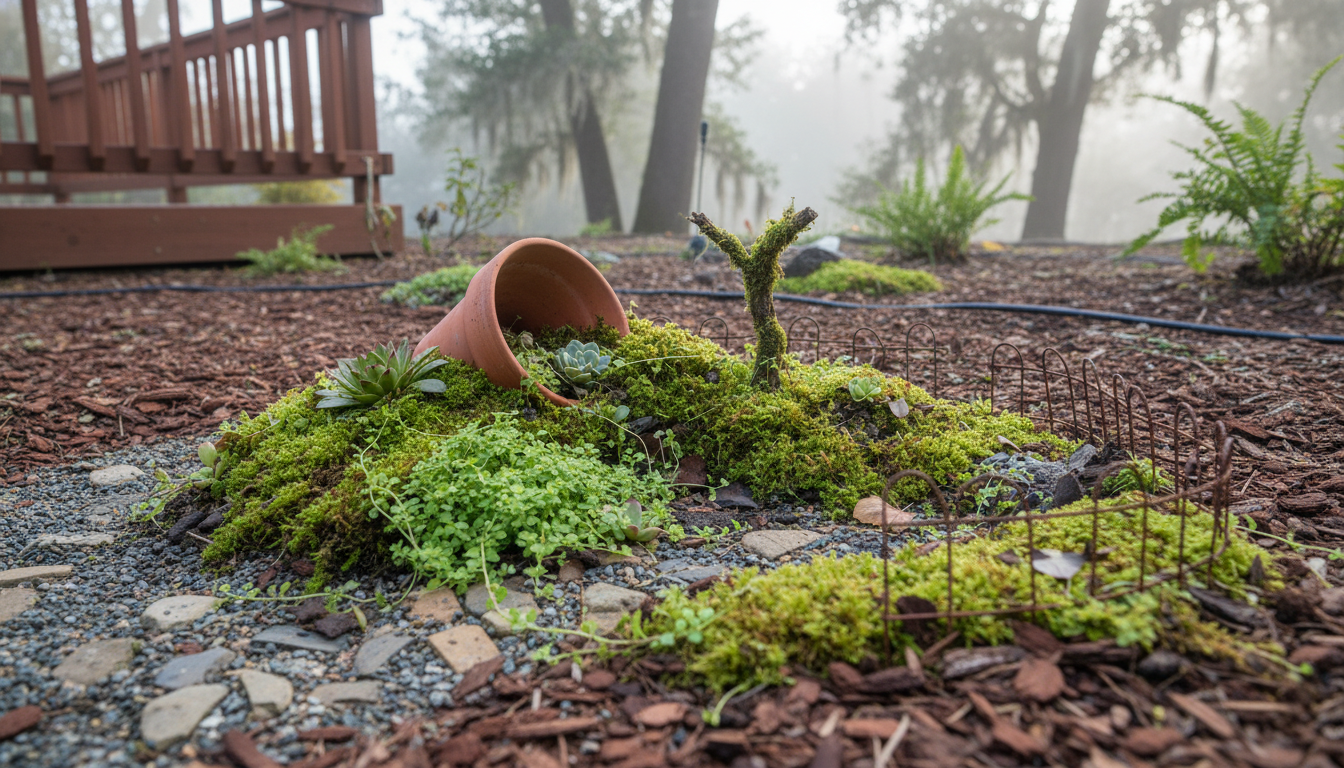
A fairy garden is a miniature world built inside a container, using real, living plants as the landscape. It is part garden, part dollhouse, part art project, and it is one of the best ways to get young kids (especially ages 3 through 8) genuinely excited about plants. The small scale makes it manageable, the creative freedom keeps kids engaged, and the living plants teach real gardening skills: watering, pruning, understanding light and drainage. UC Cooperative Extension research confirms that hands-on garden projects help children develop observation skills and a sense of responsibility.
Most fairy garden guides focus on plastic accessories and artificial plants. This guide is different. Every plant recommended here is a real, living species that thrives in California's climate. The result is a fairy garden that actually grows, changes with the seasons, and requires care, which is what makes it a learning experience rather than just a craft project.
Whether you have a sunny patio, a shaded front porch, or a bright windowsill, you can build a fairy garden that delights your kids and teaches them to care for living things.
Key Takeaway: A fairy garden built with real plants is a living project that grows and changes. It teaches kids watering, pruning, and observation skills while giving them a creative, imaginative space that is entirely their own.
What Container Works Best for a Fairy Garden?
Almost any wide, shallow container with drainage holes can become a fairy garden. The wider and shallower the better, because you want horizontal space for creating a landscape rather than deep space that wastes soil.
Best Container Options
Wide terra cotta saucer (14 to 20 inches) - Classic, affordable, and the porous clay helps prevent overwatering. Drill a few drainage holes if it does not have them.
Wooden crate or wine box - Line with landscape fabric, add drainage holes. The rustic look works beautifully.
Old wagon, wheelbarrow, or garden cart - Larger-scale fairy garden that makes a statement. Drill drainage holes in the bottom.
Broken terra cotta pot - A cracked pot turned on its side creates a natural hillside landscape. Use the broken edge as a cliff or waterfall feature.
Large hypertufa trough - If you want to get really creative, make your own container by mixing peat moss, cement, and perlite. This is a great project for older kids (with adult supervision).
Container Size Guide
Small (12 to 14 inches): Good for a single "scene" with 3 to 4 plants. Works on a windowsill or small table.
Medium (16 to 20 inches): Room for a path, a few structures, and 5 to 7 plants. The most versatile size.
Large (24 inches or wider): Full landscape with zones (forest, meadow, path, pond). Best for families who want an ongoing, evolving project.
What Plants Work Best in a Fairy Garden?
The key to a successful fairy garden is choosing naturally small or slow-growing plants that stay in scale with the miniature world you are building. These plants are all available at nurseries in the Santa Cruz area and throughout California.
Groundcovers (The "Lawn" and "Meadow")
Baby Tears (Soleirolia soleirolii) - Tiny, round leaves that form a dense, bright green mat. Looks like a perfect miniature lawn. Prefers shade to part sun and consistent moisture. Ideal for coastal California gardens.
Elfin Thyme (Thymus serpyllum 'Elfin') - The smallest thyme variety, growing just 1 to 2 inches tall. Tiny pink flowers in summer. Full sun, drought-tolerant. Smells wonderful when touched.
Corsican Mint (Mentha requienii) - Flat, creeping mint with an intense peppermint scent. The smallest mint species. Tiny purple flowers. Prefers shade and moisture. Just 1 inch tall.
Irish Moss (Sagina subulata) - Dense, bright green, mossy-looking mat with tiny white flowers. Not a true moss but looks like one. Part sun to shade. Stays 1 to 2 inches tall.
Scotch Moss (Sagina subulata 'Aurea') - Golden-green version of Irish moss. Creates a beautiful contrast when planted alongside the green form.
Miniature "Trees" and "Shrubs"
Dwarf Alberta Spruce (Picea glauca 'Conica') - Slow-growing, perfectly conical evergreen. In a container, stays small for years. Looks like a miniature Christmas tree. Needs afternoon shade in California.
Miniature Rose (any patio or miniature rose variety) - Real roses at 6 to 12 inches tall. Blooms in miniature throughout the growing season. Full sun.
Creeping Rosemary (Salvia rosmarinus 'Prostratus') - Cascading, fragrant evergreen. In a fairy garden, it plays the role of a forest or hedge. Full sun, drought-tolerant.
Dwarf Myrtle (Myrtus communis 'Compacta') - Tiny leaves, fragrant white flowers, and a naturally compact habit. Can be pruned into miniature topiary shapes. Full sun.
Boxwood, Dwarf (Buxus microphylla 'Compacta') - Classic formal hedge plant in miniature. Can be pruned into tiny hedges for fairy garden pathways.
Miniature "Flowers" and Accents
Hen and Chicks (Sempervivum spp.) - Rosette succulents that naturally reproduce by sending out "babies." Kids love watching the offsets form. Many colors available. Full sun, no fuss.
Miniature Sedums (Sedum dasyphyllum, S. acre) - Tiny succulent groundcovers in silver, green, and gold. Drought-tolerant. Spread slowly to fill gaps.
Sweet Alyssum (Lobularia maritima) - Tiny white or purple flowers with a honey scent. Low-growing (4 to 6 inches). Blooms almost year-round in coastal California. Can be trimmed to stay small.
Miniature African Violets - For indoor fairy gardens. Tiny blooms in purple, pink, and white. Bright indirect light.
Polka Dot Plant (Hypoestes phyllostachya) - Pink or white spotted leaves add color even without flowers. Keep pruned small. Part shade.
How Do You Build a Fairy Garden Step by Step?
Materials Needed
Wide, shallow container with drainage holes
Small gravel or pebbles (for drainage layer and paths)
Potting soil (quality container mix)
5 to 8 miniature plants (from the list above)
Small decorative items: pebbles, shells, driftwood, small sticks
Optional: miniature figurines, tiny furniture, small mirrors (for "ponds")
Optional: craft supplies for making accessories (clay, paint, wire)
Step-by-Step Instructions
Plan the layout. Before planting, arrange the plants (still in their nursery pots) in the container to find a design you like. Think about creating "zones" like a real landscape: a grassy meadow (baby tears), a forest corner (dwarf spruce, rosemary), a flower garden (miniature roses, alyssum), and a path between them.
Add drainage. Place a 1-inch layer of small gravel at the bottom of the container. This prevents root rot from sitting water.
Add soil. Fill the container with quality potting mix (not garden soil, which can harbor disease and drain poorly in containers) to about 1 inch below the rim.
Create terrain (optional). Mound the soil in one area to create a hill. Press down in another area to create a low spot (this could become a "pond" area with a small mirror or blue glass beads).
Plant. Remove plants from nursery pots and plant them according to your layout. Firm the soil gently around each root ball. Leave space between plants for paths and structures.
Add paths. Use fine gravel, sand, or tiny stepping stones (flat pebbles) to create pathways through the garden.
Add decorations. This is the part kids love most. Place miniature accessories: a bench made from twigs, a fence made from popsicle sticks, a "pond" made from a small mirror with blue pebbles around it, small figurines, or tiny signs. Use natural materials whenever possible (acorns for bowls, bark for bridges, moss for carpets).
Water gently. Use a small watering can or spray bottle to water the newly planted garden. Avoid flooding the surface and disturbing the decorations.
How Do You Care for a Living Fairy Garden?
Watering
Check the soil every 2 to 3 days by pressing your finger about an inch into the surface. If it feels dry, water gently. In coastal California, outdoor fairy gardens in part shade may only need watering every 3 to 4 days in summer. Full-sun gardens and those with baby tears or Corsican mint need more frequent watering. Succulents and thyme need less.
Light
Most fairy garden plants do best in bright, indirect light or morning sun with afternoon shade. In coastal California, a spot that gets 3 to 5 hours of direct morning light is ideal. Full afternoon sun in inland valleys can be too intense for baby tears and Corsican mint.
Pruning
This is the most important maintenance task, and it is a great one for kids. As plants grow, they will outgrow their "scale" in the fairy garden. Regular trimming keeps everything in proportion. Teach kids to use child-safe scissors to snip back groundcovers that are creeping over paths, trim rosemary that is growing too tall, or cut back alyssum after it finishes blooming. According to UC Master Gardeners, pruning is one of the most valuable skills children can learn in the garden because it teaches them to observe growth patterns and make decisions about plant care.
Seasonal Adjustments
Spring: Refresh soil by top-dressing with a thin layer of compost. Replace any plants that did not survive winter. Add new decorations.
Summer: Increase watering. Move to a spot with afternoon shade if plants are wilting. Trim back vigorous growers.
Fall: Reduce watering. Add fall-themed decorations (tiny pumpkins from craft stores, dried leaves, acorns).
Winter: In coastal California, most fairy garden plants are evergreen and survive winter outdoors. Move the garden under an overhang if heavy rain is expected, to avoid waterlogging.
What Activities Can Kids Do with a Fairy Garden?
Build Fairy Furniture from Natural Materials (Ages 4 and Up)
Gather twigs, bark, leaves, acorn caps, small stones, and dried flowers from the yard. Use these materials (plus a little hot glue, with adult help) to build miniature furniture: a bench from two twigs and a piece of bark, a table from an acorn cap on a short stick, a bridge from popsicle sticks, a fence from small twigs pushed into the soil. This is woodworking and engineering at a miniature scale.
Write Fairy Stories (Ages 5 and Up)
Ask kids to invent the fairies (or gnomes, or tiny dragons) who live in their garden. What are their names? What do they do all day? What is their favorite plant? This storytelling exercise builds narrative skills and deepens the imaginative connection to the garden.
Observe and Sketch (Ages 6 and Up)
Give kids a magnifying glass and a sketchbook. Have them draw their fairy garden from above, like a map. Then have them get at eye level with the garden and draw what a fairy would see. This teaches observation skills and perspective.
Propagate Baby Plants (Ages 7 and Up)
Hen and chicks succulents naturally produce offsets that can be gently separated and planted in a new spot. This is plant propagation, and it is one of the most exciting science activities for kids: they are making new plants from existing ones. Baby tears and thyme can also be divided. Help kids fill their fairy garden (or start a new one) entirely from propagated plants.
Seasonal Redecorating (All Ages)
Fairy gardens are meant to evolve. Change decorations with the seasons, add new plants, rearrange paths, and let the garden grow and change just like a real landscape. Many families make seasonal redecorating a tradition: a spring "fairy garden refresh" and a fall "fairy harvest festival."
What Other Mini Worlds Can You Build?
Once your kids are hooked on fairy gardens, the concept expands easily.
Gnome garden: Same plants, but with a woodland theme. Use more mosses, ferns, and evergreens. Add a toadstool made from a painted rock on a stick.
Beach garden: Use sand instead of soil paths, add seashells and driftwood, plant drought-tolerant succulents and sedums. A small mirror with sand around it becomes a tide pool.
Desert garden: Fill with small cacti and succulents, sand, and tiny rocks. Add miniature desert animals (lizards, tortoises). This version needs very little watering.
Dinosaur garden: Use plants that look prehistoric (ferns, cycads, selaginella) and add toy dinosaurs. See our dinosaur garden guide for detailed plant lists.
Frequently Asked Questions
What age is best for fairy gardens?
Ages 3 through 8 are the sweet spot for the imaginative, play-based aspects. Kids as young as 3 can help place decorations and water. Kids 5 to 8 can build furniture, plant, and care for the garden independently (with supervision). Older kids (9 to 12) often enjoy the design and propagation aspects more than the fairy narrative, and may prefer to call it a "miniature garden" or "terrarium."
Can I build a fairy garden indoors?
Yes, if you choose shade-tolerant plants and place the garden near a bright window (not direct sun). Baby tears, miniature African violets, polka dot plant, and small ferns all work indoors. Use a tray under the container to catch water. Indoor fairy gardens need less frequent watering than outdoor ones.
Will the plants outgrow the fairy garden?
Eventually, yes. That is part of the learning experience. Regular pruning keeps things in scale for a year or more. When a plant outgrows the container, transplant it into the regular garden and replace it with a new miniature plant. This teaches kids about growth and change.
Where do I buy miniature plants in the Santa Cruz area?
Scarborough Gardens, San Lorenzo Garden Center, and the UCSC Arboretum plant sales all carry miniature and fairy garden plants seasonally. Succulent Gardens in Castroville specializes in small succulents. Online sources like Mountain Crest Gardens (California-based) ship excellent miniature succulents.
How much does a fairy garden cost to build?
A basic fairy garden can be built for under $25: a terra cotta saucer ($5 to $10), potting soil ($5), 3 to 4 small plants from the nursery ($2 to $4 each), and natural decorations gathered from the yard (free). More elaborate versions with purchased figurines and multiple plants can run $40 to $60, but the decorations last for years.
A World of Their Own
There is something deeply satisfying about building a world in miniature. For kids, a fairy garden is a place where they make all the decisions: what to plant, where to put the path, who lives there, and what happens next. That creative ownership, combined with the real responsibility of keeping living plants alive, makes fairy gardens one of the most engaging garden projects for young children.
Want more garden project ideas for kids? Visit our Your Garden Toolkit page for free planting guides, seasonal activity checklists, and garden planning worksheets designed for California families.
Get Your Free Garden Resources
