

How to Plant a Rainbow Garden with Kids in California
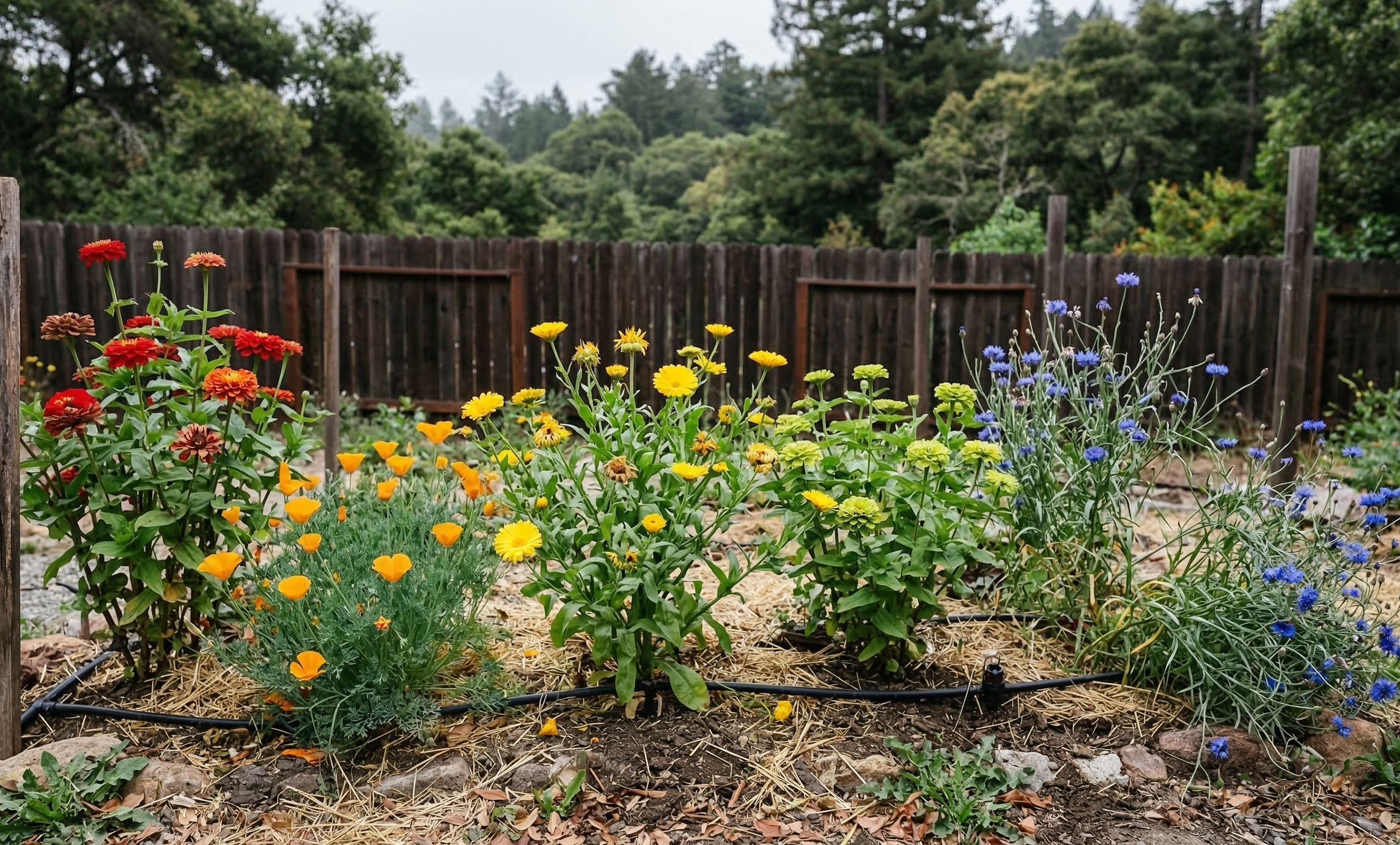
A rainbow garden is one of the most visually exciting projects you can do with kids. The concept is simple: plant flowers, vegetables, and herbs in color bands that follow the arc of a rainbow, from red through violet. The result is a garden bed that teaches kids about color, plant biology, and patience, all while producing something genuinely stunning.

This is not just a pretty idea. Research from the University of California Cooperative Extension has consistently shown that children who participate in garden-based learning develop stronger science skills, eat more vegetables, and spend more time outdoors. A rainbow garden gives that learning a creative hook that keeps kids engaged from seed to bloom.

This guide covers everything you need to plant a rainbow garden in California, with specific plant varieties that thrive in our coastal and inland climates, age-appropriate tasks for toddlers through tweens, layout options for any space (including containers on a patio), and seasonal timing so you get the best color display.

Key Takeaway: A rainbow garden works in any size space. You can plant a full arc in a large bed, run color bands in a single raised bed, or line up seven pots on a patio. The key is choosing plants that reliably bloom in each color for your California zone.

What Layout Works Best for a Rainbow Garden?

There are several ways to arrange a rainbow garden, and the best choice depends on your space and your kids' ages.

The Arc Layout (Large Space)

If you have a bed at least 8 feet wide and 4 feet deep, you can plant a true rainbow arc. Create curved rows from front to back (or left to right), each planted with a different color. This is the most dramatic option and gives kids the satisfying visual of a real rainbow growing in their yard.

The Stripe Layout (Raised Bed or Long Bed)

For a standard 4-by-8-foot raised bed, plant in straight color bands running across the short dimension. Red on one end, violet on the other, with the other colors in between. This is the easiest to maintain and works well for younger children who can "own" a color stripe.

The Container Rainbow (Patio or Small Space)

Line up seven large pots (12 inches or wider), each planted with a different color. This works beautifully on a patio, along a walkway, or on apartment balconies. Use the same variety of pot for visual consistency, or let kids paint plain terracotta pots the matching color (a great rainy-day activity before planting day).

The Pizza Slice Layout (Circular Bed)

Create a circular bed and divide it into color wedges like a color wheel. This is more advanced but looks incredible from above. It works well if you have a round area you want to fill.

What Should You Plant in Each Color Band?

The plants below are chosen specifically for California gardens. All of them grow well in USDA Zones 9 through 10 (which covers most of the populated areas of central and coastal California) and can handle our dry summers and mild winters. Where possible, I have included both flowers and edible plants so your rainbow is beautiful and productive.

Red

  • Scarlet Sage (Salvia coccinea) - Bright red tubular flowers from spring through fall. Attracts hummingbirds. Easy from seed or transplant. Full sun.
  • 'Red Robin' Cherry Tomatoes - Compact plants perfect for kids. Bright red fruit within 55 days. Container-friendly.
  • Red Zinnias ('Scarlet Flame' or 'Benary's Giant Scarlet') - Big, bold blooms all summer. Easy from direct-sown seed. Heat-loving.
  • Strawberries ('Albion' or 'Seascape') - Everbearing varieties bred in California by UC Davis. Kids love picking them.

Orange

  • California Poppies (Eschscholzia californica) - Our state flower. Direct-sow in fall or early spring. Zero maintenance once established.
  • 'Sun Gold' Cherry Tomatoes - Golden-orange and incredibly sweet. Every kid who tastes one is hooked.
  • Marigolds ('Tangerine Gem' or 'Orange Boy') - Tough, cheerful, and deer-resistant. Direct-sow or transplant.
  • Nasturtiums ('Alaska Mix' for orange selections) - Edible flowers and leaves with a peppery taste. Trail over pot edges beautifully.

Yellow

  • Sunflowers ('Teddy Bear' for short, 'Mammoth' for tall) - The ultimate kid flower. 'Teddy Bear' stays 2 to 3 feet tall, perfect for small gardeners. 'Mammoth' can top 10 feet for a dramatic backdrop.
  • Yellow Pear Tomatoes - Prolific, bite-sized, and a beautiful clear yellow.
  • Calendula ('Pacific Beauty Yellow') - Edible petals, easy from seed, blooms from fall through spring in coastal California.
  • Yellow Crookneck Squash - Fast-growing and fun for kids to harvest when the fruit is small and tender.

Green

  • 'Green Envy' Zinnia - Unusual lime-green blooms that fascinate kids and look striking against other colors.
  • Bells of Ireland (Moluccella laevis) - Tall spires of green bell-shaped calyxes. Start from seed indoors.
  • Lettuce ('Buttercrunch' or 'Little Gem') - Fast-growing, edible green that kids can harvest leaf by leaf.
  • Basil ('Genovese' or 'Sweet') - Lush green foliage, wonderful scent, and ties into cooking projects.

Blue

  • Cornflower/Bachelor's Button (Centaurea cyanus) - True blue blooms, easy from direct-sown seed, and edible petals.
  • Borage (Borago officinalis) - Star-shaped blue flowers beloved by bees. Self-sows enthusiastically.
  • Blue-eyed Grass (Sisyrinchium bellum) - California native with delicate blue flowers. Perennial.
  • Lobelia ('Crystal Palace') - Deep blue mounding plant, excellent for pot edges and borders.

Indigo/Dark Blue

  • Salvia 'Victoria Blue' - Deep blue-purple flower spikes. Perennial in California. Attracts pollinators heavily.
  • Larkspur (Consolida ajacis) - Deep blue varieties available. Direct-sow in fall for spring bloom in California.
  • 'Purple Podded' Pole Beans - Dark indigo pods that turn green when cooked (which amazes kids).

Violet/Purple

  • Purple Basil ('Dark Opal') - Deep purple foliage and edible leaves. Striking contrast plant.
  • 'Fairy Tale' Eggplant - Small, lavender-striped fruit perfect for kid-sized hands. Compact plants.
  • Lavender ('Munstead' or 'Hidcote') - Fragrant, drought-tolerant, and perennial. A permanent anchor for the purple end.
  • Purple Petunias ('Supertunia Royal Velvet') - Deep violet blooms all season. Excellent in containers.

When Is the Best Time to Plant a Rainbow Garden in California?

Timing depends on which plants you choose and where you live in California. Here is a seasonal schedule for the Santa Cruz and central coastal area (USDA Zone 9b/10a). Inland valley gardeners can shift warm-season planting 2 to 3 weeks earlier.

Fall (October through November)

  • Direct-sow California poppies, larkspur, and calendula. These need the cool, moist conditions of fall and winter to germinate and establish roots before blooming in spring.
  • Plant lavender from nursery starts. Fall planting lets roots establish during the rainy season.

Late Winter to Early Spring (February through March)

  • Start sunflower, zinnia, marigold, and basil seeds indoors. Transplant outdoors after the last frost risk (typically mid-March on the coast, mid-April in mountain areas).
  • Plant strawberry starts from the nursery.
  • Direct-sow cornflower and borage outdoors.

Spring (April through May)

  • Transplant tomatoes, eggplant, squash, and beans outdoors after soil has warmed to at least 60 degrees.
  • Transplant nasturtiums, petunias, lobelia, and salvia starts.
  • Direct-sow sunflowers, zinnias, and Bells of Ireland outdoors.

Summer (June through August)

  • Enjoy peak bloom and harvest. Most of your rainbow will be at its most colorful.
  • Succession-plant zinnias and sunflowers every 3 weeks for continuous color through fall.

What Can Kids Do at Each Age?

One of the strengths of a rainbow garden is that every age group can participate meaningfully. Here is a breakdown of age-appropriate tasks, based on child development guidelines from UC ANR's 4-H Youth Development program.

Ages 2 to 4 (Toddlers)

  • Pour water from a small watering can
  • Drop large seeds (beans, sunflowers, squash) into prepared holes
  • Sort seeds by size before planting
  • Pick ripe cherry tomatoes and strawberries
  • Smell herbs and flowers (lavender, basil, calendula)
  • Paint pots with non-toxic paint

Ages 5 to 7 (Early Elementary)

  • All toddler tasks, plus:
  • Dig planting holes with a child-sized trowel
  • Plant seedlings and pack soil around roots
  • Make plant labels with the color and plant name
  • Water with a hose (with supervision)
  • Observe and draw plants in a garden journal
  • Count days from planting to first flower or fruit

Ages 8 to 12 (Older Kids)

  • All previous tasks, plus:
  • Plan the layout on paper before planting
  • Start seeds indoors and track germination
  • Research plant varieties and make their own selections
  • Measure and space plants according to seed packet instructions
  • Photograph the garden weekly and create a time-lapse collage
  • Identify visiting pollinators and record which colors they prefer

What Materials Do You Need?

  • Garden bed or containers: A 4-by-8-foot raised bed, or 7 large pots (12-inch diameter minimum)
  • Potting soil or garden soil mix: About 2 cubic feet per large pot, or enough to fill your bed to 8 to 10 inches deep
  • Compost: Mix 2 to 3 inches into the top of your bed before planting
  • Seeds and/or transplants: See the plant lists above. Budget roughly $3 to $5 per seed packet, $3 to $8 per transplant
  • Mulch: Straw or shredded bark to conserve moisture
  • Child-sized garden tools: Trowel, watering can, gloves
  • Plant markers: Popsicle sticks, painted rocks, or purchased markers
  • Optional: non-toxic acrylic paint for decorating pots or markers
  • Garden journal or notebook for observations

How Do You Keep the Rainbow Looking Its Best?

Deadhead Regularly

Removing spent flowers (called deadheading) encourages plants to produce more blooms. This is a perfect task for kids ages 5 and up. Teach them to pinch off faded flowers just above the next set of leaves. Zinnias, marigolds, petunias, and calendula all respond dramatically to regular deadheading.

Water Consistently

Most of these plants need regular watering, especially in containers. In coastal California, water every 2 to 3 days in summer (daily for containers in hot weather). Inland valley gardeners may need to water daily. Water in the morning to reduce disease risk.

Feed Monthly

A balanced organic fertilizer (like fish emulsion or a granular all-purpose blend) applied once a month keeps plants blooming heavily. Follow package directions. Over-fertilizing pushes leafy growth at the expense of flowers.

Watch for Pests

The most common pests in a California rainbow garden are aphids, whiteflies, and snails. Hand-picking and a strong spray of water handle most aphid and whitefly problems. Copper tape around containers deters snails. Avoid chemical pesticides, which harm the pollinators your rainbow garden will attract. UC IPM recommends integrated pest management, starting with the least toxic approach.

What Activities Can You Add to the Rainbow Garden?

Rainbow Scavenger Hunt

Give kids a checklist with the colors of the rainbow and send them into the garden to find something in each color. This works even before your garden is fully blooming if you include natural items (green leaves, brown bark, gray stones) alongside the flowers.

Color Mixing with Flowers

Collect petals from different flowers and let kids experiment with grinding them with a mortar and pestle (or just fingers) on white paper to see what pigments they release. This is a great introduction to the concept of plant pigments (anthocyanins for blues and purples, carotenoids for yellows and oranges, chlorophyll for greens).

Pressed Flower Rainbow Art

Press flowers in a heavy book for 2 to 3 weeks, then arrange them in a rainbow pattern on cardstock and seal with clear contact paper or frame behind glass. This makes a beautiful piece of art that lasts for years.

Garden Journal Color Wheel

Have kids draw or paint a color wheel in their garden journal and add the names and sketches of the plants they grew in each color section. Over time, this becomes a personal reference of what grew well in your specific garden.

Frequently Asked Questions

Can I plant a rainbow garden in containers if I do not have a yard?

Absolutely. Use seven large pots (at least 12 inches in diameter) arranged in a line or arc. Choose compact varieties: dwarf sunflowers, bush tomatoes, compact zinnias, and trailing nasturtiums all perform well in containers. Make sure each pot has drainage holes and use a quality potting mix (not garden soil, which compacts in containers).

What if I cannot find a plant in every color?

Blue and true indigo are the hardest colors to find in the garden. If you cannot find specific varieties, borage and cornflower are your most reliable blue options in California. You can also cheat a little by combining blue-purple plants in that band. Kids are usually more interested in the overall effect than botanical color precision.

Will all the colors bloom at the same time?

Not perfectly, and that is okay. In California, you will get the most comprehensive color display from late May through September if you include a mix of annuals and perennials. Fall-sown plants (poppies, calendula, larkspur) bloom earlier, while summer annuals (zinnias, sunflowers, marigolds) peak later. Staggering your planting creates a rolling display that changes throughout the season, which gives kids something new to discover every week.

Is a rainbow garden expensive to plant?

It can be very affordable if you grow from seed. A packet of zinnia seeds costs $3 to $4 and can fill an entire color band. California poppies self-sow, so one packet provides years of orange. The most cost-effective approach: buy seeds for annuals, buy transplants for perennials (lavender, salvia), and trade seeds with neighbors for variety.

Can I use a rainbow garden to teach color theory?

Yes. A rainbow garden is a natural entry point for teaching kids about primary and secondary colors, warm and cool colors, complementary colors, and the visible light spectrum. Connecting these concepts to living plants makes abstract color theory tangible.

Start Your Rainbow This Weekend

You do not need to plant all seven colors at once. Start with three or four that your kids are most excited about, and add more colors in the next planting season. The most important thing is getting your kids' hands in the soil and watching their faces when those first bright flowers open.

Planning your first garden with kids? Visit our Your Garden Toolkit page for free planting guides, seasonal checklists, and garden planning worksheets that help families get growing in California.

Get Your Free Garden Resources

Related Reading

Previous
Previous

How to Grow a Pizza Garden with Kids in California

Next
Next

What Can I Plant in My Garden in January in Santa Cruz?
