

5 Easy Crops Kids Can Grow in Santa Cruz
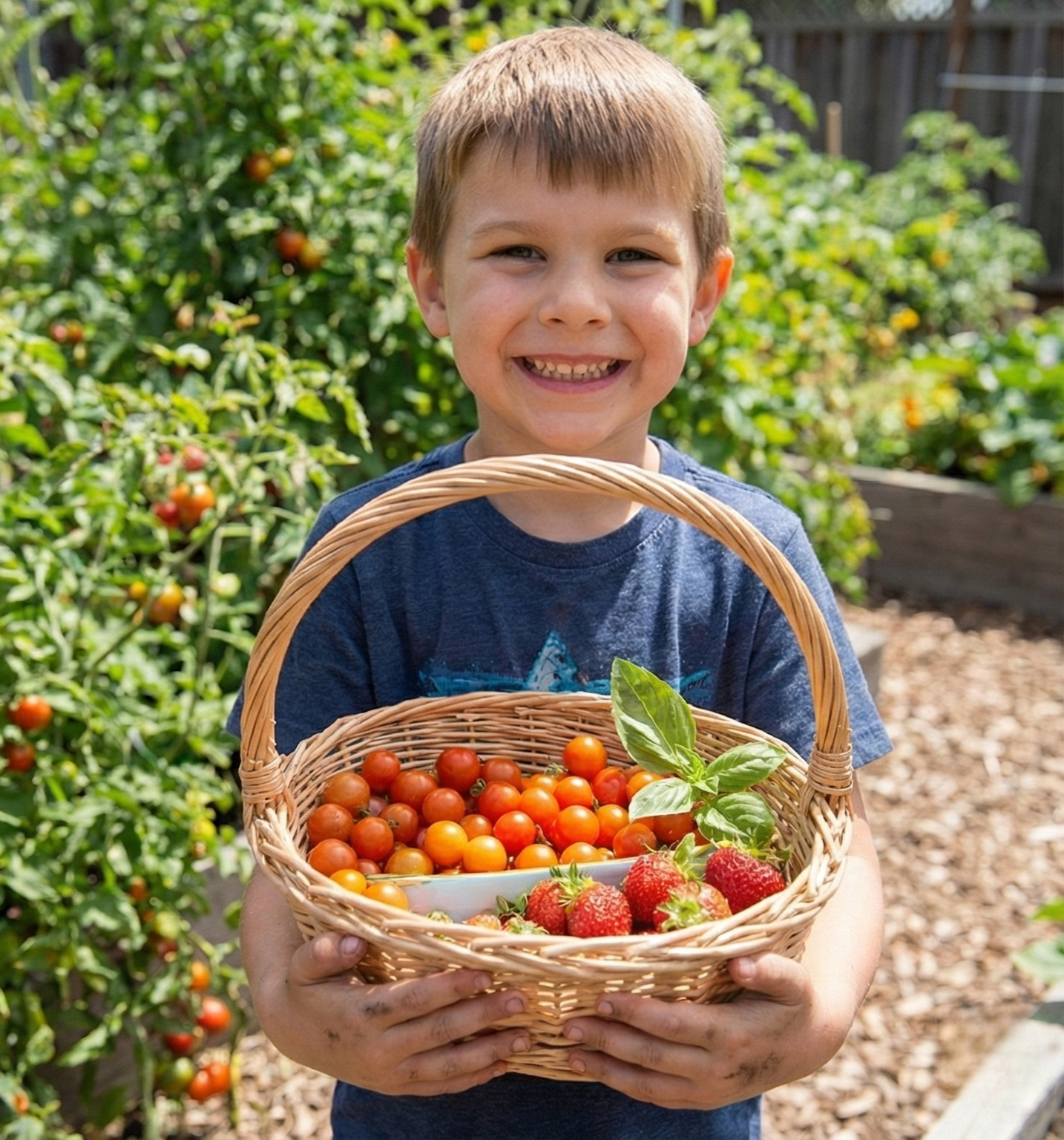
How Do You Set Kids Up for Garden Success?
A radish can go from seed to something a child can pull from the soil in about a month. A sunflower changes enough to measure from week to week. Those quick, visible changes give a young gardener a reason to come back tomorrow.
That fits the advice from UC Master Gardeners: keep gardening with children fun. The five crops below are easy to handle, satisfying to harvest, and enjoyable to eat. Santa Cruz County's mild climate also gives families plenty of planting windows and another chance if the first attempt does not work out.
Before tasting the harvest, rinse produce under running water. For young children, an adult should prepare food to suit their eating skills; whole cherry tomatoes, hard raw pieces, and whole or chopped seeds can be choking hazards. Have children sit down to eat, with an adult watching.
Before choosing seeds, set up the garden so the child has a real part in it:
- Give them ownership. Let kids choose which crops to grow and where to plant them.
- Start small. One or two plants is plenty for a young gardener.
- Check in daily. Short, regular visits beat occasional long sessions.
- Notice the small changes. A first sprout, flower, or harvest is worth stopping for.
1. Sunflowers: A Plant Kids Can Measure
Sunflower seeds are big enough for little fingers to handle, and the plant offers something new to notice well before the flower opens. Once it gets going, a child can watch the stem rise from one week to the next. Some varieties eventually reach 10 feet or more.
The appeal is easy to see:
- Giant seeds are easy to plant.
- Growth becomes visible almost daily once the plant is established.
- Different varieties offer dramatic height or shorter, fluffier flowers.
- The flowers attract bees and birds.
- Mature seeds can be saved for next year. Whole or chopped sunflower seeds are choking hazards for young children, so keep their activity focused on collecting and observing rather than eating them.
How to grow them: Sow directly in spring after frost danger has passed and the soil has warmed. Choose a sunny spot and follow the packet for sowing depth and final spacing, because dwarf and giant varieties need different amounts of room. Keep the seedbed moist while the plants establish. UC Marin Master Gardeners describe both tall and dwarf choices.
Time to harvest: Check the packet for flowering time. Mature seed takes longer: wait for the back of the flower head to dry and the seeds to loosen easily.
Varieties to try: 'Mammoth' for maximum height, 'Teddy Bear' for a shorter, fluffy option, or 'Autumn Beauty' for multicolored blooms.
A job for kids: Measure the sunflower each week and mark its height on a chart. The chart turns gradual growth into something they can see.
2. Cherry Tomatoes: A Harvest That Keeps Coming
Once cherry tomatoes begin producing, the harvest does not arrive just once. Children can check the vine again and again for the next ripe fruit. The small fruit is easy to spot, and the little “pop” as one comes off the stem makes picking part of the pleasure.
- Choose red, yellow, orange, or purple-fruited varieties. Our tomato growing guide has more variety recommendations.
- Start with transplants for faster results.
- Plant in a sunny spot after the soil warms, usually April through June in Santa Cruz.
- Provide a cage or stake for support.
- Water consistently at the base.
- Avoid heavy pruning that exposes fruit to sun. A cage can support a plant with several stems; removing suckers reduces branching, rather than making a plant bushier. See UC Master Gardeners' tomato tips.
Time to harvest: Often around 60 to 80 days from transplant, depending on the variety and conditions. Check the plant label.
Varieties to try: 'Sungold' for super-sweet orange fruit, 'Sweet 100' for a classic prolific cherry, or 'Black Cherry' for rich, purple-brown fruit.
A job for kids: Give each child a plant to water and check. Once it starts producing, that plant becomes their own place to look for ripe tomatoes.
3. Snap Peas: Build the Garden Upward
Snap peas give children two things to follow: the vines climbing a support and the pods filling out. They are crunchy, sweet, and edible without shelling or cooking.
- Plant seeds directly in the ground.
- Sow in fall or early spring in Santa Cruz because peas prefer cool weather.
- Provide a simple trellis, fence, or even sticks for climbing.
- Water regularly without overdoing it.
- Harvest when the pods are plump but still bright green.
Time to harvest: Often around 60 to 70 days from seed, depending on the variety and conditions. Check the seed packet.
Varieties to try: 'Sugar Snap' for the classic choice, 'Super Sugar Snap' for a vigorous climbing option, or compact 'Cascadia' for containers.
A job for kids: Make the support into a small teepee with bamboo poles. The peas get a place to climb, and the child gets a garden hideout.
4. Radishes: The Fastest First Harvest
For the child who asks “Is it ready yet?” every few minutes, start with radishes. Sprouts appear within days, and many small salad varieties are ready in three to six weeks. When the shoulders begin to show above the soil, the harvest is no longer hidden.
- Plant seeds directly in the ground at the depth on the packet.
- Grow them in spring or fall for the best results because radishes bolt in summer heat.
- Thin seedlings to the spacing on the packet. Small salad radishes need less room than large winter types.
- Water consistently.
- Check the packet's mature size and pull a sample when it approaches that size. Do not wait for every root to rise above the soil.
Time to harvest: roughly three to six weeks for small salad types.
Varieties to try: 'Cherry Belle' for a classic red globe, 'French Breakfast' for an oblong mild radish, or 'Watermelon' for a white exterior and pink center, with a longer wait than the quick salad radishes.
A job for kids: In suitable growing weather, try small sowings about two weeks apart to spread out the harvest. Let children decide which shoulders look ready and help pull and wash the radishes. An adult can then prepare them for tasting.
5. Strawberries: Look Under the Leaves
Strawberries slow the pace down. A child has to lift the leaves and look closely for a berry that has ripened since the last visit. The plants stay low enough for small hands to reach. How long the harvest lasts depends on the variety: short-day types have a more concentrated season, while day-neutral types can continue when temperatures suit them.
- Start with transplants. Keep the crown at soil level when planting. Match the planting date to the variety and nursery stock; UC IPM gives Central Coast planting guidance.
- Choose a sunny spot or a container.
- Keep the soil moist but not soggy.
- Mulch with straw to keep berries clean and suppress weeds.
- Remove runners to focus the plant's energy on fruit, or let them spread.
Time to harvest: This depends on the variety, planting season, and size of the transplant. Choose an established day-neutral plant if a long picking season matters more than one concentrated crop. Do not promise a child berries a fixed number of weeks after planting.
Varieties to try: 'Seascape' is day-neutral and can produce over a long season when conditions suit, 'Albion' is known for excellent flavor, and 'Chandler' is a short-day option with a more concentrated harvest.
A job for kids: Check under the leaves each morning. Finding the ripe berries turns an ordinary garden visit into a small search.
Bonus: Nasturtiums
Nasturtiums are not vegetables, but they offer many of the same child-friendly features. The seeds are large, the plants grow quickly, and the bright orange and yellow flowers are edible along with the leaves and immature seed pods. The plants can reseed themselves and grow without rich soil. They still need suitable light, drainage, and moisture.
- Plant seeds directly in the ground at the depth on the packet.
- Choose a sunny or partly shady spot.
- Use average, well-drained garden soil.
- Keep the seedbed moist while seeds germinate. After establishment, check soil moisture and water when needed, especially in containers.
- Pick flowers to encourage more blooms.
A job for kids: Add the flowers to a salad or use them to decorate a homemade pizza. It gives children another way to recognize something they grew.
See Illinois Extension's nasturtium guide for growing details.
Why Should You Let Kids Lead?
The best crop for your child is the one they want to grow. If pumpkins matter because Halloween is coming, make room for a pumpkin. If flowers are more interesting than vegetables, plant flowers.
A child who wants to come back outside tomorrow is a good result, even if the harvest is small.
Frequently Asked Questions About Growing Vegetables with Kids in Santa Cruz County
What is the easiest vegetable for kids to grow in Santa Cruz County?
Radishes are the fastest choice on this list. They sprout visibly within days and are often ready in three to six weeks. Plant them in spring, from March through May, or fall, from September through November. Cherry tomatoes are another approachable choice once they begin producing, but they take longer to reach that first harvest.
When should kids plant vegetables in Santa Cruz County?
Plant sunflowers and tomatoes as warm-season crops after frost danger has passed and the soil has warmed. Sow peas and radishes for cooler weather. Strawberries need a planting date matched to their variety and nursery stock. In a shady canyon, wait for conditions in the actual bed rather than borrowing a date from a sunny coastal garden.
What vegetables can kids grow year-round in Santa Cruz?
Some cool coastal gardens can keep radishes going for much of the year, but heat and long days can spoil the roots. Peas also prefer cool weather. Tomatoes and sunflowers need a warm-season window. Day-neutral strawberries may bear over a longer season than short-day types, so the variety matters as much as the town.
How long does it take to grow vegetables with kids in Santa Cruz?
Small salad radishes are often ready in roughly three to six weeks; winter types take longer. Use the packet's maturity estimate for peas and sunflowers and the plant label for tomatoes. Those are planning guides, not deadlines. Strawberry timing depends on the type and planting date. Pair a fast crop with a slower one so there is something to notice while the larger plant develops.
What vegetables will kids actually eat from the garden?
Cherry tomatoes, snap peas, strawberries, and mild radishes give children a harvest they can help prepare. Wash the produce, and have an adult prepare the shape and texture for the child before a seated, supervised tasting. A child who does not like one may still enjoy another, so let the child choose what to try. Picking the food themselves makes tasting part of the activity rather than a separate chore.
Do these crops work in all Santa Cruz County microclimates?
They need timing adjustments. Coastal areas such as Aptos, Capitola, and Live Oak suit snap peas, radishes, and other cool-season crops. Warmer, sunny beds give tomatoes and sunflowers more heat. Foggy areas generally suit peas and radishes better than heat-loving tomatoes, while strawberries adapt across the county. Use the conditions in your own garden to choose the crop and planting month.
What if my child loses interest before harvest?
Try a fast crop such as radishes, which can be ready in about a month. A brief daily check before breakfast or after school can make the changes easier to notice. If the child still loses interest, let the project rest and try another crop or season later. A positive visit outside matters more than a perfect garden.
Can kids grow these vegetables in containers in Santa Cruz?
All five crops can grow in containers if you match the variety to the pot. Compact tomatoes, dwarf sunflowers, and short peas are easier to accommodate than their largest relatives. Use a container with drainage holes and enough root space for the mature plant; a shallow window box is not a universal choice. Follow the cultivar's container guidance, and remember that pots need more frequent moisture checks.
What grows fast enough to keep a young child interested?
Radishes are a good starting point. UC IPM puts many salad radishes at three to six weeks, with winter types taking longer. Sunflowers give a child visible height to measure while waiting for flowers. A brief daily check makes those changes easier to notice.
