

What Is the Difference Between Compost and Mulch?
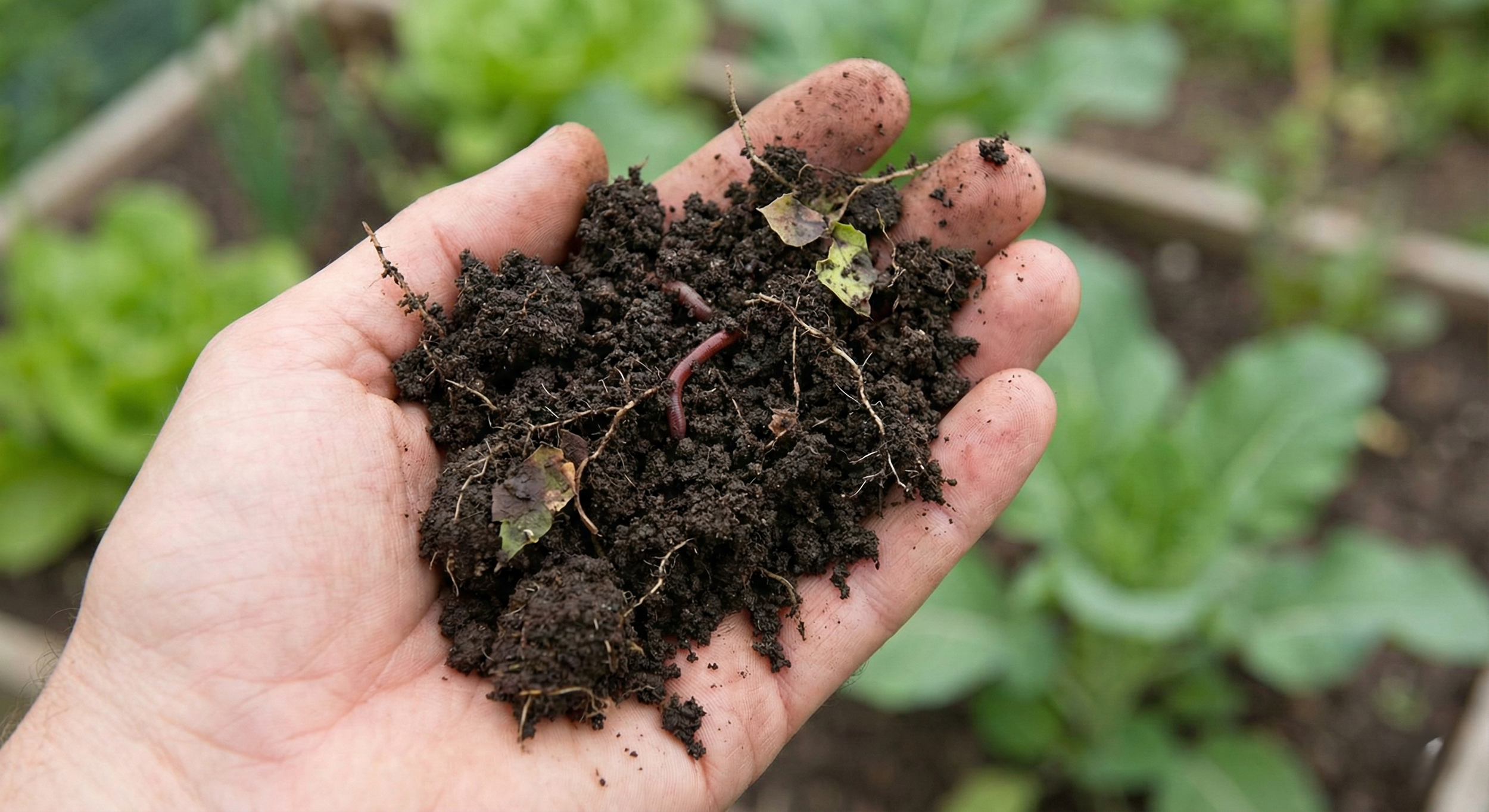
Compost feeds your soil; mulch protects it. If you are standing over a bare bed with a bag of each, the distinction is mostly about the job you want done and where the material goes.
Finished compost is dark, crumbly organic matter that smells earthy. As a soil amendment, it helps improve the soil where roots grow. You can add it before planting or use it as a top-dressing around established plants. UC ANR's composting guide covers its role in both clay and sandy soils; your own bed matters more than a neighborhood label. To make it at home, start with composting from kitchen scraps to garden gold.
Mulch stays on the surface. Wood chips, straw, shredded leaves, and bark cover bare ground, suppress weeds, hold moisture, and regulate soil temperature. In a dry Santa Cruz summer, that protective layer has work to do. Keep woody materials on top rather than digging them into a vegetable bed: Oregon State University Extension explains the nitrogen problems that can follow incorporation. Our guide to mulch and soil health looks at that surface layer in more detail.
The overlap is useful: finished compost can also be spread on the surface as mulch. But a bag of fresh wood chips is not finished compost. Put those chips to work above the soil, rather than mixing them into the root zone.
This week: Look for bare soil between established plants. A mulch layer can protect it, with room left around stems. Before adding more compost, consider what the bed has already received and what you plan to grow.
Our free Beginner Checklist covers soil preparation basics, including when and how to use both compost and mulch in your garden. For more on building healthy soil, see How Do I Improve Heavy Clay Soil in California.
Keep Reading
Frequently Asked Questions
Can I use compost as mulch, or mulch as compost?
Yes, compost can serve as mulch when it covers the soil surface. Fresh woody mulch has a different job. Keep it on top of vegetable beds rather than treating it as finished compost.
How much compost and mulch should I apply, and how often?
For mulch, two to three inches is a useful starting depth for many garden beds, with a gap around stems. Compost needs depend on the existing soil and previous additions; an annual layer is not automatically necessary in every bed.
Why is mulch especially helpful in Santa Cruz gardens?
Our long dry season leaves exposed soil losing moisture between waterings. Mulch helps slow that loss and shade the soil, so it is useful even when the plants themselves look fine.
Which mulch is best for a vegetable garden?
For vegetable beds, straw or shredded leaves break down fast and feed the soil, while wood chips suit pathways and perennials. Spread a few inches, keeping it off plant stems. Mulch is a water-wise staple here because it slows evaporation and keeps roots cool through dry Santa Cruz summers. UC IPM notes mulch conserves soil moisture and suppresses weeds.
