

What Is the Best Soil Mix for Raised Beds in California?
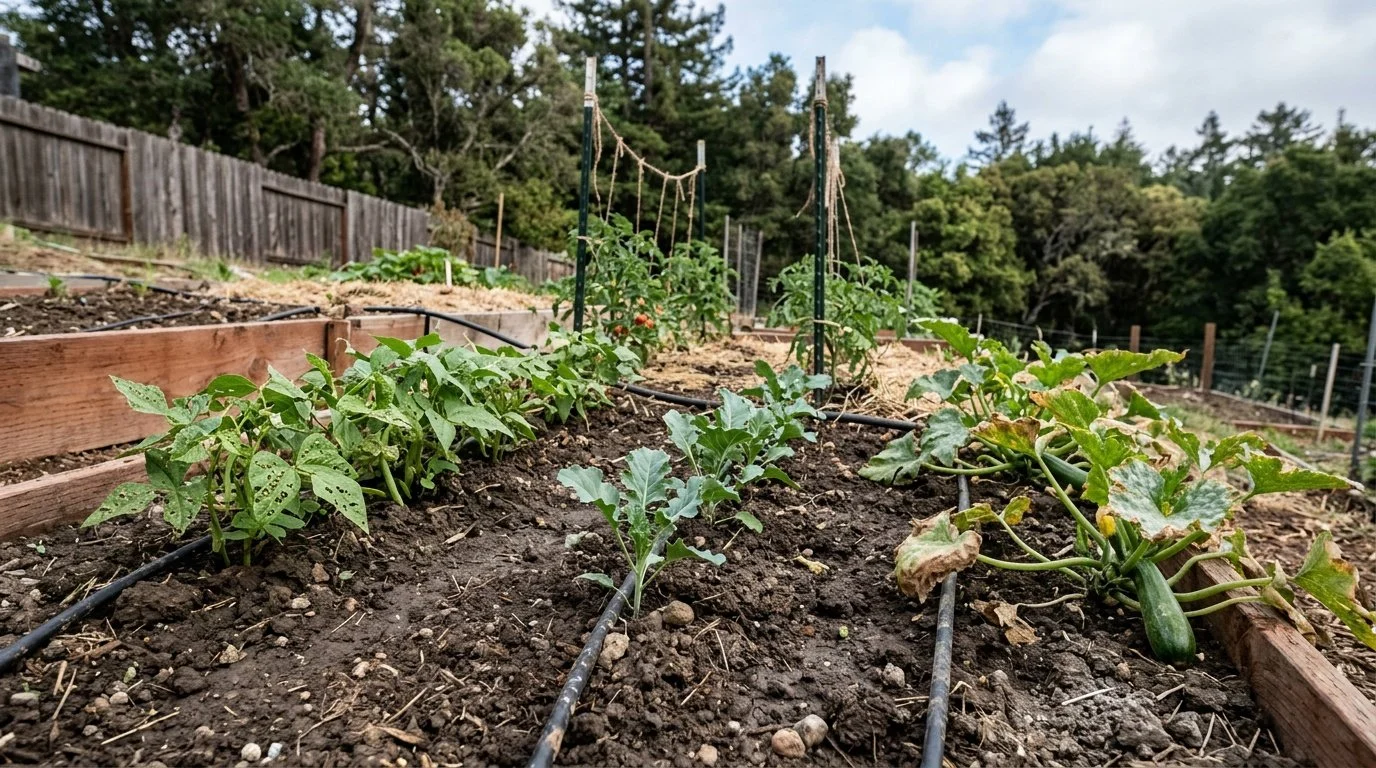
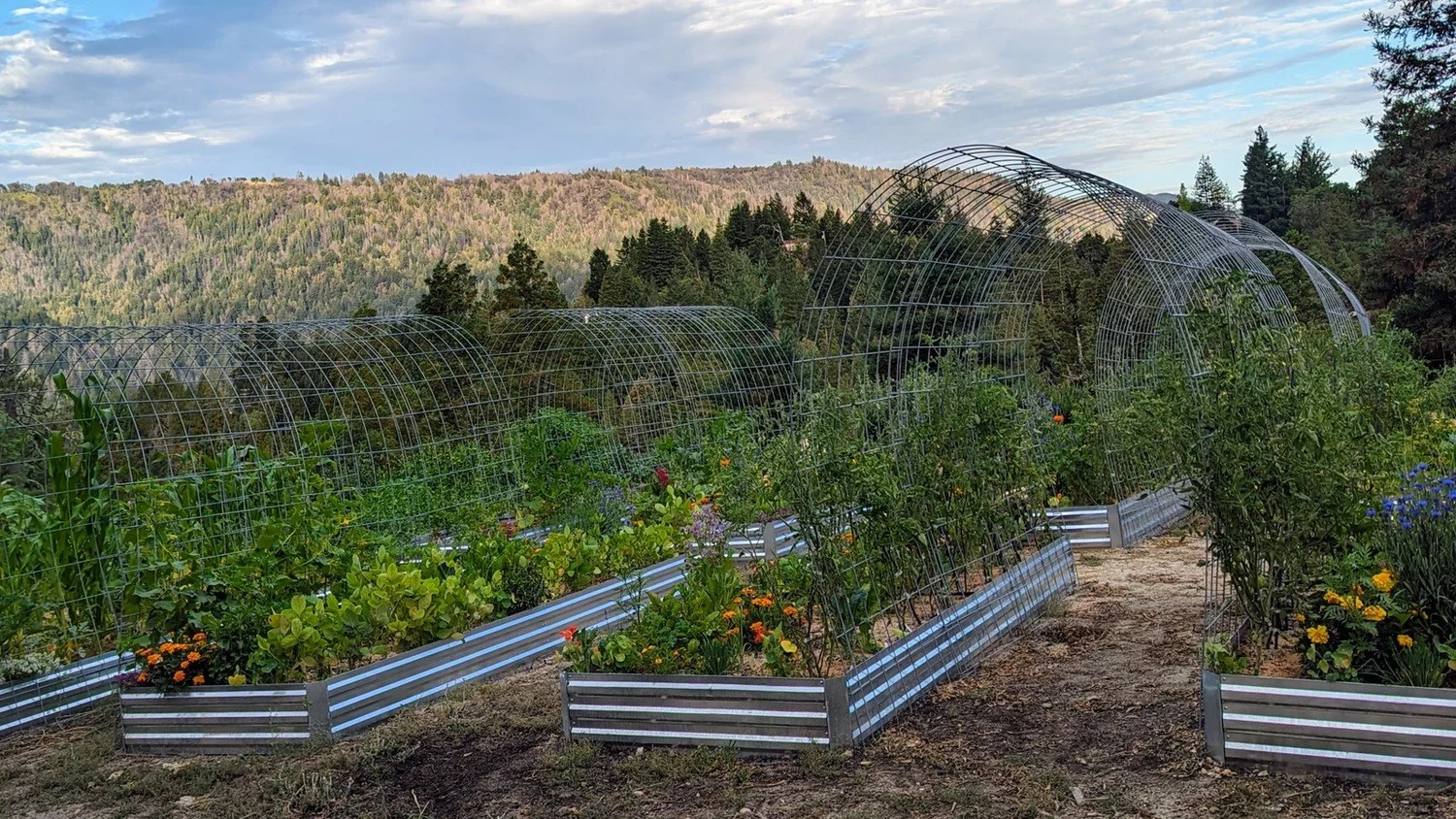
A Boulder Creek garden with multiple raised beds, hoop trellises and mixed seasonal crops. Photo: Adrienne Gaughan / Ambitious Harvest Co
This guide includes affiliate links. If you buy through one, Ambitious Harvest may earn a commission at no extra cost to you. As an Amazon Associate, we earn from qualifying purchases. Read our full disclosure.
The empty bed is built, and now the bags and bulk blends all sound promising. A suitable raised-bed mix should hold moisture while allowing air and excess water to move through it. Choose it for the bed's design and the soil beneath it.
Before buying, look at where the roots will grow. A low-sided bed open to decent garden soil is a different setup from an elevated box with a solid bottom. That distinction helps narrow the choices before you order.
Start with the bed, then choose the blend
UC Contra Costa's raised-bed guidance allows a blend using native soil and organic material, with less organic matter needed when good loam is available. It also recommends asking suppliers for a mix intended for vegetables in raised beds.
For a soil-based bed, Minnesota Extension offers a starting range of roughly one-half to two-thirds topsoil, with the remainder plant-based compost. Use that range when planning a new fill, while keeping serviceable soil already in the bed.
An elevated planter or a bed over paving needs separate consideration of drainage and usable root space. Maryland Extension distinguishes beds on hard surfaces from beds connected to garden soil and gives different filling options. Describe your setup accurately when asking for a recommendation.
Understand what each ingredient contributes
Suitable topsoil supplies the mineral part of a soil-based blend. Finished compost adds organic material and nutrients, but its composition varies. Our California soil-amendments guide explains that broader distinction.
Perlite is used in some growing mixes to change their physical properties. The amount, if needed, depends on the rest of the blend. Bark, perlite and mineral soil each behave differently.
A blend's nutrient content matters alongside its texture. Check what the blend contains and use soil testing and crop guidance to plan any additional feeding. A general UC Master Gardener resource can help you find locally relevant advice.
Read the product description, not just the bag's name
“Garden soil,” “raised-bed mix” and “potting mix” can describe different products. Read the intended use and ingredients. A product meant to be mixed into existing ground is not automatically suitable as the entire contents of an elevated planter.
For bulk material, ask about the topsoil source, compost ingredients and any available analysis. Look at a sample if possible. Compare delivered volume and the complete cost, including delivery and access, with the bagged alternative. The best value depends on how much you need.
For a local starting point, Central Home Supply's soil and mulch selection includes soil, compost and bulk amendments, with truck loading or delivery. Its Scotts Valley location is at 180 El Pueblo Road. Ask which blend suits your bed and confirm current availability and delivery costs.
Check the ingredients and available analysis before adding mushroom compost or worm castings. Their contribution depends on the product and what your soil already contains. Acid-loving blueberries need their own growing-medium plan rather than an all-purpose vegetable recipe.
Measure the amount you need
Use the bed's inside length, width and intended fill depth, all in feet. Multiply them to get cubic feet. For example, an empty bed measuring 4 by 8 feet with a one-foot fill depth needs 32 cubic feet before allowing for the supplier's advice about settling. Divide cubic feet by 27 to compare a quote in cubic yards.
Measure the unfilled space if the bed already contains soil. The height of the frame is not necessarily the amount you need to buy. Our guide to raised-bed depth for vegetables helps connect that measurement to planting plans.
Recheck the bed instead of adding compost by habit
Some settling is normal as organic ingredients break down. Before topping up, check the existing level, plant performance and past additions.
Minnesota Extension documents problems from excessive compost, including nutrient imbalances and soluble salts. Use a suitable soil test to guide corrections rather than trying to make a tired bed productive by adding more of everything.
If the underlying ground is difficult, read how to improve heavy clay soil in California. A good fill mix does not automatically solve drainage beneath the bed.
Common filling questions
Can I use only compost?
Do not treat pure compost as a universal bed fill. Choose a blend for the setup and crop, and account for its nutrient content and physical behavior.
Must I buy perlite?
Not necessarily. A suitable soil-based blend may not need it. Compare the finished mix with your bed's requirements before buying separate ingredients.
Should I replace all the soil every year?
No routine replacement is necessary simply because another season has passed. Assess the bed and correct an identified problem.
This week: measure the space to fill and write down whether the bed is open to the ground or has a bottom. Bring those details when comparing mixes. Find the Beginner Checklist and other planning resources in Your Garden Toolkit.
For the wider plan, see how to start a vegetable garden in Santa Cruz County. If coffee grounds are among the amendments you are considering, Do Strawberries Like Coffee Grounds? addresses that separate question. Browse the Ambitious Harvest home page for additional garden guides.
