

How to Plant a Peter Rabbit Storybook Garden with Kids
The Tale of Peter Rabbit is, at its heart, a story about a garden. Mr. McGregor's garden, full of lettuces, French beans, radishes, parsley, and cucumbers, is so vivid in Beatrix Potter's illustrations that generations of children have wanted to step into it. The good news is that every single plant in the Peter Rabbit stories grows beautifully in California.
A Peter Rabbit garden is a vegetable garden with a narrative. You are not just planting lettuce. You are planting the lettuce Peter ate before he got a stomach ache. You are not just growing radishes. You are growing the radishes from Mr. McGregor's garden that Peter squeezed under the gate to escape. Every bed and every plant connects to a story kids already know and love.
This project combines literacy, gardening, cooking, and imaginative play. Research from the National Association for the Education of Young Children (NAEYC) has found that connecting garden activities to familiar stories significantly increases children's engagement with both the books and the plants. UC Agriculture and Natural Resources notes that school and home garden programs help children develop a love of science and a lasting connection to the natural world. It is one of the most effective ways to turn reluctant gardeners into enthusiastic ones.
Key Takeaway: Every plant in the Peter Rabbit stories grows in California. A storybook garden connects reading to hands-on gardening, making both activities more meaningful for kids ages 3 through 10.
What Plants Appear in the Peter Rabbit Stories?
Beatrix Potter was a serious naturalist and botanical illustrator. The plants in her stories are specific and accurate. Here is every plant mentioned in the Peter Rabbit books, matched with the best varieties for California gardens.
From "The Tale of Peter Rabbit" (1902)
Lettuce - Peter "ate some lettuces." Grow 'Buttercrunch' (butterhead) or 'Little Gem' (romaine). Both are fast-growing, heat-resistant varieties perfect for California. Direct-sow from seed in fall through spring (lettuce bolts in summer heat). Ready to harvest in 45 to 60 days. The ultimate beginner crop for kids.
French Beans - Peter "ate some French beans." French beans are green beans (also called haricots verts). Grow 'Maxibel' or 'Triomphe de Farcy' for authentic French varieties, or 'Blue Lake' bush beans for easy success. Direct-sow after last frost. Full sun. Ready in 50 to 60 days.
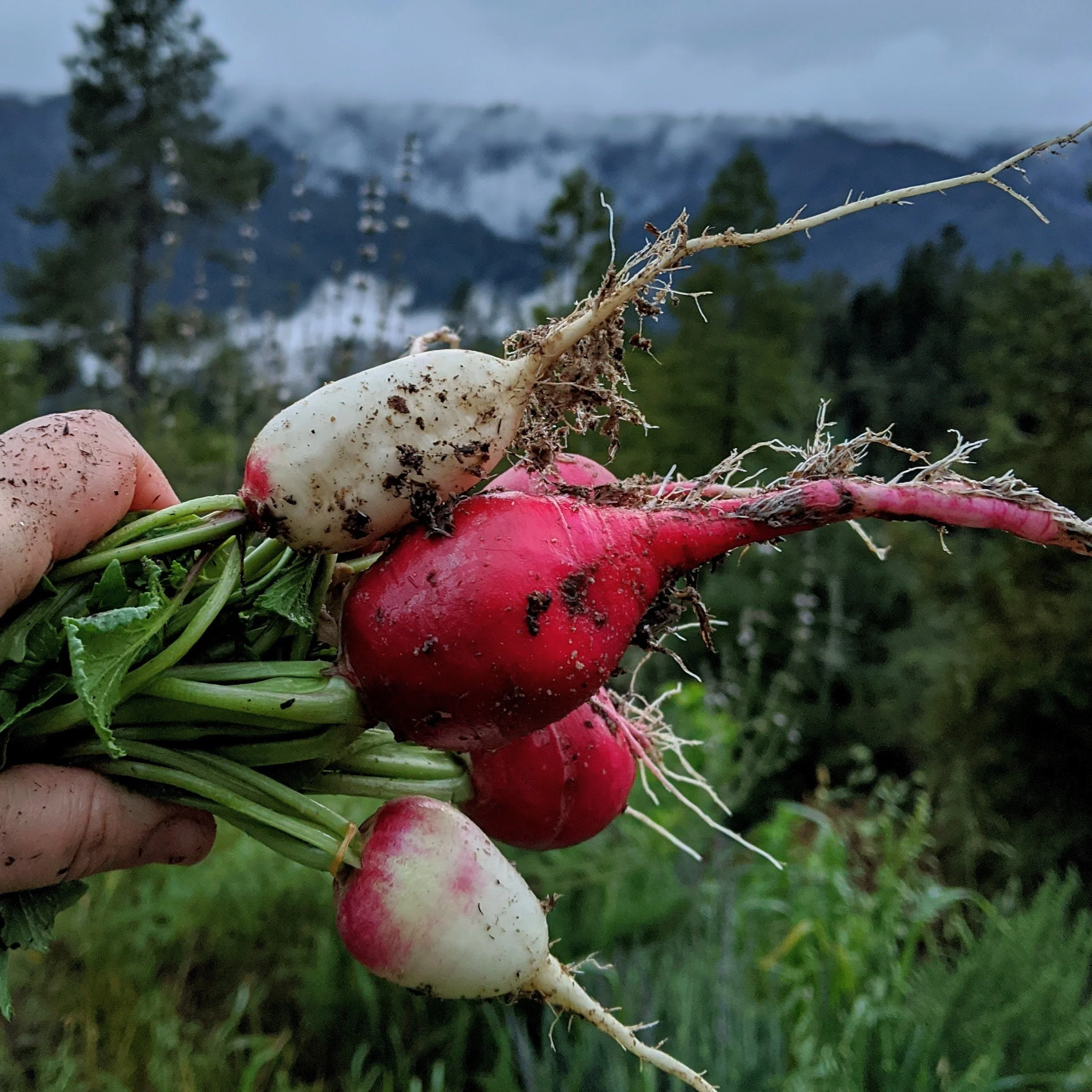
Radishes - Peter "ate some radishes." Grow 'French Breakfast' (oblong, red-and-white, mild) for the most Potter-authentic look. 'Cherry Belle' (round, red) is the easiest for kids. Direct-sow fall through spring. Ready in 22 to 30 days. The fastest vegetable in the garden, which makes it perfect for impatient young gardeners.
Parsley - Peter "went to look for some parsley" to settle his stomach. Grow flat-leaf Italian parsley (better flavor) or curly parsley (more visually dramatic). Start from seed (slow to germinate, be patient) or transplant. Cool-season herb that grows year-round in coastal California.
Cucumbers - Peter hid in Mr. McGregor's cucumber frame. Grow 'Spacemaster' (compact bush type, good for small gardens) or 'Lemon' cucumber (round, yellow, mild). Warm-season crop, transplant after last frost. Full sun. Provide a trellis or frame (just like Mr. McGregor's).
Gooseberries - Mr. McGregor was picking gooseberries when Peter arrived. Gooseberries (Ribes uva-crispa) grow in California but need some winter chill. They do well in the Santa Cruz Mountains and coastal areas. Tart berries that make excellent jam. Plant bare-root bushes in winter.
Chamomile - Peter's mother gave him chamomile tea when he came home sick. Grow German chamomile (Matricaria chamomilla) from seed. It self-sows freely. Harvest the small, daisy-like flowers and dry them for tea. A wonderful connection between the garden and the kitchen.
From "The Tale of Benjamin Bunny" (1904)
Onions - Benjamin and Peter gathered onions from the garden. Grow 'Walla Walla' (sweet, mild) or green onions/scallions (faster harvest, less waiting). Plant from sets or starts in late winter.
Pears - Mentioned in the garden. A dwarf pear tree ('Bartlett' or 'Warren') in a large container adds height and produces fruit kids can pick.
From "The Tale of Jemima Puddle-Duck" (1908) and Other Stories
Sage - Used in the stories for cooking. Common sage (Salvia officinalis) is a beautiful, drought-tolerant perennial with soft gray-green leaves. Full sun.
Thyme - Another cooking herb from the stories. English thyme is the classic. Low-growing, drought-tolerant, and fragrant.
Foxglove (Digitalis purpurea) - Appears in Potter's illustrations and in "The Tale of Jemima Puddle-Duck." Tall purple or pink flower spikes. Grows well in part shade in California. Important: foxglove is toxic if ingested. Plant it as a backdrop plant, and teach kids it is a look-only plant.
How Do You Design a Peter Rabbit Garden?
The "Mr. McGregor's Garden" Layout
The charm of a Peter Rabbit garden is in the details that evoke the story. You do not need a huge space. A 4-by-8-foot raised bed or a collection of containers can capture the feel perfectly.
A small fence or gate. This is the most important design element. Even a low picket fence (12 to 18 inches tall) around the bed, with a tiny gate, immediately says "Mr. McGregor's garden." You can buy a small decorative garden fence at any home improvement store, or build one from scrap wood with your kids. The gate should be just big enough for a stuffed rabbit to squeeze through.
Organized rows. Plant in neat, traditional rows (just like a proper English kitchen garden). Lettuce in one row, radishes in another, beans in a third, parsley in a fourth. Label each row with a handmade sign: "Peter's Lettuces," "Mr. McGregor's Radishes."
A cucumber frame or bean trellis. This is where Peter hid. A simple bamboo A-frame covered in cucumber or bean vines creates a hiding spot for stuffed animals or garden ornaments.
A watering can and garden tools. Place a small watering can and a miniature tool set near the bed (like Mr. McGregor would have left them). These serve double duty as decoration and functional kid tools.
A Peter Rabbit figurine or stuffed animal. Tuck one near the garden gate or peeking out from under the cucumber frame. Kids love this.
Container Version
Use 5 to 7 pots arranged in a group, each planted with a different Peter Rabbit plant. Place a small decorative fence in front of the pots and add a Peter Rabbit figurine. Simple, charming, and works on any patio.
When Do You Plant a Peter Rabbit Garden in California?
Many of the Peter Rabbit plants are cool-season crops, which means California gardeners can plant them in fall and winter (when most of the country is dormant). This is actually an advantage: your Peter Rabbit garden can be producing while kids are in school, and harvest aligns with spring reading activities.
Fall (September through November)
Direct-sow lettuce, radishes, and parsley.
Sow chamomile seeds (they germinate with cooler, moist weather).
Plant gooseberry bushes (bare-root, available from specialty nurseries).
Plant sage and thyme starts from the nursery.
Late Winter (January through February)
Succession-plant more lettuce and radishes for continuous harvest through spring.
Plant onion sets or starts.
Start French bean seeds indoors (or wait to direct-sow in April).
Spring (March through May)
Direct-sow French beans after last frost (mid-March on the coast).
Transplant cucumber starts after soil warms (late April).
Harvest first lettuce, radishes, and chamomile flowers.
Build the fence and add decorations.
Summer (June through August)
Harvest beans, cucumbers, and herbs.
Lettuce and radishes may bolt in summer heat. Switch to heat-tolerant varieties or take a break and replant in September.
What Materials Do You Need?
Garden bed or containers: A 4-by-8-foot raised bed or 5 to 7 large containers
Seeds: Lettuce, radish, French bean, parsley, chamomile, cucumber. Budget $15 to $25
Transplants (optional): Sage, thyme, parsley starts. Budget $10 to $15
Small decorative fence: Picket-style garden border, 12 to 18 inches tall. Budget $15 to $30
Bamboo stakes and string: For cucumber frame or bean trellis
Potting soil and compost
Handmade garden signs: Popsicle sticks or small wooden stakes, markers or paint
A copy of "The Tale of Peter Rabbit" (to read in the garden)
Optional: Peter Rabbit figurine or stuffed animal, small watering can
Chamomile tea supplies: Tea strainer or cheesecloth, honey, mugs
What Activities Go with a Peter Rabbit Garden?
Read the Story, Then Plant (Ages 3 and Up)
Read "The Tale of Peter Rabbit" together before your first planting session. As you read, point out every plant mentioned. After the story, go outside and plant those same plants. The connection between the printed page and the physical garden creates a powerful learning moment.
Harvest Like Peter (Ages 3 and Up)
When the lettuce and radishes are ready, have kids "sneak" into the garden (like Peter) and harvest their own salad. Set out a small bowl and let them pick lettuce leaves, pull radishes, and add parsley. Wash and eat the salad together. For many kids, this is the first time they willingly eat salad, because they are eating the story.
Chamomile Tea Party (Ages 4 and Up)
Harvest chamomile flowers, dry them for a day or two on a sunny windowsill, then brew chamomile tea. Add a little honey. Serve it in small cups and remind kids: "This is what Peter's mother gave him when he had a stomach ache from eating too many lettuces." A chamomile tea party in the garden is a gentle, literary afternoon activity.
Mr. McGregor's Garden Map (Ages 5 and Up)
Have kids draw a bird's-eye map of "Mr. McGregor's garden" based on clues in the story. Where was the gate? Where were the lettuces? Where was the cucumber frame where Peter hid? Where was the gooseberry net? Then compare their map to the actual garden you planted together. This builds spatial reasoning and reading comprehension simultaneously.
Write a New Peter Rabbit Adventure (Ages 6 and Up)
Challenge kids to write their own Peter Rabbit story set in your garden. What would Peter do if he snuck into your garden? Which plants would he eat? Where would he hide? Where would he lose his jacket? This creative writing exercise uses the garden as both setting and inspiration.
Radish Racing (Ages 4 and Up)
Plant 3 to 5 different radish varieties at the same time: 'Cherry Belle,' 'French Breakfast,' 'Watermelon,' 'Easter Egg Mix,' and 'Daikon.' Which variety sprouts first? Which is ready to harvest first? Which is the biggest? This is a seed-to-harvest science experiment disguised as a story extension. According to UC Integrated Pest Management, radishes reach maturity 3 to 6 weeks after the seed goes in, depending on the variety, which makes them a good crop for teaching kids about plant growth.
Can You Expand Beyond Peter Rabbit?
Absolutely. Once kids are hooked on the idea of growing plants from stories, the concept extends to many other beloved children's books. The UC ANR research on school gardens confirms that pairing gardening with reading and other subjects increases both learning outcomes and healthier food choices in children.
"The Secret Garden" by Frances Hodgson Burnett: Plant roses, crocuses, daffodils, and snowdrops. Create a "hidden" garden corner behind a trellis or screen.
"Jack and the Beanstalk": Plant runner beans on a tall teepee trellis and see how high they grow. (They can reach 10 feet or more.)
"The Carrot Seed" by Ruth Krauss: Plant carrots and practice patience. (Carrots take 70 to 80 days to mature.) Perfect for teaching that persistence pays off.
"Tops and Bottoms" by Janet Stevens: Plant crops that produce from "tops" (lettuce, broccoli), "bottoms" (carrots, potatoes), and "middles" (corn, peppers). A great lesson in how different plants produce food from different parts.
Frequently Asked Questions
What age group is a Peter Rabbit garden best for?
The core audience is ages 3 through 8, when children are most enchanted by the Beatrix Potter stories. Younger kids enjoy the planting, harvesting, and imaginative play. Older kids engage with the reading, writing, cooking, and science activities. Families with mixed ages find that the younger kids play in the garden while the older kids do the experiments and writing.
Can I grow all the Peter Rabbit plants at the same time?
In California, you can have most of them going simultaneously from March through May, when cool-season crops (lettuce, radishes, parsley) overlap with the start of warm-season crops (beans, cucumbers). The herbs (sage, thyme, chamomile) produce year-round. For the best all-at-once display, aim for a spring planting.
Do I really need a fence?
You do not need one functionally, but it makes the garden feel like Mr. McGregor's garden. Even a 12-inch decorative border fence from a garden center transforms a regular vegetable bed into a storybook scene. If building a fence is too much, use a garden gate (even one leaning against a raised bed) as a symbolic entrance.
My kids are too old for Peter Rabbit. What is the equivalent for older kids?
For kids ages 9 and up, consider "The Secret Garden" (a restoration and discovery theme), the Dr. Seuss conservation garden (environmental themes), or a pizza garden (more food-focused, less narrative). The Dr. Seuss garden guide works well for older kids who want a creative project without a "babyish" narrative.
Where can I find gooseberry bushes in California?
Gooseberries are less common at mainstream nurseries but are available from specialty fruit tree nurseries like Bay Laurel Nursery (Atascadero), Raintree Nursery (online, ships to California), or Dave Wilson Nursery (wholesale, ask your local garden center to order). The UCSC Farm and Garden plant sales occasionally carry uncommon fruit varieties. For more tips on gardening with children, see the UC Master Gardeners guide to gardening with kids.
The Best Stories Grow in Gardens
A Peter Rabbit garden is where literature meets dirt. It takes a story kids already love and makes it three-dimensional, edible, and real. When your child pulls a radish from the same soil where they planted the seed three weeks ago, and remembers that Peter Rabbit ate radishes too, the story and the garden become one experience. That is a kind of learning no worksheet can replicate.
Growing food with your family? Visit our Your Garden Toolkit page for free planting guides, seasonal checklists, and garden planning worksheets designed for California families.
Get Your Free Garden Resources
