

7 Fruit Trees That Actually Produce Well in Foggy Coastal Santa Cruz

Living on the coast of Santa Cruz County means accepting certain trade-offs. Yes, you get mild temperatures year-round, natural air conditioning in summer, and some of the most beautiful scenery in California. But you also get fog. Lots of fog.
For fruit trees, this presents a challenge. Many popular varieties need something called "heat units" or "chill hours" that our marine climate simply doesn't provide consistently. That peach tree that produces buckets of fruit in Watsonville might give you three sad, flavorless peaches in Aptos.
The good news is that some fruit trees not only tolerate our foggy coastal conditions but actually thrive in them. After talking to local orchardists and nursery experts (particularly the knowledgeable folks at Sierra Azul), here are seven fruit trees that reliably produce in coastal Santa Cruz, Aptos, Capitola, Live Oak, and other fog-belt areas.
What Are Chill Hours?
Fruit trees need a certain number of "chill hours" (cumulative hours below about 45°F) during winter dormancy to produce fruit properly. UC Davis' Fruit & Nut Research & Information Center explains this requirement and hosts a chill calculator with station data for coastal sites.
A UCSC/UCANR handout on "Reliable Fruit Tree Varieties for Santa Cruz County" describes coastal California chill as typically 500 to 800 hours between 32 and 45°F, with locations right on the coast often toward the lower end of that range. Choose varieties that match your chill hours, and you can grow excellent fruit even in the fog belt. Our chill hours guide for Santa Cruz fruit trees goes into more detail on tracking and using this information.
1. Figs: The Coastal Champion
Why they thrive here: Figs evolved in the Mediterranean and are perfectly adapted to our dry summers and mild winters. They don't need much heat to ripen, and our lack of hard freezes means they rarely suffer winter damage.
Best varieties for coastal Santa Cruz:
FigBoss calls Brown Turkey and Black Mission "widely grown, productive, hardy" and notes Violette de Bordeaux as "one of the best performers in many climates."
Brown Turkey: The most reliable producer in coastal conditions. Sweet, medium-sized fruit. Heavy crops from August through October.
Black Mission: Classic California fig with deep purple skin and pink flesh. Slightly more heat-loving than Brown Turkey but still produces well here.
Kadota: Light green skin, honey-sweet flesh. Excellent for fresh eating and preserving. Very reliable in fog zones.
Violette de Bordeaux: Compact tree perfect for small gardens. Dark purple fruit with intense flavor. Handles fog well.
What to expect:
A mature fig tree can produce 30 to 50 pounds of fruit per year in coastal Santa Cruz. Figs ripen over several weeks, giving you an extended harvest rather than all at once.
Local tip: Fig trees can get large (15 to 25 feet unpruned). If space is limited, look for dwarf varieties or plan to prune heavily. Many coastal gardeners grow figs espalier-style against sunny fences. For more details on fig varieties and care, see our guide to growing figs in Santa Cruz County.
2. Apples: Choose Low-Chill Varieties
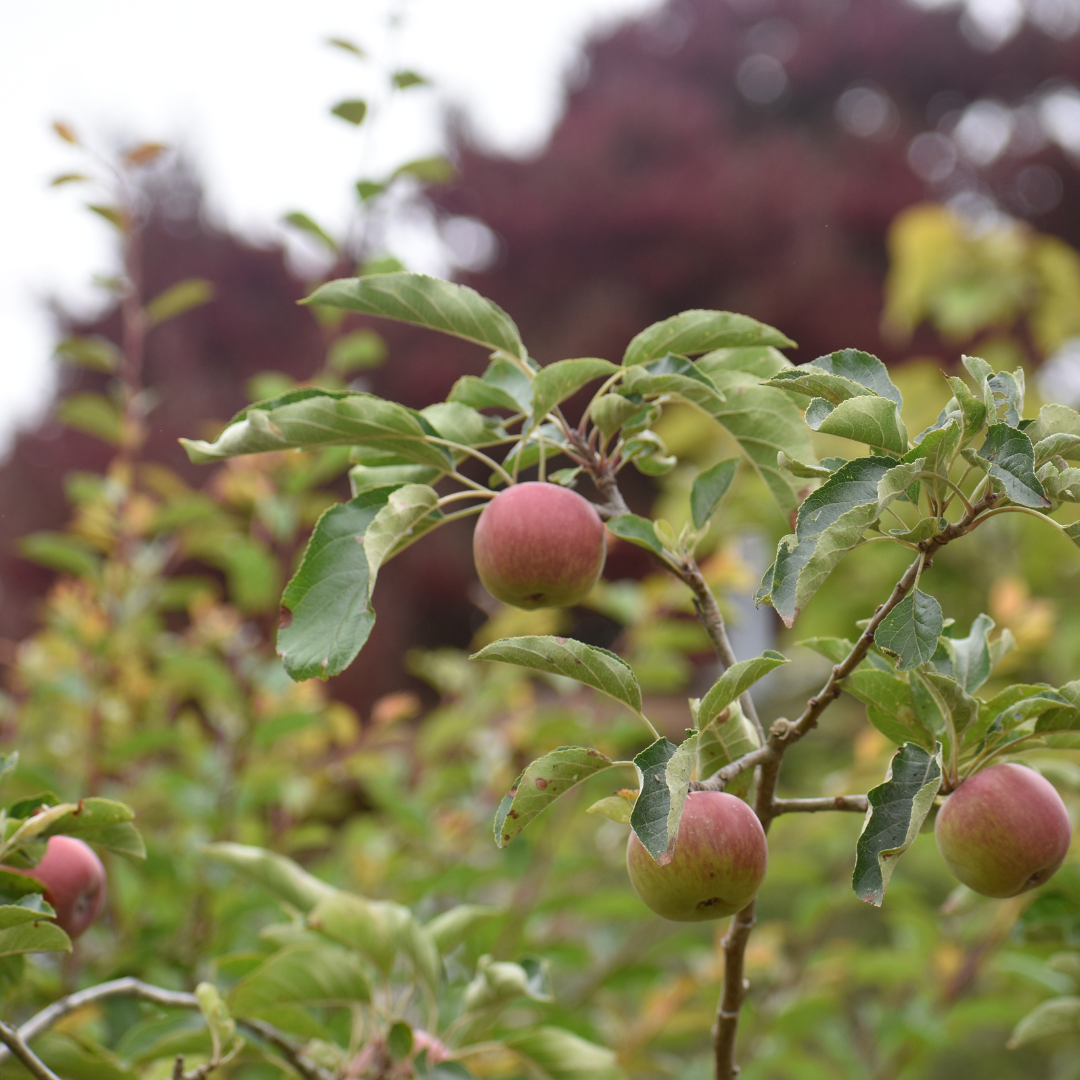
Why they can work here: Apples need a certain number of chill hours to produce fruit. Coastal Santa Cruz typically gets 500 to 800 chill hours, often toward the lower end right on the coast. Choose low-chill varieties, and you can grow excellent apples here.
Best varieties for coastal Santa Cruz:
Placer County Extension confirms that Fuji, Anna, Gala, and Pink Lady are recommended for warmer, lower-chill California locations.
Anna (about 200 chill hours): Ultra-low chill, developed for warm climates. Sweet, mild flavor. Needs a pollinator (try Dorsett Golden at about 100 hours).
Fuji (about 250 to 350 hours): Sweet, crisp, stores well. Very reliable here.
Gala (about 300 to 400 hours): Sweet and mild, great for fresh eating.
Pink Lady / Cripps Pink (about 400 hours): Tart and sweet with pink blush. Produces well in most coastal locations.
Gravenstein (about 600 to 800 hours): The famous Sonoma County apple grows well here too. Needs more chill hours but seems to perform well in our coastal areas anyway. Excellent for cooking.
What to expect:
Apples need a second variety for pollination (or a crabapple nearby). Once established, expect 50 to 100+ pounds from a standard tree. Harvest is typically August through October depending on variety.
Local tip: Sierra Azul Nursery is the best local source for apple varieties suited to our specific conditions. Their staff can advise on which varieties work best for your exact location. We also have a full guide to the best apple varieties for Santa Cruz microclimates. Coastal neighborhoods closer to the water may be better off with the very lowest-chill types like Anna and Dorsett Golden.
3. Persimmons: Foolproof Coastal Fruit
Why they thrive here:UC Davis' Fruit & Nut Research & Information Center states that persimmon has a very low chilling requirement (less than 100 hours) and grows best in mild-winter, mild-summer climates, which fits coastal Santa Cruz perfectly. They're also relatively pest-free.
Best varieties for coastal Santa Cruz:
Fuyu: Non-astringent, can be eaten firm like an apple. Flat, squat shape. The most popular variety for good reason.
Hachiya: Astringent (must be fully soft before eating). Acorn-shaped. Incredible flavor when ripe, like persimmon pudding.
Jiro: Similar to Fuyu but slightly larger. Non-astringent. Very reliable producer.
Chocolate (Maru): Brown-streaked flesh when pollinated. Unique flavor. Non-astringent.
What to expect:
Persimmons are heavy producers. A single tree can yield 100+ pounds of fruit. They ripen in fall (October through December), and Fuyus can be stored for weeks if kept cool.
Local tip: Persimmons drop their leaves in winter, revealing beautiful branching structure and any remaining fruit glowing like ornaments. They're gorgeous landscape trees.
4. Asian Pears: Crisp and Productive
Why they thrive here:Garden.org's "Meet the Asian Pears" describes chill requirements ranging 300 to 600 hours, with Hosui, Shinseiki, and 20th Century as the least chill-sensitive and best suited to warm zone-9-type climates. They're also relatively pest-resistant compared to European pears.
Best varieties for coastal Santa Cruz:
Hosui (about 300 to 450 hours): Golden-brown skin, very sweet and juicy. Perhaps the best-tasting Asian pear.
20th Century / Nijisseiki (about 300 to 400 hours): Yellow-green skin, mild sweet flavor. Very popular.
Shinseiki (about 250 to 300 hours): Yellow skin, refreshing mild flavor. Very reliable.
Kosui (about 300 to 400 hours): Bronze skin, very sweet.
What to expect:
Asian pears are crisp like apples (unlike soft European pears). They ripen on the tree in August through September and can be stored for months if refrigerated. Most need a second variety for pollination.
Local tip: Thin fruit in late spring (remove all but one fruit per cluster). This seems harsh but results in much larger, better-quality pears.
5. Citrus: Yes, You Can Grow It Here
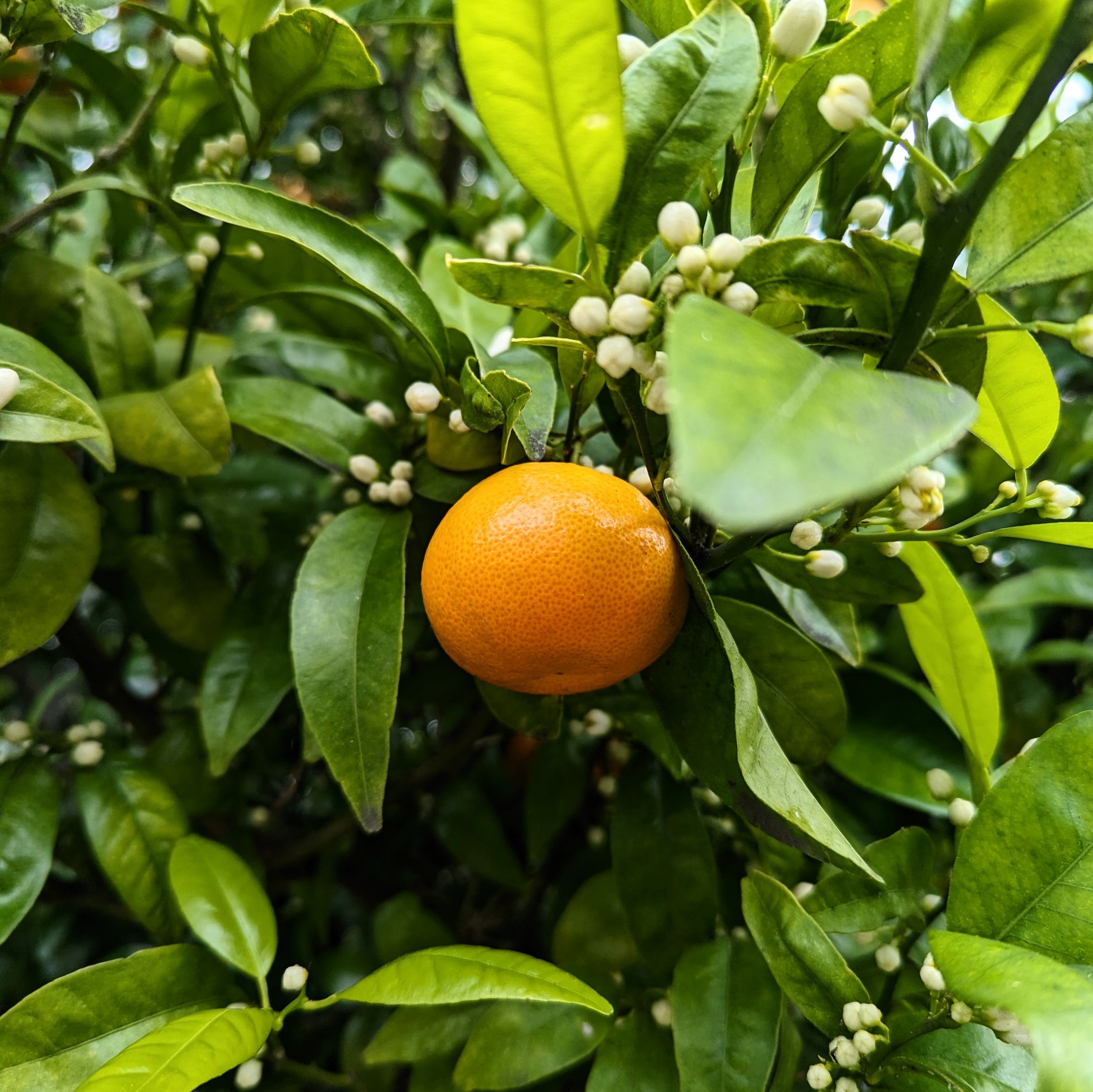
Why they can work here: Citrus is borderline in coastal Santa Cruz. We don't get hard freezes often, but we don't get a lot of heat either. The key is choosing the right varieties and the right microclimate.
Best varieties for coastal Santa Cruz:
University and grower guidance stress that coastal citrus ripens more slowly and may need warm exposures (south-facing walls, patios) or containers to accumulate enough heat.
Meyer Lemon: The most reliable citrus for coastal gardens. More cold-tolerant than true lemons. Bears fruit nearly year-round.
Improved Dwarf Meyer Lemon: Same great fruit on a smaller tree. Perfect for containers or small spaces.
Bearss Lime: More cold-tolerant than Key lime. Produces well in protected coastal locations.
Satsuma Mandarin: The most cold-hardy mandarin. Needs less heat to ripen. Sweet, easy-peeling fruit in winter.
What to expect:
Citrus in foggy areas will be slower to ripen and may produce less fruit than in warmer locations. But with a warm microclimate (south-facing wall, heat-reflecting patio), you can grow excellent citrus.
Local tip: Container citrus can be moved to the warmest spot on your property for summer ripening, then protected in winter. Many coastal gardeners find this easier than trying to site citrus perfectly in the ground.
6. Pluots: Coastal-Adapted Stone Fruit
Why they can work here: Pluots (plum-apricot hybrids) are generally easier to grow in coastal California than pure apricots, which often bloom too early and get frosted. The UCANR "Reliable Fruit Tree Varieties for Santa Cruz County" PDF includes pluots among recommended stone fruits for areas with about 500 to 800 chill hours.
Best varieties for coastal Santa Cruz:
Flavor King (about 400 to 500 hours): Perhaps the most reliable pluot for coastal areas. Incredible sweet-tart flavor. Reddish-purple skin.
Dapple Dandy / Dinosaur Egg (about 400 to 500 hours): Striking mottled skin, red flesh. Sweet with plum flavor.
Flavor Supreme (about 500+ hours): Early ripening, greenish skin with red flesh. Performs well in many coastal spots.
What to expect:
Pluots ripen in July through August. They need a pollinator (a Japanese plum like Santa Rosa works, or plant two pluot varieties). Production can be inconsistent in cool years, but good years yield heavily.
Local tip: If you're on the edge of the fog zone (like parts of Soquel or the hills above Capitola), you may have enough heat units for pluots to produce reliably. Try one and see.
7. Feijoa (Pineapple Guava): The Underrated Choice
Why they thrive here:California Rare Fruit Growers' Fruit Facts sheet on Feijoa states that it is native to the highlands of southern Brazil, Paraguay, Uruguay, and northern Argentina, and thrives in coastal California. It tolerates partial shade, slight salt spray, fog, and wind, and is well suited to hedges and windbreaks. Plus, the flowers are edible!
Best varieties for coastal Santa Cruz:
CRFG's variety notes:
Coolidge: Self-fertile (doesn't need a pollinator). Large fruit with excellent flavor.
Nazemetz: Very large fruit. Considered one of the best-tasting. Self-fertile but heavier with cross-pollination.
Trask: Heavy producer, medium-sized fruit. Self-fertile. Used as a pollinator.
Mammoth: Very large fruit but needs a pollinator for best production.
What to expect:
Feijoa fruit ripens in fall (October through November) and falls from the tree when ripe. The flavor is unique: aromatic, slightly gritty, like a combination of pineapple, guava, and mint. Eat fresh, use in smoothies, or make jam.
Local tip: Feijoas make excellent hedges and can be pruned heavily without affecting fruit production. Use them as edible landscaping.
Fruit / VarietyChill RequirementNotes for Foggy Coastal Santa CruzSourceApple 'Anna'~200 hoursUltra-low chill; very reliable near coast as long as pollinatedUC Davis chill calculatorApple 'Dorsett Golden'~100 hoursGood pollinator for Anna; suited to the mildest, lowest-chill spotsVariety chartsApple 'Fuji'~250–350 hoursWorks in many coastal climates with 400+ chillPCWA "Fall Treat"Apple 'Gala'~300–400 hoursSweet and mild; reliable in most coastal locationsApple 'Pink Lady'~400 hoursTart-sweet; needs slightly more chill than Anna/FujiApple 'Gravenstein'~600–800 hoursHigher chill but often performs anyway in Santa Cruz coastal areasLocal grower experienceAsian Pear 'Hosui'~300–450 hoursVery good choice for coastal chill ranges; sweet and juicyGarden.org "Meet the Asian Pears"Asian Pear 'Shinseiki'~250–300 hoursLowest chill Asian pear; very reliableAsian Pear '20th Century'~300–400 hoursPopular variety; crisp and mildPersimmon (Fuyu, Hachiya)<100 hoursExtremely well suited to coastal Santa Cruz; heavy crops, low pest pressureUC Davis Persimmon in CaliforniaFeijoa (Coolidge, Nazemetz, etc.)Very low; subtropicalIdeal coastal fruit/hedge; no formal chill requirement; handles fog and saltCRFG Feijoa Fruit FactsPluot 'Flavor King'~400–500 hoursMost reliable pluot for coastal areas; incredible flavorUCANR Santa Cruz PDFPluot 'Dapple Dandy'~400–500 hoursStriking appearance; sweet plum flavor
Honorable Mentions
These fruit trees can produce in coastal Santa Cruz under the right conditions (see also our broader California fruit trees guide):
Plums (Japanese varieties): Santa Rosa, Satsuma, and Burgundy plums can produce well with 300 to 500 chill hours.
Pomegranates: May struggle in the foggiest areas but can produce in warmer microclimates.
Loquats: Very reliable in coastal areas. Often overlooked but delicious.
Mulberries: Tolerant of coastal conditions and produce heavily with minimal care.
Trees to Avoid in Foggy Coastal Areas
The UCANR Santa Cruz County fruit-variety PDF notes that high-chill types and heat-loving peaches, nectarines, and sweet cherries are unreliable for Santa Cruz coastal areas:
Most peaches and nectarines: Need more heat units than we can provide. Trees may survive but produce little or poor-quality fruit.
Sweet cherries: Need more chill hours and heat units. Sour cherries are marginally better.
Apricots: Bloom too early and often get frosted. Very unreliable.
European pears: Some varieties work, but most need more heat than we get for good fruit quality.
Frequently Asked Questions About Coastal Fruit Trees
I'm just a few blocks from the ocean. Can I still grow fruit trees?
Yes, but stick to the most coastal-tolerant varieties: figs, feijoas, Meyer lemons (protected spot), and persimmons. Salt air and wind are additional challenges right on the coast.
My neighbor grows peaches successfully. Why can't I?
Microclimates matter enormously. Your neighbor may have a south-facing slope, a heat-reflecting wall, or be slightly more inland. Even a few blocks can make a difference. Try the trees that work for your specific spot.
How do I know if I have enough chill hours?
Coastal Santa Cruz typically gets 500 to 800 chill hours annually (hours below 45°F), often toward the lower end right on the coast. If you're unsure, the UC Davis Fruit & Nut Research and Information Center has chill hour tracking data for California locations.
Should I buy a fruit tree at a big-box store or a local nursery?
Local nurseries (Sierra Azul, Far West) stock varieties proven for our area. Big-box stores carry generic inventory that may include varieties unsuited to coastal conditions. Pay more for local expertise.
When should I plant fruit trees?
Bare-root season (December through February) offers the best selection and prices. Container trees can be planted year-round but establish fastest when planted in fall or early winter before our rainy season.
How long until I get fruit?
Depends on the tree and whether you buy bare-root or larger container stock. Most fruit trees begin producing within 3 to 5 years. Figs and persimmons are often fastest; apples and pears take longer.
Free Gardening Resources
Seasonal Planting Calendar: When to plant and care for fruit trees in Santa Cruz County.
Know Your Microclimate Worksheet: Identify the best spots for fruit trees on your property.
How Do You Grow Fruit in the Fog Belt?
Coastal fog isn't a barrier to fruit growing; it's just a filter. The trees that thrive here have adapted to similar conditions elsewhere in the world. Work with your climate instead of against it.
Start with one or two trees from this list. Site them in the warmest, sunniest spot you have. Be patient while they establish. In a few years, you'll be harvesting more fresh fruit than you can eat, right from your foggy coastal garden.
