

Raised Beds vs. In-Ground Gardening in Santa Cruz County: A Practical Comparison
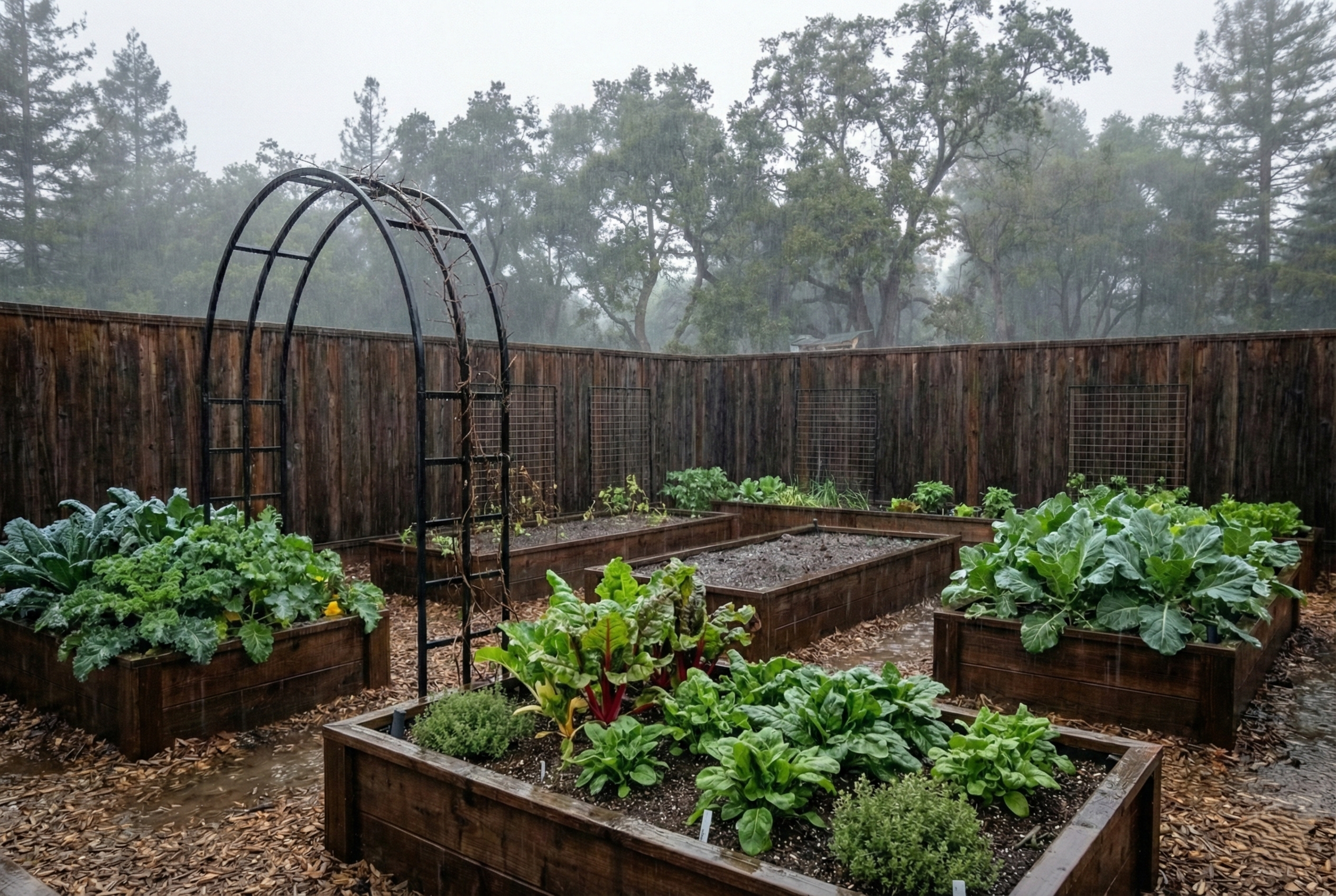
Before you order lumber and a truckload of soil, take a spade to the spot where you want to grow. The ground may be easier to work with than you expect. Or one shallow hole may explain why last winter's vegetables struggled.
Raised beds are useful when they solve a problem: awkward access, limited usable soil, or a small growing area you want to manage separately. In-ground beds can be just as sensible where the soil and drainage already suit your crops. For a Santa Cruz County garden, the better choice starts with your site rather than your town's name.
A few of the product links in this guide are affiliate links. If you buy through one, Ambitious Harvest may earn a small commission at no extra cost to you, which helps keep these guides free. As an Amazon Associate, we earn from qualifying purchases. Read our full disclosure.
Look at the ground before choosing the frame
Check several places in the proposed bed. Does a spade go in easily? Are there dense layers, building debris or large roots? After rain, does water collect there or move through? Compare these observations with what you see in the drier months. A spot that looks workable in summer may receive runoff in winter.
The USDA Natural Resources Conservation Service soil surveys can provide background on mapped soil types, but they cannot tell you exactly what a builder left in your yard. Avoid assuming that every coastal garden is sandy or every inland garden is clay. Soil can change within a property.
Clay by itself is not a reason to abandon in-ground gardening. The questions are whether water and roots can move through the soil and whether you can work it without compacting it. If the cause of poor drainage is unclear, ask the UC Master Gardeners for help interpreting what you find.
A hole filled with water can reveal a drainage concern, but a single pass-or-fail time is not enough to design the garden. Persistent standing water deserves a closer look. A raised frame adds growing depth; it does not make a high water table or incoming storm runoff disappear.
Where raised beds earn their cost
Start with the problem you want the bed to solve. A higher growing surface can reduce bending. A defined bed makes it easier to keep feet off the planting soil. Imported growing mix can give you a usable root zone above difficult ground. These are concrete benefits you can compare with the price of construction and filling.
Reach matters as much as height. Choose a width that lets you tend the middle without stepping inside, and leave paths you can use with a hose, bucket or wheelbarrow. A bed against a fence needs to be narrower than one you can reach from both sides. The UC raised-bed planning guide discusses sizing, access and materials.
Under redwoods, a frame will not supply missing sunlight or remove competition from established trees. Avoid damaging tree roots when preparing the site. Our Growing Under the Redwoods guide looks more closely at the growing conditions to consider there.
On a slope, a level planting surface may be useful, but the structure and drainage need to suit the slope. Do not treat an ordinary garden-bed frame as a retaining-wall design. Get site-specific help where a bed must hold back earth or where runoff could affect a building or neighboring property.
What happens to water in each kind of bed
Raising the root zone can help where the surface soil drains poorly, provided excess water has somewhere to go. The fill, the ground beneath it and the path of incoming water all matter. Do not promise yourself a waterlogging-proof garden simply because the sides are tall.
Summer brings the opposite concern. Raised beds can dry more quickly than surrounding ground, a trade-off also noted in the UC planning guide. The original choice may solve a winter problem while creating a need for closer summer watering checks.
Check moisture below the surface rather than watering because the top looks dusty. Mulch and well-managed drip irrigation can help you deliver water to the growing area. Our Drip Irrigation Setup 101 guide explains setup, while the Water-Wise Gardening Guide covers broader conservation choices. Both raised and in-ground beds benefit from attention to where the water actually goes.
Good soil still needs care
Buying a raised-bed blend gives you more control over the starting material, but the bag or delivery ticket is worth reading. Ask what is in it and whether it is intended for your kind of bed. An open-bottom bed over soil and an enclosed planter on paving do not offer roots the same conditions.
There is no single topsoil-compost-drainage ratio that every Santa Cruz garden needs. Choose a mix that holds moisture while draining, and avoid adding ingredients simply to meet a recipe. Perlite is an ingredient in some growing mixes, not a mandatory purchase for every raised bed.
For a local bulk purchase, ask Aptos Landscape Supply or another supplier about the current blend, delivery access and total quantity before ordering. Take the internal dimensions of the bed with you. Settling and later top-ups are part of the upkeep.
In-ground soil also deserves a fair trial. Protect it from foot traffic, avoid working it while wet, and base amendments on its condition and test results. You do not have to wait a fixed number of years before it can grow vegetables, and adding a frame does not eliminate the need to care for soil.
Weeds, roots and growing space
Clean fill can reduce some existing weed pressure, but seeds still arrive and persistent weeds may grow from below. Check the site before covering it, then remove new weeds while they are small. Neither bed style stays weed-free on its own.
Likewise, a raised bed does not make every crop suitable for close spacing. Leave room for the mature plant and for light and air to reach it. A sprawling squash needs room whether its roots are inside a timber frame or in the ground.
Raised soil may warm sooner, but planting still depends on the crop and conditions. A frame cannot turn a shaded, foggy spot into a warm tomato site. Use the Know Your Microclimate Worksheet to assess the whole growing area rather than choosing by soil alone.
Plan gopher protection before filling
If gophers are active, think about exclusion while the bed is empty. UC IPM recommends wire mesh beneath raised beds and describes protection for in-ground plantings too. A raised bed is convenient to screen, but it is not the only way to protect plants.
Hardware cloth can form part of that barrier. Fit it to the bed without gaps and check its condition over time. Do not describe any barrier as permanent or impossible to breach. The Gopher Control Guide resource provides more planning help.
When in-ground growing is the simpler choice
If you have workable soil, reasonable drainage and room to garden, you may gain little by buying a frame. In-ground beds avoid that construction expense and can make sense for larger planting areas or crops that need considerable space.
There is also a middle option: begin with one small raised bed while growing other crops in the ground. Keep notes on watering, work and harvests. Your own comparison will be more useful than a blanket claim that one system always wins across the county.
Frequently asked questions
How deep should my raised bed be?
Consider the roots' entire usable depth, not just the height of the frame. Roots may continue into workable soil beneath an open bed. A planter on concrete needs enough growing medium within the container and a planned drainage outlet. Match the design to your crops and access needs.
What should go on the bottom?
Decide what you need to address: gophers, weeds, soil loss through a container base or drainage. Wire screening excludes burrowing animals; it does not stop weeds. Avoid sealing an open-bottom growing bed with an impermeable liner that traps water. Plan enclosed containers separately.
Will a raised bed use less water?
Not necessarily. It may need more frequent checks because it dries faster. Soil mix, plant size, exposure, mulch and irrigation management determine the result. Watch the plants and moisture in the root zone.
How much will it cost?
Get current prices for the frame, fill, delivery, screening and irrigation together. A low frame price can hide a substantial soil bill. Compare that total with preparing a small in-ground bed before deciding.
When should I build it?
Work backward from the crops you want to plant and allow time to prepare the site. Avoid compacting wet ground during construction. Check the completed bed's drainage and watering before filling it with seedlings.
Can raised beds work on the foggy coast?
Yes, but choose crops for the available sunlight and warmth just as you would in the ground. Better access or added soil depth can be worthwhile; the frame itself does not change the coastal growing season.
Choose one useful next step
If you are undecided, assess the proposed growing spot and price one bed. That gives you something real to compare. Build when the added access, soil depth or protection solves a problem you have actually identified.
Free Resources
Know Your Microclimate Worksheet: Assess your soil, drainage, and site conditions
Gopher Control Guide: Essential reading for raised bed installation
Seasonal Planting Calendar: What to plant once your beds are ready
Garden Checklist: Getting started checklist for new gardeners
Related Articles
Getting Started: Your First Vegetable Garden in Santa Cruz County: Complete beginner's guide
Navigating Santa Cruz County Microclimates: Understanding your specific growing conditions
Drip Irrigation Setup 101: Practical setup guidance
Water-Wise Gardening Guide: Maximizing water efficiency
