

Understanding Your Soil: A Guide for Santa Cruz Gardeners
A few of the product links in this guide are affiliate links. If you buy through one, Ambitious Harvest may earn a small commission at no extra cost to you, which helps keep these guides free. As an Amazon Associate, we earn from qualifying purchases. Read our full disclosure.
Push a trowel into a bed after rain and the soil begins telling you a story. It may slide apart like beach sand, cling to the blade, or crumble into small pieces. Those differences affect how you water, when you can work the bed, and what help it needs. Before buying amendments, get to know what is already under your feet.
Santa Cruz County soils vary, and a town name cannot tell you the texture or pH of a particular yard. Imported fill, construction, and previous gardening can change a bed as well. Test the planting area itself.
This guide will help you identify what you're working with and how to improve it for growing vegetables.
What roots need from soil
Healthy soil does more than anchor plant roots. It:
Stores and releases nutrients that plants need to grow. Nitrogen, phosphorus, potassium, and essential micronutrients cycle through the soil food web.
Holds water while still allowing excess to drain. The ideal soil acts like a sponge, retaining moisture between waterings without becoming waterlogged.
Supports beneficial organisms. Bacteria, fungi, earthworms, and other soil organisms break down organic matter and cycle nutrients. Some also help suppress plant pathogens.
Provides structure for roots to penetrate and spread. Loose, well-aerated soil lets roots access oxygen, water, and nutrients efficiently.
You cannot fix every plant problem by changing the soil. But understanding how roots get water, air, and nutrients helps you rule out avoidable trouble before you reach for fertilizer.
Texture and structure: two different things
Sand, silt, and clay describe the size of the mineral particles in soil. Their proportions determine texture. Structure is different: it describes how those particles join into aggregates, with pores between them. Compost can improve structure without turning clay into a different mineral texture. UC Master Gardeners explain this distinction in their soil-preparation guide.
Sandy Soil
Feel: Gritty, often loose when squeezed. Drainage: Usually rapid, though compaction and underlying layers still matter.
Pros:
Warms quickly in spring
Easy to dig and work with
Usually drains readily
Cons:
Dries out quickly, requires frequent watering
Nutrients leach away rapidly
Holds less water and many nutrients than finer-textured soil
Organic matter content depends on the soil and its history; texture alone does not tell you how much compost it needs.
If your handful feels gritty and falls apart readily, watch how quickly that bed dries after watering. Sandy soil often needs shorter intervals between irrigations, but measure moisture rather than watering on texture alone. Mulch and appropriate compost additions can help it hold water.
Clay Soil
Feel: Sticky and moldable when moist. Drainage: Often slow, especially where the soil is compacted.
Pros:
Holds nutrients well
Retains moisture longer between waterings
Cons:
Compacts easily, becomes hard when dry
Drains slowly, can waterlog in winter
Difficult to dig and work with
Warms slowly in spring
Cracks when dry
Clay can be awkward to work when it is sticky and just as awkward after it dries hard. It also holds water and nutrients well. Wait until the soil is workable, protect it from traffic, and improve its structure gradually rather than trying to force a spade through a wet bed.
Loam (The Goldilocks Soil)
Feel: Often crumbly when well structured. Drainage: Usually favorable, but affected by compaction and subsoil.
Useful qualities:
Balance of sand, silt, and clay
Drains well but retains moisture
Holds nutrients; can still compact
Easy to work with
Supports healthy microbial life
Loam is a texture class, not an endpoint you reach by repeatedly adding compost. A sandy or clay soil can become a productive garden soil while remaining sandy or clay. Aim for good structure, suitable drainage, and balanced fertility rather than a different name for the soil.
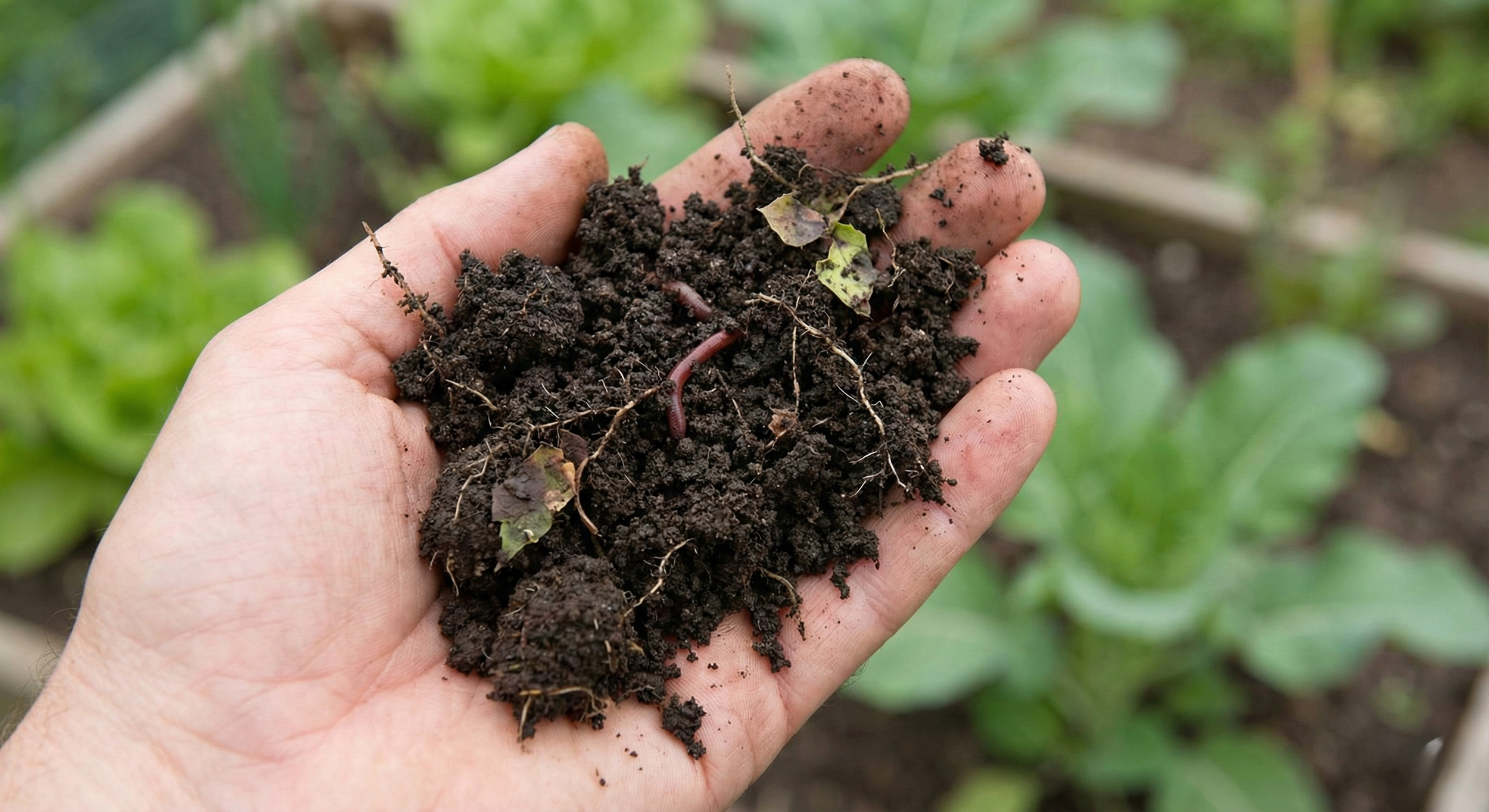
Start with a moist handful
Here's a simple way to identify your soil:
Take a handful of moist soil (not wet, not dry)
Squeeze it firmly in your fist
Open your hand and observe:
If it falls apart immediately: It may be sandy, especially if it also feels gritty.
If it holds together and crumbles when gently pressed: it may have favorable structure. A squeeze test alone does not identify an exact texture class.
If it forms a sticky ball and smears when rubbed: It may be clay-rich. Use a fuller texture test to refine the result.
For a more precise texture classification, follow a standard ribbon test or request a laboratory analysis.
You can refine this test by rubbing a small amount of soil between your fingers. Sand feels gritty. Silt feels like flour. Clay feels slippery or sticky.
A mail-in soil test kit sends your sample to a laboratory. That differs from an at-home probe or color-change kit. Check the included analyses and follow the sampling instructions before ordering.
What Is Soil pH?
Soil pH describes acidity or alkalinity: 7 is neutral, lower values are acidic, and higher values are alkaline. It affects nutrient availability, which is why adding more fertilizer does not always solve a nutrient problem.
Many vegetables do well around pH 6 to 7, though crop preferences vary. Test before applying lime or sulfur. A lab recommendation takes soil properties and the intended crop into account, not just the pH number.
Do not infer pH from proximity to the beach, a redwood tree, or an inland address. A test of the actual planting area is the useful starting point.
In alkaline soil, some nutrients can become less available. Yellow leaves can also have other causes, so diagnose the plant and test the soil before treating pH. Organic matter is useful for structure but is not a predictable substitute for a measured pH correction.
For a soil that is too acidic for the intended crop, use the lab's lime recommendation. Do not choose dolomite automatically; it also adds magnesium. Fireplace ash is too variable and concentrated to make a routine vegetable-bed recommendation.
Test before making a correction
A soil test is most useful when it answers a decision: does this bed need a nutrient, is its pH unsuitable, or is there a salt problem? Order the analyses you need and tell the lab what you plan to grow. A basic panel does not necessarily include organic matter, texture, or contamination testing.
DIY Test Kits
Home kits and inexpensive meters can provide a rough indication, but accuracy depends on the kit, calibration, and sampling method. They should not set your lime, sulfur, or fertilizer rate. If a result will change what you apply, use a laboratory and its sampling instructions.
Garden centers may carry home kits. Check current stock before making a trip; the names below are places to inquire rather than a verified availability list.
San Lorenzo Garden Center
Scarborough Gardens
Home Depot
Far West Nursery
DIY kits work for a general sense of your soil, but for accurate, detailed information, send a sample to a lab.
Professional Lab Testing
Laboratory panels and fees vary. Check the current order form and select the tests that answer your question. Do not assume a basic fertility panel includes nitrogen, organic matter, heavy metals, or amendment recommendations.
Where to send soil samples:
UMass Soil Lab: Review current sample acceptance, submission instructions, and available tests at soiltest.umass.edu.
A&L Western Laboratories: Review its California laboratory services and sampling instructions at al-labs-west.com.
The local UC Master Gardener program can help you interpret a garden problem and choose the next question to investigate. Check its current contact and event information; do not assume that the office operates a testing laboratory or has a testing workshop scheduled.
How to Take a Soil Sample
Read the chosen lab's instructions before taking the sample. Sampling depth and preparation can differ by crop and test.
- Divide the garden into areas managed alike. Keep a raised bed, a lawn, and an unusual problem spot separate.
- Use clean tools and the type of container the lab specifies. Avoid soil immediately beside a fertilizer spill or compost pile.
- Take subsamples from several places within one area and combine them if the lab directs you to do so.
- Label the sample with the bed and intended crop. Follow the lab's drying, packaging, and mailing instructions.
Keep the report so a future test can show change. Retest on the lab's recommended schedule and after a significant problem or treatment, rather than following one universal interval.
Use organic matter thoughtfully
Compost is often a useful starting point, but more is not always better. It adds nutrients and can add salts as well as organic matter. Use the bed's history and test results to decide how much it needs.
Organic matter comes from living material at different stages of decomposition. For a vegetable bed, finished compost is easier to manage than fresh kitchen scraps or a load of undecomposed material. Raw ingredients generally belong in a composting system first.
Improves structure in both clay and sand:
In clay, it can support aggregation and pore spaces, improving structure
In sand, it acts like a sponge, holding water and nutrients that would otherwise wash away
Feeds soil life. Microorganisms break down organic matter, releasing nutrients in forms plants can absorb. This creates a living soil food web.
Supports soil processes. Compost properties vary; do not rely on it as a predictable pH correction.
Increases water retention. Organic matter can improve water storage; the amount depends on the soil and amendment.
Avoid chasing one organic-matter percentage without knowing how the laboratory measured it. Mass and volume percentages are not interchangeable. Record what you add and use soil performance and testing to guide later applications.
Choosing compost and other organic material
Compost
Bulk compost for large areas:
- Ask Aptos Landscape Supply about current compost products and delivery details before ordering.
Ask Central Home Supply about current soil blends, compost, and pickup or delivery options.
Bagged compost for small gardens:
Ask San Lorenzo Garden Center about current compost products.
Compare current bagged amendments at Dig Gardens.
Check compost ingredients and availability with Scarborough Gardens.
Manure
Age alone does not establish that manure is pathogen-safe. Six months in a pile is not the same as a controlled composting process. For food beds, choose properly composted material from a source that can explain its process, and follow UC guidance on safe home-grown produce. Do not use pet manure in edible beds.
Ask a supplier what a manure-based product contains and how it was composted. Availability changes, so check before visiting.
Leaf Mold and Mulch
Shredded deciduous leaves can become leaf mold as they decompose. Keep the pile moist and aerated, and judge it by its crumbly condition rather than a one-year deadline.
ChipDrop connects gardeners with arborist chip deliveries. Check its current terms and understand the possible load size and variable material before requesting a delivery. Use woody material as surface mulch rather than mixing a fresh load into vegetable soil.
Worm Castings
Vermicompost contains organic matter, nutrients, and microbes, but its composition varies. A worm composting bin lets you make it at home; check its space and maintenance needs before choosing one.
Ask Dig Gardens or San Lorenzo Garden Center about current worm-casting products and their analysis.
The county composting program lists current backyard and worm-composting workshops. Check the schedule and eligibility details before attending.
Match the addition to the bed
For a new bed: Assess the native soil and its existing organic matter first. An initial amendment may be useful, but a blanket three- or four-inch addition can be excessive for a soil already rich in nutrients. UC Master Gardeners distinguish initial rehabilitation from smaller maintenance additions.
For an established bed: A modest surface addition may be enough. Consider what last year's compost and fertilizers already supplied; do not add a fixed amount twice a year simply because the calendar says to.
For raised beds: Choose a soil-based mix intended for that use and ask about its ingredients. There is no single 60/30/10 formula for every bed. Materials such as perlite belong in an appropriate mix, not as an automatic purchase for all gardens.
Keep an empty bed growing
A cover crop keeps a bed occupied while you are not growing a harvest crop. Its roots and residue can protect the surface and add organic matter. Plan how you will finish it before sowing; an overgrown stand can delay the vegetables you meant to plant next.
Why use cover crops:
Add organic matter when turned into the soil
Reduce erosion and suppress some weed growth
Can fix nitrogen through suitable root bacteria, in legumes such as clover and vetch
Maintain root channels and protect soil structure; roots do not guarantee a compaction repair
Cover crops to consider for Santa Cruz gardens:
Fall-planted (September to November):
Fava beans: A cool-season legume that can fix nitrogen with suitable root bacteria; it still needs drainage.
Crimson clover: Fast-growing, fixes nitrogen, beautiful flowers
Oats: A cool-season grass; do not assume it will winter-kill locally
Winter rye: Produces roots and residue that protect soil; it does not turn clay into another texture.
Warm-season options, once conditions suit:
Buckwheat: Fast, suppresses weeds, attracts beneficial insects
Cowpeas: Heat-tolerant, fixes nitrogen
Choose a crop for the season and the time available. Legumes fix nitrogen through an association with suitable bacteria; they do not automatically supply all the next crop's fertilizer needs. Cut the crop before it sets unwanted seed and allow sufficient time for residue to decompose before planting. UC cover-crop guidance explains why establishment and termination timing matter. A fixed six-to-twelve-week growing period and two-week wait do not fit every species or season.
Places to ask about cover-crop seeds:
Peaceful Valley Farm Supply: Check current cover-crop seed choices and shipping terms.
Mountain Feed & Farm Supply in Ben Lomond
- Ask the Felton Branch Library about its seed-lending collection; cover-crop stock is not guaranteed.
Protect the surface with mulch
Mulch covers the soil surface. An organic mulch gradually decomposes, but its immediate job is to protect the bed from evaporation, weeds, and weather. Keep the seed row clear while seedlings emerge and leave space around plant stems.
A suitable mulch layer can:
Reduce evaporation from the soil surface
Suppress weeds by blocking light
Moderate soil temperature
Reduce surface erosion and the impact of rain
Feed soil organisms as organic mulch decomposes
Best mulches for vegetable gardens:
Straw: A light, manageable mulch for vegetable beds. Choose clean material with few seeds and ask Mountain Feed & Farm Supply or San Lorenzo Garden Center about current stock.
Shredded leaves: A useful way to cover soil with material from your own trees. Shredding helps keep whole leaves from forming a dense mat.
Compost: Adds organic matter and nutrients at the surface. Account for those nutrients before adding more fertilizer.
Wood chips: Useful as surface mulch, especially on paths. Keep them on top rather than mixing them into vegetable soil, where decomposing woody material can temporarily reduce nitrogen available to plants.
Leave a gap around plant stems so mulch does not hold moisture against them. Check beneath mulch for slugs if seedlings are being damaged.
When a bed still struggles
Compaction
Symptoms: Hard, dense soil that water runs off instead of soaking in. Plants struggle to establish roots.
Causes: Walking on beds, working soil when wet, heavy clay content, lack of organic matter.
Solutions:
Never walk on planting areas. Use paths or stepping stones.
Use compost where soil history and testing show it would help; do not add it automatically each year.
- A broadfork can loosen some compacted beds when soil is workable. Avoid unnecessary disturbance and investigate deeper restrictions before repeatedly digging.
- Cover-crop roots can help maintain pores, but they are not a guaranteed remedy for an existing compacted layer.
Acidity (Low pH)
Low pH is a laboratory finding, not a diagnosis made from yellow leaves or nearby redwoods. If the result is too low for your crop, follow a lab recommendation for lime and retest as advised. Do not assume compost, ash, or a change of crop will resolve an undiagnosed problem.
Alkalinity (High pH)
If a test confirms pH is too high for the crop, ask for a correction suited to the soil. Do not rely on coffee grounds or pine needles as a measured acidifying treatment. Nutrient symptoms also require attention to watering, roots, and the plant's actual needs.
Poor Drainage
Notice how long water remains after rain or irrigation. Slow drainage can reflect surface compaction, a restrictive layer, or a high water table. Compost can help structure, but it is not a universal drainage repair. Raised beds may offer a workable growing area; drainage excavation needs a site assessment, especially on slopes or near buildings. Do not direct runoff onto a neighbor's property.
Look for changes you can observe
Improvement is usually gradual, but you do not have to wait for perfect soil to begin gardening. Start with one bed and one problem you can observe. Does water enter more readily? Is the surface less crusted? Can you work the soil without making hard clods?
Compost may improve workability and water retention, but the result depends on the starting soil, amendment, and rate. A poorly drained subsoil will not necessarily be fixed by a layer of compost on top.
Record the amendment and amount, protect the bed from traffic, and check it through a wet and dry season. Keep the practices that help, and investigate persistent problems before buying more material.
Local Classes and Resources
Want to learn more about soil? Check out these local opportunities:
Use the local UC Master Gardener website for current contact details and classes.
Check Cabrillo College's current horticulture course listings if you want a more structured introduction to soils.
The county composting program lists current backyard and worm-composting workshops. Check the schedule and eligibility details before attending.
Santa Cruz Permaculture occasionally offers workshops on soil building and regenerative practices. Check their events at santacruzpermaculture.com.
For specific guidance on soil amendments for California gardens, see our complete guide to California garden soil amendments. Understanding your local microclimate also helps you make better soil improvement decisions.
Start Testing, Start Building
Start with the bed you want to plant next. Feel the soil when it is moist, watch what happens after watering, and get a test before making a chemical correction. Then choose a small, specific improvement you can evaluate. That is more useful than buying a cartful of amendments on guesswork.
Good soil makes everything else easier. It's the best investment you can make in your garden.
Frequently Asked Questions About Santa Cruz Soil
What type of soil do I have in Santa Cruz County?
Soil varies within the county and within individual yards. Feel a moist sample for grit, smoothness, and stickiness; use a laboratory texture analysis if you need a precise class. Your address and nearby trees do not establish texture or pH.
How do I test my soil?
Use the lab's current instructions for sampling depth, mixing, and preparation. A home kit can give a rough indication, but do not base amendment rates on an uncalibrated meter. Choose a lab panel that covers your question, and confirm current fees and included analyses.
How do I fix acidic soil under redwoods?
Test first. Redwoods do not establish a pH value for the bed, and shade, roots, and moisture may matter more than acidity. If the soil is too acidic for the intended crop, follow a lab recommendation. Do not add lime or ash simply because a tree is nearby.
How much compost should I add to my garden?
The right amount depends on the existing soil, prior additions, compost composition, and crop. Initial improvement and annual maintenance are different jobs. Use a modest amount where it is needed and reassess rather than chasing a universal recipe or organic-matter percentage.
Where can I buy compost and soil amendments in Santa Cruz?
For bulk material, ask local landscape suppliers about ingredients, testing, and delivery. For bags, compare labels at local garden centers. Ask about current stock rather than assuming a particular brand is available. Composting at home can also reduce the amount you need to buy.
What's the best way to improve heavy clay soil?
Protect the bed from foot traffic and avoid working it while wet. Suitable compost additions can improve structure over time. Deep roots can help maintain pores, but cover crops and a broadfork are not guaranteed repairs for a hardpan or drainage problem. A raised bed may be useful while you investigate the native soil.
Should I use raised beds or improve my native soil?
A raised bed can provide a manageable growing space where native soil is difficult, but the reason matters. Gopher protection requires an appropriate barrier. Suspected contamination needs assessment and a suitable clean-soil separation plan; simply adding a frame is not a safety remedy. Good native soil may be the more economical choice. Either way, manage fertility from the actual soil and crop needs.
What are cover crops and should I use them?
Cover crops occupy a bed between harvest crops, protecting soil and adding residue. Choose for the season, water available, and the time before the next planting. Plan termination before seed set and allow the residue time to break down. Legume nitrogen contributions depend on growth and suitable root bacteria.
Free Soil and Garden Setup Resources
Download these free guides to understand and improve your Santa Cruz garden soil:
Beginner Garden Setup Checklist: Includes soil assessment as a key step before planting. Covers drainage testing, amendment sources, and bed preparation for Santa Cruz conditions.
Know Your Microclimate Worksheet: Assess the actual bed rather than assigning soil properties by location. This worksheet helps you assess your full growing environment.
Water-Wise Gardening Guide: Healthy soil holds water better. Learn mulching, drip irrigation, and soil-building strategies that conserve water in our dry summer climate.
Companion Planting Guide: Includes information on cover crops and plants that improve soil health while you grow food.
How do I test my soil pH at home and what should it be?
A calibrated test method can give a rough pH estimate, but vinegar or baking-soda fizz tests cannot give a usable amendment rate. Send a sample to a lab when you need to change pH. Many vegetables suit a slightly acidic to neutral range; the UC guide to soil tests helps place the result in context.
