

Blossom End Rot vs. Sunscald on Tomatoes
A few of the product links in this guide are affiliate links. If you buy through one, Ambitious Harvest may earn a small commission at no extra cost to you, which helps keep these guides free. We only point to gear we would use in our own Santa Cruz garden. As an Amazon Associate, we earn from qualifying purchases. Read our full disclosure.
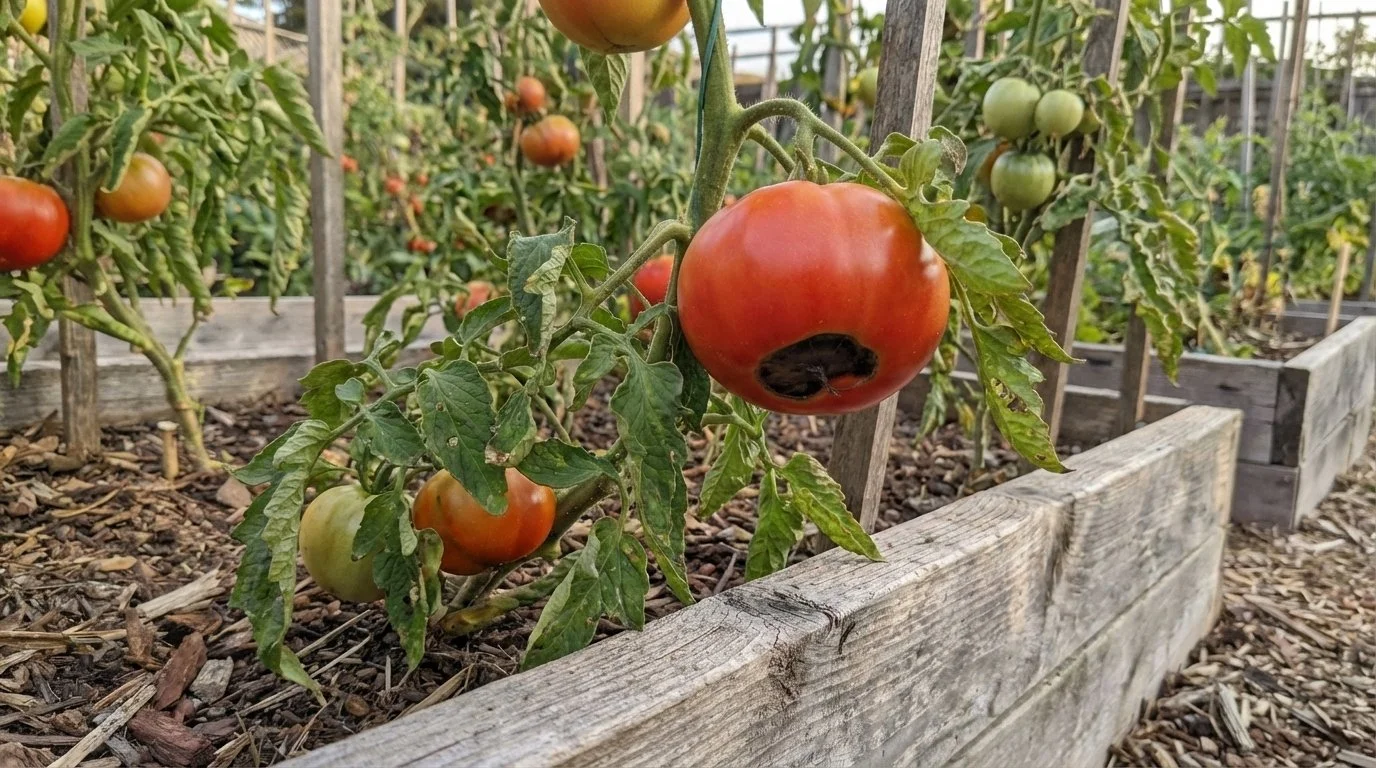
Both cause ugly, discolored patches on tomatoes, but they appear in different places and have completely different causes. Blossom end rot shows up as a dark, sunken, leathery patch on the bottom (blossom end) of the fruit. Sunscald appears as a pale, papery, bleached area on the side of the fruit facing the sun. According to UC Agriculture and Natural Resources, blossom end rot is caused by calcium deficiency in the developing fruit (usually triggered by inconsistent watering), while sunscald happens when fruit loses its protective leaf canopy and is exposed to direct, intense sunlight. Knowing which one you have tells you exactly what to fix.
How to Identify Blossom End Rot
Blossom end rot starts as a small, water-soaked spot on the bottom of green or ripening fruit. Over a few days, it expands into a dark brown or black, sunken, leathery patch that can eventually cover half the fruit. The tissue feels firm and dry, not mushy (unless secondary mold moves in). It most commonly appears on the first fruits of the season, especially on paste tomatoes like San Marzano and Roma, and on peppers.
Despite what many gardeners believe, blossom end rot is almost never caused by a lack of calcium in the soil. Santa Cruz soils generally have adequate calcium. The real culprit is inconsistent watering, which prevents the plant from transporting calcium to developing fruit even when the mineral is present in the soil. A cycle of drought stress followed by heavy watering is the classic trigger.
How to Identify Sunscald
Sunscald appears as a whitish or yellowish, papery patch on the sun-facing side of the fruit. The affected area may blister, crack, or become translucent. It usually happens after a sudden increase in sun exposure: heavy pruning that removes shading leaves, a branch breaking under the weight of fruit, or a heat wave after a stretch of foggy weather.
In Santa Cruz, sunscald is most common on inland properties in Watsonville and the Pajaro Valley, where summer temperatures can spike above 90 degrees F. Coastal gardens rarely see it because our fog and moderate temperatures keep fruit shaded naturally. When sunscald does occur on the coast, it is usually because someone over-pruned their tomato plants in pursuit of better airflow.
The Bottom Line for Santa Cruz Gardeners
For blossom end rot, the fix is consistent water delivery. Mulch your tomato beds with 3 to 4 inches of straw or wood chips, water deeply on a regular schedule (drip irrigation on a timer is ideal), and stop cultivating near plant roots. Do not bother adding calcium supplements; fix the watering first. For sunscald, maintain enough leaf canopy to shade developing fruit. If you must prune tomatoes heavily or if a heat wave is forecast, drape 30% shade cloth over exposed plants. Both problems are preventable with good garden management.
This week: Check your tomato plants. If the bottom of any fruit shows dark, sunken patches, check your watering consistency. If the sun-facing side is bleached and papery, add shade cloth or stop pruning so aggressively.
For more on growing healthy tomatoes in our climate, check out our free Tomato Growing Guide at Your Garden Toolkit.
Keep Reading
- Determinate vs. Indeterminate Tomatoes
- Heirloom vs. Hybrid Tomatoes
- Powdery Mildew vs. Downy Mildew
- Soaker Hoses vs. Sprinklers
Frequently Asked Questions
How do I tell blossom end rot from sunscald?
Blossom end rot shows up as a dark, sunken patch on the bottom of the fruit, while sunscald appears as a pale, papery, bleached area on the sun-facing side. Their locations on the fruit are the easiest giveaway.
Is blossom end rot caused by a calcium deficiency in my soil?
Usually not. It comes from inconsistent watering that prevents the plant from moving calcium to the developing fruit, so cycles of drought followed by heavy watering trigger it. Steady moisture, helped by mulch and drip irrigation, is the fix.
Which problem is more common in Santa Cruz?
Blossom end rot is the more common issue locally because of watering inconsistencies. Sunscald mostly affects hotter inland areas like Watsonville, since coastal fog cover shields most coastal gardens from intense sun.
