

How Deep Should a Raised Bed Be for Vegetables?
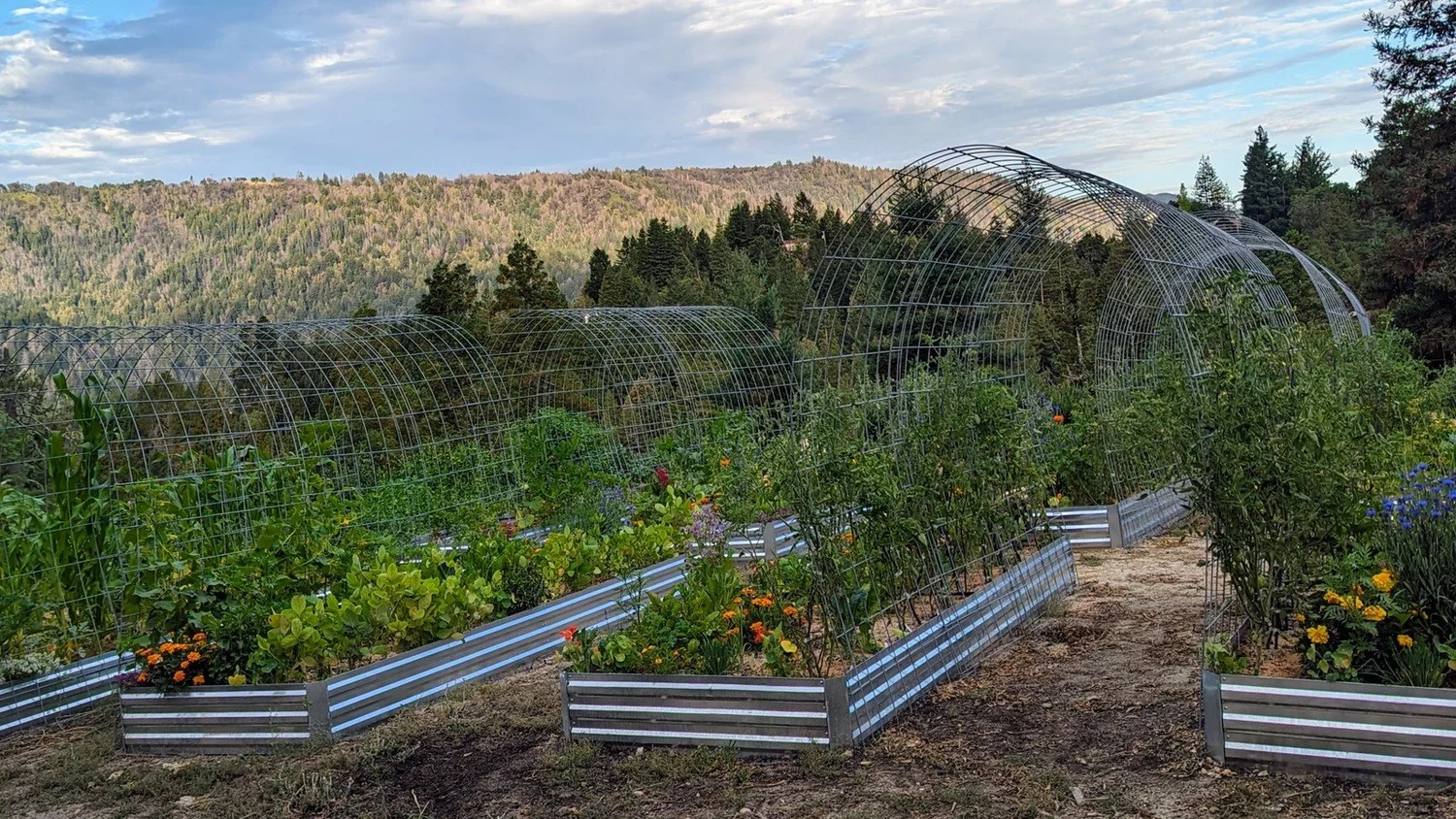
A Boulder Creek garden with multiple raised beds, hoop trellises and mixed seasonal crops. Photo: Adrienne Gaughan / Ambitious Harvest Co
A few of the product links in this guide are affiliate links. If you buy through one, Ambitious Harvest may earn a small commission at no extra cost to you, which helps keep these guides free. We only point to gear we would use in our own Santa Cruz garden. As an Amazon Associate, we earn from qualifying purchases. Read our full disclosure.
At least 12 inches, but 18 to 24 inches is the sweet spot for most vegetables. That extra depth makes a real difference for root crops, tomatoes, and anything you want to grow through a Santa Cruz summer without constant watering.
Most vegetable roots need 12 inches minimum to develop properly. Lettuce, herbs, and radishes do fine in a shallow bed, but tomatoes, peppers, squash, and carrots need at least 18 inches. UC Master Gardeners recommend 18 to 24 inches for a versatile vegetable bed that handles both shallow and deep-rooted crops without restricting growth.
Deeper beds also hold more moisture, which matters here. Santa Cruz summers are dry, and a 12-inch bed dries out fast, especially on warm days in Scotts Valley or the San Lorenzo Valley. A 24-inch bed gives roots more volume to explore and retains water longer between irrigation cycles.
One detail specific to Santa Cruz County: if you're in an area with gophers (and most of us are), line the bottom of your bed with half-inch hardware cloth before filling it. This keeps gophers from tunneling up into your soil and eating roots from below. Attach it to the frame with staples so there are no gaps.
For materials, avoid treated lumber. Untreated redwood or cedar lasts well in our climate, or use galvanized steel troughs. The soil mix matters just as much as the depth, so plan for a good blend before you fill.
This week: Measure the depth of your existing raised beds. If they're under 12 inches and you're growing tomatoes or root vegetables, plan to add a second frame on top to bring the depth to 18 inches before transplanting.
Our free Beginner Checklist walks through raised bed setup, soil filling, and first planting steps. For more on choosing bed materials and layouts, see our raised bed gardening guide.
Keep Reading
- What Is the Best Soil Mix for Raised Beds in California?
- How to Build Gopher-Proof Raised Beds
- How to Start a Vegetable Garden in Santa Cruz
- How Deep Should a Raised Bed Be for Tomatoes?
Frequently Asked Questions
How deep should a raised bed be for most vegetables?
Aim for at least 12 inches, with 18 to 24 inches being the sweet spot for most vegetable gardens. Shallow crops like lettuce and herbs are fine at 12 inches, while deep rooted crops like tomatoes, peppers, and carrots prefer 18 inches or more.
Why do deeper beds help during a Santa Cruz summer?
Deeper beds hold more soil volume and retain moisture longer, so they dry out more slowly during our warm, dry summers. A 12 inch bed dries out fast and needs more frequent watering.
How can I protect raised beds from gophers?
Gophers are common in Santa Cruz County, so line the bottom of the bed with hardware cloth before adding soil. It is also best to use untreated redwood, cedar, or galvanized steel rather than treated lumber.
