

Cover Crops vs. Mulch for Winter Beds: Which Is Better?
Some links in this guide are affiliate links. If you buy through them, we may earn a small commission at no extra cost to you. Read our full disclosure.
Cover crops protect soil better than mulch over winter because they do two jobs at once: shielding the surface from erosion while actively improving the soil below. UC Cooperative Extension gives home gardeners a way to estimate what a legume cover crop returns, and a good stand of bell beans works out to roughly 100 pounds of nitrogen per acre, which no layer of mulch can do. For Santa Cruz gardeners facing heavy winter rains on clay soil, a living cover is the stronger defense.
When to Choose Cover Crops
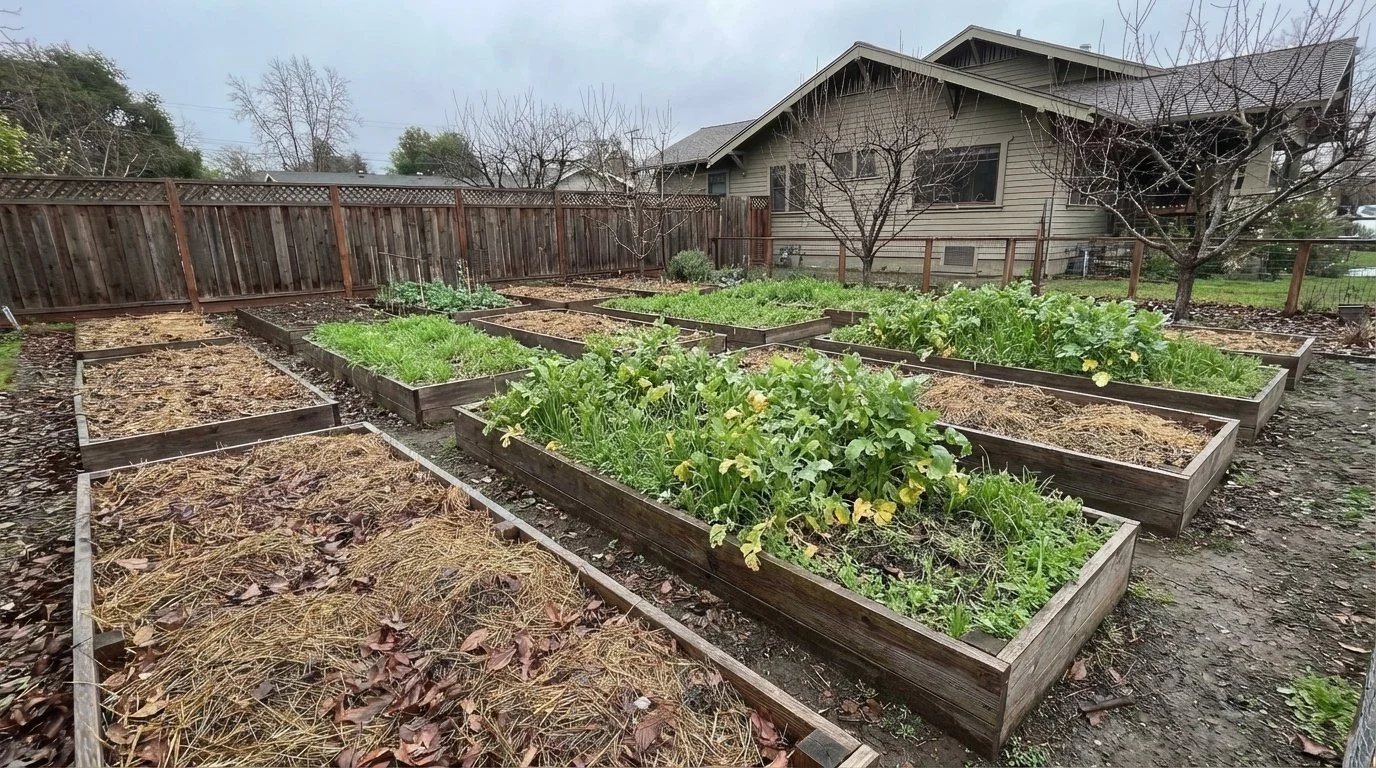
Cover crops are the best choice for any vegetable bed that will sit empty from October through March. A mix of bell beans and crimson clover (a classic Central Coast blend) will fix atmospheric nitrogen into the soil, break up compacted clay with their roots, and give beneficial insects a place to overwinter. Sow the seed by mid-October in Santa Cruz County while the soil is still warm enough for germination.
Cover crops are especially valuable if you are building new beds or improving poor soil. The deep taproots of daikon radish (sometimes called tillage radish) punch through our heavy clay like nothing else, creating channels for water and air. In the Pajaro Valley and Watsonville areas, local farmers have used cover crop mixes for decades, and home gardeners can follow the same playbook on a smaller scale. Plan to chop and turn the cover crop into the soil at least three weeks before your spring planting date.
When to Choose Mulch
Mulch is the right call for beds that still have winter crops growing in them, like garlic, overwintering brassicas, or perennial herbs. You cannot sow a cover crop around existing plants, but you can spread 3-4 inches of straw or wood chips to protect exposed soil between rows.
Mulch also makes more sense for gardeners who do not want the extra step of turning in a cover crop before spring planting. If your schedule is tight in March and you need beds ready to go immediately when the soil warms, a thick layer of mulch that you simply rake aside is less work than cutting, chopping, and incorporating a living cover. Free arborist wood chips (check ChipDrop or local tree services) make this an essentially zero-cost option.
The Bottom Line for Santa Cruz Gardeners
If you have empty beds this winter, plant a cover crop. The combination of nitrogen fixation, erosion control, and clay-busting root action is too valuable to pass up, especially given our heavy winter rains that can wash bare topsoil right out of raised beds. Sow a mix of bell beans and crimson clover by mid-October, let it grow through the rainy season, and chop it down three weeks before spring planting. Use mulch for beds that have crops already in the ground.
This week: Order a bag of bell bean and crimson clover cover crop seed from a local farm supply store (Peaceful Valley Farm Supply ships quickly to the Central Coast) and broadcast it over any bed you have already cleared for the season.
For more on building healthy soil in California, check out our free Seasonal Planting Guide at [/your-garden-toolkit].
Frequently Asked Questions
Do cover crops protect winter soil better than mulch?
Yes, for empty beds. Cover crops shield the surface from erosion while actively improving the soil, and UC Cooperative Extension puts a good stand of bell beans at roughly 100 pounds of nitrogen per acre, which mulch cannot do.
What cover crop should I plant in Santa Cruz County?
A mix of bell beans and crimson clover is the classic Central Coast blend. Sow the seed by mid-October while the soil is still warm enough for germination, and add daikon radish if you want deep taproots to punch through heavy clay.
When is mulch the better choice over a cover crop?
For beds that still have winter crops growing in them, like garlic, overwintering brassicas, or perennial herbs, since you cannot sow a cover crop around existing plants. Mulch is also less work if you need beds ready to plant immediately in spring.
When should I turn a cover crop into the soil?
Chop and turn the cover crop into the soil at least three weeks before your spring planting date.
