

Growing Satsuma Mandarins in the Pajaro Valley
A few of the product links in this guide are affiliate links. If you buy through one, Ambitious Harvest may earn a small commission at no extra cost to you, which helps keep these guides free. We only point to gear we would use in our own Santa Cruz garden. As an Amazon Associate, we earn from qualifying purchases. Read our full disclosure.
If you garden in the Pajaro Valley around Watsonville, the satsuma mandarin is a strong, sensible citrus choice. The valley's warm summers ripen fruit beautifully, and the satsuma's cold tolerance covers you on the frosty mornings the valley floor is prone to. The one thing to respect here is the cold-air pooling that gives this otherwise warm microclimate its surprise winter lows.
Quick verdict: Good, with a frost caveat. The Pajaro Valley is the county's warmest summer microclimate, which suits citrus ripening, and the satsuma is the most cold-hardy citrus, which suits the valley's chilly winter nights. Plant it out of the lowest frost pockets, on slightly higher ground, and you get sweet early easy-peel fruit. Plant it in a dip and you will be fighting frost.
This page focuses on satsuma mandarins in the Pajaro Valley. For how citrus performs across the whole county, start with the hub, best citrus varieties for Santa Cruz microclimates.
Why the Pajaro Valley suits a satsuma, with one watch-out
The Pajaro Valley around Watsonville is the warmest summer microclimate in Santa Cruz County, which is why it grows so much of the region's produce. That summer warmth gives a satsuma everything it needs to size and sweeten, and then some, since this citrus needs less heat than most. The catch is winter. The flat valley floor collects cold air on clear still nights, so frost settles here harder and more often than its warm summers would suggest. The satsuma is the right citrus for that reality because it is the most cold-hardy of the bunch, tolerating cold into the high 20s Fahrenheit once established. The county overview at gardening in Watsonville and the Pajaro Valley walks through both the warm-season advantage and the frost-pocket trade-off. For citrus, the satsuma threads that needle better than any orange or true lemon.
When to plant in the Pajaro Valley
Plant in spring once frost risk has clearly passed, so a young tree has the warm season to root in before it meets its first valley winter. Avoid fall planting on the valley floor, where a tender new tree could meet frost before it is established.
Sun, soil, and water
Sun: Full sun is easy to come by in the open valley, and the satsuma will use all of it. Good sun plus warm summer days means the fruit sweetens fully and ripens early. The siting challenge here is frost, not sun.
Soil: Much of the valley has rich agricultural soil, but rich does not always mean fast-draining, and citrus hates wet feet. Plant slightly high or on a low mound where ground holds water, keep mulch off the trunk, and feed two or three times a season with a citrus fertilizer.
Water: Warmer and often drier in summer than the coast, so a Pajaro Valley satsuma drinks more than a fog belt tree but less than a true inland desert. Water deeply and let the top few inches dry between soaks. Steady deep watering through the warm months supports the heavier fruit set the valley encourages.
Reading your own valley lot
In the Pajaro Valley the decisive factor is elevation within your own property and your neighborhood. The flat low floor and any dip or hollow are where cold air pools on still winter nights, and that is where frost damage happens. A satsuma on slightly higher ground, on a gentle slope, or near a south-facing wall sits above the worst of the cold drainage and stays safer. If your whole lot is low and flat, pick the highest corner, back the tree against a warm wall, and keep frost cloth ready for cold snaps. The summers will take care of ripening; your job is to keep the tree above the frost line in winter.
What to expect from the fruit
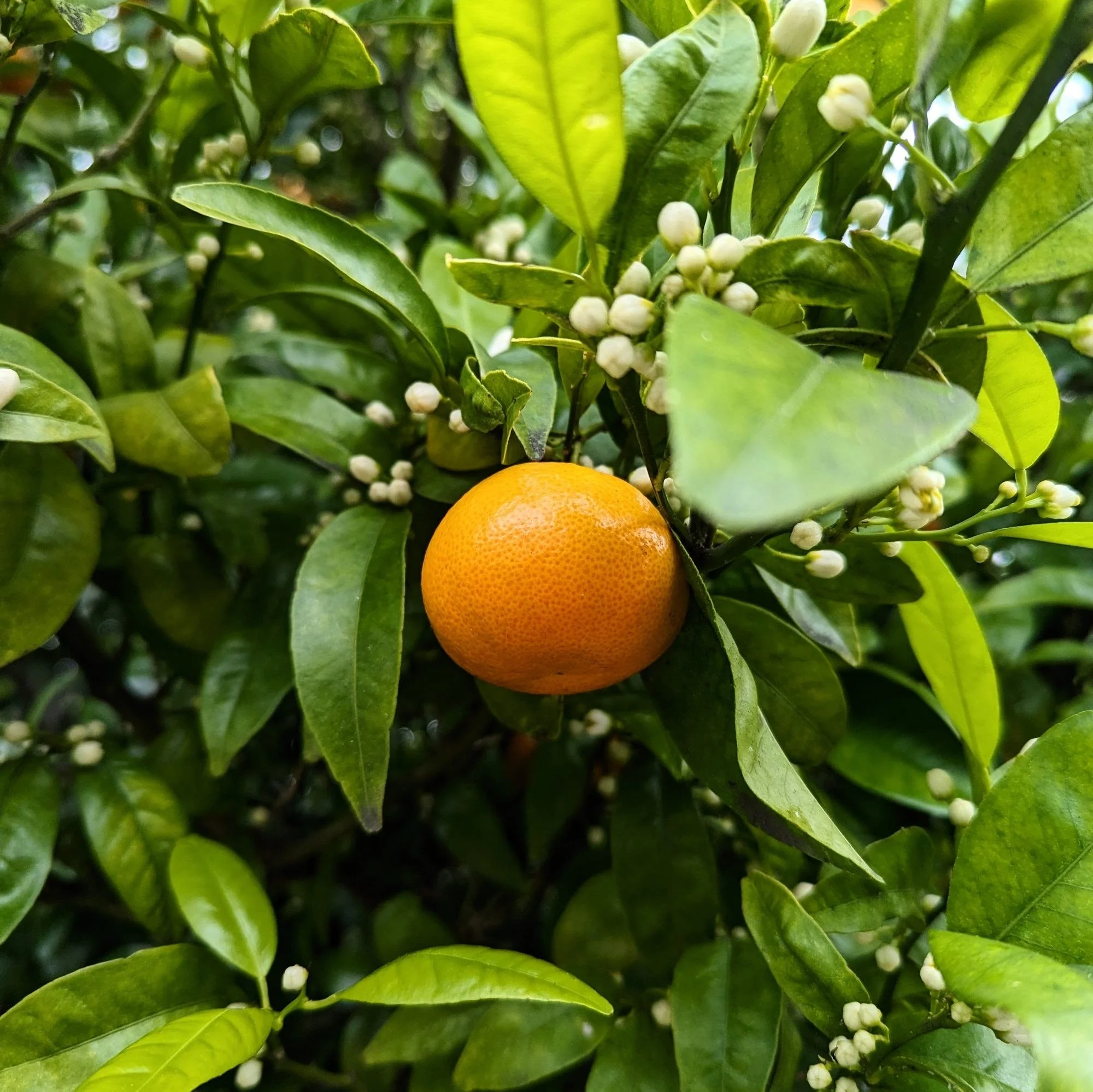
Easy-peel, loose-skinned fruit that segments cleanly, the familiar lunchbox mandarin.
Early ripening, generally October into December, helped along by the valley's warm summers.
Sweet, low-acid, often seedless flesh, well sized thanks to the strong summer heat.
Generous yields on a tidy tree once established, provided winter frost has not set the tree back.
Common problems in the Pajaro Valley
Frost damage in a low pocket: the signature valley problem. Plant on higher ground, protect young trees, and avoid hollows where cold air settles.
Wet roots in rich heavy soil: fertile valley ground can hold water. Plant high, improve drainage, and water deeply but infrequently.
Aphids and citrus leafminer on new flush: warm summers push tender growth. Mature trees cope; protect young flush if it gets heavy.
Hungry, yellowing leaves: a fast-growing warm-season tree uses nutrients quickly. Keep up the citrus feeding schedule.
Local tip: In the Pajaro Valley, summer is on your side and winter is the test. Put your satsuma on the highest, best-drained ground you have, ideally near a south-facing wall, and keep frost cloth handy for clear cold nights. The satsuma's cold tolerance plus a little smart siting turns the valley's frost-pocket weakness into a non-issue, and its warm summers then deliver early, sweet, easy-peel fruit.
Frequently asked questions
Is the Pajaro Valley a good place to grow a satsuma?
Yes, with attention to frost. The valley's warm summers ripen citrus well, and the satsuma is cold-hardy enough to handle the valley's frosty winter nights. Site it out of the low frost pockets and it is a dependable choice.
Why does such a warm valley get frost?
The flat valley floor collects cold air on clear still nights, a process called cold-air drainage and pooling. Warm summer days and frosty winter mornings coexist here, which is why winter siting on higher ground matters even though summers are hot.
Where on my lot should I plant it?
On the highest, best-drained ground you have, ideally on a slope or near a south-facing wall, and away from any dip or hollow where cold air settles. If your whole lot is low and flat, choose the highest corner and keep frost cloth ready for young trees.
When will the fruit ripen?
Generally October into December. The valley's warm summers tend to size and sweeten the fruit well, so a Pajaro Valley satsuma often ripens early and tastes full. Taste before picking, since color can lead sweetness.
