

Coyote Mint: A Fragrant Santa Cruz Native to Grow
A few of the product links in this guide are affiliate links. If you buy through one, Ambitious Harvest may earn a small commission at no extra cost to you, which helps keep these guides free. As an Amazon Associate, we earn from qualifying purchases. Read our full disclosure.
Some California natives are imported from drier, hotter parts of the state and ask you to recreate a climate you do not have. Coyote mint is not one of them. Monardella villosa is a true Santa Cruz County native, found growing on its own in our coastal scrub, chaparral, and oak woodland, so when you plant it you are giving a home to something that already belongs here.
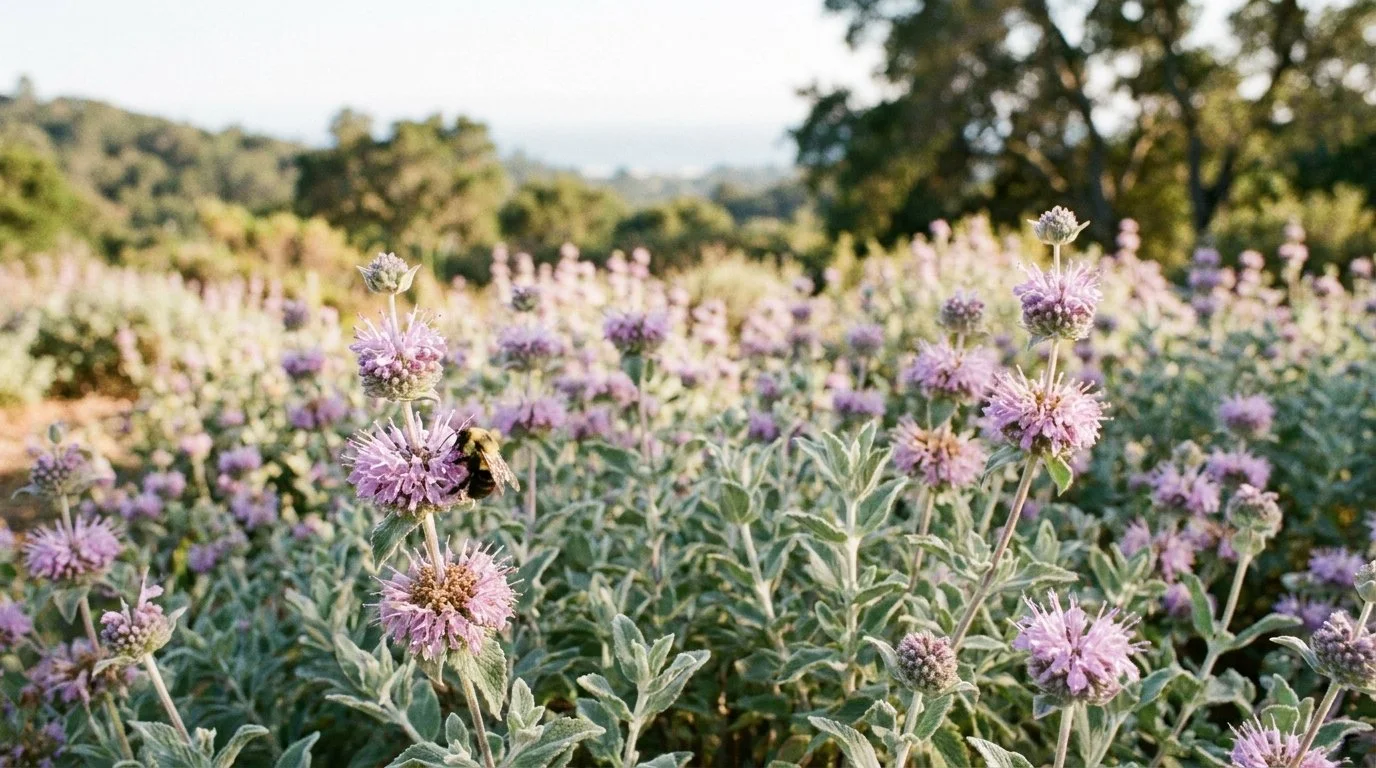
It is also a delight to have around. Brush the fuzzy gray-green leaves and you release a clean, minty fragrance that gives the plant its name and its long history as a soothing tea. From late spring into summer it lifts rounded pompom flower heads in soft lavender to pink above the foliage, and those flowers pull in butterflies, native bees, and hummingbirds. Add an easygoing nature and very low water needs, and coyote mint becomes one of the most rewarding small natives you can tuck into a Santa Cruz garden.
It is a low, mounding plant, reaching roughly two feet tall and spreading to around three feet wide, which makes it a natural fit for the front of a border, a dry slope, a parking strip, or a container near a seating area where you can enjoy the scent.
Why Should I Grow Coyote Mint in Santa Cruz County?
The first reason is that it is genuinely local. According to Calflora, which maps wild plant records across the state, Monardella villosa has been documented growing naturally in Santa Cruz County. Calscape, the California Native Plant Society's plant guide, lists its home habitats as coastal scrub, chaparral, and mixed-evergreen and oak woodland, the same plant communities that surround our towns. It even tolerates serpentine soils, the lean, mineral soils that defeat many garden plants.
The second reason is the fragrance. Coyote mint is a member of the mint family, and its soft, hairy leaves carry a strong, sweet mint scent when touched. Plant it where you will brush past it, along a path or beside a bench, and it perfumes the air on a warm afternoon.
The third reason is the wildlife. Coyote mint is an outstanding pollinator plant, and we cover that in detail below. The fourth reason is how little it asks of you: full sun to part shade, very little summer water, and good drainage are most of what it needs to thrive.
Where Does Coyote Mint Grow Best?
Our county is really several gardens stacked together, and coyote mint fits comfortably into most of them as long as the soil drains.
The coastal fog belt suits it well. Because coyote mint grows wild in our coastal scrub, it is at home in the cooler, brighter conditions near the ocean and tolerates the salt-tinged air better than many drier-climate natives. Give it the sunniest open spot you have and sharp drainage.
The San Lorenzo Valley and the mountains are also a strong match, since coyote mint naturally occupies chaparral and oak woodland edges. In dappled light under high oaks or on a sunny bank, it settles in with little fuss.
The inland valleys, including the warmer benches around the Pajaro Valley and Scotts Valley, work too, but the hotter and drier your site, the more a little summer water helps. Coyote mint will take more shade in a hot inland garden than it needs along the coast, and a deep drink every few weeks during the worst of the heat keeps it looking fresh.
The constant across every microclimate is drainage. Coyote mint is forgiving about sun and shade but unforgiving about wet feet, so the one thing to get right everywhere is soil that does not stay soggy.
How Do You Plant Coyote Mint?
Fall is the ideal planting time in California. Setting plants in the ground from October through early winter lets the roots establish during the rainy season so they are ready for their first dry summer. Spring planting works too, but you will need to water more attentively through that first summer.
Follow these steps for a strong start:
Pick sun to part shade. Coyote mint flowers best with at least a half day of sun. Near the coast, lean toward more sun; in a hot inland garden, a little afternoon shade is welcome.
Prioritize drainage. This is the single most important factor. Coyote mint rots in heavy, wet soil. If you garden on clay, plant on a low mound or berm, or improve a wide area with coarse grit rather than rich compost.
Do not over-amend. Skip the heavy compost and fertilizer. Lean soil produces a tougher, more fragrant, longer-lived plant, which is no surprise given that this species tolerates serpentine.
Set the crown high. Place the plant so the top of the root ball sits slightly above the surrounding soil to keep the crown dry, then backfill with native soil and firm it gently.
Give it room to mound. A mature plant spreads to roughly three feet wide over a foot or two of height, so space plants accordingly and keep them off walkways.
Water in, then ease off. Soak the root ball at planting, then water deeply but infrequently through the first dry season while the roots extend.
Coyote mint also grows well in containers, which is a tidy way to manage drainage and to keep the fragrant foliage within easy reach of a patio. Use a fast-draining mix and a pot with a generous drainage hole.
How Do You Care for It?
The good news is that an established coyote mint barely needs you. The most common way to lose one is too much water in soil that holds it.
For watering, treat it as a low-water native. After the first year, many coastal and mountain gardens can carry coyote mint on winter rain alone, with perhaps a deep soak once or twice during the hottest stretch of summer. In hotter inland gardens, water deeply every two to three weeks in summer. When in doubt, water less and let the soil dry between waterings. A slightly dry coyote mint recovers; a waterlogged one rots.
Coyote mint is evergreen but tends to look semi-deciduous and scruffy by late summer after it finishes blooming. The simple fix is to shear it back by about a third once the main flush of flowers fades, as Las Pilitas Nursery recommends for keeping the plant compact and tidy. This light cutback refreshes the foliage and encourages a denser mound the following year.
Skip the fertilizer. This is a plant adapted to lean, even serpentine, soils, and feeding it does more harm than good. A thin gravel mulch helps keep the crown dry and the roots cool without trapping moisture against the stems the way bark mulch can. Coyote mint is also deer-resistant, a real advantage in our county where deer browse so many gardens, so it is a dependable choice for an unfenced bed or a wildland edge.
What Pollinators Does Coyote Mint Attract?
This is where coyote mint truly earns its place. Calscape describes it as especially attractive to butterflies and lists a long roster of visitors, including native bees, several confirmed butterfly species, and hummingbirds, along with seed-eating birds later in the season. The rounded clusters of small tubular flowers work like a landing pad and a nectar buffet at the same time, which is part of why butterflies favor them.
One thing is worth flagging. Coyote mint is a superb nectar source that feeds adult butterflies, bees, and hummingbirds, but it is not a larval host plant for monarchs. Monarch caterpillars feed only on native milkweeds. Think of coyote mint as the dining room rather than the nursery: it keeps adult pollinators fed and visiting, and you can pair it with milkweed and other host plants if raising caterpillars is your goal. As a habitat plant for sheer adult pollinator traffic, especially butterflies, it is hard to beat.
Common Problems with Coyote Mint
Coyote mint is an easy, forgiving plant, and most of its few troubles trace back to one of three causes, all of them preventable.
Root rot from too much water or poor drainage. This is the number one killer, especially in clay or in low spots that stay damp. The fix is prevention: fast-draining soil, a raised planting position, base watering only, and a dry summer. If a plant wilts even though the soil is moist, suspect rot rather than thirst.
Late-summer scruffiness. Coyote mint commonly looks tired and half-bare after blooming, which surprises gardeners expecting a tidy evergreen. This is normal, not a disease. Shear the plant back by about a third after the main bloom and it freshens up and returns fuller the next season.
A short lifespan. Coyote mint can be relatively short-lived, sometimes declining after several years even with good care. This is part of its nature rather than a failure on your part. The plant often self-sows, and you can also divide or take cuttings to keep a patch going, so treat it as a renewable part of the garden rather than a permanent fixture.
On the reassuring side, coyote mint has no concerning toxicity and is not invasive. It is a well-behaved native that stays where you plant it.
Where Can You Buy Coyote Mint in Santa Cruz County?
Locally grown plants establish best, so start with California native nurseries and native plant sales close to home. Watch for the seasonal sales hosted by the local chapter of the California Native Plant Society, usually in fall, which is also the best time to plant. Ask independent garden centers and native specialty growers around Santa Cruz, Aptos, Watsonville, and the San Lorenzo Valley whether they carry Monardella villosa, and request it by name, since coyote mint is a common nursery offering among California natives. Buying from a local CNPS sale or native grower also means you are getting plants suited to our climate and supporting the people who keep these species in cultivation.
If you would rather start from seed, coyote mint seed is sometimes available from mail-order native seed suppliers. You can also check coyote mint seed from online sellers, though germination of native mints can be uneven, so do not be discouraged if not every seed sprouts. For most gardeners, a single nursery plant or two is the easiest way to get a fragrant, pollinator-friendly patch started.
Frequently Asked Questions About Coyote Mint
Is coyote mint a true mint, and can I make tea from it?
Yes, coyote mint (Monardella villosa) is a member of the mint family, and its leaves have a strong, pleasant mint fragrance. It has a long history of being brewed into a soothing herbal tea. As with any wild or homegrown herb, use only plants you have positively identified and grown without chemical sprays, and start with a small amount to see how it agrees with you.
Does coyote mint attract monarch butterflies?
Coyote mint is an excellent nectar plant that feeds adult butterflies, including monarchs, along with native bees and hummingbirds. However, it is not a host plant for monarch caterpillars, which feed only on native milkweeds. Plant coyote mint for adult pollinator food and pair it with milkweed if you want to support the full monarch life cycle.
Why does my coyote mint look ragged by the end of summer?
That is normal. Coyote mint is evergreen but often looks semi-deciduous and scruffy after it finishes blooming in late summer. Shear it back by about a third once the main flush of flowers fades, and it will refresh its foliage and come back fuller the following year.
How much water does coyote mint need in Santa Cruz County?
Very little once established. In coastal and mountain gardens it can often rely on winter rain alone, with perhaps a deep soak or two during the hottest part of summer. In hotter inland gardens, water deeply every two to three weeks in summer. The most important rule is sharp drainage, because coyote mint rots in soggy soil far more easily than it suffers from drought.
Will deer eat coyote mint?
Coyote mint is considered deer-resistant, thanks in part to its strongly aromatic foliage, which makes it a dependable choice for unfenced beds and wildland edges in our county. No plant is completely deer-proof in a hungry year, but coyote mint is rarely a deer's first choice.
A Native Worth Growing
Coyote mint asks for very little and gives back a great deal: fragrant foliage, soft lavender pompoms through summer, a steady stream of butterflies and bees, and the quiet satisfaction of growing a plant that already belongs to this place. Give it sun, sharp drainage, and a dry summer, shear it once after bloom, and accept that it may need renewing every few years. In a county where water is precious and pollinators need all the help we can offer, that is a generous trade. Plant one this fall in your sunniest, best-draining bed, and let it earn its keep.
