Growing Citrus in Containers: The Mobility Advantage
A few of the product links in this guide are affiliate links. If you buy through one, Ambitious Harvest may earn a small commission at no extra cost to you, which helps keep these guides free. We only point to gear we would use in our own Santa Cruz garden. As an Amazon Associate, we earn from qualifying purchases. Read our full disclosure.
Why Is Container Growing the Smart Strategy for Citrus in Santa Cruz?
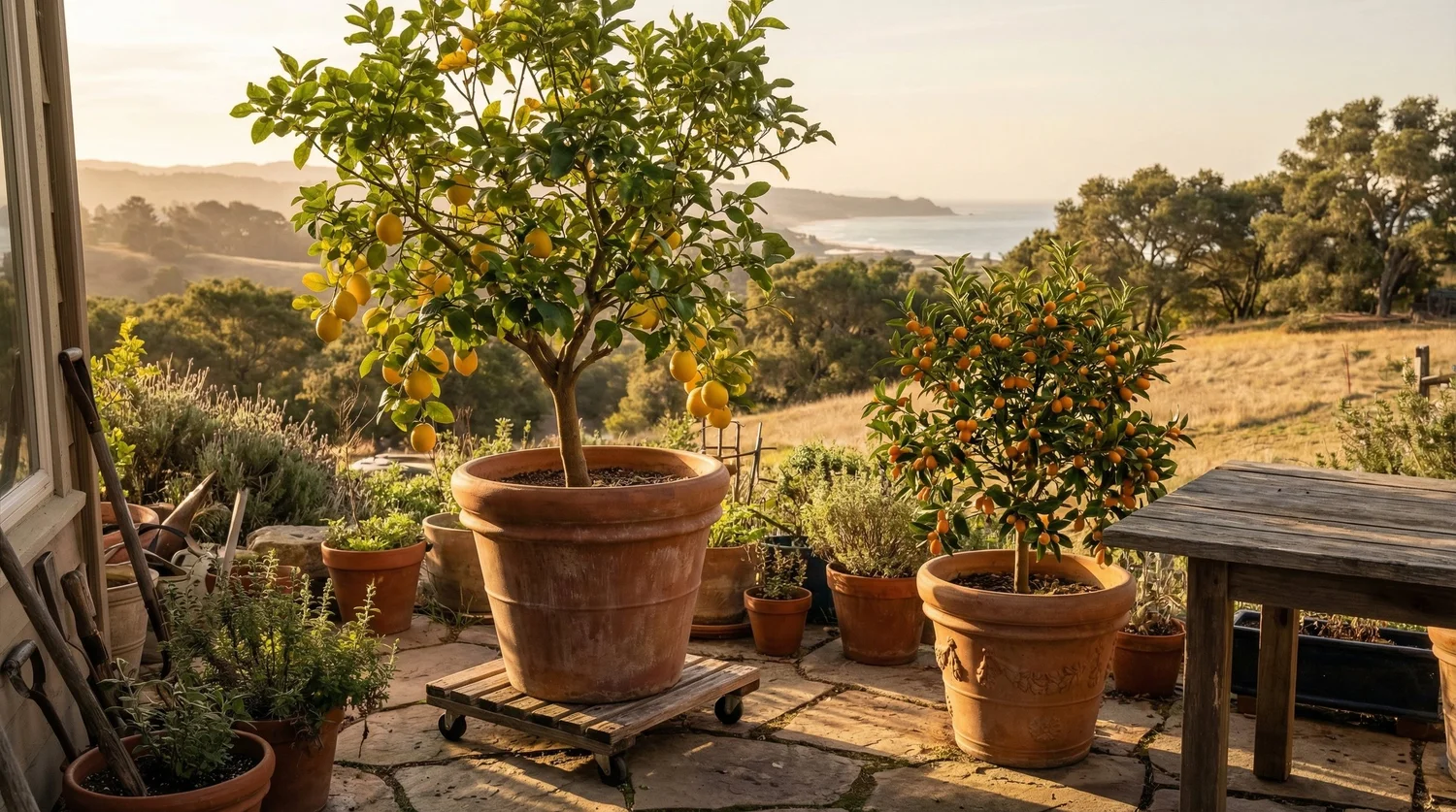
Growing citrus in containers gives Santa Cruz County gardeners the ability to move trees into sun, shelter them from frost, and succeed with varieties that would otherwise struggle in our cool, foggy climate. According to UC Agriculture and Natural Resources, container-grown citrus can produce fruit equivalent in quality to in-ground trees when given proper soil, nutrition, and care. The mobility advantage is particularly valuable in our area, where microclimates can shift dramatically across a single property.
Santa Cruz County is a place where a few degrees of temperature difference can determine whether your citrus tree thrives or merely survives. A south-facing patio that bakes in afternoon sun might be perfect for a lime in July but dangerously cold on a January night. With container growing, you do not have to choose one spot and hope for the best. You can follow the sun, dodge the frost, and give your citrus exactly what it needs in every season.
This guide covers everything you need to know about growing citrus in containers in Santa Cruz County, from choosing the right pot and soil mix to seasonal care strategies that make the most of our unique climate.
What Are the Advantages of Container Citrus in Our Climate?
The benefits of growing citrus in containers go beyond simple frost protection, though that alone is reason enough for many Santa Cruz gardeners.
Frost mobility: On nights when temperatures dip below freezing, you can roll your container citrus against the house, into a garage, or under an overhang. This is the single biggest advantage for gardeners in frost-prone areas like the San Lorenzo Valley, Scotts Valley, or higher elevations in Bonny Doon. While your in-ground citrus neighbors are draping frost cloth and stringing lights, you simply wheel your tree to safety.
Sun chasing: Our fog patterns change throughout the year, and the sun angle shifts dramatically between summer and winter. Container citrus can be repositioned to capture maximum sunlight as conditions change. Move your tree to the sunniest available spot in winter, then shift it to avoid scorching reflected heat from west-facing walls during rare summer heat events.
Soil control: Much of Santa Cruz County has heavy clay soil that holds too much moisture for citrus roots. Containers let you create the perfect growing medium regardless of your native soil conditions. You control the drainage, pH, and nutrient content completely.
Renter flexibility: If you rent your home, container citrus lets you invest in fruit trees you can take with you when you move. A well-maintained container Meyer lemon can produce for decades and travel wherever you go.
Space efficiency: Container citrus on dwarfing rootstock stays compact enough for small patios, balconies, and even wide front steps. You do not need a full yard to grow fresh citrus.
What Citrus Varieties Work Best in Containers?
Not every citrus variety is equally well-suited to container life. The best container choices are naturally compact varieties, those grafted onto dwarfing rootstock, or types that produce well even when root-restricted.
Meyer lemons are the top container citrus for Santa Cruz. They stay naturally compact, produce fruit prolifically even in restricted root space, and tolerate the slightly cooler root temperatures that container growing creates. A Meyer lemon on Flying Dragon rootstock will stay 4 to 6 feet tall in a container and can produce 20 to 40 pounds of fruit annually. For complete growing details, see our Meyer lemon growing guide.
Kumquats (both Nagami and Meiwa) are exceptional container plants. They are the most cold-hardy citrus, naturally compact (4 to 6 feet), and produce generously even in relatively small pots. Meiwa kumquats are sweeter and more pleasant for fresh eating, while Nagami types have the classic tart kumquat flavor preferred for cooking and preserves.
Calamondin oranges are among the easiest citrus to grow in containers. They stay small (3 to 5 feet), produce heavily, and are highly ornamental with their nearly year-round display of small orange fruit. The fruit is tart and best used for drinks, marmalade, or Filipino cuisine rather than fresh eating.
Bearss limes (Persian limes) are the most cold-sensitive common citrus, which actually makes them ideal container candidates in Santa Cruz. Growing them in pots lets you move them to shelter during any frost threat. On dwarfing rootstock, they stay 4 to 6 feet tall and produce good crops of familiar, seedless limes.
Satsuma mandarins on dwarfing rootstock produce excellent container fruit, though they will not yield as heavily as in-ground trees. The fruit quality from container Satsumas in Santa Cruz is outstanding because our cool nights enhance sugar development.
Yuzu grows well in containers, is remarkably cold-hardy, and tolerates more shade than most citrus. The fruit is prized for its aromatic zest and juice in Japanese and contemporary cooking. For a detailed breakdown of which varieties match different parts of Santa Cruz County, see our guide to the best citrus varieties for Santa Cruz microclimates.
What Size Container Do You Need for Citrus?
Container size directly affects how large your tree grows and how much fruit it produces. Too small and the tree becomes root-bound, stressed, and unproductive. Too large and the excess soil stays wet, creating root rot risk.
Starting size: When you bring home a citrus tree from a nursery (typically in a 5-gallon pot), move it up to a 10 or 15-gallon container. This gives roots room to grow without excess soil holding moisture.
Long-term size: Plan to move your citrus into a final 20 to 25-gallon container, roughly 18 to 24 inches across, which gives dwarf citrus enough root room for good production while staying movable. UC Master Gardeners recommend stepping trees up into progressively larger containers as they grow. According to UC Master Gardeners, this is the ideal final size for most dwarf citrus. It provides enough root space for good fruit production while remaining manageable to move. A 25-gallon container with moist soil and a mature citrus tree weighs approximately 100 to 150 pounds, so plan your mobility strategy accordingly.
Material considerations: Glazed ceramic retains moisture and insulates roots but is heavy. Plastic is lightweight and affordable but can overheat in direct sun. Fabric grow bags provide excellent drainage but dry out quickly. Terra cotta is breathable (good for preventing overwatering) but fragile and heavy.
Drainage is non-negotiable: Whatever container you choose, it must have drainage holes. Multiple holes are better than one. If you love a pot that lacks drainage, drill holes before planting. According to UC research, citrus roots sitting in standing water for even a few days can develop Phytophthora root rot, which is often fatal.
What Soil Mix Should You Use for Container Citrus?
Standard potting soil is not ideal for citrus in containers. Citrus needs a mix that drains quickly, holds some moisture without staying soggy, and maintains structure over several years without compacting.
UC researchers recommend a container mix that is roughly 40 to 50 percent organic matter (composted bark, coconut coir, or quality potting soil), 25 to 30 percent drainage material (perlite, pumice, or coarse sand), and 20 to 25 percent additional aeration material (orchid bark or fine pine bark).
A practical recipe for Santa Cruz gardeners:
- 5 parts quality potting soil (not garden soil)
- 3 parts perlite or pumice
- 2 parts composted pine bark (fine to medium grade)
Mix these thoroughly before filling your container. Wet the mix slightly before potting, as dry perlite and bark are dusty and difficult to work with.
Avoid these common mistakes: Do not use garden soil in containers, as it compacts and holds too much water. Do not put gravel in the bottom of the pot "for drainage," as UC research has shown this creates a perched water table that actually makes drainage worse. Avoid potting mixes with moisture control additives, as citrus roots prefer to dry slightly between waterings.
How Do You Water Container Citrus in Santa Cruz?
Watering is the most critical ongoing care task for container citrus, and it is where most problems originate. Container soil dries out faster than garden soil, and the watering needs change dramatically between our wet and dry seasons.
Dry season (May through October): Water deeply when the top 2 inches of soil feel dry. For most containers in Santa Cruz, this means watering every 2 to 4 days during warm weather. Water until it runs freely from the drainage holes, then do not water again until the soil surface has dried. According to UC Cooperative Extension, the "deep and infrequent" approach is far better than frequent light watering, which keeps the surface wet while leaving deeper roots dry.
Wet season (November through April): Reduce watering significantly. Rainfall may handle most of your citrus tree's moisture needs, but containers under eaves or covered patios still need regular checks. Feel the soil before watering. During cool, cloudy periods, container citrus may only need water every 7 to 10 days or less. Overwatering during our cool season is the most common cause of root rot in container citrus.
Fog season considerations: Our summer fog actually benefits container citrus by reducing water loss through leaves and moderating temperature swings. On foggy days, your citrus may need less water than on clear, sunny days. Adjust accordingly rather than watering on a rigid schedule.
Signs of watering problems: Wilting leaves can indicate either overwatering or underwatering, so check the soil before adding more water. Yellow leaves with green veins suggest iron chlorosis, often caused by overwatering. Leaf drop during winter usually means too much water. Curling leaves during summer usually means too little.
How Do You Fertilize Container Citrus?
Container citrus needs more frequent fertilization than in-ground trees because nutrients wash out of the pot with each watering. This leaching effect means you need to replenish nutrients regularly throughout the growing season.
UC Agriculture and Natural Resources recommends a two-pronged approach for container citrus:
Slow-release fertilizer: Apply a citrus-specific slow-release fertilizer in February, May, and September. This provides a steady baseline of nutrients between applications. Follow the package rate for container plants (typically less than the in-ground rate).
Liquid supplement: Apply a diluted liquid citrus fertilizer every 2 to 4 weeks from March through September. Use it at half the recommended strength. This compensates for nutrient leaching and provides micronutrients (iron, zinc, manganese) that are especially important in container culture.
Stop fertilizing in late fall and winter: Do not fertilize from November through January. Citrus growth slows during our cool season, and pushing new growth with fertilizer makes the tree more vulnerable to frost damage. Resume feeding in February as new growth appears.
Micronutrient attention: Container citrus is especially prone to iron and zinc deficiency because these nutrients leach readily and become less available as soil pH rises. If you see yellowing between leaf veins (iron) or small, narrow leaves in clusters (zinc), apply chelated micronutrient sprays or soil drenches in addition to your regular fertilizer program.
How Do You Overwinter Container Citrus in Santa Cruz?
Overwintering is where container citrus earns its keep compared to in-ground trees. Your mobility advantage means you can provide protection that in-ground citrus simply cannot receive.
Monitor forecasts actively: From late November through mid-March, check the weather forecast daily. Most of Santa Cruz County experiences freezing temperatures on 5 to 20 nights per winter depending on location. When temperatures below 35 degrees are forecast, begin preparing to move or protect your citrus. Our frost date guide provides detailed timing for different areas.
First line of defense (move the tree): Wheel container citrus against a south-facing house wall on cold nights. The radiant heat from the building can keep the tree 3 to 5 degrees warmer than open air. If temperatures below 28 degrees are forecast, move the tree into an unheated garage, enclosed porch, or greenhouse. Citrus can tolerate a few nights in low light without harm.
Second line of defense (frost cloth): If you cannot move the tree, drape it with frost cloth (not plastic sheeting, which can trap cold air and cause more damage). According to UC Master Gardeners of Sacramento County, frost cloth adds roughly 4 to 8 degrees of protection depending on its weight, and unlike sheets or blankets it can lie directly on the foliage and stay on for a few days at a time. Secure the cloth so it reaches the ground around the pot, trapping ground-level warmth.
Long-term indoor overwintering: Gardeners in mountain areas above 1,500 feet may need to move container citrus indoors for the entire winter. Place the tree near the brightest window available (south-facing is best), maintain temperatures above 55 degrees, and keep it away from heating vents. Reduce watering and stop fertilizing while indoors.
Spring transition: When moving citrus back outdoors in spring (typically mid-March), acclimate gradually. Start with a shaded outdoor location for a week, then filtered sun for another week before placing it in full sun. Abrupt exposure to direct sun after a winter indoors can sunburn leaves and bark.
How Do You Repot and Maintain Container Citrus Long-Term?
Container citrus can live and produce for 20 years or more with proper maintenance. Long-term success requires periodic repotting, root management, and soil renewal.
Repotting schedule: Young citrus trees (under 5 years) should be moved to a larger container every 2 to 3 years. Once your tree reaches its final container size (20 to 25 gallons), you no longer need to size up, but you should refresh the soil every 3 to 4 years.
Root pruning: When a mature tree in its final container becomes root-bound, lift it out, shave 2 to 3 inches of roots from the sides and bottom with a sharp saw or knife, and repot in fresh mix in the same container. UC Master Gardeners note that container citrus gradually use up the soil in their pots, so every few years the tree needs to come out of its pot so new soil can be added. This is best done in early spring (March) before active growth begins. Root pruning stimulates new feeder root growth and rejuvenates the tree.
Pruning container citrus: Keep your container tree compact by pruning lightly in early spring. Remove dead wood, crossing branches, and any growth below the graft union. Thin the interior canopy to allow light penetration and air circulation. Avoid heavy pruning, which stimulates vigorous upright growth that is hard to manage in a container.
Frequently Asked Questions
Can you grow a full-size citrus tree in a container?
You can grow citrus in containers, but the trees will stay smaller than in-ground specimens. Citrus on standard rootstock stays smaller in a container than in the ground, and with routine pruning a 25-gallon tree holds to about 5 to 7 feet. Trees on dwarfing rootstock like Flying Dragon stay more compact, roughly 4 to 8 feet. Trees on dwarfing rootstock like Flying Dragon stay 4 to 5 feet in containers. Fruit quality is identical to in-ground trees, though total yield is proportionally less due to the smaller tree size.
How often should you water citrus in pots in Santa Cruz?
During the dry season (May through October), water container citrus every 2 to 4 days, or whenever the top 2 inches of soil feel dry. During the wet season, reduce to every 7 to 10 days or less, depending on rainfall and temperature. UC Master Gardeners suggest checking below the surface: push a finger or a long screwdriver down into the root zone, and water only if the roots themselves are dry. If it feels dry at that depth, water thoroughly until water runs from the drainage holes.
What is the best container material for citrus trees?
Each material has trade-offs. Glazed ceramic retains moisture well and insulates roots but is heavy. Plastic is lightweight and affordable but can overheat in direct sun. Fabric grow bags provide excellent drainage and air pruning but dry out quickly. According to UC research, the container material matters less than proper drainage holes, appropriate size, and correct watering practices. Choose based on your mobility needs and budget.
Do container citrus trees need to come inside for winter in Santa Cruz?
Most container citrus does not need to come indoors for the entire winter in Santa Cruz County. Moving trees against a south-facing wall on frost nights and draping with frost cloth is sufficient for cold-hardy varieties like Meyer lemons, Satsumas, and kumquats. Only the most cold-sensitive types, like limes and true lemons (Eureka and Lisbon), usually need indoor protection during our coldest nights. In colder mountain settings, gardeners may need to bring all container citrus indoors for the coldest stretch of winter. Gardeners above 1,500 feet elevation may need to bring all citrus indoors.
Can you grow limes in containers in Santa Cruz?
Yes, containers are actually the best way to grow limes in Santa Cruz County because limes are the most frost-sensitive common citrus. According to UC Agriculture and Natural Resources, lime trees suffer damage at 32 degrees Fahrenheit. Container growing lets you move lime trees to protected locations on cold nights while giving them full sun exposure during the growing season. Bearss (Persian) limes on dwarfing rootstock are the best container choice for our area.
How long do citrus trees live in containers?
With proper care, container citrus trees can produce fruit for 20 years or more. UC Master Gardeners note that container citrus stays healthy long term when you add fresh soil every few years, move the tree to a larger container once it becomes root-bound, fertilize monthly from about February through October, and avoid overwatering. Some container citrus specimens in Mediterranean climates have been documented producing fruit for over 50 years.
Should you use saucers under citrus containers?
Use saucers only to protect surfaces from water damage, and never let water stand in the saucer for more than 30 minutes. According to UC research, citrus roots sitting in standing water are highly susceptible to Phytophthora root rot, which can kill a tree within a season. If you use saucers, empty them after watering. Elevating pots on feet or a wheeled caddy over the saucer provides drainage space and makes monitoring easier.
What size pot does a dwarf Meyer lemon need?
A dwarf Meyer lemon needs a minimum 15-gallon container for good production, with 20 to 25 gallons being ideal for a mature tree. Start a nursery tree in a 10 to 15-gallon pot and step up to the final 20 to 25-gallon size over the next two to three years. UC Master Gardeners suggest potting up whenever roots fill the container, ideally when the tree is not actively flowering or fruiting. A container 18 to 24 inches in diameter and at least 18 inches deep provides adequate root space for productive, long-term growth.
Ready to start growing citrus in containers and explore more California-specific gardening resources? Visit Your Garden Toolkit for our complete collection of growing guides, planting calendars, and tools designed for Santa Cruz County gardeners.