

Best Citrus Varieties for Santa Cruz Microclimates
A few of the product links in this guide are affiliate links. If you buy through one, Ambitious Harvest may earn a small commission at no extra cost to you, which helps keep these guides free. We only point to gear we would use in our own Santa Cruz garden. As an Amazon Associate, we earn from qualifying purchases. Read our full disclosure.
Which Citrus Varieties Actually Produce in Santa Cruz County?
The citrus varieties that thrive in Santa Cruz County are those with low heat requirements, strong cold tolerance, and the ability to ripen fruit during our cool, fog-influenced growing season. According to UC Agriculture and Natural Resources, successful citrus variety selection in coastal California depends on matching each cultivar's heat accumulation needs to your specific microclimate. Our county's patchwork of coastal, valley, inland, and mountain zones means that variety recommendations vary significantly by neighborhood.
This guide breaks down citrus variety recommendations by microclimate zone, with clear assessments of what will and will not work in each area. A variety that produces beautiful fruit in Aptos may barely ripen in Bonny Doon. One that freezes out in a San Lorenzo Valley bottom may thrive on a sunny slope 200 yards uphill. For a broader understanding of what makes our local growing conditions so variable, see our Santa Cruz microclimates guide.
How Do Santa Cruz Microclimates Affect Citrus Variety Selection?
Santa Cruz County spans USDA Hardiness Zones 9b through 10a, with pockets of Zone 9a at higher elevations. But hardiness zones only tell part of the story. Citrus variety success depends on three interacting factors: minimum winter temperature, summer heat accumulation, and growing season length.
Minimum winter temperature determines which varieties survive. A variety rated cold-hardy to 26 degrees Fahrenheit can handle a typical Santa Cruz winter, while one that suffers at 32 degrees needs significant protection or container growing.
Summer heat accumulation determines which varieties produce sweet, well-developed fruit. According to UC Davis citrus research, this is measured in "degree-day" units, essentially the sum of daily temperatures above a baseline threshold. Our coastal fog dramatically reduces heat accumulation compared to inland California. This is why navel oranges that produce abundantly in Sacramento often yield bland, flavorless fruit in Santa Cruz.
Growing season length affects varieties that need extended warm periods to ripen. Some citrus requires 12 to 16 months from bloom to ripe fruit. In our climate, that timeline stretches even longer, which actually benefits some varieties (cool-climate Satsumas develop outstanding flavor) while frustrating others (grapefruit may never reach acceptable sweetness).
The practical takeaway: choose varieties that need less heat and tolerate more cold, and you will succeed with citrus in nearly any Santa Cruz microclimate.
What Are the Best Citrus Varieties for Coastal Santa Cruz?
Coastal areas (Santa Cruz city, Capitola beachside, Pleasure Point, Twin Lakes, Live Oak near the coast) receive heavy summer fog, rarely freeze hard, and accumulate the least summer heat in the county. Wind exposure from ocean breezes is an additional challenge.
Top picks for coastal zones:
Meyer lemon (Citrus x meyeri "Improved"): The unquestioned number one choice. Meyer lemons need less heat than any other lemon type, tolerate fog and cool temperatures gracefully, and produce fruit nearly year-round. Cold-hardy to about 28 degrees Fahrenheit. In coastal locations, plant against a south-facing wall for reflected heat, and expect excellent production within 3 years. Our complete guide to growing Meyer lemons covers all the details.
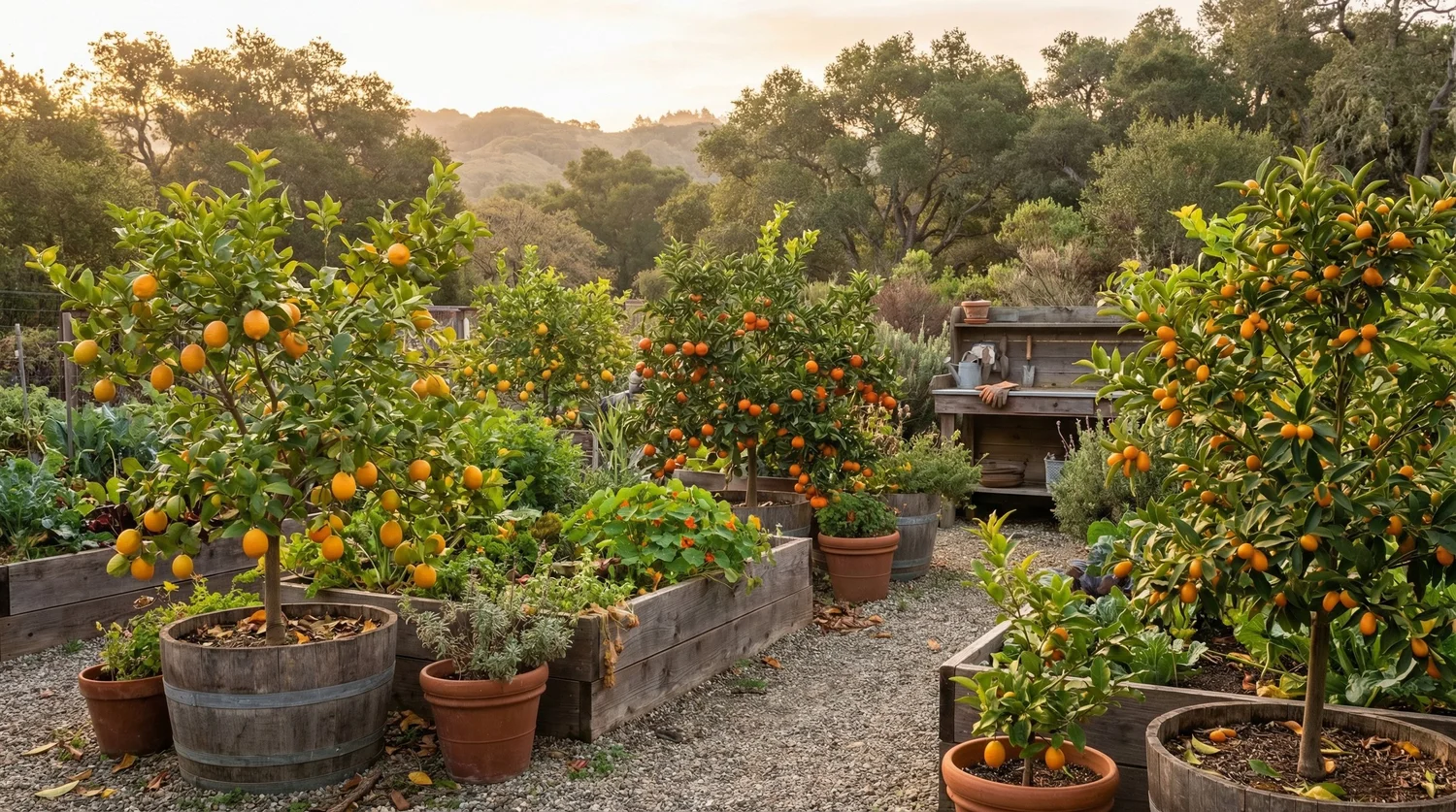
Kumquat, Meiwa (Fortunella crassifolia): The sweetest kumquat variety, eaten whole including the peel. Cold-hardy to about 18 degrees Fahrenheit, making frost protection a non-issue in coastal Santa Cruz. Trees stay compact (6 to 8 feet) and produce heavily even in cool conditions. Meiwa kumquats are round and sweet. According to UC Riverside Citrus Variety Collection, Meiwa requires less heat to develop sweetness than Nagami kumquat.
Kumquat, Nagami (Fortunella margarita): The classic oblong kumquat with sweet skin and tart flesh. Same outstanding cold hardiness as Meiwa. Better for cooking, marmalade, and candying.
Calamondin (Citrus x microcarpa): Extremely ornamental, with small, bright orange fruit produced nearly year-round. Cold-hardy to about 20 degrees Fahrenheit. The fruit is very tart, used primarily in drinks and marmalade. Trees stay compact (4 to 6 feet).
Yuzu (Citrus junos): Remarkably cold-hardy (to about 15 degrees Fahrenheit) and tolerant of partial shade, making it uniquely suited to foggy coastal gardens. The bumpy, aromatic fruit is used for zest and juice in Japanese cooking. Trees are thorny but productive. According to UC Davis, yuzu is one of the few citrus species that performs well in cool-summer climates.
Marginally successful in coastal zones: Satsuma mandarins can produce here but fruit may lack sweetness in the foggiest areas. Eureka lemons grow but produce less than Meyer lemons with greater frost risk.
Skip these in coastal zones: Navel oranges, Valencia oranges, grapefruit, tangelos. They will not accumulate enough heat for acceptable fruit quality.
What Citrus Grows Best in Mid-County Santa Cruz?
Mid-county areas (Soquel, Aptos, inland Capitola, Seacliff, Rio del Mar, parts of Live Oak away from the coast) receive more sun, somewhat less fog, and slightly warmer summers than the immediate coast. Frost risk is moderate, with most areas experiencing 5 to 15 nights below 32 degrees per winter.
This zone is the sweet spot for Santa Cruz citrus growing. You have the widest variety selection in the county.
All coastal zone varieties perform even better here due to increased heat accumulation. Meyer lemons are prolific, kumquats are outstanding, and calamondin oranges produce heavily.
Additional varieties for mid-county:
Satsuma mandarin, Owari (Citrus unshiu "Owari"): This is where Satsumas truly shine. The Owari cultivar is the most widely available and reliable Satsuma, producing medium-sized, seedless fruit with exceptional flavor when grown in our cool climate. Cold-hardy to about 26 degrees Fahrenheit. According to UC Agriculture and Natural Resources, cool-climate Satsumas develop a flavor complexity that warm-climate fruit cannot match, with higher sugar-to-acid ratios and more aromatic compounds. Fruit ripens November through January.
Satsuma mandarin, Dobashi Beni: An early-ripening Satsuma that colors up about two weeks before Owari. Slightly smaller fruit but intensely flavored. A good companion to Owari for an extended Satsuma harvest season.
Eureka lemon (Citrus limon "Eureka"): In protected mid-county locations, Eureka lemons produce the large, classic lemons you find in grocery stores. Less cold-hardy than Meyer lemons (damage begins at about 30 degrees), so site selection is critical. South-facing walls with wind protection are ideal. Worth growing if you prefer true lemon flavor over the sweeter Meyer profile.
Lisbon lemon (Citrus limon "Lisbon"): Slightly more cold-hardy than Eureka (by about 2 degrees) and more vigorous growing. Produces similar fruit. The tree tends to be thornier and more upright than Eureka. A good choice if you want a true lemon and need marginally better frost tolerance.
Blood oranges, Moro and Sanguinelli: These are the most likely orange varieties to succeed in mid-county Santa Cruz. According to UC research, blood oranges develop their characteristic red flesh pigmentation best when nights are cool, which our climate provides. The fruit may not develop as deep a color as Central Valley blood oranges, but the flavor is excellent. Heat accumulation for sweetness can be marginal in foggier spots, so plant in the warmest location available.
Marginally successful in mid-county: Valencia oranges on warm south-facing slopes may produce acceptable fruit in good years. Mandarin varieties beyond Satsuma (like Clementine or Page) can produce but need the warmest available sites.
What Citrus Can You Grow in Inland Santa Cruz Valleys?
Inland valleys (Scotts Valley, San Lorenzo Valley, Corralitos, parts of Watsonville) offer a challenging combination: more summer heat than the coast (good for citrus) but significantly higher frost risk (bad for citrus). Cold air pools in valley bottoms, creating frost pockets where winter temperatures can drop into the low 20s.
The key distinction in these valleys is elevation and slope position. Valley bottom locations have the most frost risk and should stick to the hardiest varieties or container growing. Hillside locations above the cold air pool enjoy both the extra heat and good air drainage, making them some of the best citrus sites in the county.
Valley bottom recommendations (high frost risk):
Kumquats (Nagami and Meiwa): Their exceptional cold hardiness (to 18 degrees) makes them the safest citrus bet in frost-prone valleys. They will survive cold events that would devastate other citrus varieties.
Yuzu: Cold-hardy to about 15 degrees Fahrenheit, yuzu can handle even severe valley frost events. The trees are deciduous in cold years, dropping leaves and recovering in spring.
Satsuma mandarins: Cold-hardy to about 26 degrees with excellent fruit quality from the extra heat. Protect with frost cloth on the coldest nights. The added summer warmth in these valleys produces notably sweeter Satsumas than coastal locations.
Meyer lemons with frost protection: Can succeed in valley bottoms with consistent frost protection (frost cloth, thermal mass, incandescent lights) on cold nights. Many valley gardeners grow Meyer lemons in containers for mobility. See our container citrus guide for strategies.
Hillside and slope recommendations (moderate frost risk, more heat):
All of the mid-county varieties work well on inland slopes with good air drainage, plus these additions:
Clementine mandarin (Citrus clementina): Needs more heat than Satsuma but less than navel oranges. South-facing inland slopes can provide enough heat for good Clementine production. Cold-hardy to about 28 degrees. The fruit is the familiar small, easy-peeling mandarin popular around the holidays.
Page mandarin: A tangelo-mandarin hybrid with rich, complex flavor. Page has moderate cold hardiness, similar to other mandarins at roughly the mid-20s Fahrenheit, and produces excellent juice. It needs more heat than Satsuma but performs well on warm inland slopes.
Tango mandarin: A seedless mandarin developed by UC Riverside that performs well in areas with moderate heat. Similar cold hardiness to Clementine. Fruit is medium-sized, easy to peel, and excellent flavored. This is one of the newer varieties worth trying on warm inland sites.
Valencia orange (on warm slopes only): Valencia oranges ripen later than navels (summer rather than winter), giving them more heat accumulation time. On the warmest south-facing slopes in Scotts Valley or Corralitos, Valencias can produce acceptable to good fruit. This is the closest to a reliable orange you will get in Santa Cruz County, and results still vary year to year.
What Citrus Works in Mountain and Higher Elevation Areas?
Mountain areas (Bonny Doon, Summit, higher elevations of the Santa Cruz Mountains, upper Ben Lomond, Brookdale) face the most challenging conditions for citrus: frequent frost, wind exposure, shorter growing seasons, and reduced heat accumulation at elevation. However, south-facing slopes at moderate elevations (800 to 1,500 feet) can surprise with their warmth and citrus potential.
Reliable mountain varieties:
Kumquats (Nagami and Meiwa): The only citrus that can survive mountain winters without extensive protection. Their cold hardiness to 18 degrees provides a safety margin for all but the most extreme cold events. Plant on south-facing slopes for best fruit quality.
Yuzu: The most cold-hardy citrus available, surviving temperatures to 15 degrees Fahrenheit. Yuzu is practically indestructible in mountain gardens and produces valuable aromatic fruit even with limited heat. A must-plant for mountain citrus enthusiasts.
Changsha tangerine (Citrus reticulata "Changsha"): One of the hardiest mandarin varieties, tolerant to temperatures in the low 20s once established. The fruit is seedy but flavorful. According to UC sources, Changsha is grown more as a cold-hardy ornamental than a commercial fruit, but home gardeners appreciate its resilience.
Container citrus (any variety): For mountain gardeners who want more options, container growing with winter shelter is the most reliable approach. A Meyer lemon or Satsuma in a container that spends winters in a garage or greenhouse can produce excellent fruit while avoiding freeze damage. Our container citrus guide covers the strategies that work.
Trifoliate orange (Poncirus trifoliata): Not a true citrus for eating (the fruit is seedy and bitter), but trifoliate orange is the most cold-hardy citrus relative, surviving temperatures below 0 degrees Fahrenheit. It is primarily used as rootstock but makes interesting marmalade, and the tree is striking in winter with bright yellow fruit against thorny, green-barked branches.
What About Chill Hours and Heat Requirements?
Unlike deciduous fruit trees, citrus does not need chill hours (accumulated cold) to break dormancy and fruit. Citrus is evergreen and does not go fully dormant. This is actually an advantage in Santa Cruz County, where our variable winters sometimes deliver too many chill hours for stone fruit but are perfectly fine for citrus.
Heat requirements, measured in degree-days (base 55 degrees Fahrenheit), are the critical limiting factor for citrus variety selection here. According to UC Davis citrus research, approximate heat requirements for common varieties are:
- Kumquats: 1,500 to 2,000 degree-days (lowest requirement, easiest to satisfy in Santa Cruz)
- Meyer lemons: 1,800 to 2,200 degree-days
- Satsuma mandarins: 2,000 to 2,500 degree-days
- Eureka/Lisbon lemons: 2,200 to 2,800 degree-days
- Blood oranges: 2,500 to 3,000 degree-days
- Clementine mandarins: 2,800 to 3,200 degree-days
- Valencia oranges: 3,000 to 3,500 degree-days
- Navel oranges: 3,200 to 3,800 degree-days
- Grapefruit: 3,500 to 4,500 degree-days (highest requirement, nearly impossible in Santa Cruz)
Most of coastal Santa Cruz accumulates roughly 2,000 to 2,500 degree-days annually. Mid-county areas reach 2,500 to 3,000. Warm inland slopes can hit 3,000 to 3,500. Compare these numbers to the variety requirements above, and you can quickly see which varieties will produce quality fruit in your location and which will fall short.
What Citrus Should You Skip in Santa Cruz County?
Knowing what will not work saves you years of frustration and wasted effort. For a detailed discussion, see our overview of what works and what does not for citrus in Santa Cruz.
Grapefruit (any variety): Needs more heat than any location in Santa Cruz County can provide. The fruit will stay sour and bitter regardless of how long you leave it on the tree. Even gardeners in the warmest inland pockets should skip grapefruit.
Navel oranges: While the trees grow and produce fruit-shaped objects in our climate, the fruit almost never develops acceptable sweetness. The disappointment of harvesting a full-sized navel orange that tastes like a sour lemon is not worth the years of care.
Pummelo and tangelos: Both need intense heat that our climate cannot provide. Tangelos inherit the grapefruit parent's high heat requirement. Quality is unreliable at best.
Key limes (Mexican limes): The most cold-sensitive common citrus, unhappy below 50 degrees. Persian (Bearss) limes are a much better choice for Santa Cruz gardeners who want limes.
Frequently Asked Questions
What is the most cold-hardy citrus for Santa Cruz?
Yuzu is the most cold-hardy true citrus for Santa Cruz gardens, surviving temperatures to about 15 degrees Fahrenheit. Kumquats are a close second at 18 degrees. According to UC Agriculture and Natural Resources, both species have evolved greater cold tolerance than tropical citrus due to their East Asian mountain origins. For eating quality fruit with good cold hardiness, Satsuma mandarins (hardy to 26 degrees) are the best balance of hardiness and fruit quality.
Can you grow oranges in Santa Cruz County?
Most orange varieties do not produce quality fruit in Santa Cruz County due to insufficient summer heat. Navel oranges are among the most heat-hungry citrus and ripen sweet only in hot inland valleys, while most of Santa Cruz is a low-heat, fog-influenced climate. That heat gap is why local navels reach full size but rarely develop real sweetness. Blood oranges and Valencia oranges on warm inland slopes are the closest you can get to a successful orange. For reliable orange-like fruit, try Satsuma mandarins, which thrive in our climate.
What rootstock should you choose for Santa Cruz citrus?
UC recommends trifoliate orange (Poncirus trifoliata) or its dwarf selection Flying Dragon for Santa Cruz County citrus. Both provide excellent cold hardiness, tolerance of our clay-heavy soils, and resistance to Phytophthora root rot. Flying Dragon rootstock is strongly dwarfing. UC Master Gardeners note it keeps trees to roughly 4 to 8 feet, which is ideal for containers and small gardens.
Do citrus trees need chill hours like other fruit trees?
No, citrus trees do not need chill hours. Unlike deciduous fruit trees (apples, peaches, cherries) that require accumulated cold to break dormancy, citrus is evergreen and does not go dormant. According to UC Agriculture and Natural Resources, this is actually an advantage in Santa Cruz County, where our unpredictable winters sometimes provide too few or too many chill hours for stone fruit, while citrus grows steadily through mild winters.
Which mandarin variety is best for Santa Cruz?
The Owari Satsuma mandarin is the best overall mandarin for Santa Cruz County. According to UC Master Gardeners, Satsumas are the most cold-hardy mandarin, holding to about 20 degrees Fahrenheit once mature, second only to kumquat among common citrus. Our cool nights actually enhance Satsuma flavor, producing fruit with more complex sugar-acid balance than warm-climate Satsumas. For gardens with extra warmth, Clementine and Tango mandarins are excellent secondary choices.
How many citrus trees can you grow in a small Santa Cruz yard?
A typical small Santa Cruz yard (2,000 to 3,000 square feet of garden space) can accommodate 2 to 3 in-ground citrus trees on dwarfing rootstock, spaced 8 to 10 feet apart. Container growing adds even more range, since a sunny patio can hold several dwarf trees in pots. A practical approach many UC Master Gardeners suggest is to start with one reliable producer like a Meyer lemon, then add specialty varieties as space allows. UC Master Gardeners suggest planting one reliable producer (Meyer lemon) as your foundation tree, then adding specialty varieties as space and experience allow.
When is the best time to buy citrus trees in Santa Cruz?
The best selection at local nurseries is from February through May, when fresh shipments arrive for spring planting season. According to UC Cooperative Extension, the ideal planting window is April through June, which gives trees a full warm season to establish before winter. Buying in late winter and potting up until planting time in spring gives you the best variety selection combined with optimal planting timing for our climate.
Are there any new cold-hardy citrus varieties worth trying?
Several newer UC-developed varieties show promise for cool-climate growing. Tango mandarin, released by UC Riverside, is seedless, cold-tolerant, and develops good flavor with moderate heat. Gold Nugget mandarin is another UC release with decent cold tolerance and bumpy-skinned, intensely sweet fruit. According to UC Riverside Citrus Variety Collection, ongoing breeding programs continue to develop varieties specifically adapted to California's diverse growing conditions, so check with local nurseries for the latest releases.
Ready to choose your citrus varieties and start growing? Visit Your Garden Toolkit for our complete collection of growing guides, planting calendars, and resources designed specifically for Santa Cruz County gardeners.
