

Growing Citrus in Santa Cruz County: What Actually Works (and What Doesn't)
A few of the product links in this guide are affiliate links. If you buy through one, Ambitious Harvest may earn a small commission at no extra cost to you, which helps keep these guides free. We only point to gear we would use in our own Santa Cruz garden. As an Amazon Associate, we earn from qualifying purchases. Read our full disclosure.
Can You Really Grow Citrus in Santa Cruz County?
Yes, you can grow citrus in Santa Cruz County, but your success depends almost entirely on your specific microclimate and variety selection. According to UC Agriculture and Natural Resources, citrus is adapted to warm subtropical conditions, needs a full-sun site sheltered from wind, and needs enough summer warmth to ripen properly, and where summers are cool a south-facing wall helps by adding heat units. Our coastal fog, cool nights, and frost-prone valleys mean some citrus thrives here while other types barely survive.
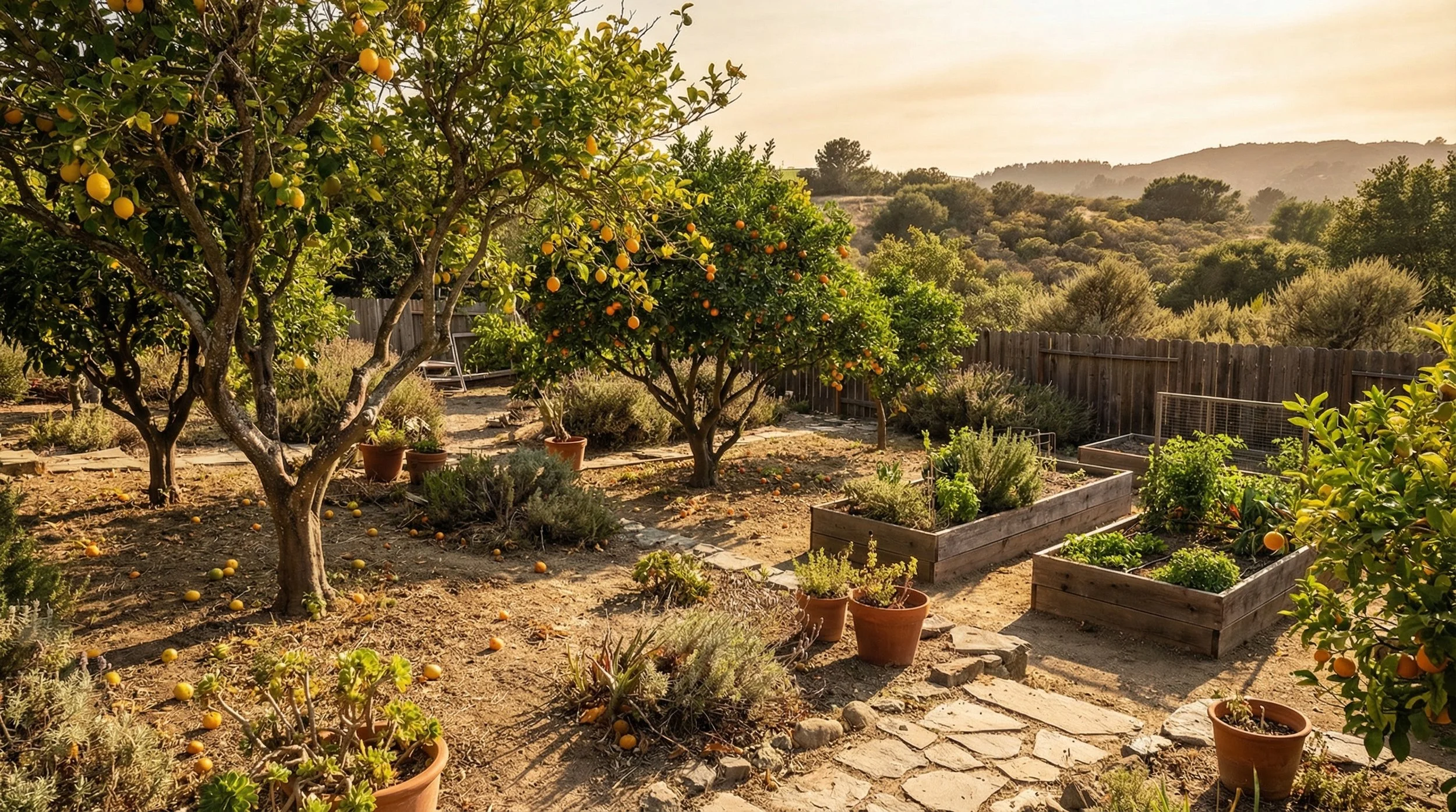
That reality is what makes Santa Cruz County such an interesting place to grow citrus. We are not the Central Valley, where nearly any citrus variety produces reliably. We are not Southern California, where backyard grapefruit trees are commonplace. We are a patchwork of microclimates where a gardener on a sunny hillside in Bonny Doon might harvest beautiful mandarins while someone two miles away in a fog-drenched hollow struggles to ripen a single lemon.
This guide covers what actually works in our area, what struggles, and how to set yourself up for success based on where you garden.
What Citrus Thrives in Santa Cruz County?
The citrus varieties that perform best here share a few traits: they tolerate cooler temperatures, they do not require intense summer heat to develop sweetness, and they can handle our marine influence without dropping fruit or stalling growth.
Meyer lemons are the undisputed champion of Santa Cruz citrus growing. They are technically a hybrid between a lemon and a mandarin orange, which gives them better cold tolerance than true lemons. Meyer lemons handle brief dips into the low 20s once established, and they produce fruit nearly year-round here, which is why UC Master Gardeners list them among the most reliable citrus for coastal California gardens. UC Cooperative Extension notes that limes and most lemons do not need full sun or long periods of heat to ripen fruit, which is what makes them dependable in a cool coastal garden. If you are new to citrus growing here, start with a Meyer lemon. You can read our complete guide on growing Meyer lemons in Santa Cruz County for detailed planting and care instructions.
Improved Meyer lemons (the virus-free cultivar) are what you will find at most nurseries today, and they perform identically to the original in our climate.
Satsuma mandarins are the second most reliable choice. According to UC Master Gardeners, Satsumas are among the most cold-hardy citrus, hardy into the low 20s (about 20 degrees Fahrenheit once established), though the fruit itself can be damaged around 26 degrees. They need less heat than other mandarins to develop sweetness, which is critical in our cool-summer areas. The fruit ripens from November through January, and the flavor in our climate is outstanding because cool nights enhance sugar development.
Kumquats (both Nagami and Meiwa varieties) are surprisingly well-suited to Santa Cruz. They are the most cold-hardy of all true citrus, tolerating temperatures into the low 20s. Kumquats also have a longer dormancy period than other citrus, which helps them handle our cool winters. The fruit is small but intensely flavored, and the trees stay compact enough for containers or small garden spaces.
Yuzu is an underappreciated option that deserves more attention from local gardeners. This Japanese citrus is cold-hardy to about 15 degrees Fahrenheit and produces aromatic fruit even in partial shade. The fruit is used primarily for its zest and juice rather than eaten fresh, but it is prized in cooking.
Calamondin oranges produce abundantly in our climate and make excellent ornamental trees. The fruit is tart and best used for marmalade, drinks, or cooking rather than fresh eating.
What Citrus Struggles in Our Climate?
Some citrus varieties that grow beautifully in Sacramento or Los Angeles will disappoint you in Santa Cruz County, and it is better to know that before you invest years of care into the wrong tree.
Navel oranges are the most common disappointment. They need significantly more summer heat than most of Santa Cruz County provides. According to UC Agriculture and Natural Resources, oranges and grapefruit need enough heat for pigmentation and sweetness, while limes and most lemons ripen without full sun or long hot spells. In our coastal areas, the fruit often stays sour or bland even when it reaches full size. Gardeners in the warmest inland pockets of Scotts Valley or the sunny slopes above Soquel might have marginal success, but for most of us, navel oranges are not worth the effort.
Grapefruit needs even more heat than navel oranges. UC research shows grapefruit requires the most heat of any common citrus variety to develop its characteristic flavor. In Santa Cruz County, grapefruit trees may grow and even produce fruit, but the fruit will almost certainly be too sour and bitter for fresh eating. This is one to skip entirely unless you are gardening in containers and can provide a very protected, south-facing, heat-reflecting location.
Valencia oranges are slightly more forgiving than navels because they ripen later in the season, giving them more time to accumulate heat. Some gardeners in our warmest microclimates report decent Valencia harvests, but results are inconsistent year to year.
True lemons (Eureka and Lisbon) are somewhat of a middle ground. They grow well in protected spots and produce usable fruit, but they are more cold-sensitive than Meyer lemons and more likely to suffer frost damage. If you have a warm, sheltered location, Eureka lemons can produce, but Meyer lemons will outperform them in almost every Santa Cruz garden.
Limes are the most cold-sensitive common citrus. Limes are the least cold-hardy common citrus. According to UC Master Gardeners, lime trees begin to suffer damage around 30 degrees Fahrenheit, so they need protection or container growing in our area. In Santa Cruz County, growing limes outdoors year-round is risky except in the most protected coastal spots. Container growing with winter protection is the better approach for limes, which we cover in our guide to growing citrus in containers.
How Do Santa Cruz Microclimates Affect Citrus Growing?
Understanding your specific microclimate is the single most important factor in citrus success here. Santa Cruz County has dramatic variation in temperature, fog exposure, and wind patterns across short distances. For a deeper look at how these zones work, see our guide to Santa Cruz microclimates.
Coastal zones (Santa Cruz, Capitola, beachside areas): These areas rarely freeze but receive heavy marine fog from May through September. The fog limits summer heat accumulation, which affects fruit sweetness. Meyer lemons, kumquats, and calamondin oranges do well here. Satsuma mandarins perform reasonably but may produce slightly less sweet fruit than inland locations. Plant on the south side of buildings where reflected heat can supplement what fog takes away.
Mid-county (Soquel, Aptos, inland Capitola): These areas get more summer heat and somewhat less fog than the immediate coast. This is the sweet spot for Santa Cruz citrus growing. Meyer lemons produce prolifically, Satsumas develop excellent sweetness, and even some Eureka lemons perform well. Frost risk is moderate, typically a few nights per winter dropping to 28 to 30 degrees.
Inland valleys (Scotts Valley, San Lorenzo Valley, Corralitos): These areas offer more summer heat but carry significantly higher frost risk. Cold air pools in valley bottoms, and winter nights can drop into the mid-20s or lower. Citrus trees in valley bottom locations need serious frost protection. However, gardeners on slopes above the valley floor, where cold air drains away, can grow a wider range of citrus. South-facing hillsides in these areas are some of the best citrus locations in the county.
Mountain areas (Bonny Doon, Summit, higher elevations): Above 1,000 feet, citrus growing becomes challenging but not impossible. Frost frequency increases, summer heat decreases, and wind exposure can be significant. Container-grown citrus that can be moved to protected locations during cold snaps is the most reliable approach. Meyer lemons and kumquats are your best bets in these areas.
South-facing slopes: Regardless of your general location, a south-facing slope with good air drainage is citrus gold in Santa Cruz County. These sites accumulate more heat, drain cold air downhill, and often sit above the fog line. If you have this kind of site, your citrus options expand significantly.
When Should You Plant Citrus in Santa Cruz County?
The best planting window for citrus in our area is April through June. This timing gives trees the entire warm season to establish roots before their first winter. UC Master Gardeners of Santa Clara County say citrus can go in almost any time of year, with the best window after the last spring frost around mid-March.
Avoid planting citrus from November through February. Even though nurseries stock citrus trees year-round, putting a young citrus tree in the ground heading into our coolest, wettest months puts unnecessary stress on a plant that has not yet established its root system.
If you find a great deal on a citrus tree in fall or winter, pot it up in a container and keep it in a protected location until spring. Then plant it in the ground once soil temperatures are consistently above 60 degrees.
For container citrus, you have more flexibility because you can move the tree to shelter. But spring planting still gives the best results for long-term establishment.
How Should You Care for Citrus Trees in Our Climate?
Watering: Citrus trees in Santa Cruz County need consistent moisture but not soggy soil. New trees need watering two to three times per week during their first summer. Established trees typically need deep watering every 7 to 14 days during the dry season (May through October). During our rainy season, supplemental watering is rarely needed unless we hit a dry stretch. UC research recommends watering deeply to encourage deep root growth rather than frequent shallow watering.
Fertilizing: Citrus trees are heavy feeders, especially of nitrogen. Apply a citrus-specific fertilizer three times per year: in February, May, and September. UC Agriculture and Natural Resources recommends using actual nitrogen amounts based on tree age rather than following generic fertilizer package directions. A mature citrus tree needs about 1 to 1.5 pounds of actual nitrogen per year, split across those three applications.
Frost protection: In most Santa Cruz locations, you will need frost protection for at least some winter nights. For frost nights, UC Master Gardeners suggest watering the tree ahead of the cold snap, draping frost blankets or bed sheets rather than plastic, and stringing old-style incandescent holiday lights in the canopy for a few degrees of warmth. String LED lights do not produce enough warmth. Water the soil thoroughly before expected frost, as moist soil releases heat overnight. For more on frost timing in our area, check our frost date guide.
Soil: Citrus needs well-draining, slightly acidic soil with a pH between 5.5 and 6.5. Much of Santa Cruz County has clay-heavy soil that retains too much moisture for citrus roots. Amending the planting area with compost and planting on a slight mound can improve drainage. Our guide to composting basics covers how to build the organic matter your citrus trees need.
Mulching: Apply 3 to 4 inches of organic mulch around your citrus tree, keeping it at least 6 inches away from the trunk. Mulch moderates soil temperature, retains moisture, and slowly feeds the soil. However, do not let mulch touch the trunk, as this promotes crown rot. Learn more about the difference between compost and mulch for best results.
What Are the Most Common Citrus Problems in Santa Cruz?
Citrus leafminer: This pest has become increasingly common in our area. The tiny moth larvae tunnel through leaf tissue, creating silvery trails. According to UC IPM at ipm.ucanr.edu/home-and-landscape/, citrus leafminer damage is mostly cosmetic on established trees. The best management is to avoid pruning or fertilizing in late summer, which stimulates the tender new growth that leafminers prefer.
Citrus scale: Several scale species affect citrus in our area, appearing as small bumps on branches and leaves. UC IPM recommends horticultural oil sprays during the crawler stage for control. Encouraging natural predators like ladybugs and parasitic wasps provides long-term management.
Yellow leaves: The most common cause of yellowing citrus leaves in Santa Cruz County is iron chlorosis, caused by our sometimes-alkaline irrigation water interacting with slightly alkaline soil. Chelated iron applications and soil acidification with sulfur can correct this. Nitrogen deficiency is the second most common cause, identified by overall yellowing of older leaves first.
Fruit drop: Some fruit drop is normal (citrus trees naturally thin their crop), but excessive drop often indicates inconsistent watering. The transition from our wet season to dry season in late spring is a critical time. If rainfall stops abruptly and you do not begin irrigating, stressed trees will drop developing fruit.
Slow ripening: Fruit that seems to hang on the tree forever without ripening is a sign of insufficient heat accumulation. This is especially common in foggy coastal areas. There is no fix for this other than variety selection and site improvement (reflected heat from walls, windbreaks to trap warmth).
Is Growing Citrus in Santa Cruz Worth the Effort?
Absolutely, if you choose the right varieties for your specific location. A well-placed Meyer lemon tree can produce 50 to 100 pounds of fruit per year once mature, more lemons than most families can use. Satsuma mandarins from a Santa Cruz garden taste better than anything you can buy in a store because cool-climate Satsumas develop a flavor complexity that warm-climate fruit cannot match.
The key is matching your expectations to your microclimate. If you are on the coast, accept that you are a Meyer lemon and kumquat gardener, and enjoy being great at that. If you are in a warm inland pocket, you have more options, but still skip the grapefruit. Every Santa Cruz gardener can grow some citrus successfully. The trick is knowing which citrus is yours.
For help choosing the right variety for your specific location, see our guide to the best citrus varieties for Santa Cruz microclimates.
Frequently Asked Questions
Can you grow citrus outdoors year-round in Santa Cruz?
Yes, several citrus varieties grow outdoors year-round in Santa Cruz County with appropriate frost protection. Meyer lemons, Satsuma mandarins, and kumquats are the most reliable choices. According to UC Agriculture and Natural Resources, these varieties tolerate brief temperature dips into the upper 20s once established. Most Santa Cruz locations will need frost cloth on the coldest winter nights, typically 5 to 15 nights per year depending on your microclimate.
What is the easiest citrus to grow in Santa Cruz?
The Meyer lemon is the easiest citrus to grow in Santa Cruz County. UC Master Gardeners writing for coastal gardeners point to high-acid citrus, lemons and limes, because coastal temperatures rarely build the sugars that oranges and mandarins need, and they single out Improved Meyer lemon as doing well in cooler climates. A single Meyer lemon tree can produce fruit within two years of planting and will bear lemons nearly year-round once established, making it the most rewarding citrus for beginners.
Why is my citrus tree not producing fruit?
The most common reasons citrus trees fail to fruit in Santa Cruz are insufficient heat, overwatering, and excessive nitrogen fertilization. According to UC Master Gardeners, young citrus trees take about three to four nonbearing years before they produce well. If your mature tree is not producing, evaluate its sun exposure (citrus needs at least 6 hours of direct sun), reduce nitrogen in favor of phosphorus-heavy fertilizer, and ensure you are not keeping the soil constantly wet.
Do citrus trees need full sun in Santa Cruz?
Citrus trees perform best with at least 6 to 8 hours of direct sunlight daily. In Santa Cruz County, this is especially important because our fog already reduces effective sun hours during summer. UC research shows that citrus in partial shade produces less fruit and the fruit that does develop is often sour due to reduced sugar production. South-facing locations against a light-colored wall provide the best growing conditions in our climate.
How often should you water citrus trees in Santa Cruz?
Established citrus trees in Santa Cruz County typically need deep watering every 7 to 14 days during the dry season from May through October. UC Master Gardeners recommend keeping the soil moist to a depth of about two feet, and holding off while only the top inch is dry, watering once the top several inches have dried out. During our rainy season, supplemental irrigation is rarely needed. Overwatering is more common than underwatering in our area and can cause root rot.
When do citrus trees fruit in Santa Cruz County?
Fruiting times vary by variety. Meyer lemons produce fruit nearly year-round in Santa Cruz, with heaviest production from November through March. Satsuma mandarins ripen from November through January. Kumquats bear fruit from December through April. According to UC Cooperative Extension, cool coastal climates delay ripening substantially compared with inland growing areas, by as much as 6 to 8 weeks for a Pixie mandarin, so patience with harvest timing is important.
Should you grow citrus in the ground or in containers in Santa Cruz?
Both approaches work in Santa Cruz County, and the best choice depends on your microclimate. In-ground trees grow larger and produce more fruit but cannot be moved during frost events. Container trees offer mobility, letting you shift them to protected spots during cold snaps or into sunnier positions as seasons change. UC Master Gardeners recommend containers for gardeners in frost-prone or heavily shaded areas. See our container citrus guide for details.
What rootstock is best for citrus in Santa Cruz?
For Santa Cruz County, UC research recommends trifoliate orange rootstock (Poncirus trifoliata) or Flying Dragon rootstock for most home citrus trees. Trifoliate rootstock provides excellent cold hardiness, tolerance of our heavy soils, and natural dwarfing that keeps trees manageable. According to UC Riverside Citrus Variety Collection, Flying Dragon rootstock produces the most compact trees, making it ideal for small gardens and containers in our area.
Ready to start growing citrus and other California crops? Visit Your Garden Toolkit for our complete collection of growing guides, planting calendars, and resources designed specifically for Santa Cruz County gardeners.
