

Growing Roma Tomatoes in the Santa Cruz Coastal Fog Belt
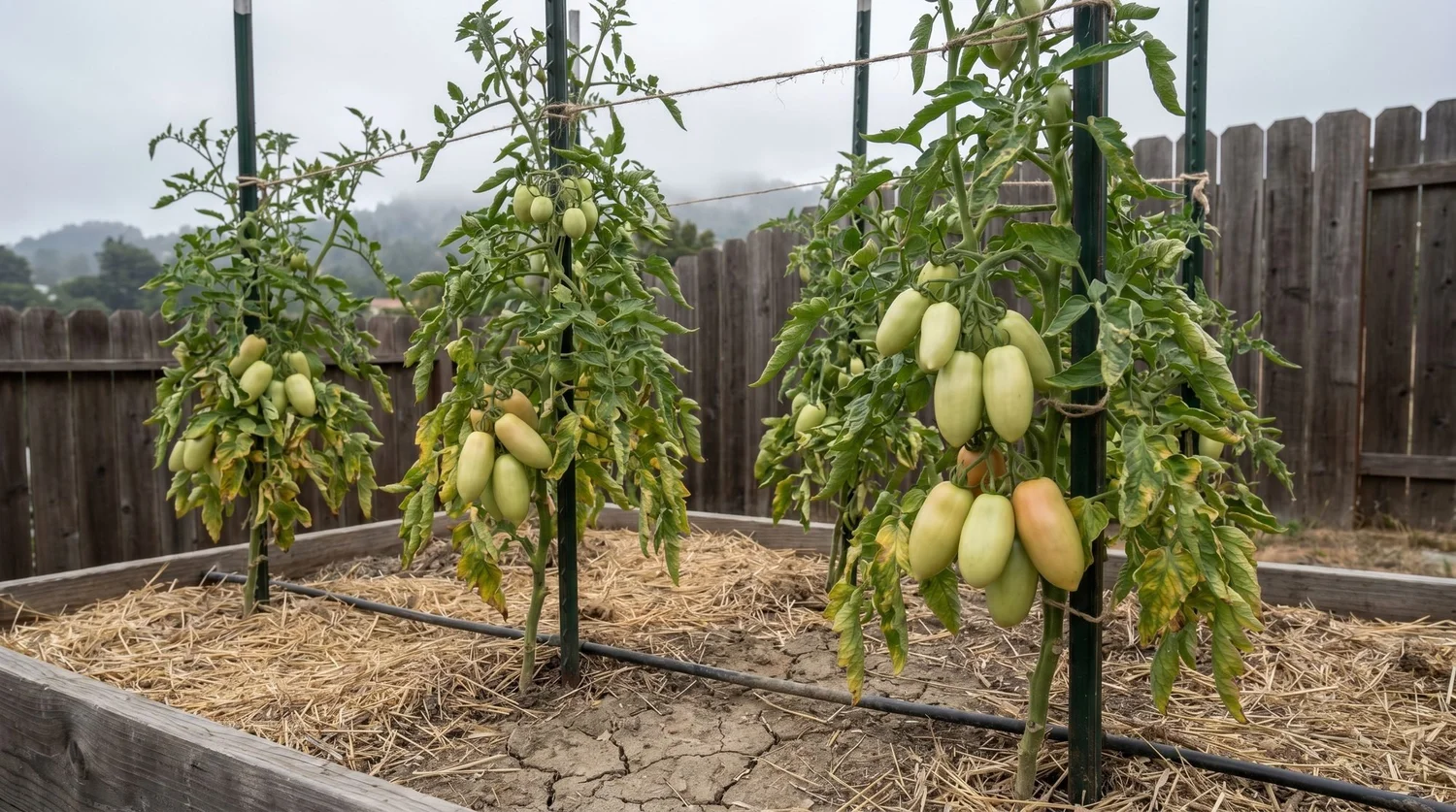
If you garden in the fog belt, from Davenport down through the Santa Cruz, Capitola, and Aptos coast, the reality is that Romas are a stretch here. You can grow them, but you have to stack the deck.
Quick verdict: A hard fit, not a sure thing. The fog belt simply does not deliver the steady heat a paste tomato wants. Expect slow, late, and sometimes incomplete ripening. If you are set on Romas here, your whole strategy is finding heat: the warmest spot you have, an early short-season paste variety, and patience. If you want a reliable paste harvest near the water, the Banana Belt or Pajaro Valley pages are the better answer.
Why the fog fights you
Tomatoes ripen on accumulated warmth, not calendar days, and a paste tomato like the Roma carries a lot of dense flesh that needs real heat units to color up and sweeten. Our coast runs cool and overcast through the exact months a Roma needs to be cooking. The marine layer rolls in most summer mornings and often does not clear the immediate coast until early afternoon, if at all. Night temperatures stay in the low to mid 50s. That combination keeps soil and air below the roughly 70F daytime sweet spot where tomato fruit fills and ripens efficiently. The plant grows fine and flowers fine. It is the finish line that suffers: fruit sits green for weeks, and a bad foggy August can leave a good share of the crop still hard when the season runs out.
The dry-farming exception worth knowing
There is a real coastal tomato tradition here, and it is worth understanding before you give up. Santa Cruz County is famous for dry-farmed tomatoes, grown on the coastal terraces with little or no summer irrigation. The cool foggy nights and morning moisture are part of what makes that flavor so intense. But dry farming is done almost entirely with Early Girl and a handful of small slicers, not heavy paste types, and it works on deep clay soils that hold winter water. A Roma is a poor candidate for the classic dry-farm method. The lesson the dry farmers teach is the one that matters for you: on this coast, choose the variety that ripens cool and early, and let the climate do what it does well rather than forcing it.
When to plant in the fog belt
Frost is rarely the limiting factor on the immediate coast. The fog belt almost never sees a hard freeze, so your real constraint is warmth, not cold. Do not rush transplants out in April just because there is no frost risk. Cold soil stalls roots and a stunted early plant never catches up. Waiting for May soil to warm gives you a stronger plant that ripens sooner overall.
Choosing a variety that can finish here
The standard Roma was bred for hot inland canning country, and it is the wrong tool for the fog belt. If you want paste-type fruit near the coast, lean toward early, short-season, or cool-tolerant paste and saucing tomatoes that color up with fewer heat units. Look for paste varieties rated around 60 to 68 days, and favor those described as good for short or cool seasons. Determinate types help here too, because they set and finish their crop in a tighter window before the season closes out. If a true Roma is the goal, treat it as the experiment and plant a proven coastal early tomato alongside it as your insurance crop.
Find and build the warmest spot you have
This is where a fog-belt Roma is won or lost. You are hunting for every degree of heat on your property. South-facing walls, light-colored fences, and paved patios all radiate stored warmth into the evening and can lift your microclimate noticeably. A Roma grown in a large dark container against a sunny south wall, up off cold ground, will outperform the same plant in an open bed nearly every time. Black plastic or landscape fabric over the root zone warms the soil. A clear cloche or a simple plastic tunnel in the cool early weeks traps daytime heat and protects against the chronic damp that drives coastal fungal disease. The goal is to manufacture the inland conditions the climate will not give you.
Common problems in the fog belt
- Slow and incomplete ripening: the signature fog-belt issue. Pick at the first blush and finish fruit on a warm windowsill indoors rather than waiting on the vine.
- Late blight and gray mold: cool, wet, still air is a fungal paradise. Space plants wide, prune lower leaves for airflow, and water at the base in the morning, never overhead in the evening.
- Leggy, slow seedlings: weak coastal spring light stretches young plants. Start under a grow light, not a dim window.
- Few pollinators on gray days: cool overcast mornings slow bees, so a gentle midday tap of the flower trusses helps set fruit.
The realistic outcome
Set realistic expectations. A fog-belt Roma will likely give you a modest harvest that arrives in September and October rather than midsummer, with some fruit you finish indoors after a heat-free run. That is a fine result for a backyard cook who wants a few jars of sauce and enjoys the challenge. It is not the basket-after-basket canning crop the inland valleys get. If your real goal is volume for putting up sauce, grow a coastal-proven early slicer for fresh eating and source paste tomatoes for canning from a warmer pocket of the county. There is no shame in matching the plant to the place.
Local tip: Do not measure your success by midsummer. Measure it by your warmest two weeks of the year, which on this coast usually fall in late September and early October when the fog finally backs off. Plan the whole season around delivering ripe fruit into that window: an early variety, a warm sheltered spot, and a willingness to finish the last fruit on the counter.
Frequently asked questions
Can I grow Roma tomatoes at all in the Santa Cruz fog belt?
Yes, but consider it an experiment rather than a staple. The cool foggy summer keeps heat units too low for reliable paste-tomato ripening. With an early variety, a hot south-facing microclimate, and indoor finishing you can get a modest crop. For a dependable paste harvest, a warmer county pocket is the better bet.
Why are my coastal Romas still green in August?
That is the fog belt doing exactly what it does. There simply has not been enough accumulated warmth to ripen dense paste fruit. Be patient into the warmer September and October stretch, and pick fruit at the breaker stage to finish indoors so the plant can put energy into ripening the rest.
Should I dry-farm my Romas like the famous Santa Cruz tomatoes?
No. Dry farming on the coast works with early slicing types like Early Girl on deep moisture-holding soil, not heavy paste tomatoes. A Roma needs more consistent water and more heat than the dry-farm method provides. Grow Romas with normal irrigation in your warmest spot instead.
Would a container do better than my garden bed?
Often yes. A large dark pot against a sunny south wall warms faster than cold coastal ground and lets you chase the sun. Up off the chilly soil and backed by radiated wall heat, a container Roma in the fog belt frequently ripens earlier than one in an open bed.
