

Does Adding Sand to Clay Soil Improve Drainage?
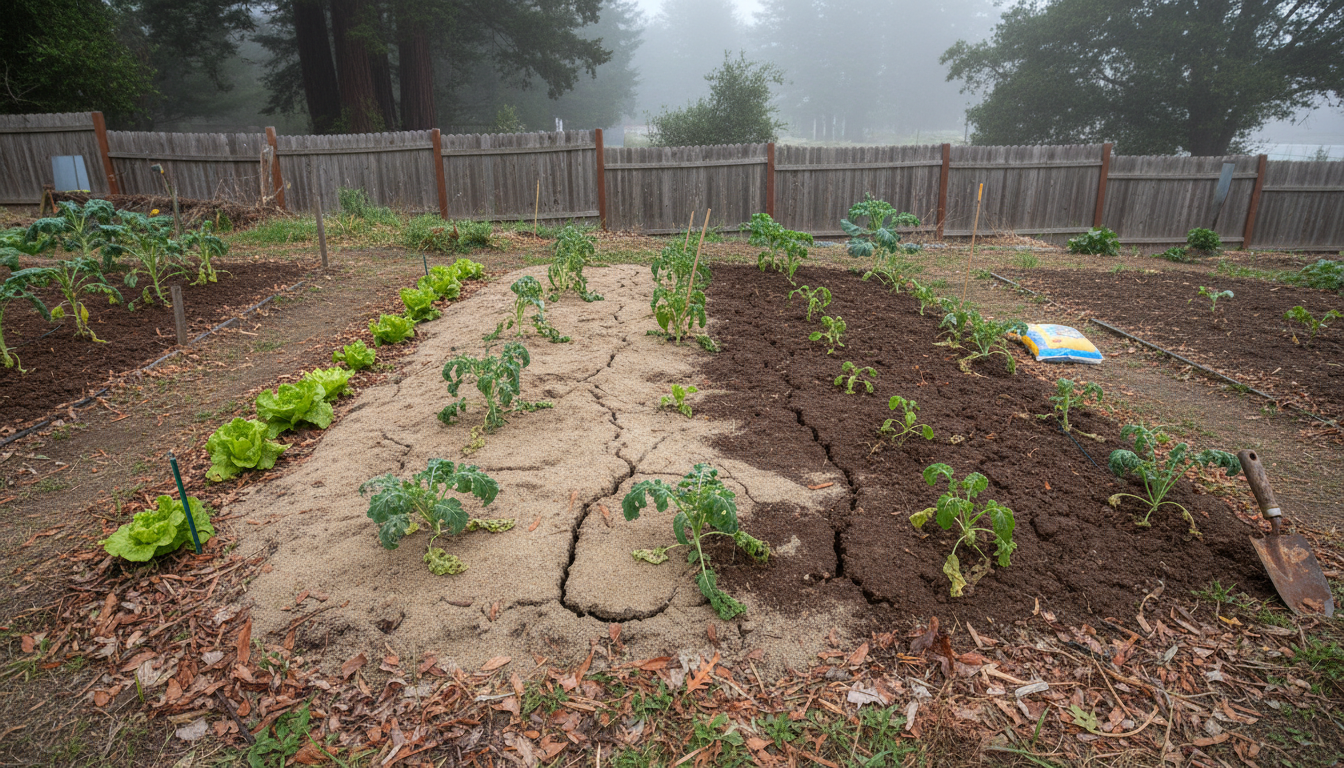
The verdict: skip the sand. A bag of sand looks like an easy answer to a sticky clay bed. In modest amounts, though, it can leave you with a denser mixture and no better drainage.
Why People Believe This
The idea is easy to follow: sand drains quickly, clay drains slowly, so mixing them ought to split the difference. But a garden bed is not that simple. Before hauling sand into a Santa Cruz clay patch, look at what happens between the particles.
What the Research Says
Washington State University Extension explains that mixing clay and sand in the wrong proportions can produce a denser mix with less pore space. Its guidance says a soil must contain nearly 50% sand by total volume before it begins to behave as sandy soil, so adding a modest bag or two is not a practical drainage fix.
Small clay particles can settle between larger sand grains. A little sand does not necessarily create the open spaces you hoped for; it can make the mixture pack more tightly. That is why changing the texture of an entire bed is a much bigger job than adding a bag of amendment.
What to Do Instead
Composted organic matter is a more practical way to improve soil structure. Oregon State Extension recommends adding composted organic matter to garden soil, followed by ongoing care. Think in terms of gradual improvement: how easily the fork enters, whether water lingers, and how the bed handles the next season.
This week: Check the bed before working it. If the soil smears or sticks heavily to your tools, wait until it is workable. Choose finished compost instead of sand, and match the amount to your soil and planting plan.
For more on building great garden soil, check out our free California Garden Planning Guide at Your Garden Toolkit.
Keep Reading
Building Raised Beds for Heavy Soil Areas
Related reading: if your clay has compacted into something harder, here is whether hardpan soil can actually be fixed.
Frequently Asked Questions
Will adding sand to clay soil improve drainage?
A modest amount can make the mixture denser because fine clay fills spaces between sand grains. Washington State University Extension says nearly 50% sand by total volume is required before the soil behaves as sandy soil, which is why small additions are not a practical fix.
What actually improves heavy clay soil?
Composted organic matter is generally a more practical amendment than sand. Oregon State Extension recommends adding composted organic matter to improve garden soil; match the amount and method to the existing soil and the plants you plan to grow.
How long does it take to see a difference?
Look for gradual changes rather than a deadline. Starting soil, drainage, amendment quality, weather, and ongoing care all affect the result. Check the bed each season and adjust from what you see.
