

Raspberry Growth Stages: A Year-by-Year Visual Guide
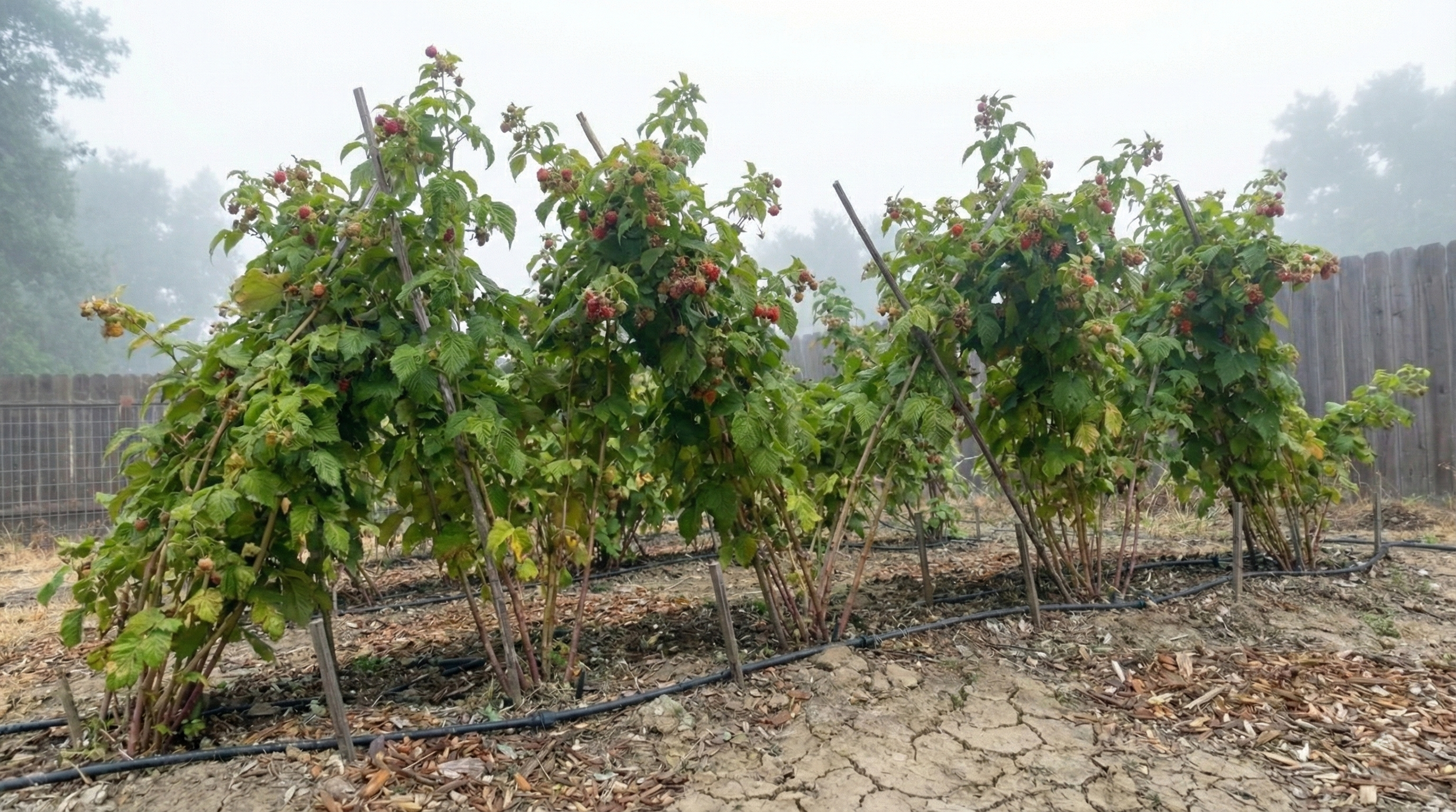
Raspberry plants take two to three years to reach full production, and most varieties give their first meaningful harvest in year two. The roots and crown live for many years, while each individual cane lives only two summers: it grows one year, fruits the next, and then dies. According to the University of Wisconsin Extension, a well-established raspberry plant commonly yields 1 to 2 quarts of berries per season. In Santa Cruz County, primocane varieties like Heritage and Caroline often produce a small fall crop in their first year, with peak yields arriving in years three through five.
A small or uneven crop in year one isn't failure. Canes dying back after fruiting isn't disease. And seeing your plants look like "random sticks" for a while is completely normal.
This guide walks you through what your raspberry plants should look like at each stage, from planting through peak production and beyond. Understanding these patterns helps you distinguish normal development from actual problems and saves you from unnecessary worry.
How Do Raspberry Plants Grow Over Time?
The University of Wisconsin Extension explains that raspberries have perennial, long-lived roots and crowns, while the above-ground canes are biennial and live for only two summers. Each cane lives for only two years: growing vegetatively in year one (primocane stage) and fruiting in year two (floricane stage) before dying. The root crown continuously sends up new primocanes to replace spent floricanes.
Before diving into year-by-year expectations, it helps to understand the basic biology.
Raspberry plants have perennial roots and crowns that live for many years. But each individual cane (the above-ground stem) lives for only two growing seasons: first as a primocane focused on growth, then as a floricane that fruits and dies.
University of California Cooperative Extension notes that a summer-bearing raspberry's first-year primocanes grow vegetatively and do not fruit, so a new planting gives little or no crop the first year and fills in toward full production over its first few seasons. This is normal biology, not poor performance.
UC Master Gardeners describe recurring patterns (winter dormancy, spring cane growth, summer fruiting, post-harvest die-back) that gardeners sometimes misread as problems rather than normal stages.
The key difference between raspberry types:
Primocane-fruiting (everbearing) varieties produce fruit on first-year canes in late summer/fall
Floricane-fruiting (summer-bearing) varieties produce fruit on second-year canes in early summer
Both types follow the same basic cane lifecycle, but differ in when fruit appears. For details on these types, see our guide to Primocane vs Floricane Raspberries.
| Year | Primocane (Everbearing) | Floricane (Summer-Bearing) |
|---|---|---|
| Year 1 |
Establishment Spring-summer: Canes grow, little fruit. Late summer-fall: First modest crop on upper cane portions.
Light crop (normal)
|
Establishment Almost entirely vegetative growth. Canes emerging now will fruit next year as floricanes.
Few to no berries (normal)
|
| Year 2 |
First Real Harvest Winter: Cut all canes to ground. Spring-summer: Dense primocane regrowth. Fall: Significantly larger, more even crop.
Moderate crop
|
First Real Harvest Spring-early summer: Year-1 canes fruit as floricanes. After harvest: Remove spent canes, keep new primocanes.
Moderate crop
|
| Years 3-5 |
Peak Production Steady pattern: winter pruning, vigorous spring growth, reliable fall crops. Dense stands, predictable yields.
Full production (1-2 qt/ft of row)
|
Peak Production Routine annual cycle: primocanes grow, floricanes fruit and are removed. Regular thinning maintains quality.
Full production (1-2 qt/ft of row)
|
| Years 6-10 |
Sustained Production Continued good yields with proper maintenance. Watch for gradual decline in vigor. May need crown division or soil refresh.
Good yields with care
|
Sustained Production Continued good yields with proper maintenance. Disease pressure may increase. Stay vigilant on cane health.
Good yields with care
|
| 10+ Years |
Potential Decline Older plantings may show declining vigor, increased disease, and reduced yields despite good care. Consider renovation or replanting with fresh, disease-free stock.
Variable; evaluate replanting
|
|
What Should I Expect from Raspberries in Year 1?
For summer-bearing (floricane) raspberries, the first-year primocanes grow only vegetatively and do not flower, so year one naturally goes into building roots and canes rather than fruit. For primocane varieties in Santa Cruz County, you can allow a small fall crop without significantly impacting long-term plant vigor.
The first year is about building infrastructure, not maximizing harvest. Your plants are investing energy in roots and cane growth rather than heavy fruiting.
What's Happening Underground
After planting dormant canes in late winter or early spring, roots expand into the surrounding soil and the crown (the base where canes emerge) establishes itself. Good drainage and deep soil encourage strong root development.
This underground work isn't visible, but it's the foundation for everything that follows.
What You'll See Above Ground
New primocanes emerge in spring, growing foliage and height throughout the season. Early canes may look thin or sparse compared to what you imagined. This is normal.
Year 1 Expectations by Type
Primocane (everbearing) varieties:
Spring through early summer: Vigorous green canes emerge and grow, but little or no fruit appears
Late summer through fall: Your first modest crop develops on the upper portions of primocanes
Typical yield: Light, maybe a handful of berries per plant. Some primocanes may not fruit at all the first year.
Floricane (summer-bearing) varieties:
Year 1 is almost entirely vegetative. The canes that emerge this year will fruit next year as floricanes.
Typical yield: Few to no berries. This is expected, not a problem.
What's Normal vs. What's Not
Normal in year 1:
Thin, sparse canes
Uneven growth between plants
Few or no berries (especially floricane types)
Small berries on primocane types
Some leaf yellowing as plants adjust
Potentially problematic:
No new cane growth at all by late spring
Canes dying back soon after emerging (possible root rot or disease)
Severe, widespread yellowing affecting all foliage
Complete lack of fruit on primocane types by October
If your plants show concerning symptoms, see our Raspberry Problems guide for diagnosis help.
How Much Fruit Do Raspberries Produce in Year 2?
By the second growing season, crowns are more established and canes are better organized (assuming you've done basic pruning). This is typically when the planting starts to look and act like a productive raspberry patch.
Primocane Varieties (Simple One-Crop System)
Winter (year 1 into year 2): Following standard primocane management, you cut all canes to the ground during dormancy.
Spring through summer: A fresh flush of primocanes emerges from the now-established crowns. You'll notice more canes, more vigor, and more uniform growth than year 1. The row fills in more densely.
Late summer through fall: A significantly larger, more even crop develops on the upper portions of those new canes. This is your first "real" harvest.
What to expect: Noticeably more fruit than year 1. Individual berries may be larger. The harvest window extends longer as more canes contribute.
Floricane Varieties
Spring through early summer: The canes that grew in year 1 now flower and fruit as floricanes. This is your first substantial summer crop.
After harvest: Spent floricanes die (they look tired, with brown/gray bark). Cut them at ground level. Meanwhile, new primocanes have been growing since spring. These will be next year's floricanes.
What to expect: Your first significant harvest. The summer crop window is concentrated (a few weeks in June/July typically).
The "Click" Moment
For most gardeners, year 2 is when the planting "clicks" and starts to look like a productive patch rather than a row of random sticks. You'll see:
Organized cane growth filling the row
Predictable fruiting patterns
Enough berries to actually enjoy (fresh eating, maybe some for the freezer)
If year 2 doesn't show clear improvement over year 1, something may be wrong with site conditions, watering, or plant health.
When Do Raspberry Plants Reach Peak Production?
With consistent pruning and care, raspberries usually reach full production between years 3 and 5. This is the payoff for your patience.
What Peak Production Looks Like
Denser, more uniform stands: Canes fill the row with consistent height and spacing. The planting looks established and intentional rather than scraggly.
Strong, predictable crops: Each season delivers reliable harvests as long as you maintain proper pruning. You'll develop a sense of when to expect fruit and how much.
More maintenance needed: Ironically, peak production requires more attention. Vigorous growth means more thinning, better trellis support, and closer monitoring for overcrowding.
Primocane Types During Peak Years
Using the simple one-crop system (cutting all canes to the ground each winter), you'll see a steady pattern:
Winter: Cut everything down
Spring/Summer: Vigorous primocanes emerge and grow
Late Summer/Fall: Heavy, reliable crop on upper cane portions
Repeat
If you use the two-crop system, some canes will fruit lightly in early summer as floricanes before you remove them, and new primocanes will carry the main fall crop.
Floricane Types During Peak Years
The annual pattern becomes routine:
First-year primocanes grow
Second-year floricanes fruit and are removed
New primocanes take their place
Repeat
Proper thinning maintains airflow and light, reducing disease and keeping berry size and quality high.
Raspberry Growth Timeline
What to Expect from Year 1 Through Peak Production
What You'll See
Thin, sparse canes. Uneven growth between plants. Few berries on primocane types, none on floricane types.
What You'll See
Denser canes, more uniform growth. Noticeably more fruit than year 1. The patch starts to look productive.
What You'll See
Dense, uniform stands. Strong canes filling the row. Heavy, predictable harvests. May need more thinning and support.
What You'll See
Continued good production with proper maintenance. May notice gradual decline in vigor. Disease pressure may increase.
What You'll See
Weaker canes, declining yields, more disease issues despite good care. Crowns becoming woody and less productive.
Dec-Feb
Mar-May
Jun-Aug
Sep-Nov
What's Normal vs. What's a Problem
Typical Peak Yields
For reference, a well-managed raspberry planting in good conditions can produce roughly 1-2 quarts of fruit per foot of row during peak years. Individual results vary based on variety, care, and conditions, but you should see meaningful harvests.
What Is the Raspberry Growing Season in Santa Cruz County?
Once your planting is established, raspberries follow a consistent annual rhythm tied to our mild winters and cool summers. This pattern repeats each year.
| Season | Key Activities | What's Normal to See |
|---|---|---|
| Winter Dec - Feb |
Pruning Primocane: Cut all canes to ground (simple system) Floricane: Remove dead floricanes, thin primocanes Repair trellises, refresh mulch |
Plants dormant, bare canes, no leaves. May look "dead" but roots are alive. No new growth until spring. |
| Spring Mar - May |
Fertilize
Water
Monitor Apply balanced fertilizer as growth begins. Start regular watering. Control weeds. Tie canes to trellis. |
Rapid new growth from crowns. Fresh green primocanes emerge and elongate quickly. Leaves unfurl and expand. |
| Early-Mid Summer May - Jul |
Harvest
Prune
Water Floricane: Harvest summer crop, remove spent canes after Primocane: Continued growth, no fruit yet Maintain consistent watering |
Floricane: Flowers, then ripe berries on year-old canes. Canes look tired and die after fruiting (normal). Primocane: Tall, vigorous green canes growing. |
| Late Summer-Fall Aug - Oct |
Harvest
Water
Monitor Primocane: Main harvest season, pick every 2-3 days Continue watering. Watch for pests (SWD) and fruit rots. Prepare for dormancy. |
Primocane: Flowers and fruit on upper portions of current-year canes. Heavy harvest period. Growth slows as fall progresses, eventual leaf yellowing and drop. |
| Late Fall Nov |
Monitor Final harvests (primocane). Reduce watering as plants go dormant. Clean up fallen leaves. |
Leaves yellowing and dropping. Growth stops. Plants entering dormancy. Canes hardening for winter. |
Some links in this guide are affiliate links. If you buy through them, we may earn a small commission at no extra cost to you. Read our full disclosure.
Winter (December-February)
What's happening: Plants are dormant or nearly so. Canes have dropped leaves and growth has stopped.
What to do: This is the main window for pruning and trellis repairs.
Primocane types: Cut all canes to ground (simple system) or selectively manage two-crop canes
Floricane types: Remove any remaining dead floricanes, thin primocanes, leaving next season's fruiting canes
What's normal: Bare canes, no activity. Don't worry if plants look "dead." They're resting.
Spring (March-May)
What's happening: New primocanes emerge from crowns and elongate rapidly. You'll see fresh green growth and leafing out.
What to do:
Apply balanced fertilizer as growth begins
Control weeds around the base
Start regular watering as weather warms
Tie canes to trellises as they grow
What's normal: Rapid growth. Canes can grow several inches per week in good conditions.
Early-Mid Summer (May-July)
What's happening: Growth patterns diverge by type.
Floricane raspberries: Main summer crop on last year's canes
Primocane raspberries: Continued vegetative growth, no fruit yet
What to do:
Harvest floricane crops as berries ripen
After floricane harvest, remove spent canes at ground level
Tie in new primocanes
Maintain consistent watering
What's normal: Floricane canes dying back after fruiting. This isn't disease; it's the normal lifecycle.
Late Summer-Fall (August-October)
What's happening: Primocane varieties produce their main crop on the upper portions of current-year canes. Floricane types are focused on primocane growth for next year.
What to do:
Harvest primocane crops frequently (every 2-3 days during peak)
Continue watering
Monitor for pests (especially spotted wing drosophila) and fruit rots
Prepare for winter dormancy as temperatures drop
What's normal: Gradually slowing growth, eventual leaf drop as fall progresses.
How Long Do Raspberry Plants Last?
According to the University of Wisconsin Extension, raspberry plantings are usually kept to bear fruit for about 10 to 12 years, and can remain productive as long as 12 to 15 years with good care before they decline. Signs of decline include smaller berries, fewer canes, and increased disease pressure. When renovation is needed, remove old plants completely, amend the soil, and replant in a new location if possible to reduce soilborne disease carryover.
Raspberries don't live forever. Over many seasons, even well-maintained plantings can decline.
Signs Your Patch Is Past Its Peak
Declining vigor despite good care:
Thinner, weaker canes each year
Noticeably lower yields even with correct pruning and feeding
Canes that struggle to reach normal height
Increasing disease pressure:
More frequent cane diseases (anthracnose, spur blight, cane blight) affecting large sections rather than isolated canes
Root problems spreading through the planting
Chronic issues that don't respond to treatment
Physical decline:
Crowns becoming woody and less productive
Dead patches expanding in the row
Overall "tired" appearance
When to Consider Replanting
Extension bramble guides note that old raspberry stands sometimes need renovation or complete replacement rather than continued maintenance.
General timeline: When a planting is 8-10 or more years old and steadily declining despite proper care, it may be time to start fresh.
Replanting approach:
Remove old plants completely
Improve soil with compost and amendments
If possible, establish new plants in a different location to break disease cycles
Choose fresh, certified disease-free stock
Consider trying different varieties based on your experience
This is a good moment to revisit your variety choices and microclimate understanding. See our Best Raspberry Varieties for Santa Cruz County for updated recommendations.
Raspberries are not the only crop working on a multi-year timeline. See our blackberry growth stages and strawberry growth stages guides for the rest of the berry patch, or browse growth stage guides for every crop, from grapes to garlic.
Frequently Asked Questions
My first-year raspberries barely produced anything. Did I do something wrong?
Probably not. Light or no production in year 1 is completely normal, especially for floricane varieties (which won't fruit until year 2). Primocane types may produce a modest fall crop, but don't expect much. Year 2 should show significant improvement.
When will my raspberries reach full production?
Most raspberry plantings reach peak production between years 3 and 5, assuming good care. You'll see meaningful harvests by year 2, but the "full potential" takes a bit longer as crowns mature and fill in.
Why do my raspberry canes die after fruiting?
This is normal biology, not disease. Floricanes (second-year canes) naturally die after fruiting. They've completed their lifecycle. Remove them at ground level after harvest to make room for new primocanes.
How long will my raspberry plants live?
The roots and crown can live 10-15 years or more with good care. Individual canes live only two years (one as primocane, one as floricane). The planting stays productive through continuous cane renewal. Expect some decline after 8-10 years.
My year-2 raspberries still aren't producing much. What's wrong? If year 2 doesn't show clear improvement over year 1, investigate potential problems: inadequate sun (need 6+ hours), poor drainage, inconsistent watering, wrong variety for your conditions, or disease/pest issues. See our troubleshooting guide for diagnosis help.
Is it normal for raspberry plants to look dead in winter?
Yes. Raspberries are deciduous; they drop leaves and go dormant in winter. Bare, brown canes in December through February are completely normal. New growth emerges in spring.
Should I fertilize first-year raspberries?
Yes, but lightly. A modest application of balanced fertilizer in early spring supports establishment without pushing excessive soft growth. Avoid heavy nitrogen, which can promote disease-susceptible canes.
When is the best time to plant raspberries for fastest establishment?
In Santa Cruz County, plant bare-root raspberries in late winter (January-February) or container plants in early spring (March-April). This gives roots time to establish before summer heat and allows first-year primocanes to develop well.
Why are my first-year raspberries not producing fruit?
This is completely normal. Most raspberry varieties need one to two growing seasons to establish their root systems before producing a meaningful harvest. Primocane varieties may give you a handful of berries in their first fall, but full production starts in year two. For summer-bearing (floricane) types, the first-year canes are vegetative and do not fruit, so the plant spends year one establishing roots and canes, with full production following in year two.
How do I know when my raspberry patch needs replacing?
Look for these signs after year 8: berries getting smaller each season, fewer new canes emerging in spring, increased disease (yellow or spotted leaves, crumbly berries), and declining overall yield. According to the University of Wisconsin Extension, most plantings bear well for about 10 to 12 years and can stay productive up to 12 to 15 years with proper care. When you replant, choose a different garden location if possible to avoid soilborne pathogens that accumulate over time.
How long does it take for raspberries to grow and produce fruit?
Everbearing (primocane) varieties planted in early spring produce a small first crop the same fall, about five to six months after planting. Summer-bearing varieties fruit on second-year canes, so the first real harvest comes 12 to 14 months after planting. Either way, plan on year three for full production.
Downloadable Guides
These free PDF resources will help you track raspberry development:
Seasonal Planting Calendar: Month-by-month guide including raspberry care timing.
Seasonal Garden Tasks Checklist: Track your pruning, feeding, and maintenance by season.
Garden Troubleshooting Guide: Diagnose problems vs. normal growth stages.
Understanding the Timeline
Growing raspberries rewards patience. Year 1 builds the foundation. Year 2 delivers your first real harvest. Years 3-5 bring peak production. And with proper maintenance, that productivity continues for many seasons.
Knowing what to expect at each stage helps you avoid unnecessary worry and recognize when something actually needs attention. Most "problems" new raspberry growers worry about are simply normal stages of development.
Related Articles
Growing Raspberries in Santa Cruz County: A Complete Guide - Everything you need to know to grow raspberries successfully in our coastal climate.
Primocane vs Floricane Raspberries: Which Should You Grow in California? - Understanding the two fruiting types and which works best for your garden.
Best Raspberry Varieties for Santa Cruz County Gardens - Top-performing varieties matched to our local microclimates and conditions.
How to Prune Raspberries: A Step-by-Step Guide - Clear pruning instructions for both primocane and floricane types.
Growing Raspberries in Containers - How to grow productive raspberry plants in pots and small spaces.
Raspberry Problems: Pests, Diseases, and Common Issues - Diagnose and solve common raspberry growing challenges in California.
