

How to Prune Raspberries: A Step-by-Step Guide
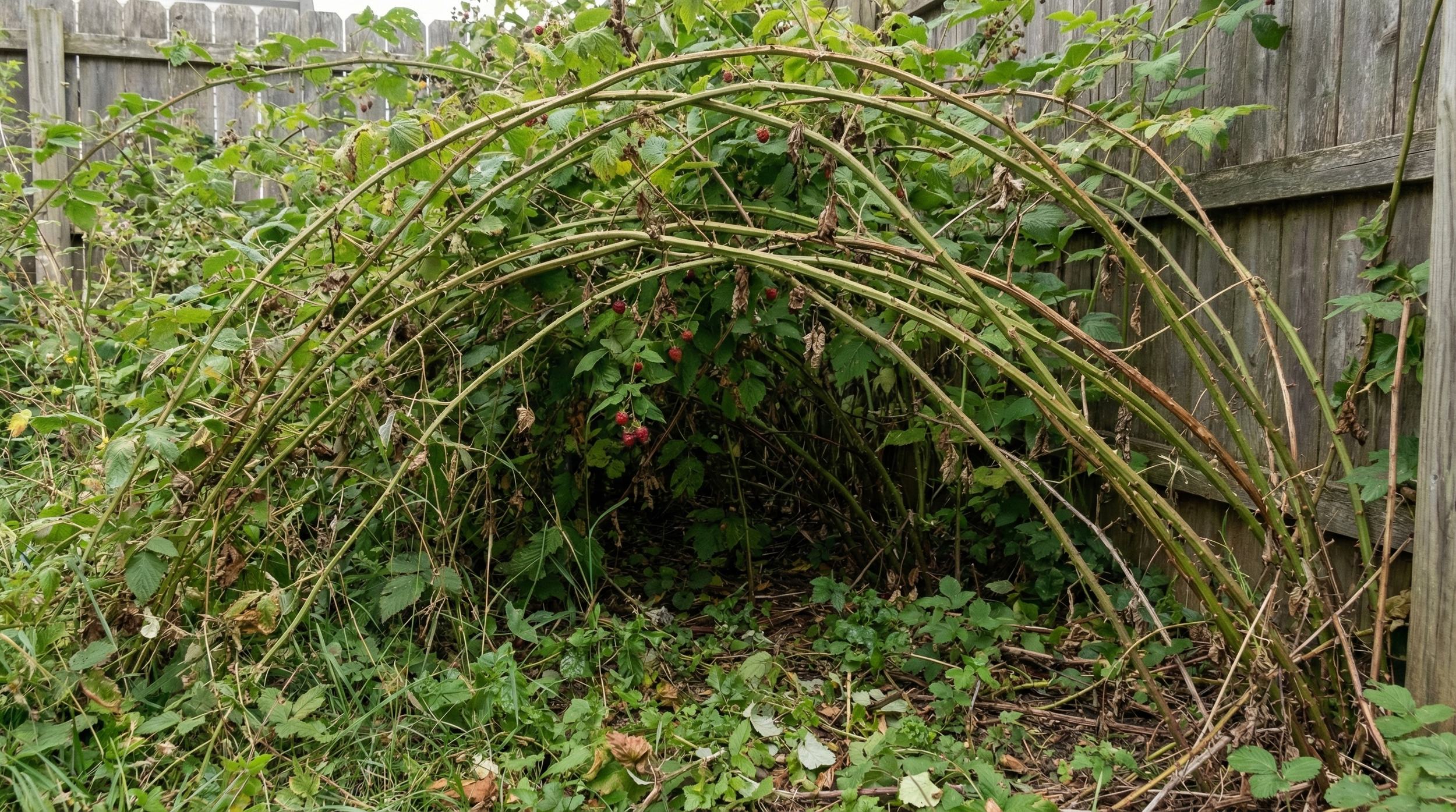
A few of the product links in this guide are affiliate links. If you buy through one, Ambitious Harvest may earn a small commission at no extra cost to you, which helps keep these guides free. We only point to gear we would use in our own Santa Cruz garden. As an Amazon Associate, we earn from qualifying purchases. Read our full disclosure.
Pruning is the single most confusing part of growing raspberries. It's also the most important. Get it right, and you'll have healthy canes, good airflow, and abundant harvests. Get it wrong, and you might accidentally cut off next year's entire crop.
The good news is that once you understand how primocane and floricane raspberries grow, pruning becomes straightforward. You don't need a degree in plant science. You just need to know which type you're growing and follow the right method.
For most Santa Cruz County gardeners growing primocane (everbearing) varieties, pruning is remarkably simple: cut everything to the ground once a year. That's it. Floricane (summer-bearing) varieties require a bit more attention, but the process is still manageable once you understand the pattern.
This guide walks you through both approaches with clear, step-by-step instructions timed for our coastal California climate.
What Type of Raspberry Canes Do You Have?
The most important rule in raspberry pruning is this: know what type of raspberry you're growing before you make any cuts.
Raspberry plants have perennial roots but biennial canes. According to Gardening Know How and UC ANR, here's the basic pattern:
First-year canes (primocanes): New shoots that emerge from the crown each spring. On most varieties, they grow vegetatively all season.
Second-year canes (floricanes): Those same primocanes after overwintering. They flower, produce fruit, and then die.
The critical difference is when your variety fruits:
Primocane-fruiting varieties (also called everbearing or fall-bearing) produce fruit on the upper portions of first-year canes in late summer and fall. Gardeners Path explains that these varieties can also produce a smaller crop as floricanes the following early summer if you don't cut them down.
Floricane-fruiting varieties (summer-bearing) produce fruit almost entirely on second-year canes. Their primocanes grow one year and fruit the next.
If you're not sure which type you have, check your plant tag or see our guide to Primocane vs Floricane Raspberries for identification tips.
Most Santa Cruz County gardeners should be growing primocane varieties like Caroline, Heritage, Joan J, Anne, Fall Gold, or Bababerry. These are easier to prune and more reliable in our variable winters.
What Tools and Timing Do You Need for Coastal California?
Essential Pruning Tools
UC Master Gardeners of Santa Clara County recommend having these tools ready:
Bypass pruners: Your primary tool for cutting canes. Bypass pruners make clean cuts without crushing stems. Keep them sharp.
Loppers: Useful for thick, woody cane bases that are difficult to cut with hand pruners.
Sturdy gloves: Essential for thorny varieties. Leather or reinforced gloves protect your hands and forearms.
Long sleeves: Even with gloves, thorny canes will find exposed skin. Wear a long-sleeved shirt you don't mind snagging.
Sanitizer: Keep rubbing alcohol or a dilute bleach solution handy to disinfect tools between plants if you suspect disease. UC IPM gives the same instruction for caneberries generally: after harvest, the canes that have borne fruit are cut down to the ground.
Pruning Timing in Santa Cruz County
Winter (late December through February): This is your main pruning window. Plants are dormant, canes are leafless (or nearly so), and you can clearly see the structure of your patch. This is when you do the big cuts.
Summer (immediately after harvest): Secondary pruning time for floricane varieties. Remove spent canes right after they finish fruiting. For primocane varieties using the one-crop method, there's no summer pruning needed.
Spring and early summer: Light maintenance only. Tie canes to trellises, thin overcrowded new growth if necessary, but avoid major cuts that could stress plants during active growth.
How Do You Prune Primocane Raspberries Using the Simple One-Crop Method?
This is the easiest pruning method and works for all primocane (everbearing) varieties: Caroline, Heritage, Joan J, Anne, Fall Gold, Bababerry, Raspberry Shortcake, and others.
Gardeners Path and UC extension resources confirm that for a simple fall-only harvest, you can cut all primocanes to the ground each winter. New canes grow in spring and fruit in late summer through fall.
Step-by-Step Instructions
Step 1: Wait for winter dormancy
In Santa Cruz County, this typically means late December through February. Canes should be leafless or nearly leafless. Don't prune too early in fall while plants are still actively growing.
Step 2: Cut all canes to the ground
Using bypass pruners or loppers, cut every cane in the patch to within 1-2 inches of soil level. Don't worry about distinguishing between cane types or ages. Everything goes.
This feels dramatic the first time you do it, but it's exactly what these plants need.
Step 3: Remove prunings from the bed
Gather all the cut canes and haul them away. Compost them off-site or dispose of them. Leaving prunings in the bed encourages disease and pest carryover.
Step 4: Check your trellis and refresh mulch
With all canes removed, this is the perfect time to repair trellis wires, replace rotted posts, and add fresh mulch (2-3 inches of wood chips or straw) around the base of the planting.
Step 5: In spring and summer, thin if necessary
New primocanes will emerge in spring and grow vigorously through summer. If your patch sends up more shoots than your trellis can handle, thin weaker canes to maintain 4-6 strong canes per foot of row. This improves airflow and light penetration.
Step 6: Harvest in late summer through fall
Your new primocanes will fruit on their upper portions from approximately August through October (timing varies by variety and microclimate). Enjoy your berries.
Step 7: Repeat next winter
The following winter, cut everything to the ground again. That's the entire cycle.
Why This Method Works
The one-crop system offers major advantages for home gardeners:
No cane identification required: You don't need to distinguish primocanes from floricanes. Everything gets cut.
Disease and pest control: Annual removal of all canes breaks disease cycles and eliminates overwintering pest habitat.
Easy maintenance: The annual reset keeps your patch manageable and prevents tangles.
Reliable cropping: Even in variable winters, primocanes will produce on current-season growth.
This is the method we recommend for most Santa Cruz County gardeners with primocane varieties.
What Is the Advanced Two-Crop Pruning System for Primocane Raspberries?
If you want both a fall harvest AND an early-summer harvest from your primocane raspberries, you can use a more complex two-crop system. This gives you more total fruit but requires keeping track of cane ages.
How the Two-Crop System Works
Primocane varieties have the ability to fruit twice: once in fall on first-year growth, and again in early summer on those same canes (now floricanes) before they die.
Step-by-Step Instructions
Step 1: After fall harvest, leave canes standing
Instead of cutting everything to the ground in winter, leave the canes that just fruited in fall standing through winter. They'll look a bit ratty, but they're still alive.
Step 2: In early spring, tip-prune
Before new growth begins (late February to early March in Santa Cruz County), cut back the tips of those overwintered canes. Remove just the portion that fruited in fall (usually the top 12-18 inches). The remaining lower portion will produce flowers and fruit.
Step 3: Early summer: harvest floricane crop
Those overwintered canes will produce a smaller early-summer crop (typically June) on the lower portions that didn't fruit in fall. This is your "bonus" harvest.
Step 4: After early-summer harvest, remove spent floricanes
Once those canes finish fruiting, cut them at ground level. They're done and won't produce again. Meanwhile, new primocanes have been growing since spring.
Step 5: Thin new primocanes as needed
Maintain 4-6 strong new primocanes per foot of row. Remove weak, crowded, or damaged canes to improve airflow.
Step 6: Fall: harvest primocane crop
Your new primocanes will produce the main fall crop on their upper portions.
Step 7: Repeat
Leave fall-fruited canes standing, tip-prune in early spring, harvest early summer floricane crop, remove spent floricanes, harvest fall primocane crop, and continue the cycle.
Is the Two-Crop System Worth It?
For most home gardeners, we recommend the simple one-crop method. The two-crop system gives you more total fruit and extends your harvest season, but it:
Requires tracking cane ages
Reduces the size of your main fall crop slightly (since canes put energy into the floricane crop first)
Increases disease risk (overwintered canes can harbor pathogens)
If you have the time and interest, try it on a portion of your patch while keeping the rest on the simpler one-crop system.
How Do You Prune Floricane Raspberries (Summer-Bearing)?
Floricane varieties like Tulameen, Nova, Willamette, and Meeker require different handling than primocanes. You cannot cut everything to the ground, or you'll have no fruit the following summer.
Understanding the Floricane Cycle
With floricane varieties:
Primocanes grow in year 1 (no fruit)
Those same canes fruit as floricanes in year 2, then die
New primocanes grow each year to replace them
At any given time, a healthy floricane patch contains both primocanes (next year's crop) and floricanes (this year's crop, or spent canes after harvest).
Step-by-Step Instructions
Step 1: During the growing season, learn to identify cane ages
UC Master Gardeners note that first-year primocanes are typically taller, greener, and lack side branches early in the season. Second-year floricanes are more woody in appearance, with mature bark and side branches bearing fruiting laterals.
With practice, you'll easily distinguish them.
Step 2: Immediately after summer harvest, remove spent floricanes
Right after your floricane crop finishes (typically July in Santa Cruz County), cut all canes that just fruited at ground level. They will not fruit again, and leaving them encourages disease.
Be careful not to cut the current-year primocanes. They're next year's crop.
Step 3: Keep and tie in primocanes
Leave the current-year primocanes in place. Space them several inches apart along the row and tie them loosely to your trellis wires. This keeps them upright and organized.
Step 4: Winter: thin and tip-prune
During dormancy (December through February), do your maintenance pruning:
Thin crowded primocanes: Aim for 4-6 strong canes per foot of row. Remove weak, damaged, or diseased canes.
Tip-prune for height: If canes are taller than your trellis can support, cut them back to a manageable height (usually 5-6 feet). This also encourages branching.
Step 5: Spring and summer: minimal intervention
Tie canes as needed and remove any winter-damaged portions, but avoid major cuts during active growth.
Step 6: Harvest and repeat
Your primocanes (now floricanes) will fruit in early summer. Immediately after harvest, remove those spent floricanes, keep the new primocanes, and repeat the cycle.
The Critical Rule for Floricane Varieties
Never cut all canes to the ground on a floricane variety. If you do, you'll remove all the floricanes (this year's fruiting wood) AND all the primocanes (next year's fruiting wood). The result is no fruit at all.
If you've already made this mistake, don't panic. Let whatever new primocanes emerge grow through the season. Don't cut them next winter. They'll fruit as floricanes the following summer, and you can resume normal pruning from there.
How Should You Prune Compact and Container Raspberries?
Dwarf varieties like Raspberry Shortcake and other compact primocane types follow the same basic principles as full-sized primocanes, with a few modifications for containers and small spaces.
Cal Poly Pomona Nursery notes that Raspberry Shortcake can be pruned like other primocane raspberries: cut back old canes in winter and thin crowded shoots to maintain airflow.
UC Master Gardeners of Contra Costa County emphasize that container berries need regular renewal of older wood, thinning for light, and careful attention to water and nutrients.
Container Pruning Tips
Use the one-crop method: For container raspberries, cut all canes to the ground each winter. This keeps plants compact and manageable in confined spaces.
Thin more aggressively: Containers have limited root space. Remove weak canes early to direct energy to your strongest 3-5 shoots per container.
Check roots periodically: Every 2-3 years, unpot your raspberry during dormancy, trim any circling roots, and refresh the potting mix.
For complete container growing guidance, see our guide to Growing Raspberries in Containers.
What Are the Most Common Pruning Mistakes (And How to Fix Them)?
Even experienced gardeners make pruning errors. Here's how to identify and recover from the most common mistakes:
Mistake 1: Cutting All Canes on a Floricane Variety
What happened: You treated a summer-bearing raspberry like a primocane type and cut everything to the ground.
Result: No summer crop the following year. You removed both the floricanes that would have fruited AND the primocanes that would have become next year's floricanes.
How to fix it: Let whatever new growth emerges grow undisturbed through the entire season. DO NOT cut those canes the following winter. They need to overwinter and fruit as floricanes the next summer. After that harvest, resume normal selective pruning.
Prevention: Label your raspberry varieties clearly and confirm their type before pruning.
Mistake 2: Never Removing Old Floricanes
What happened: You let spent floricanes remain in the patch year after year.
Result: Dense, thorny thickets with poor airflow. Increased disease pressure. Weak, small fruit.
How to fix it: During dormancy, identify the oldest, most woody canes (thick, gray bark, multiple years of side branching) and cut them at ground level. Remove dead or clearly declining canes first. Thin gradually over one or two seasons to avoid shocking the plant.
Prevention: Mark your calendar to remove spent floricanes immediately after harvest each year.
Mistake 3: Leaving Too Many Canes in a Small Space
What happened: You let every cane that emerged stay in the patch.
Result: Overcrowded conditions, poor airflow, powdery mildew, small berries, difficult harvesting.
How to fix it: During winter pruning, thin canes to 4-6 strong ones per foot of row. Prioritize straight, vigorous canes and remove weak, crossing, or damaged ones. It takes courage to remove healthy-looking canes, but your remaining canes will be much more productive.
Prevention: Thin canes annually during winter pruning, even when it feels like you're removing too many.
Mistake 4: Pruning at the Wrong Time
What happened: You did major cuts in fall while plants were still active, or in spring during rapid growth.
Result: Stressed plants, possible dieback, reduced harvest.
How to fix it: Let plants recover through the current season without additional stress. Resume pruning at the correct time next year (late December through February for major cuts, immediately after harvest for floricane removal).
Prevention: Follow the timing guidance in this article. Big cuts happen in winter dormancy. Post-harvest cleanup happens right after fruiting. Spring and summer are for light maintenance only.
What Is a Quick Reference Summary of Pruning Methods?
Here's a condensed reference for the three main pruning approaches:
Primocane Varieties (One-Crop Method)
When: Winter (December through February)
What to cut: Everything to ground level
Result: Fall crop (August through October)
Best for: Most Santa Cruz County gardeners
Primocane Varieties (Two-Crop Method)
When: Early spring (tip-prune), after early-summer harvest (remove spent floricanes)
What to cut: Tips of overwintered canes in spring; spent floricanes after summer crop
Result: Small early-summer crop plus main fall crop
Best for: Experienced gardeners wanting extended harvest
Floricane Varieties (Selective Method)
When: Immediately after summer harvest (remove spent floricanes), winter (thin and tip-prune primocanes)
What to cut: Only canes that have fruited; keep current-year primocanes
Result: Summer crop (June through July)
Best for: Cool microclimates with adequate chill
Frequently Asked Questions
When exactly should I prune raspberries in Santa Cruz County?
For major winter pruning, aim for late December through February while plants are fully dormant and leafless. For floricane varieties, remove spent canes immediately after summer harvest (typically July). Avoid significant pruning during active spring growth or fall ripening.
Can I prune raspberries in fall after harvest?
For primocane varieties, it's better to wait until winter dormancy (December through February) for the main cut-to-ground pruning. Cutting too early in fall can stimulate new growth that may be damaged by cold. For floricane varieties, you can (and should) remove spent floricanes right after harvest, but leave primocanes for winter thinning.
How short should I cut primocane raspberries?
Cut them to within 1-2 inches of ground level. Don't worry about leaving perfect stubs. The crown below ground is what matters, and it will send up new shoots in spring regardless of exactly how short you cut the old canes.
What if I don't know whether my raspberry is primocane or floricane? Don't prune until you can identify the type. Watch your plants through a full season. If they fruit in fall on canes that grew that same year, they're primocane types. If they only fruit in early summer on canes that overwintered, they're floricane types. See our Primocane vs Floricane guide for more identification tips.
How do I know which canes to remove on a floricane variety?
Canes that just finished fruiting (floricanes) are easy to identify: they have spent fruit clusters, look tired, and their bark is more mature and woody. Current-year primocanes are greener, more vigorous, and haven't fruited yet. When in doubt, trace a cane back to its base. If it has obvious old fruiting wood, it's a spent floricane.
Should I cut back the tips of my raspberry canes?
For primocane varieties using the one-crop method, you're cutting everything to the ground, so tip-pruning doesn't apply. For floricane varieties, tip-pruning in winter helps manage height and encourages branching. Cut canes back to 5-6 feet if they're too tall for your trellis.
What should I do with all the pruned canes?
Remove them from the garden. Don't compost them in place or leave them as mulch around the plants. Old canes can harbor disease and pests. Compost off-site, chip for garden paths elsewhere, or dispose of them.
My primocane raspberry fruited in fall. Should I cut those canes now or wait until late winter?
Wait until late winter (December through February) to do your cut-to-ground pruning. The canes are still alive and may provide some minor benefit to the plant through fall. Pruning too early can stimulate growth that gets damaged by cold. Be patient and prune during true dormancy.
Downloadable Guides
These free PDF resources will help you succeed with raspberry pruning and care:
Seasonal Planting Calendar: Month-by-month guide including raspberry care timing for Santa Cruz County.
Seasonal Garden Tasks Checklist: Track your pruning and maintenance tasks by season.
Garden Troubleshooting Guide: Diagnose problems that may result from improper pruning.
Next Steps
With the right pruning approach for your variety, you'll keep your raspberry patch healthy, productive, and manageable for years. The simple one-crop method works for most Santa Cruz County gardeners with primocane varieties. If you're growing floricane types in a cool microclimate, the selective method keeps your summer crop coming.
For complete growing information beyond pruning, see our guide to Growing Raspberries in Santa Cruz County.
Related Articles
Growing Raspberries in Santa Cruz County: A Complete Guide - Everything you need to know to grow raspberries successfully in our coastal climate.
Primocane vs Floricane Raspberries: Which Should You Grow in California? - Understanding the two fruiting types and which works best for your garden.
Best Raspberry Varieties for Santa Cruz County Gardens - Top-performing varieties matched to our local microclimates and conditions.
Growing Raspberries in Containers - How to grow productive raspberry plants in pots and small spaces.
Raspberry Growth Stages: What to Expect Year by Year - A timeline of raspberry development from planting to peak production.
Raspberry Problems: Pests, Diseases, and Common Issues - Diagnose and solve common raspberry growing challenges in California.
