

Growing Raspberries in Containers
A few of the product links in this guide are affiliate links. If you buy through one, Ambitious Harvest may earn a small commission at no extra cost to you, which helps keep these guides free. We only point to gear we would use in our own Santa Cruz garden. As an Amazon Associate, we earn from qualifying purchases. Read our full disclosure.
If you garden on a deck, balcony, or tiny backyard, raspberries in containers can still deliver bowls of fruit without letting canes run wild through your beds. Container growing also gives you more control over soil, water, and sun exposure, which is especially useful in California's mix of foggy coasts and hot inland spots.
The keys to success are simple: a large enough pot, the right variety (primocane types work best), quality potting mix, and consistent watering. Get those basics right, and you can harvest fresh raspberries just steps from your kitchen door.
This guide covers everything you need to know about growing raspberries in containers in Santa Cruz County and coastal California, from choosing your pot to long-term maintenance.
Are Raspberries a Good Fit for Containers?
Yes, with some caveats.
UC Master Gardeners of Contra Costa County note that red raspberries have relatively shallow root systems and are well-suited to containers when grown in quality potting mix with good drainage.
Container growing offers several advantages:
Control over soil: You choose the mix, avoiding heavy clay or poorly drained native soil
Flexibility: Move pots to optimize sun exposure or protect from heat
Reduced disease: Fresh container mix starts you clear of whatever is already living in your garden bed, though it is not sterile and root rot will still take hold in a pot that stays saturated
Space efficiency: Perfect for patios, decks, balconies, and small yards
The tradeoffs are real, though. Ask Extension's container guidance notes that pots dry out faster than ground soil, raspberries are heavy feeders that need regular fertilization in containers, and long-term plants require large containers to avoid root stress.
If you're willing to pay closer attention to watering and feeding than you would with in-ground raspberries, containers can work beautifully.
How Should You Choose the Right Container?
Container size is the single most important factor for raspberry success. Too small, and your plants will struggle with drought stress, nutrient depletion, and cramped roots.
Size Requirements
Monrovia's guide to growing berries in containers puts the floor at a pot at least 2 feet deep, with a 20 to 30 gallon container working well for a plant you intend to keep for years. Generous drainage holes are not optional.
Ask Extension warns that very small pots (like a foot wide) are inadequate for multi-year raspberry plants. A minimum of roughly 24x24 inches with good depth is recommended.
Practical recommendations:
Minimum: 20-gallon container at least 2 feet deep, per Oregon State
Better: 25-gallon container for easier water management and healthier roots
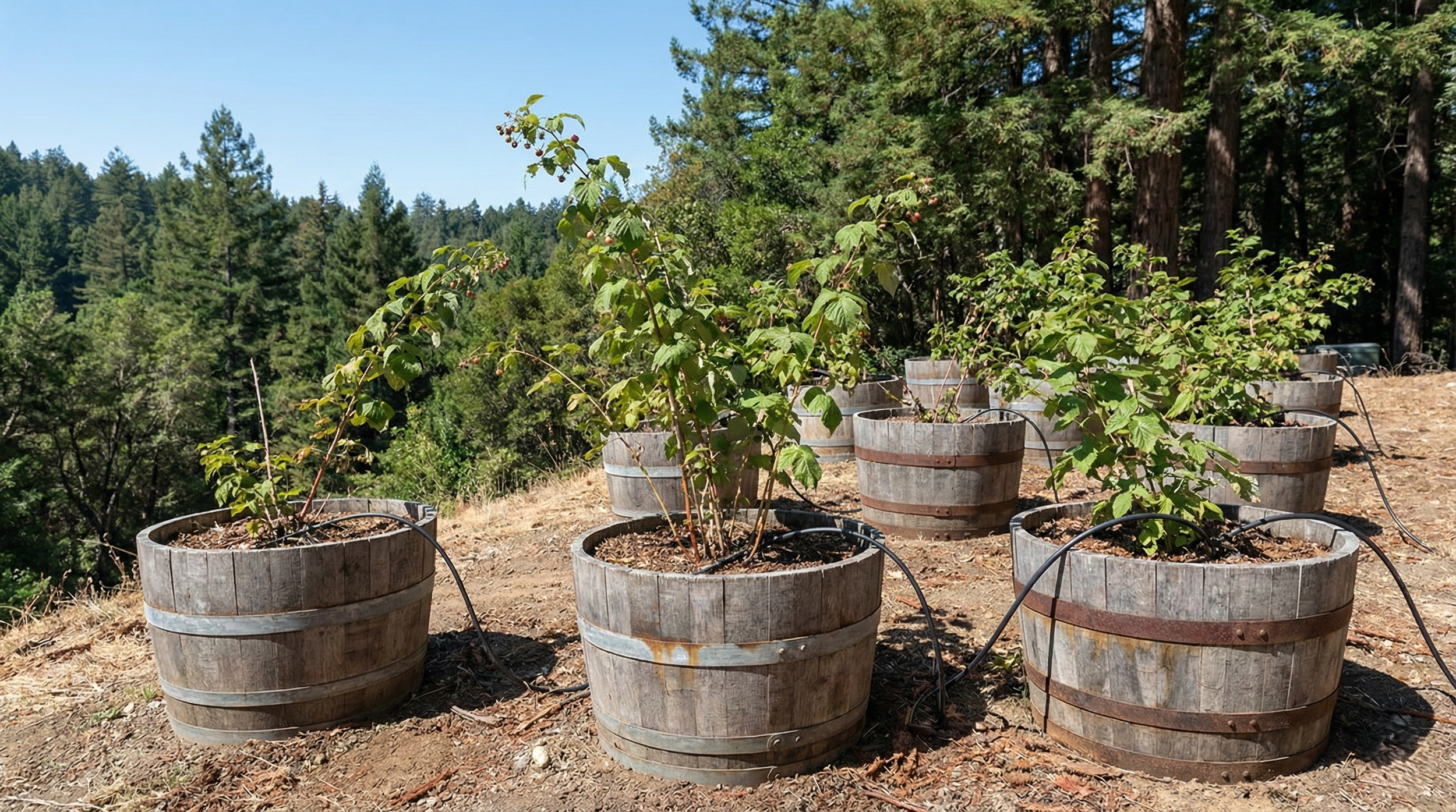
Best: Half-barrel (25-30 gallons) or larger for long-term growing
Bigger is genuinely better here. Larger containers hold more soil moisture, buffer temperature swings, and give roots room to spread.
Material Considerations
The material your container is made from affects how quickly it heats up and dries out:
Good choices:
Thick plastic or resin (insulates well, lightweight, affordable)
Glazed ceramic (attractive, good insulation, heavy)
Wood half-barrels (classic look, good insulation, will eventually rot)
Fabric grow bags (excellent drainage, lightweight, less insulation)
Avoid:
Thin black plastic in full sun (overheats roots)
Unglazed terra cotta (dries out very quickly)
Metal containers without insulation (extreme temperature swings)
Drainage
Every container must have drainage holes. Raspberries cannot tolerate waterlogged roots. If your decorative pot lacks holes, either drill them or use it as a cachepot (outer container) with a well-draining inner pot.
What Are the Best Raspberry Varieties for Containers?
Not all raspberries are equally suited to container life. Primocane (everbearing) varieties and compact cultivars work best.
Why Primocane Types Excel in Pots
OSU Master Gardeners and Gardeners Path both point to primocane varieties for containers, since you can cut every cane to the ground in late winter and still get a fall crop off the new growth. This simplifies pruning considerably in the confined space of a pot.
With primocane types, you avoid the complexity of managing two ages of canes in a small container.
Top Container Varieties
Raspberry Shortcake
The usual first recommendation for container gardeners, though the sizing and habit figures below come from the breeder rather than from extension trials. Cal Poly Pomona Nursery and Monrovia both recommend this dwarf, thornless bush raspberry specifically for container use.
Compact growth (2-3 feet tall and wide)
Thornless canes
No trellis required
Primocane fruiting
Needs at least a 24-inch wide/deep container
Caroline
A full-sized primocane variety that adapts well to containers with aggressive thinning.
Large, flavorful berries
Heavy producer
Needs more space than Raspberry Shortcake (25+ gallon pot)
Thin to 3-5 strong canes per container
Heritage
The classic primocane raspberry, widely available and reliable.
Medium-sized berries, good flavor
Proven performer
Thin aggressively in containers
Late-season crop
Joan J
Thornless primocane with excellent production.
Large, firm berries
Thornless (easier to manage in tight spaces)
Early ripening
Good container candidate with thinning
For complete variety information, see our guide to Best Raspberry Varieties for Santa Cruz County.
Soil, Planting Mix, and Planting Steps
The soil you use in containers matters more than it does in the ground. Native garden soil is too heavy and poorly draining for pots.
Choosing Your Mix
UC Master Gardeners advise filling berry containers with high-quality container mix (not native garden soil) enriched with organic matter to promote root growth and water retention.
Monrovia recommends using high-quality potting soil with excellent drainage.
What to use:
Premium potting mix (not garden soil or topsoil)
Mix in 20-30% compost for added nutrients and water retention
Avoid mixes that stay soggy or contain excessive peat
Optional: Skip the gravel layer. A coarse layer at the bottom of a pot raises the water table inside it rather than lowering it, so the root zone ends up wetter. A good mix and clear drainage holes are what actually drain a container.
Planting Steps
Step 1: Prepare the container
Cover drainage holes with mesh, landscape fabric, or pottery shards to keep soil in while allowing water out. This prevents mix from washing away with each watering.
Step 2: Add potting mix
Fill the container about two-thirds full with your potting mix/compost blend. Don't pack it down tightly.
Step 3: Position the plant
Remove your raspberry from its nursery pot and gently loosen any circling roots. Set it in the container at the same depth it grew in the nursery pot. The crown (where canes emerge) should be just at or slightly below the soil surface.
Step 4: Fill and firm
Add more potting mix around the root ball, firming gently to eliminate air pockets. Leave about an inch of space below the rim for watering.
Step 5: Water thoroughly
Give the container a deep soaking until water runs freely from the drainage holes. This settles the soil and ensures good root-to-soil contact.
Step 6: Add mulch
Top with 1-2 inches of organic mulch (wood chips, straw, or shredded bark) to stabilize moisture and soil temperature. Keep mulch a few inches away from cane bases.
Sun, Shade, and Placement in California
Where you position your container significantly affects raspberry performance, especially in California's varied microclimates.
Coastal Santa Cruz (Foggy Areas)
In foggy coastal areas like Aptos, Live Oak, or the Westside of Santa Cruz, site containers in full sun. The cooler temperatures and marine influence mean raspberries can handle (and benefit from) maximum light exposure. Six or more hours of direct sun is ideal.
Inland and Warmer Areas
Greg Alder's guide to growing raspberries in Southern California reports from his own Southern California garden that the two keys in warm inland conditions are plenty of water and some afternoon shade.
UC Master Gardeners of Sacramento County report that raspberries perform well with overhead shade (such as a pergola or shade structure), with good fruit set and less sunburn.
For warmer spots in Santa Cruz County (Scotts Valley, south-facing patios, inland valleys):
Morning sun with afternoon shade is ideal
Position containers under eaves, deciduous trees, or shade cloth during the hottest months
East-facing locations work well
Container Placement Tips
Elevate pots slightly on feet or blocks to ensure drainage holes don't sit in puddles
Group containers to create a slightly more humid microclimate (helpful in dry, windy spots)
Consider mobility: Use a plant dolly for large containers so you can adjust placement seasonally
Protect from reflected heat: Avoid placing pots against south or west-facing walls that radiate heat
How Often Should You Water and Feeding Container Raspberries?
Container raspberries need more attention to water and nutrients than in-ground plants. The limited soil volume means less buffer against drought and faster nutrient depletion.
Watering
UC Master Gardeners of Inyo and Mono Counties note that raspberries need roughly 1 to 1.5 inches of water per week during the growing season, with less in winter. They caution against overhead irrigation that can promote disease.
UC Master Gardeners of Contra Costa County stress checking moisture in the top several inches of soil and watering when it feels dry, but not letting pots sit in standing water.
Practical watering guidelines:
Foggy coastal areas:
During active growth (spring through fall), water large containers 2-3 times per week
Check soil moisture by inserting your finger 2-3 inches deep; water when dry at that depth
Reduce watering in winter but don't let pots go completely dry
Warmer inland areas:
May need daily watering during summer heat waves
Morning watering is best (allows foliage to dry before evening)
Consider drip irrigation on a timer for consistent moisture
Signs of water problems:
Wilting despite moist soil = possible root rot from overwatering
Crispy leaf edges, drooping = underwatering
Shriveled or sunburned fruit = insufficient water during fruiting
Feeding
Ask Extension highlights that raspberries are heavy feeders and that regular watering leaches nutrients out of pots, requiring more frequent fertilization than in-ground plants.
Fertilizing schedule:
Early spring (March): Apply a balanced slow-release fertilizer according to package directions
Mid-season (June-July): Light supplemental feeding if growth appears weak or leaves are pale
Fall: No fertilizer needed; let plants prepare for dormancy
Avoid high-nitrogen fertilizers late in the season, which can promote soft growth susceptible to cold damage.
How Should You Prune and Cane Management in Containers?
The same pruning principles apply in containers as in the ground, but you'll thin more aggressively to prevent overcrowding in the limited space.
Primocane Varieties (Recommended for Containers)
Use the simple one-crop pruning method:
Late winter (January-February): Cut all canes to within 1-2 inches of soil level
Spring: New primocanes emerge; thin to 3-5 strong canes per container (fewer than you'd keep in the ground)
Summer/Fall: Canes fruit on upper portions
Repeat the following winter
This annual reset keeps container raspberries manageable and productive.
Floricane Varieties (Less Ideal for Containers)
If you're growing a floricane variety in a container:
After summer harvest: Cut out canes that just fruited at ground level
Keep current-year primocanes (they'll fruit next summer)
Winter: Thin remaining canes to 3-4 per container; provide a small trellis or stakes for support
Repeat annually
Floricane types are harder to manage in containers because you're maintaining two generations of canes in limited space. Primocane varieties are much easier.
Container-Specific Thinning
In containers, aggressive thinning is essential:
Keep fewer canes than you would in the ground (3-5 maximum for most containers)
Remove weak, spindly shoots early in spring before they compete for resources
Prioritize airflow to prevent disease in the confined space
For detailed pruning instructions, see our How to Prune Raspberries guide.
Overwintering and Long-Term Care
Container raspberries in Santa Cruz County rarely face serious winter cold damage, but they do need some seasonal attention.
Winter Care
Ask Extension notes that in colder climates, containers may need extra winter protection. In coastal California, freeze damage is usually minimal, but drying out remains a concern.
Santa Cruz County winter care:
Keep dormant containers just moist (not bone-dry, not waterlogged)
Check soil monthly during winter and water lightly if completely dry
No fertilizer during dormancy
Position containers where they won't collect excessive rain (avoid waterlogging)
Long-Term Maintenance
Container plantings need periodic refreshing as roots fill the pot and soil breaks down:
Every 1-2 years:
Top-dress with fresh compost in late winter
Check that drainage holes aren't blocked
Every 3-4 years:
Consider removing and dividing the plant during dormancy
Replace some or all of the potting mix with fresh material
Root-prune if the plant has become severely pot-bound (trim outer roots and repot with fresh mix)
Signs your container raspberry needs attention:
Declining vigor despite good care
Water runs straight through without absorbing
Roots circling on the soil surface or emerging from drainage holes
Smaller harvests year over year
What Are the Most Common Container Raspberry Problems?
Most container raspberry problems trace back to the basics: pot size, watering, and nutrients. Before assuming you have a disease or pest, check the fundamentals.
Yellow Leaves
Likely causes in containers:
Overwatering or poor drainage (check that water flows freely from holes)
Underwatering (soil pulling away from pot edges)
Nutrient deficiency (common in containers; fertilize)
Pot too small (roots stressed)
Small or Few Berries
Likely causes:
Insufficient sun (need 6+ hours)
Too many canes competing for limited resources (thin more)
Nutrient depletion (fertilize in spring)
Inconsistent watering during fruit development
Sunburned or Shriveled Fruit
Greg Alder documents this pattern in Southern California raspberries grown without adequate water or shade.
Solutions:
Increase watering frequency
Move container to morning sun/afternoon shade
Add mulch to stabilize soil moisture
Weak, Spindly Canes
Likely causes:
Not enough sun
Overcrowding (thin canes)
Poor nutrition (fertilize)
Pot-bound roots (repot or divide)
For more detailed troubleshooting, see our guide to Raspberry Problems: Pests, Diseases, and Common Issues.
A Simple Container Plan for Santa Cruz
Here's a straightforward approach for growing raspberries in containers in Santa Cruz County:
Container: One 20-25 gallon pot (or half-barrel) with drainage holes
Variety: Raspberry Shortcake for easiest care, or Caroline/Joan J for larger harvests (with more thinning)
Placement:
Coastal/foggy areas: Full sun
Inland/warm areas: Morning sun, afternoon shade
Soil: Premium potting mix blended with compost, topped with 1-2 inches of mulch
Water: Check every 2-3 days; water deeply when top 2-3 inches are dry. Daily in summer heat.
Feed: Balanced slow-release fertilizer in early spring; light mid-season boost if needed
Prune: Cut all canes to ground level in late winter (January-February); thin new growth to 3-5 strong canes in spring
Maintain: Top-dress with compost annually; repot or refresh soil every 3-4 years
Follow this plan, and you'll be harvesting fresh raspberries from your patio, deck, or balcony for years to come.
Frequently Asked Questions
What size pot do I really need for raspberries?
Oregon State puts the minimum at a pot 2 feet deep, and says a 20 to 30 gallon container works well. Larger containers hold more moisture, buffer temperature swings, and give roots room to grow. Half-barrels (25-30 gallons) work excellently.
Can I grow raspberries in a 5-gallon bucket?
Not well. A 5-gallon container is far too small for a raspberry plant that will live for years. You might get minimal production the first season, but the plant will quickly become stressed, root-bound, and unproductive. Invest in a proper-sized container.
Do container raspberries need a trellis?
Raspberry Shortcake and other compact varieties don't need support. Full-sized primocane varieties may benefit from a small trellis or stakes, especially if you're keeping canes for two-crop production. For the simple one-crop system (cut everything down each winter), trellising is optional.
How often should I water container raspberries?
It depends on container size, weather, and location. As a starting point: 2-3 times per week during active growth in coastal areas, potentially daily during heat waves in warmer spots. Check soil moisture by feel and water when the top 2-3 inches are dry.
Can I bring my container raspberry indoors for winter?
You can, but it's usually not necessary in Santa Cruz County. Raspberries need winter dormancy (including some chill) to fruit well. An unheated garage, covered porch, or sheltered outdoor spot is fine. The main winter concern is keeping soil from completely drying out.
Why are my container raspberry leaves turning yellow?
Most likely causes: overwatering, underwatering, or nutrient deficiency. Check drainage, adjust watering, and fertilize if you haven't recently. If the container is very small or the plant has been in the same pot for years, root stress may also be a factor.
How long will a raspberry plant live in a container?
Oregon State gives red raspberry plants a lifespan of 10 to 15 years in the ground. A container plant will not match that, and with annual pruning, regular feeding, and periodic soil refreshing you should expect several good years before vigor starts to fade. Eventually, you may need to divide the plant or replace exhausted soil to maintain vigor.
Can I grow floricane (summer-bearing) raspberries in containers?
You can, but primocane varieties are much easier. Floricane types require managing two ages of canes in limited space, which gets complicated. If you want summer-bearing raspberries, plant them in the ground if possible.
Downloadable Guides
These free PDF resources will help you succeed with container and in-ground raspberries:
Seasonal Planting Calendar: Month-by-month guide including raspberry planting windows.
Know Your Microclimate Worksheet: Assess your patio or balcony conditions to choose the right placement.
Garden Troubleshooting Guide: Diagnose common plant problems including container issues.
Ready to Grow?
Container raspberries are a perfect solution for small-space gardeners who want homegrown fruit. Choose a large enough pot, pick a primocane variety suited to containers, and stay on top of watering and feeding. You'll be rewarded with fresh, flavorful berries just steps from your door.
Related Articles
Growing Raspberries in Santa Cruz County: A Complete Guide - Everything you need to know to grow raspberries successfully in our coastal climate.
Primocane vs Floricane Raspberries: Which Should You Grow in California? - Understanding the two fruiting types and which works best for your garden.
Best Raspberry Varieties for Santa Cruz County Gardens - Top-performing varieties matched to our local microclimates and conditions.
How to Prune Raspberries: A Step-by-Step Guide - Clear pruning instructions for both primocane and floricane types.
Raspberry Growth Stages: What to Expect Year by Year - A timeline of raspberry development from planting to peak production.
Raspberry Problems: Pests, Diseases, and Common Issues - Diagnose and solve common raspberry growing challenges in California.
