

7 Raspberry Varieties That Thrive in Santa Cruz County
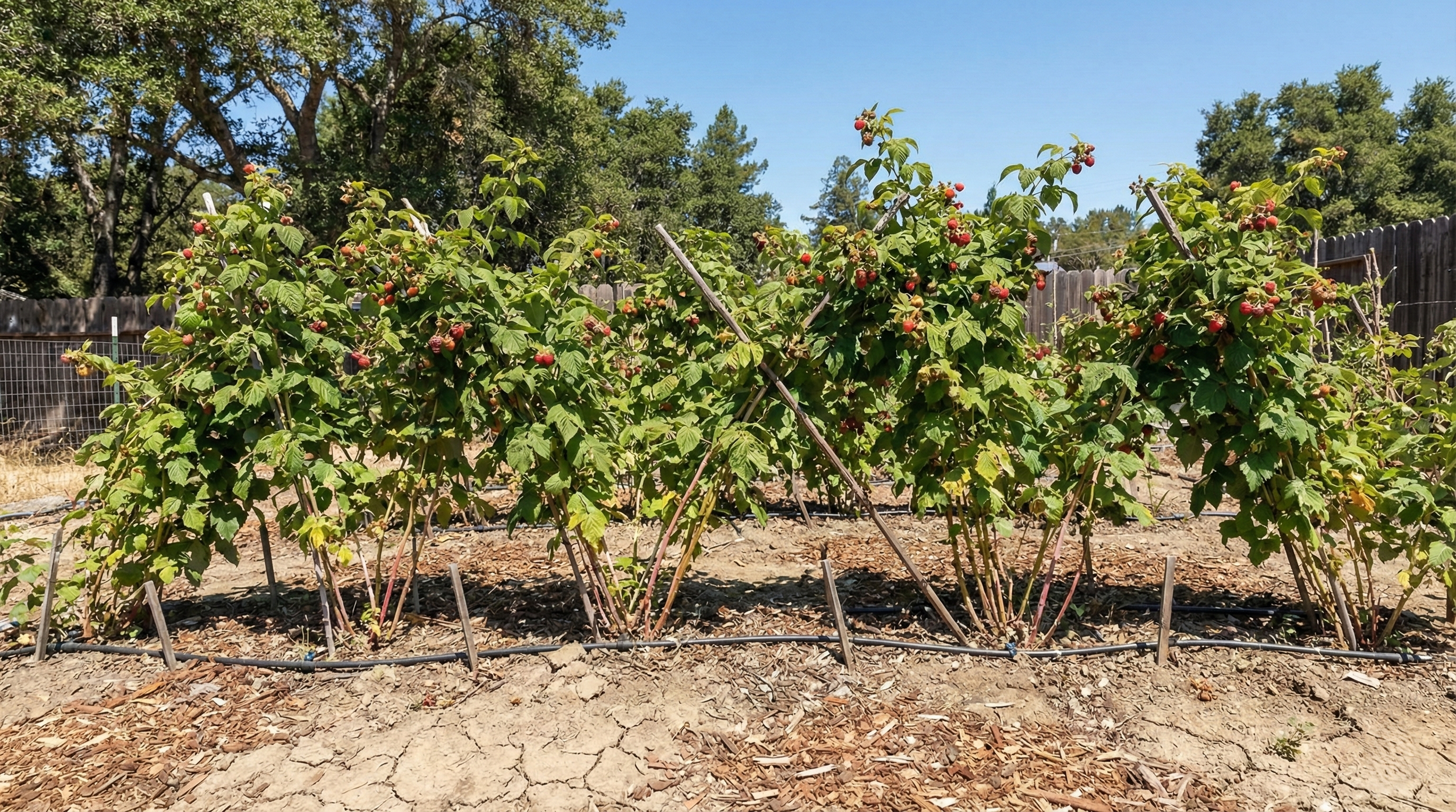
The best raspberry varieties for Santa Cruz County are Caroline, Heritage, and Joan J, all primocane types that produce reliably in our mild winters and cool coastal summers. Primocane raspberries, which UC Cooperative Extension calls everbearing or fall-bearing, fruit on the tips of the current season's growth from late summer into fall, so a crop does not depend on canes surviving the winter.
The good news is that plenty of excellent raspberries do thrive here. This guide highlights 10+ varieties that are proven performers in coastal California gardens, with notes on chill requirements, flavor, disease resistance, and where each variety shines. There are options here for foggy Aptos, for sunny Scotts Valley, and for a shaded canyon in the San Lorenzo Valley.
Most Santa Cruz County gardeners will do best with primocane (everbearing) varieties, which offer simpler pruning and more reliable cropping in our variable winters. But we'll also cover floricane options for cooler microclimates and specialty types for adventurous growers.
What Makes a Variety "Good" for Santa Cruz County?
According to UC Agriculture and Natural Resources, raspberry varieties for Bay Area gardens are listed at 200 to 800 chill hours, counted from November through February when temperatures sit between 32 and 45 degrees F, to break dormancy and produce fruit. Coastal Santa Cruz County typically accumulates 400 to 800 chill hours between November and February, making primocane varieties (which need fewer chill hours) the safest choice for most gardens.
Before we get to specific varieties, it helps to understand what we're looking for.
UC ANR's Growing Raspberries guide notes that raspberries grow best along California's cool coastal belt. Hot interior conditions can be challenging, which is why variety selection matters so much here.
Raspberries are commonly grouped into high-chill (800+ hours), medium-chill (400-600 hours), and low-chill (under 400 hours) categories. For Santa Cruz County, low and medium-chill varieties are generally the safest choices, especially in coastal areas.
UC Master Gardeners of Santa Clara County emphasize that variety choice should consider heat tolerance, disease resistance, and flavor alongside chill requirements.
Here's what to look for when choosing raspberries for Santa Cruz County:
Primocane vs. floricane: Primocane (everbearing) types are easier to prune and more reliable in mild winters. See our guide to Primocane vs Floricane Raspberries for details.
Chill level: Low to medium-chill varieties work best for most of the county. Higher-chill varieties can succeed in cooler inland and mountain areas.
Heat tolerance: Important for inland gardens, south-facing slopes, and anywhere summer temperatures regularly exceed 85°F.
Disease resistance: Phytophthora root rot is common in heavy or poorly drained soils. Some varieties have better resistance than others.
Flavor and firmness: Soft berries are fine for eating fresh but don't store well. Firmer varieties handle freezing and transport better.
What Are the Best Primocane Raspberry Varieties for Coastal California?
These primocane (everbearing) raspberries form the backbone of most Santa Cruz County raspberry patches. They're reliable, easy to manage, and proven in our climate.
| Variety | Type | Color | Best Location | Harvest | Key Features |
|---|---|---|---|---|---|
| Caroline | Primocane | Red | Coastal + inland (with shade) | Late summer through fall | Large berries, outstanding flavor, Phytophthora resistant |
| Heritage | Primocane | Red | Anywhere in county | Late summer through fall | Reliable classic, widely available, proven performer |
| Joan J | Primocane | Red | Coastal + inland | Mid-summer through fall | Thornless, early ripening, high yields, firm berries |
| Anne | Primocane | Yellow | Cool coastal areas | Summer through fall | Sweet, large berries, soft (eat fresh only) |
| Fall Gold | Primocane | Yellow | Coastal areas | Summer + fall | Vigorous, sweet, soft fruit, easy to grow |
| Bababerry | Primocane | Red | Warm inland (with shade) | May-July + fall | Heat tolerant, extra-large berries, firm |
| Raspberry Shortcake | Primocane | Red | Containers, small spaces | Summer | Compact (2-3 ft), thornless, no trellis needed |
| Tulameen | Floricane | Red | Cool, foggy areas only | June-July | Outstanding flavor, large berries, needs chill |
| Nova | Floricane | Red | Cooler microclimates | Early summer | Disease resistant, more adaptable, firm berries |
| Jewel | Floricane | Black | Cool areas only | Early-mid summer | Intense unique flavor, disease resistant, self-supporting |
Caroline
If you plant only one raspberry variety in Santa Cruz County, Caroline is an excellent choice.
UC Master Gardeners of Inyo and Mono Counties report that Caroline produces large berries and a heavy fall crop, performing well even in their relatively warm location near Bishop.
Cal Poly Pomona Nursery lists Caroline as a summer-through-fall bearing primocane with exceptional flavor, high yields, and better tolerance to Phytophthora root rot than Heritage. They recommend afternoon shade in warm climates.
Commercial trials and gardener discussions consistently describe Caroline as extremely productive with intensely flavored berries. Fruit Growers News ranked it among the top primocane varieties in their reviews.
Best for: Both foggy coastal areas and warmer inland microclimates (with afternoon shade). Excellent all-around choice for Santa Cruz County.
Harvest: Late summer through fall
Notes: Large berries, outstanding flavor, good disease resistance, high productivity. The variety most local gardeners should try first.
Heritage
Heritage was developed at Cornell University and released in 1969, making it one of the oldest and most widely planted primocane varieties in the world. Cornell, which released Heritage in 1969, reports that it is resistant or tolerant to most major raspberry diseases and has become the world's predominant primocane-fruiting cultivar.
The classic primocane raspberry that's been a reliable performer in California gardens for decades.
Master Gardener Pam Bone notes in the Garden Basics podcast that Heritage handles Sacramento's heat when sited correctly and can produce both spring and fall crops if managed for two harvests.
UMN Extension still lists Heritage as a dependable, late-fall primocane variety, though they note that newer cultivars like Caroline may have larger fruit.
Best for: Reliable baseline variety for any Santa Cruz County garden. Widely available and well-tested.
Harvest: Late summer through fall (later than Caroline)
Notes: Medium-sized berries, good flavor, very reliable. Not the newest or largest-fruited variety, but a proven performer that's easy to find.
Joan J
Joan J was bred by the Scottish Crop Research Institute (now James Hutton Institute) and released in 1992. It is a thornless primocane variety known for large, dark red berries with excellent flavor. In an Oregon State University Extension trial of primocane-fruiting raspberries, Joan J was the highest-yielding cultivar across both seasons.
For gardeners who want thornless canes (and who doesn't?), Joan J is the primocane variety to grow.
Fruit Growers News trials report that Joan J is one of the best early primocane varieties tested, with high yields, excellent flavor and firmness, and completely thornless canes.
A commercial trial in warm Zone 10B placed Joan J near the top in productivity, just behind Himbo Top.
Ison's Nursery notes that Joan J produces large, firm berries that ripen about 10-14 days earlier than Heritage, offering both floricane and primocane crops if managed for two harvests.
Best for: Gardeners who want thornless harvesting. Good for coastal gardens and slightly inland microclimates.
Harvest: Earlier than Heritage (mid-summer start for primocane crop)
Notes: Large, firm berries with excellent flavor. Thornless canes make harvesting much more pleasant. Earlier ripening extends the harvest season when planted with later varieties like Heritage.
Anne
The premier yellow raspberry for home gardens, Anne offers something different from standard red varieties.
UMN Extension and Fruit Growers News describe Anne as one of the best yellow-fruited raspberries, with large berries and distinctive sweet flavor, though they note the fruit is somewhat soft.
UC Master Gardeners of Inyo and Mono Counties report that Anne did well initially in their trials but canes weakened after a few years, suggesting it may need good management and cooler conditions in hot climates.
Dave Wilson Nursery describes Anne as low-chill, very sweet, and adaptable, with large yellow berries bearing from summer into fall.
Best for: Cooler, foggier sections of Santa Cruz County with good soil and consistent watering. Plant near the house where you can harvest and eat berries immediately.
Harvest: Summer through fall
Notes: Beautiful pale yellow berries with exceptional sweetness. Soft fruit doesn't store well, so plan to eat fresh. May need extra attention to soil and water compared to red varieties.
Fall Gold
A more vigorous yellow option than Anne, Fall Gold is a reliable producer for gardeners who want golden raspberries.
Cal Poly Pomona Nursery and Dave Wilson Nursery both list Fall Gold among their offerings. It's widely known as a sweet, soft, yellow everbearing raspberry with two potential crops in many climates.
Gardeners in online discussions often praise Fall Gold for flavor but note that fruit can be delicate and best for fresh eating in the garden.
Best for: Home gardens where berries will be eaten fresh. Coastal areas where gentler sun reduces fruit damage.
Harvest: Summer and fall
Notes: More vigorous than Anne, making it easier to establish. Sweet, mild flavor. Soft berries best for immediate eating rather than storage.
Bababerry (Baba)
For gardeners in the warmest parts of Santa Cruz County, Bababerry offers better heat tolerance than most raspberries.
UC Master Gardeners of Inyo and Mono Counties state that Bababerry is one of the most heat-tolerant raspberries, with good flavor and firm berries in their warm, high-desert context.
Dave Wilson Nursery and Cal Poly Pomona describe Baba Red Raspberry as an everbearing type with extra-large berries, a heavy early crop (May through July), and a smaller late summer/fall crop, particularly suited to Southern California coastal and inland valleys.
However, Greg Alder cautions that despite marketing claims, Bababerry still needs as much shade and water as other varieties in his hot inland Southern California garden. Microclimate management remains crucial.
Best for: Warmer inland parts of Santa Cruz County (Scotts Valley, hot backyards, south-facing slopes) with afternoon shade and adequate water.
Harvest: Heavy early crop (May-July), lighter fall crop
Notes: Better heat tolerance than most varieties, but still needs shade and water in warm spots. Large, firm berries with good flavor. Worth trying if you've struggled with other raspberries in a warm location.
Raspberry Shortcake
For container gardeners and small spaces, Raspberry Shortcake offers a compact, thornless option.
Cal Poly Pomona Nursery lists Raspberry Shortcake as a dwarf, thornless bush raspberry well-suited to patio pots, with an estimated chill requirement of 500 hours or less and good container performance.
Greg Alder mentions Raspberry Shortcake as a bushy variety that grows especially well in containers and is widely available in Southern California nurseries.
Best for: Containers, patios, small spaces, urban gardens. See our guide to Growing Raspberries in Containers for complete container care.
Harvest: Summer
Notes: Compact growth (2-3 feet tall and wide) doesn't require trellising. Thornless canes. Lower yields than full-sized varieties but perfect for small-space gardening.
Can You Grow Floricane Raspberries in Santa Cruz County?
Traditional summer-bearing raspberries can work beautifully in the coolest, foggiest corners of Santa Cruz County. They require more complex pruning and higher chill accumulation, but reward you with a concentrated early-summer harvest.
Consider floricane varieties if you garden in:
Foggy coastal areas with consistent winter chill
Higher elevations in the Santa Cruz Mountains
North-facing slopes or shaded canyons
Areas where you've had success with other high-chill fruits
Tulameen
Widely praised as one of the best-flavored summer raspberries available.
Gardeners and growers consistently recommend Tulameen for its large, flavorful summer berries. It's a West Coast favorite that originated in British Columbia.
Best for: Cooler, foggier microclimates with reliable winter chill. Experienced growers comfortable with floricane pruning.
Harvest: Early to mid-summer (June-July)
Notes: Large, aromatic berries with outstanding flavor. Needs adequate chill and may struggle in warm years or warm microclimates. Worth the effort if conditions are right.
Nova
A disease-resistant floricane option that tolerates warmer conditions better than many summer bearers.
Dave Wilson Nursery lists Nova as a medium-sized, dark red, firm berry with mild flavor, early harvest, and good disease resistance, performing even into zones 10-11.
Best for: Gardeners who want an early summer crop but have slightly warmer conditions than classic floricane territory.
Harvest: Early summer
Notes: More adaptable than most floricane types. Good disease resistance. Firm berries. Flavor is milder than Tulameen but still good for fresh eating and preserving.
What Specialty Raspberry Varieties Grow in Santa Cruz County?
Looking for something beyond the standard red raspberry? These specialty options offer unique flavors and appearances.
Jewel Black Raspberry
Black raspberries have a distinctive, intense flavor quite different from red varieties.
Dave Wilson Nursery describes Jewel as very disease-resistant, with rich flavor and large black raspberries on upright canes that need no support, suited to zones 4-11.
Best for: Experienced gardeners wanting something different. Black raspberries are floricane-fruiting and need cooler conditions than most primocane reds.
Harvest: Early to mid-summer
Notes: Intensely flavored berries excellent for jams and baking. Self-supporting canes. Disease resistant. Needs adequate chill and may struggle in warm microclimates.
| Your Situation | Best Varieties | Why These Work |
|---|---|---|
| First-time raspberry grower | Caroline or Heritage | Reliable primocane types, simple pruning, forgiving of mistakes |
| Foggy coastal garden (Aptos, Westside, Live Oak) | Caroline Joan J, Anne, Tulameen | Cool conditions suit most varieties; can try floricane types |
| Warm inland garden (Scotts Valley, south-facing slopes) | Bababerry Caroline (with shade) | Heat tolerance essential; provide afternoon shade |
| Want thornless harvesting | Joan J Raspberry Shortcake | Completely thornless canes make picking comfortable |
| Container or patio gardening | Raspberry Shortcake | Compact 2-3 ft size, no trellis, thornless |
| Want yellow raspberries | Anne Fall Gold | Best in cooler areas; soft fruit for fresh eating only |
| Making jam or freezing berries | Caroline Joan J, Heritage | Firm berries hold up to processing; good flavor |
| Want early summer harvest (June-July) | Tulameen Nova | Floricane types; need cool microclimate and chill |
| Extended harvest season | Joan J + Heritage | Early + late primocanes extend picking window |
| Something unique and different | Jewel (black) Anne (yellow) | Distinctive flavors and colors; need cooler conditions |
How Many Raspberry Varieties Should I Plant?
For most Santa Cruz County home gardens, we recommend starting with:
Primary variety (3-5 plants): Choose one proven primocane red like Caroline, Heritage, or Joan J as your backbone variety.
Secondary variety (2-3 plants): Add a second primocane with different characteristics. If your primary is Caroline (late), add Joan J (earlier) for extended harvest. Or add a yellow like Anne or Fall Gold for variety.
Optional additions:
Bababerry if you have a warm spot that's struggled with other varieties
Raspberry Shortcake for containers or small spaces
One floricane variety (Tulameen or Nova) if you have a cool, foggy microclimate and want early-summer berries
Planting tips:
Plant yellow or soft-fruited varieties near the house where you can harvest and eat immediately
Put robust, firmer reds where you have room for processing (freezing, jamming)
If experimenting with both primocane and floricane types, plant them in separate rows for easier management
For more on balancing primocane and floricane types, see our guide to Primocane vs Floricane Raspberries.
Raspberry Variety Picker
Find the Right Variety for Your Santa Cruz Garden
Caroline
Joan J
Heritage
Anne
Bababerry
Raspberry Shortcake
Also try: Tulameen (floricane)
Avoid: High-chill floricane types
Consider: Container growing in sunnier spot
Also try: Joan J (with support)
The Santa Cruz Raspberry Starter Pack
Caroline
3-5 plants (main producer)Joan J
2-3 plants (earlier, thornless)Anne or Fall Gold
1-2 plants (optional yellow)Shopping Tips
Where Can I Buy Raspberry Plants in Santa Cruz County?
Local Nurseries
Santa Cruz County nurseries typically stock raspberries during bare-root season (December through February) and sometimes as container plants through spring. Call ahead to check availability of specific varieties:
San Lorenzo Garden Center (Santa Cruz)
Scarborough Gardens (Scotts Valley)
Many local nurseries carry Dave Wilson varieties, so ask specifically for Caroline, Heritage, Anne, or Bababerry.
Mail-Order and Regional Sources
For wider variety selection or specific cultivars:
Cal Poly Pomona Nursery: Excellent selection of varieties suited to California climates. Their berry list includes Caroline, Bababerry, Raspberry Shortcake, Anne, and more.
Dave Wilson Nursery Variety Finder: Use their locator to find retail nurseries carrying specific varieties.
Raintree Nursery: Good selection with detailed growing information.
One Green World: Unique varieties and good selection for Pacific Coast gardeners.
Buying Tips
UC ANR recommends buying certified disease-free nursery stock rather than dug-up canes from unknown sources. Viruses and root diseases can persist in infected plants and spread through your patch.
Look for:
Certified virus-free stock
Healthy, firm roots on bare-root plants
No signs of disease or damage
Reputable nurseries that specialize in berries or fruit
Frequently Asked Questions
What's the best raspberry variety for a beginner in Santa Cruz County? Caroline or Heritage. Both are reliable primocane types that tolerate our variable conditions well. Caroline has larger fruit and better disease resistance. Heritage is more widely available and time-tested. Either will give you a good first experience with raspberries.
Can I grow raspberries in the foggiest parts of Santa Cruz? Yes, raspberries actually prefer cool, foggy conditions over hot, sunny ones. Primocane varieties like Caroline, Heritage, and Joan J all do well in foggy coastal areas. You may even be able to grow higher-chill floricane varieties like Tulameen that struggle in warmer locations.
Which raspberry is best for making jam? Firmer varieties with good flavor hold up better for processing. Caroline and Joan J are excellent choices. Heritage also works well. Avoid soft-fruited yellows like Anne and Fall Gold for jam, as they're better suited to fresh eating.
Are thornless raspberries worth growing? Absolutely. Joan J is thornless with excellent production and flavor. Raspberry Shortcake is also thornless and perfect for containers. The difference in harvesting comfort is significant, especially if you're picking frequently.
How do I choose between Caroline and Heritage? Caroline has larger berries, better disease resistance, and ripens earlier than Heritage. Heritage is more widely available, slightly later ripening, and has decades of proven performance. If you can find Caroline, it's the better choice for most gardeners. But Heritage remains excellent and may be easier to source locally.
What raspberry should I try if Heritage failed in my garden? First, diagnose why Heritage failed. If heat stress was the issue, try Bababerry with afternoon shade. If root rot was a problem, Caroline has better Phytophthora resistance. If chill was insufficient, stick with primocane types and consider Joan J for earlier ripening.
Can I grow yellow raspberries in Santa Cruz County? Yes, Anne and Fall Gold both grow here. They do best in cooler, foggier locations with consistent moisture. Plant them near the house where you can harvest and eat berries immediately, as the soft fruit doesn't store well. They're wonderful for fresh eating but not ideal for preserving.
Is it worth growing floricane raspberries here? It depends on your microclimate. In the coolest, foggiest parts of Santa Cruz County (coastal areas, north-facing slopes, higher elevations), floricane varieties like Tulameen can produce outstanding early-summer crops. In warmer or more variable locations, primocane types are more reliable.
What is the easiest raspberry to grow in Santa Cruz County?
Heritage is widely considered the easiest raspberry for beginners in Santa Cruz County. It is disease-resistant, tolerates a range of soil conditions, and produces reliably on primocanes without requiring the trellis management that floricane varieties need. Plant it in full sun with consistent water and it will produce fruit in its first fall season.
Can I grow raspberries near the coast in Santa Cruz?
Yes, but variety selection matters. Coastal Santa Cruz (Sunset zone 17) gets less summer heat and more fog than inland areas. Primocane varieties like Caroline and Joan J are the best choices because they do not require high summer heat to ripen fruit. Avoid floricane varieties like Tulameen, which need more winter chill and summer warmth than the immediate coast provides.
How many chill hours do raspberries need in Santa Cruz County?
Primocane raspberries need 200 to 400 chill hours, which all of Santa Cruz County provides. Floricane varieties need 800 or more chill hours, which only higher elevation or inland areas consistently deliver. Coastal areas near sea level may not reliably meet floricane chill requirements every year. Check your specific location using the UC Davis chill hour calculator.
Downloadable Guides
These free PDF resources will help you succeed with raspberries:
Seasonal Planting Calendar: Month-by-month guide including raspberry planting windows for Santa Cruz County.
Know Your Microclimate Worksheet: Identify your garden's conditions to choose the right varieties.
Companion Planting Guide: Learn what to plant near your raspberries for best results.
Ready to Plant?
With the right variety for your microclimate, raspberries can be one of the most rewarding fruits in your Santa Cruz County garden. Start with a proven primocane like Caroline or Joan J, give it good drainage and consistent water, and you'll be harvesting sweet berries for years to come.
Related Articles
Growing Raspberries in Santa Cruz County: A Complete Guide - Everything you need to know to grow raspberries successfully in our coastal climate.
Primocane vs Floricane Raspberries: Which Should You Grow in California? - Understanding the two fruiting types and which works best for your garden.
How to Prune Raspberries: A Step-by-Step Guide - Clear pruning instructions for both primocane and floricane types.
Growing Raspberries in Containers - How to grow productive raspberry plants in pots and small spaces.
Raspberry Growth Stages: What to Expect Year by Year - A timeline of raspberry development from planting to peak production.
Raspberry Problems: Pests, Diseases, and Common Issues - Diagnose and solve common raspberry growing challenges in California.
Free California Gardening Resources
Looking for more help with your California garden? We put together a collection of 12 free PDF guides covering planting schedules, variety selection, soil prep, and more. All of them are tailored to California growing conditions.
They are free, they are practical, and you can download them right now.
