

Water-Wise Gardening in Santa Cruz County: A Complete Guide to Growing More with Less Water
A few of the product links in this guide are affiliate links. If you buy through one, Ambitious Harvest may earn a small commission at no extra cost to you, which helps keep these guides free. We only point to gear we would use in our own Santa Cruz garden. As an Amazon Associate, we earn from qualifying purchases. Read our full disclosure.
California's Mediterranean climate gives us something remarkable: the ability to garden year-round. But that gift comes with a challenge. From roughly May through October, rain is rare. Our gardens depend on irrigation during exactly the months when water is most precious.
Water-wise gardening isn't about sacrificing beauty or productivity. It's about working smarter. Building soil that holds moisture. Delivering water efficiently to roots. Choosing plants adapted to our conditions. Timing plantings to take advantage of natural rainfall.
The strategies in this guide aren't just for droughts (though they help then too). They're practical approaches that reduce your water bills, save time, and create healthier gardens year after year. These principles apply to vegetables, ornamentals, and native plants.
What Is Santa Cruz County's Water Reality?
Our Mediterranean Climate
Santa Cruz County has a classic Mediterranean climate: mild, wet winters and warm, dry summers. Average annual rainfall is about 30 inches on the coast and up to 60 inches in the mountains, but nearly all of it falls between November and April.
This pattern shapes everything about water-wise gardening here. We don't need to make our gardens survive on less water overall. We need to capture winter moisture, store it in soil, and stretch it through the long dry season.
Why Water Efficiency Matters Here
Cost: Water rates continue rising. The Santa Cruz Water Department, Soquel Creek Water District, and other local providers use tiered pricing that penalizes high usage. Efficient irrigation saves real money.
Reliability: Our water supply faces challenges from aging infrastructure, saltwater intrusion in coastal aquifers, and variable rainfall. Using less water helps ensure supply reliability for everyone.
Plant health: Counterintuitively, many plants perform better with efficient deep watering than with frequent shallow irrigation. Proper watering encourages deep root growth, disease resistance, and overall vigor.
Time: A well-designed water-wise garden largely waters itself. Time you'd spend dragging hoses around goes back to actual gardening.
Microclimates and Water Needs
Water needs vary dramatically across Santa Cruz County:
Coastal areas (Aptos, Capitola, Live Oak, Santa Cruz beaches): Summer fog reduces evaporation significantly. Gardens here often need 30 to 50 percent less irrigation than inland areas. However, the fog also reduces heat units, affecting what crops perform well.
Sunny mountain areas (Boulder Creek, Ben Lomond ridges, Bonny Doon): Hot, dry summers create the highest water demands. These areas need the most attention to water efficiency.
Under redwoods: Shade and fog drip provide natural moisture, but the trees themselves compete aggressively for water. Gardens here need careful plant selection more than heavy irrigation.
Watsonville and Pajaro Valley: Warm conditions and often sandy soils mean faster drainage. This area benefits from soil building and frequent, lighter irrigation.
Understanding your specific microclimate helps you prioritize strategies. A coastal gardener might focus on fog-tolerant plants and moderate irrigation. An inland gardener might invest heavily in mulching and drip systems. For a deeper look at how location shapes your gardening approach, see our guide to Santa Cruz microclimates.
How Does Soil Help You Save Water?
The most effective water-saving strategy isn't about irrigation at all. It's about building soil that captures and holds moisture.
Why Soil Matters
Think of soil as a bank account for water. Sandy soil is like a checking account with no minimum balance: water flows through immediately. Clay soil holds water but releases it reluctantly. Soil rich in organic matter is like a savings account: it absorbs water readily, holds it against gravity, and releases it slowly to plant roots.
Every 1 percent increase in soil organic matter helps soil hold an additional 20,000 gallons of water per acre. That's significant even at garden scale. The UC Master Gardener Program recommends mixing compost into the top 12 inches of soil and notes that loam containing 5 to 10 percent organic matter provides the best balance of water retention and drainage for home gardens.
Adding Organic Matter
Compost: The cornerstone of soil building. Add 2 to 4 inches annually to vegetable beds, working it into the top few inches or using it as mulch. For established perennial beds and trees, top-dress with 1 to 2 inches.
Quality matters. Well-finished compost (dark, crumbly, earthy-smelling) improves soil immediately. Partially decomposed material continues breaking down, temporarily tying up nitrogen. For more on improving your garden's foundation, see our California garden soil amendments guide.
Local sources: Aptos Landscape Supply (5035 Freedom Boulevard, Aptos) and Central Home Supply (180 El Pueblo Rd, Scotts Valley) sell bulk compost. Santa Cruz County also offers free compost to residents through periodic distribution events.
Cover crops: Planting cover crops in fall does double duty. The roots break up compacted soil and add organic matter when they decompose. The above-ground growth becomes mulch or compost material.
Best cover crops for Santa Cruz County:
Fava beans: Fix nitrogen, produce edible beans, easy to grow. Plant October through November.
Bell beans: Similar to favas but smaller. Excellent nitrogen fixers.
Crimson clover: Beautiful red flowers attract pollinators. Fixes nitrogen. Plant September through October.
Annual ryegrass: Quick-growing, adds bulk organic matter. Mix with legumes for best results.
Cut cover crops before they set seed (typically March or April) and leave the residue on the soil surface or turn it under lightly.
Leaf mold: Free and abundant in fall. Rake leaves into a pile, let them decompose for a year, and use the resulting crumbly material as mulch or soil amendment. Redwood leaves decompose slowly but work eventually.
Reducing Soil Disturbance
Tilling and heavy digging disrupt soil structure and the networks of fungi that help move water through soil. Consider no-dig or minimal-till approaches:
Top-dress with compost rather than digging it in.
Use broad forks to loosen compacted soil without inverting layers.
Keep soil covered with mulch or plants year-round.
Healthy soil develops structure over time: channels and pore spaces that allow water to infiltrate and move to roots. Constant disturbance destroys that structure.
Why Is Mulching the Easiest Way to Save Water?
If you do nothing else in this guide, mulch. A proper layer of mulch can cut water needs by 25 to 50 percent. According to UC Agriculture and Natural Resources, mulch can reduce evaporation from soil by 70 percent or more when applied correctly.
How Mulch Saves Water
Reduces evaporation: Bare soil loses moisture to sun and wind. Mulch creates a barrier, keeping water in the soil rather than escaping into the air.
Moderates soil temperature: Hot soil dries faster. Mulch keeps soil cooler in summer, reducing water demand.
Suppresses weeds: Weeds compete with your plants for water. Fewer weeds mean more water for the plants you want.
Improves soil: As organic mulches break down, they add organic matter, further improving water retention.
Choosing Mulch
For vegetable gardens:
Straw: Light, easy to work with, breaks down in one season. Excellent for pathways and around plants. Apply 3 to 4 inches.
Compost: Works as both mulch and soil amendment. Apply 2 to 3 inches. May need topping up through the season.
Wood chips: Best for pathways in vegetable gardens. Keep away from direct contact with vegetable stems.
For perennial beds and ornamentals:
Wood chips and bark: Long-lasting, attractive, widely available. Apply 3 to 4 inches. Keep mulch a few inches away from tree trunks and shrub stems.
Leaves: Free in fall. Shred first or they mat together. Best used in combination with other mulches.
For succulents and Mediterranean plants:
Gravel and decomposed granite: Provides drainage succulents need, reduces humidity around stems (preventing rot), attractive in Mediterranean-style gardens.
Rock mulch: Low maintenance, doesn't break down. However, it doesn't improve soil over time like organic mulches.
Mulching Guidelines
Apply enough: 3 to 4 inches for most mulches. Thinner layers don't provide adequate moisture retention.
Keep mulch away from stems: Direct contact promotes rot and provides cover for pests. Leave a few inches of clearance around plant bases.
Water first, then mulch: Apply mulch after watering or rain to trap existing moisture.
Replenish as needed: Organic mulches break down over the season. Top up in spring and fall as needed.
Consider fire safety: In fire-prone areas, avoid deep wood mulch within 5 feet of structures. Use gravel or decomposed granite in Zone 0.
What Are the Most Efficient Irrigation Methods?
How you deliver water matters as much as how much you use.
Drip Irrigation
Drip irrigation delivers water directly to plant roots through a network of tubes and emitters. It's the most efficient irrigation method for most garden situations. The UC Master Gardener Program notes that drip irrigation exceeds 90 percent efficiency because water moves directly to the root zone with minimal evaporation. For a detailed walkthrough, see our beginner's guide to drip irrigation setup.
Benefits:
Uses 30 to 70 percent less water than sprinklers
Keeps foliage dry, reducing disease
Delivers water slowly, allowing soil to absorb it fully
Works on timers for hands-off operation
Best for: Vegetable gardens, perennial beds, shrubs, trees, and containers.
Getting started: Beginner kits from hardware stores work well for small gardens.
San Lorenzo Garden Center (235 River Street, Santa Cruz) and Mountain Feed & Farm Supply (9550 Highway 9, Ben Lomond) carry drip irrigation supplies.
Soaker Hoses
Soaker hoses are porous tubes that weep water along their length. They're simpler than drip irrigation but less precise.
Benefits:
Inexpensive and easy to install
Good for densely planted beds where individual emitters would be impractical
Limitations:
Water distribution can be uneven (more water near the faucet, less at the end)
Less durable than drip tubing
Harder to control water delivery precisely
Best for: Densely planted annual beds, areas where you'll reconfigure plantings frequently.
Ollas
Ollas are unglazed clay pots buried in the soil and filled with water. Water slowly seeps through the porous clay, irrigating surrounding roots.
Benefits:
Extremely efficient (virtually no evaporation)
Self-regulating (seepage slows when soil is moist)
Work without electricity or timers
Limitations:
Limited range (effective within about 18 inches)
Need to be refilled every few days
Initial cost per unit
Best for: Individual large plants (tomatoes, squash, peppers), raised beds, areas without easy access to hose connections.
Watering Practices That Save Water
Water in early morning: Cooler temperatures and calm air reduce evaporation. Plants have all day to absorb water before the heat.
Water deeply and less frequently: Deep watering encourages roots to grow down, making plants more drought-tolerant. Shallow daily watering keeps roots near the surface where they're vulnerable.
Know your soil: Sandy soil drains quickly and may need more frequent, lighter watering. Clay soil holds water longer but absorbs it slowly. Match your watering to your soil type.
Adjust for weather: Most gardens don't need the same watering schedule all season. Increase during heat waves, decrease during cool spells, turn off entirely when rain is predicted.
Use a timer: Even for hose watering, a simple timer prevents the "I forgot to turn off the water" disaster. For drip systems, programmable timers automate seasonal adjustments.
How Should You Choose Water-Wise Plants?
The right plant selection dramatically reduces water needs once plants establish. For more options, see our list of 10 drought-resistant plants for California gardens.
California Natives


Plants native to California evolved with our dry summers. Once established (usually after one to two years of regular watering), many need little to no supplemental irrigation. As UC Agriculture and Natural Resources explains, native plants develop deep roots that can reach underground moisture, making them naturally adapted to our dry summers.
Outstanding natives for Santa Cruz gardens:
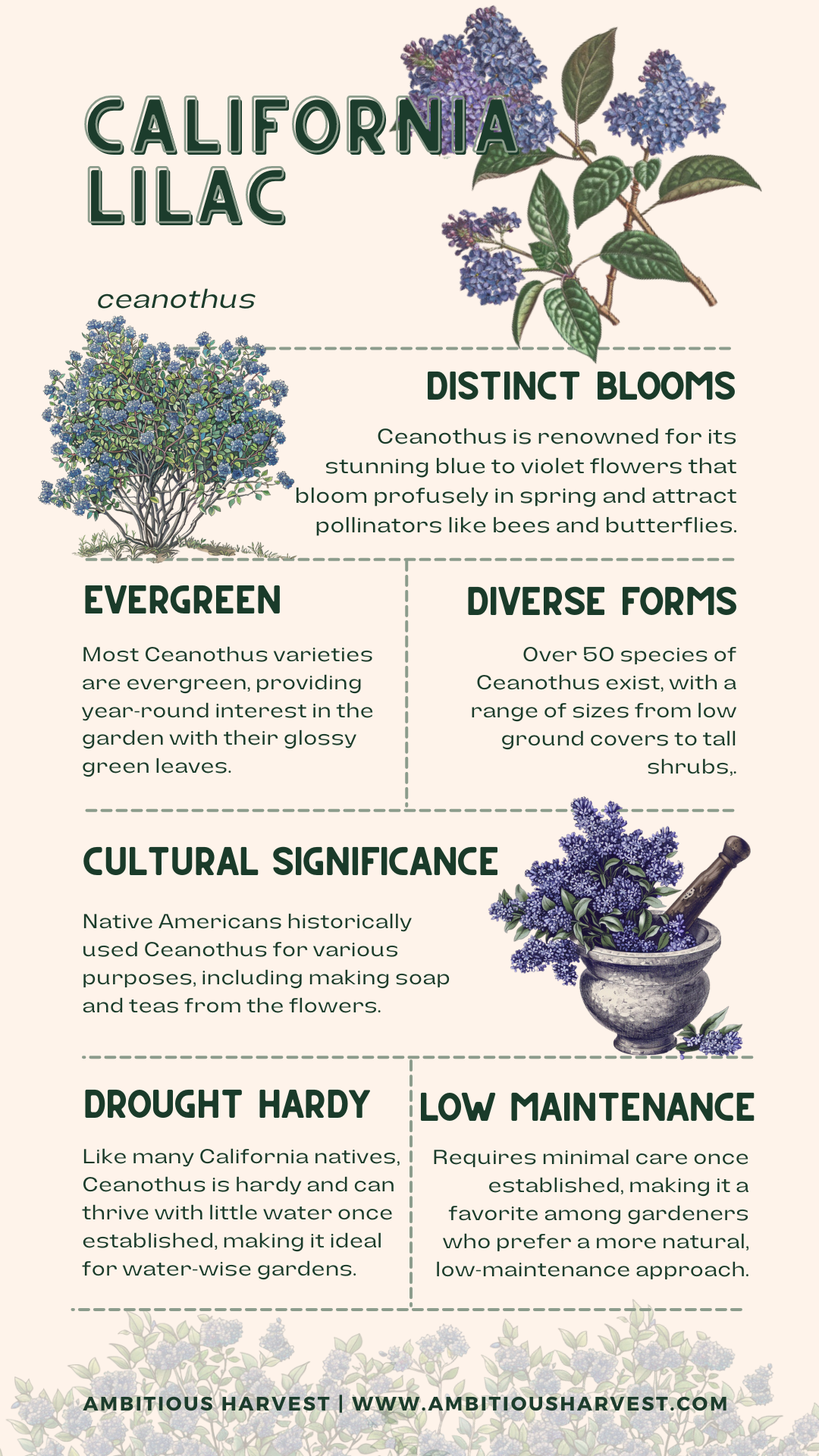
California lilac (Ceanothus): Stunning blue flowers in spring, evergreen foliage, extremely drought-tolerant once established. Many species and cultivars available, from groundcovers to large shrubs.
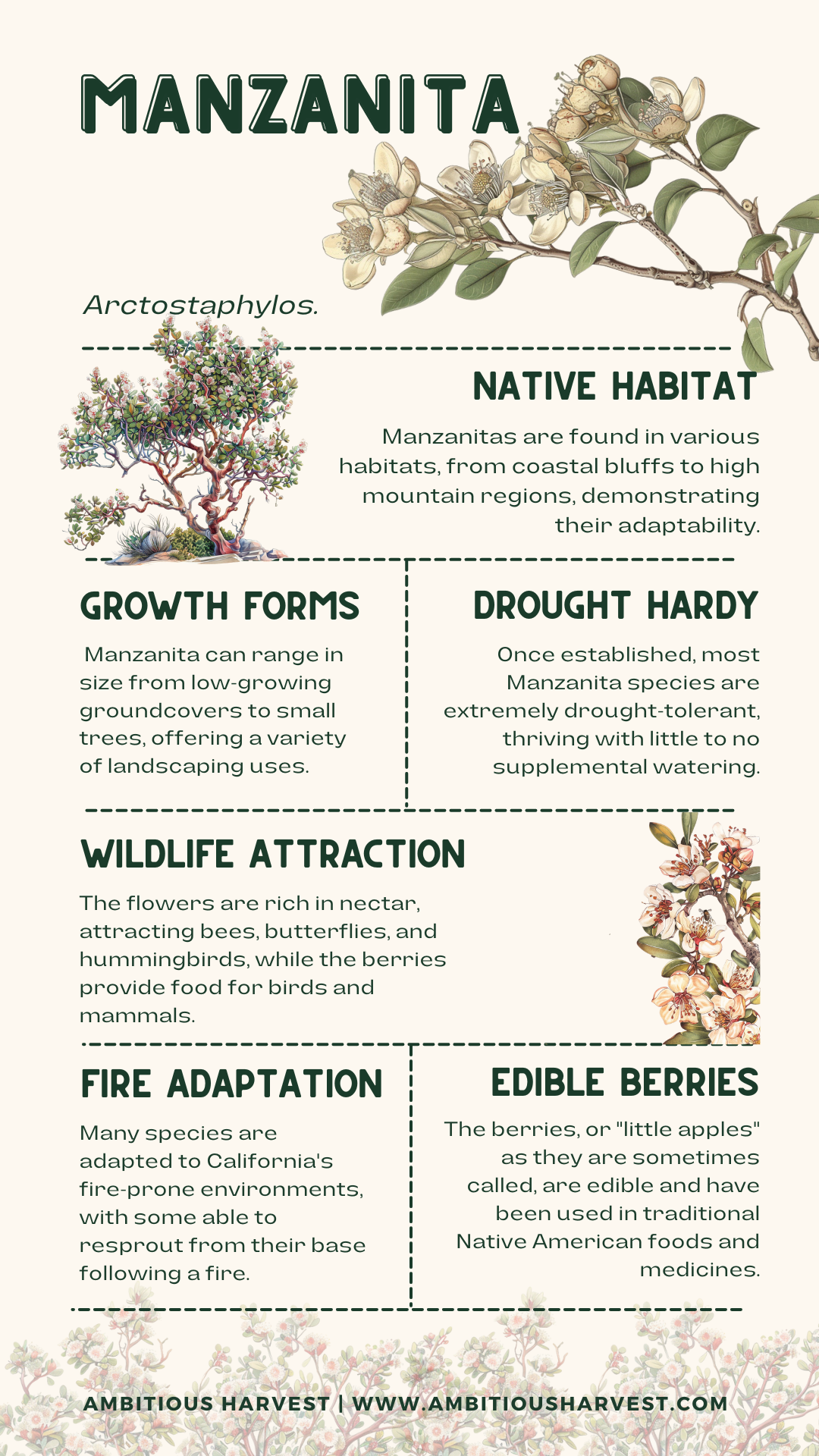
Manzanita (Arctostaphylos): Beautiful red bark, pink or white flowers, berries for wildlife. Ranges from groundcovers to small trees. Prefers excellent drainage.
Toyon (Heteromeles arbutifolia): California holly. Evergreen shrub with white flowers and red winter berries. Extremely drought-tolerant and fire-resistant.
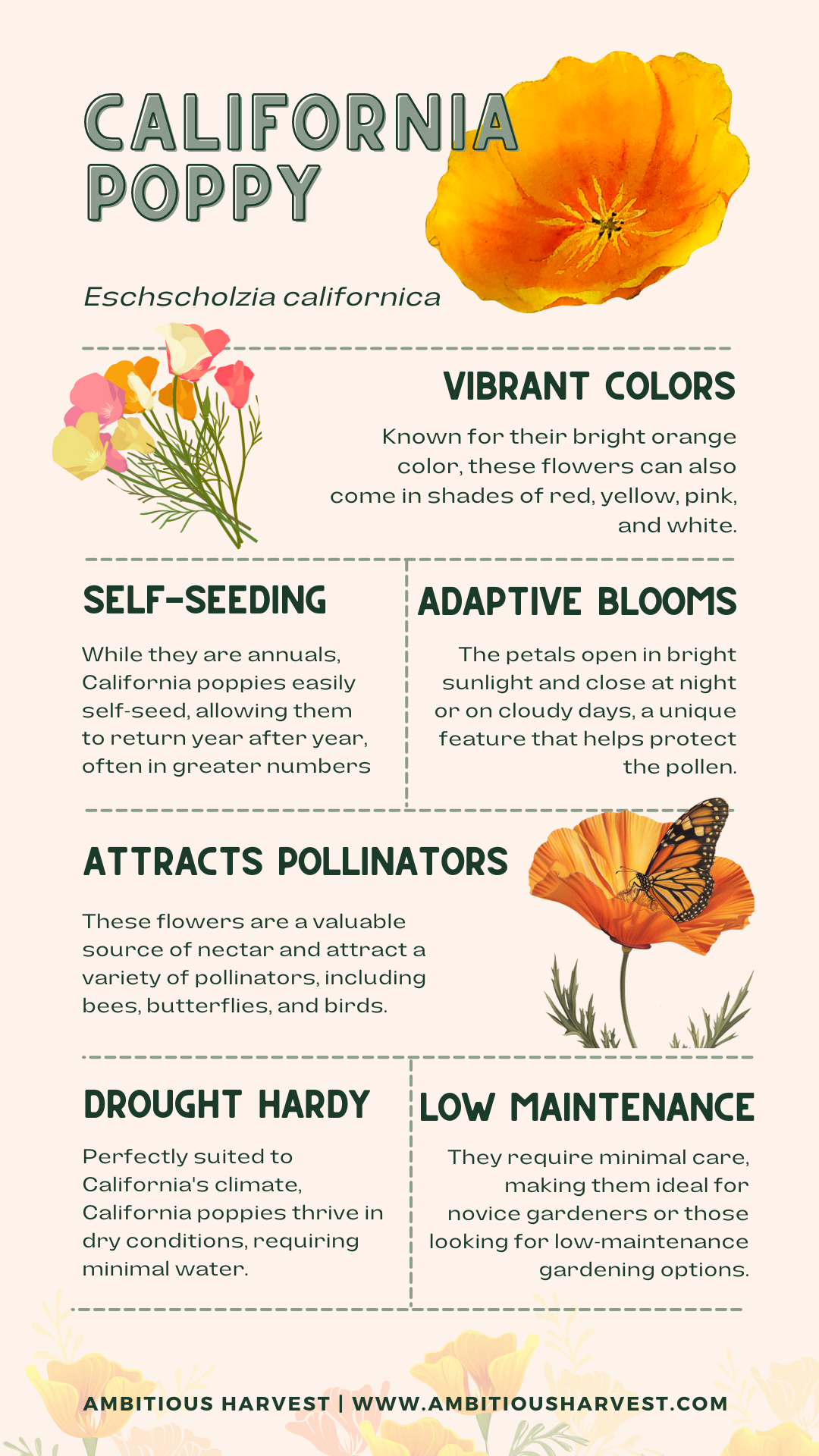
California poppy (Eschscholzia californica): Our state flower. Brilliant orange (or yellow, red, pink in cultivated varieties) blooms from spring through early summer. Self-seeds readily.
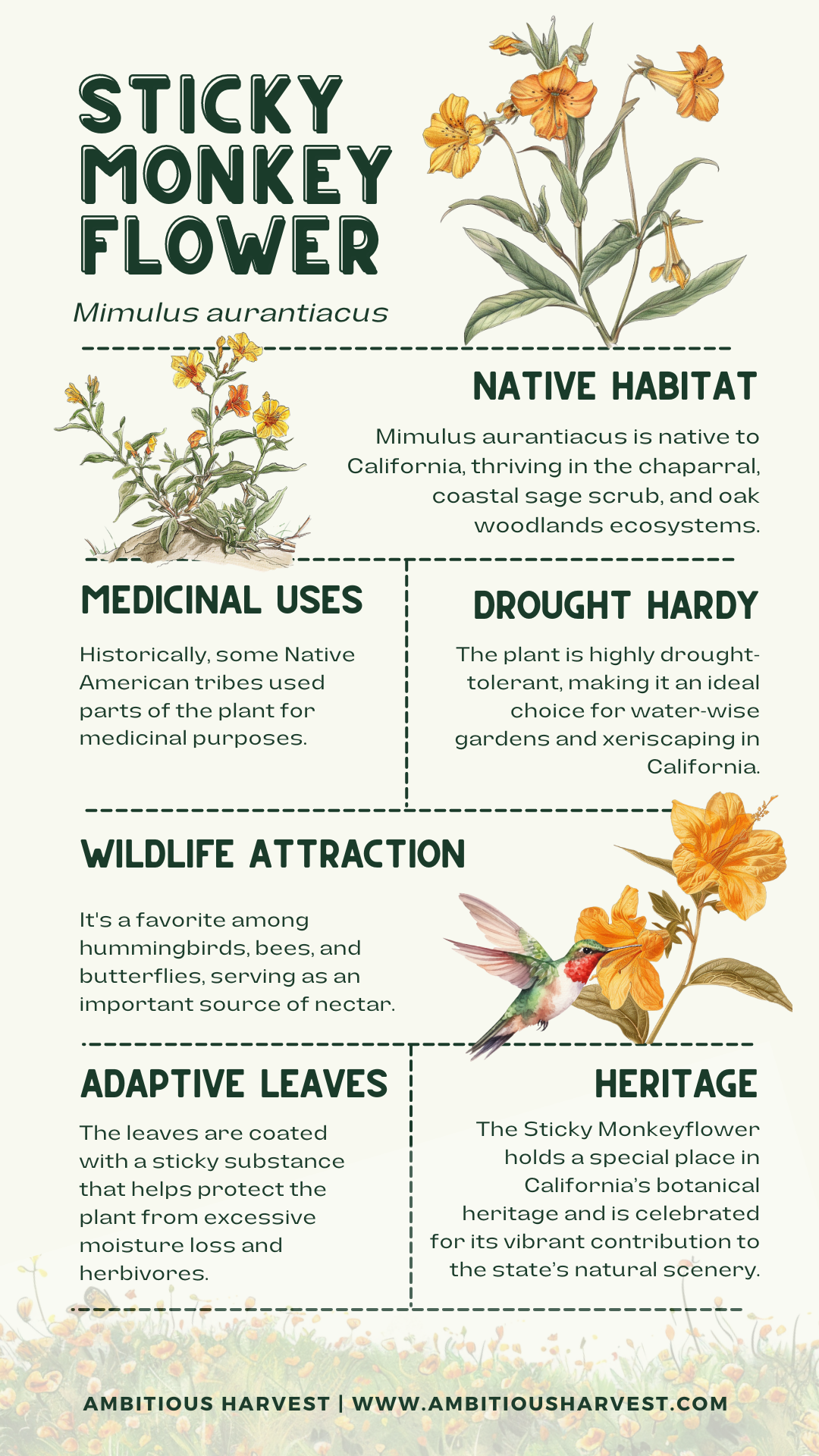
Sticky monkey flower (Mimulus aurantiacus): Orange, yellow, or red tubular flowers beloved by hummingbirds. Blooms spring through fall with occasional water.
Salvias (Salvia species): Multiple native species offer blue, purple, or red flowers. Cleveland sage, white sage, black sage, and hummingbird sage all thrive here.
Where to find natives:
California Native Plant Society Santa Cruz Chapter holds spring and fall plant sales at Cabrillo College Horticulture Center.
UCSC Arboretum (1156 High Street, Santa Cruz) has seasonal plant sales.
Sierra Azul Nursery (2660 E. Lake Avenue, Watsonville) specializes in California natives.
Mediterranean Plants
Plants from Mediterranean climates worldwide (Southern Europe, South Africa, Australia, Chile) share our wet winter/dry summer pattern and adapt well here.
Excellent Mediterranean choices:
Lavender: Fragrant, drought-tolerant, attracts pollinators. Needs excellent drainage; avoid clay soil without amendment.
Rosemary: Evergreen, edible, extremely tough. Will grow almost anywhere with full sun and decent drainage.
Olive trees: Beautiful silver foliage, sculptural form. Fruitless cultivars available if you don't want olives.
Rockrose (Cistus): Papery flowers in white, pink, or purple. Extremely drought-tolerant once established.
Grevillea: Australian natives with unusual flowers in red, orange, or pink. Many attract hummingbirds.
Sage (culinary, Salvia officinalis): Different from native sages but equally drought-tolerant. Evergreen, culinary, attracts bees.
Drought-Tolerant Edibles
Even vegetable gardens can include water-wise elements:
Mediterranean herbs: Rosemary, thyme, oregano, sage, and lavender all produce with minimal water once established.
Dry-farmed tomatoes: With proper soil preparation, certain tomato varieties (especially Early Girl) can produce with no supplemental irrigation. The fruit is smaller but intensely flavored. This technique requires deep, healthy soil and isn't for beginners, but it demonstrates what's possible.
Figs: Once established, figs are remarkably drought-tolerant and produce abundant fruit.
Pomegranates: Adapted to hot, dry climates. Produce better with some irrigation but tolerate drought.
Artichokes: Mediterranean natives that produce with minimal water. They're perennial here, producing for years from a single planting.
Grapes: Adapted to dry summers. Wine grapes especially are often dry-farmed.
Establishment Period
Even drought-tolerant plants need regular water while establishing. Plan to water native and Mediterranean plants weekly during their first dry season, tapering to every other week in year two. By year three, most should thrive on rainfall alone (with occasional deep watering during extended dry spells).
Don't plant drought-tolerant species in summer and expect them to survive on their own. Plant in fall when rains will help establish roots, or provide irrigation through the first summer.
When Should You Plant and Water in Santa Cruz County?
Working with Santa Cruz County's seasons reduces water needs dramatically.
Embrace Cool-Season Gardening
Our climate allows productive gardening from September through May with minimal irrigation because rain provides most of the water.
Cool-season vegetables:
Lettuce, spinach, arugula, kale, chard, and other greens
Broccoli, cauliflower, cabbage, Brussels sprouts
Peas, fava beans
Carrots, beets, radishes, turnips
Garlic, onions, leeks
All of these crops grow well with winter rainfall and need only occasional supplemental water during dry spells.
Fall planting: September and October are prime planting times. Transplant cool-season vegetables, sow garlic and fava beans, and establish perennials. Fall plantings establish roots during wet months and require less summer irrigation than spring-planted equivalents.
Be Strategic with Summer Crops
Summer crops (tomatoes, peppers, squash, beans, corn) need irrigation during our dry season. Minimize water use by:
Planting at the right time: Plant summer crops as early as conditions allow (typically late April through May for warm-season crops). Plants establish roots before peak heat, reducing water stress.
Mulching heavily: Summer beds especially benefit from thick mulch to retain moisture.
Choosing appropriate varieties: Some varieties are more drought-tolerant than others. Look for "dry-farmed" or "drought-tolerant" designations.
Accepting limits: In the driest years, you might choose to grow fewer summer crops, focusing water on your highest-value plants.
Transition Seasons
Spring (March through May): Rainfall tapers off. Begin supplemental irrigation for summer crops as soil dries. Cool-season crops may still need only occasional water.
Fall (September through November): Rains return (usually). Plant cool-season crops and perennials to take advantage of natural irrigation. Established plants may need water until the first significant rain.
How Should You Design Your Garden for Water Efficiency?
How you arrange your garden affects water use.
Hydrozoning
Group plants by water needs:
High water zone: Vegetable garden, annual flowers, new plantings. This area gets regular irrigation and is typically closest to your water source.
Moderate water zone: Established perennials, deciduous fruit trees, some ornamental shrubs. Occasional deep watering during dry periods.
Low water zone: Established natives, Mediterranean plants, succulents. No irrigation once established, or perhaps a deep watering once or twice during extended summer dry spells.
By grouping plants this way, you water efficiently rather than applying the same amount everywhere (overwatering some plants and underwatering others).
Reduce Lawn
Traditional lawns are the biggest water users in most landscapes. Consider:
Reducing lawn size: Replace unused lawn areas with drought-tolerant groundcovers, mulched beds, or permeable hardscape.
Native lawn alternatives: Native grasses and groundcovers like yarrow (Achillea millefolium), California meadow sedge (Carex pansa), or creeping red fescue provide green coverage with much less water.
Functional lawn only: Keep lawn where you actually use it (play areas, entertaining space) and replace ornamental lawn with alternatives.
Shade Strategically
Shade reduces water needs by lowering soil and air temperatures.
Deciduous trees: Plant deciduous trees to shade summer gardens. They block hot afternoon sun in summer but allow winter light through for cool-season crops.
Shade cloth: Temporary shade cloth over summer beds reduces water loss during heat waves.
Building placement: Position raised beds and intensive plantings on the east side of structures where they get morning sun but afternoon shade.
How Can You Capture Rainwater for Your Garden?
Santa Cruz County receives plenty of rainfall, just not when we need it. Capturing winter rain extends that free water into the dry season.
Rain Barrels
Simple rain barrels connected to downspouts capture roof runoff. A 1,000 square foot roof produces about 600 gallons per inch of rainfall. Even a modest storm can fill multiple barrels.
Considerations:
Size: A 55-gallon barrel is standard. Consider multiple barrels for greater storage.
Mosquitoes: Use screened covers and treat standing water if needed.
Overflow: Direct overflow away from foundations.
Use: Rain barrel water is best for ornamental plants. For food gardens, use early in the growing season (not on near-harvest vegetables) and water soil, not leaves.
Rain Gardens
Rain gardens are shallow planted depressions designed to capture and infiltrate runoff from roofs, driveways, and patios. Rather than storing water for later use, they recharge groundwater and irrigate surrounding plants naturally.
Plant rain gardens with species that tolerate both temporary flooding and dry periods:
California meadow sedge (Carex pansa)
Blue-eyed grass (Sisyrinchium bellum)
Deer grass (Muhlenbergia rigens)
Rush (Juncus species)
Swales and Berms
On sloped properties, swales (shallow trenches following contour lines) and berms (mounds on the downhill side) capture runoff and allow it to infiltrate slowly. This technique is particularly valuable in mountain areas with seasonal streams and heavy runoff.
What Are the Basics of Graywater?
Graywater (from bathroom sinks, showers, and laundry) can be redirected to irrigate landscapes, reducing potable water demand.
California regulations allow simple systems:
Laundry-to-landscape: Direct washing machine output to outdoor plants through gravity. No permit required for systems under 250 gallons per day that meet basic guidelines.
Considerations:
Use plant-safe detergents (no boron, sodium, or chlorine).
Rotate graywater to different areas to prevent salt buildup.
Never use on edibles eaten raw.
Avoid during rainy season when it's not needed.
Graywater is beyond the scope of this guide, but organizations like Greywater Action provide California-specific resources. The California Institute for Water Resources at UC ANR also offers guidance on graywater use in urban landscapes.
How Do You Build a Water-Wise Plan Over Time?
You don't need to implement everything at once. Here's a prioritized approach:
Year One: Foundations
Start with mulch: The fastest way to reduce water use. Mulch all bare soil 3 to 4 inches deep.
Improve your soil: Add compost to vegetable beds. Start a cover crop in fall.
Fix obvious irrigation problems: Repair leaks, adjust sprinkler heads, check timer settings.
Year Two: Systems
Install drip irrigation: Start with your vegetable garden, then expand to perennial beds.
Plant cover crops systematically: Make fall cover cropping an annual habit.
Shift timing: Move plantings to fall where possible to take advantage of rain.
Year Three and Beyond: Design
Replace high-water plants: Swap out thirsty plants for drought-tolerant alternatives.
Reduce lawn: Replace unused lawn with alternatives.
Add rainwater capture: Install rain barrels or design a rain garden.
Consider graywater: Explore laundry-to-landscape systems.
Each change builds on the previous ones. A garden with good soil, proper mulch, and efficient irrigation can look lush while using a fraction of the water conventional gardens require.
If you want to see water-wise planting at full size before you commit, our guide to the succulent nurseries and dry gardens worth the drive from Santa Cruz includes the Ruth Bancroft Garden, which is a long lesson in growing beautifully on very little water.
Frequently Asked Questions About Water-Wise Gardening
Can I grow vegetables with water-wise techniques?
Absolutely. Vegetable gardens benefit enormously from soil building, mulching, drip irrigation, and proper timing. You can reduce vegetable garden water use by 50 percent or more while maintaining yields. Some vegetables (Mediterranean herbs, artichokes, some tomato varieties) are genuinely drought-tolerant once established. Cool-season vegetables grown during our rainy months need minimal irrigation at all.
How long does it take for drought-tolerant plants to become established?
Most native and Mediterranean plants need regular watering during their first dry season and reduced watering during their second. By the third year, they should be established and need little to no supplemental water. Plant in fall when possible so winter rains do the establishing work.
Will my water bill really decrease?
Yes, if you implement these strategies systematically. Mulching alone can reduce water use by 25 to 50 percent. Adding drip irrigation saves another 30 to 70 percent compared to sprinklers. Switching to drought-tolerant plants in ornamental beds can eliminate irrigation for those areas entirely. The total reduction depends on your starting point, but 50 percent or greater reductions are common.
Is water-wise gardening more work than traditional gardening?
Initially, some changes require effort (installing drip irrigation, sheet mulching to replace lawn). But long-term, water-wise gardens are typically less work. Less watering time. Fewer weeds (mulch suppresses them). Healthier plants (proper watering and adapted species). Many gardeners find they spend less time on maintenance and more time enjoying their gardens.
How do I water-wise garden in shade (under redwoods)?
Shaded areas are already partially water-wise due to reduced evaporation. Focus on plants adapted to dry shade (many ferns surprisingly tolerate dry conditions once established, as do native Solomon's seal, wild ginger, and redwood sorrel). The bigger challenge in redwood understory is competition from tree roots. Raised beds help, or focus on shallow-rooted groundcovers that can coexist with tree roots.
What about vegetable gardens in containers?
Containers are challenging for water efficiency because they dry out quickly and have limited soil volume for moisture retention. Use the largest containers practical, choose high-quality potting mix with good water retention, mulch the surface, and consider self-watering containers or drip irrigation with individual emitters. Group containers together (they shade each other) and position in morning sun/afternoon shade during summer.
Do I need to water native plants at all once established?
Most California natives need no supplemental water once established in their appropriate setting. However, "established" typically means two to three years of decreasing irrigation. And "appropriate setting" matters: a manzanita planted in heavy clay will struggle regardless of watering. Some natives appreciate occasional deep watering during extended summer drought, especially in their first few years. Very few natives tolerate summer water on their foliage, which promotes disease.
How do I transition an existing water-intensive garden to water-wise?
Gradually. Start by adding mulch everywhere and fixing irrigation inefficiencies. Replace plants as they decline naturally rather than ripping everything out at once. Focus first on the easiest wins: swapping thirsty annuals for drought-tolerant perennials, reducing lawn area, and adding natives in new beds. A gradual transition over three to five years is less overwhelming and allows you to learn what works in your specific conditions.
How do I garden during a drought or water restrictions in California?
Start by holding moisture in the soil: mulch beds a few inches deep and water deeply but less often so roots grow down. Switch to drip or soaker lines to cut waste, group thirsty plants together, and lean on drought-tolerant crops and California natives. Check your local agency for current restrictions. UC ANR recommends deep, infrequent watering to build drought-resilient roots.
Free Gardening Resources
Water-Wise Gardening Guide: Printable quick-reference guide with key strategies.
Know Your Microclimate Worksheet: Determine your local conditions to prioritize the right strategies.
Seasonal Tasks Checklist: Year-round maintenance including seasonal watering adjustments.
Seasonal Planting Calendar: Timing guidance to maximize cool-season gardening.
Start Today
You don't need to transform your garden overnight. Pick one strategy from this guide and implement it this month. Add mulch to a bed. Fix a leaky hose connection. Plant fava beans as a cover crop.
Every improvement builds on the last. A year from now, your garden can be using significantly less water while looking just as good (or better) than it does today. That's the promise of water-wise gardening: abundance without waste.
