

Microclimate Gardening: How to Use Your Yard's Warm and Cool Spots
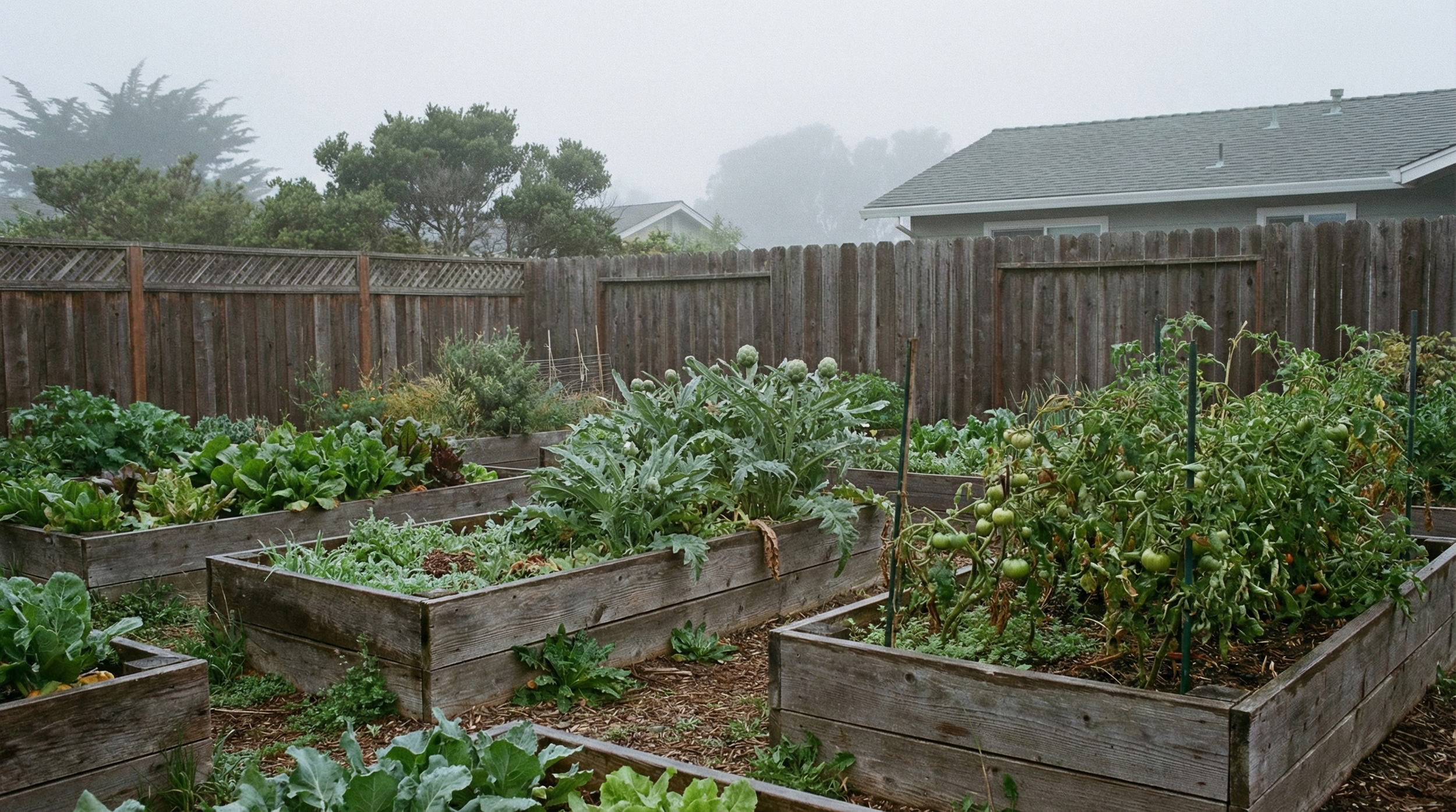
Every yard has its own internal climate system. The sunny strip along your south-facing fence can be 10 to 15 degrees warmer than the shaded north side of your house on the same afternoon. The low corner where cold air pools on clear nights might frost while the rest of your garden stays above freezing. That sheltered spot between two buildings where the wind never reaches creates a pocket of warmth that plants love.
These are microclimates, and learning to identify and use them is one of the most powerful things you can do as a gardener. In Santa Cruz County, where neighborhood-level climate differences are already dramatic (a fog-bound Westside garden and a sun-baked Scotts Valley garden can be 20 degrees apart on any summer day), yard-level microclimates add another layer of variation that either limits or expands what you can grow.
This guide shows you how to map the microclimates in your own yard and plant strategically to take advantage of each one.
Key Takeaway: You do not need to change your yard's microclimates. You need to understand them and plant accordingly. The right plant in the right spot performs dramatically better than the same plant in the wrong spot just 20 feet away.
What Creates Microclimates in Your Yard?
Four primary factors create microclimate variation within a residential yard: sun exposure, wind patterns, thermal mass, and cold air drainage. Understanding each one helps you read your yard's specific conditions.
Sun Exposure
The most powerful microclimate factor is sun. South-facing surfaces receive the most intense and longest-duration sunlight. West-facing areas get hot afternoon sun. East-facing areas get gentler morning sun. North-facing areas receive the least direct sunlight and stay coolest. A sunny south-facing wall soaks up heat all day and radiates it back after sundown, creating a warmer pocket that can carry a tender crop through a cool Santa Cruz spring. UC Master Gardeners of Butte County describe the mechanism directly: south-facing areas get more light and heat than areas facing any other direction, and a south-facing wall accentuates that because it absorbs and reflects heat. How much you gain depends on the wall material and the exposure.
In your yard, buildings, fences, trees, and hedges all cast shadows that change throughout the day and across seasons. A spot that gets full sun in June may be partially shaded in March when the sun is lower in the sky. Observe your yard at different times of day and in different seasons to build a complete picture.
Wind
Wind strips heat from plants and soil, increases water loss through evapotranspiration, and can cause physical damage to tender growth. In Santa Cruz County, prevailing winds come from the northwest (off the ocean) during most of the year, with occasional offshore (northeast) winds during fall dry spells.
Structures, fences, and dense plantings create wind shadows on their leeward (downwind) side. A solid fence or hedge on the windward side calms the air well past its own height. USDA and extension research puts meaningful wind reduction over a downwind zone of roughly 10 to 15 times the barrier height, so a 6-foot fence shelters a good stretch of bed behind it. This sheltered zone is measurably warmer and has lower water demands than exposed areas.
Thermal Mass
Dense materials (concrete, stone, brick, water) absorb heat during the day and release it slowly at night. UC Master Gardeners of Butte County make the same point about ordinary hardscape: a house absorbs heat during the day and re-radiates it at night, and paved surfaces act as heat islands that absorb and reradiate the sun's energy. A south-facing stone wall, a concrete patio, or even a cluster of large water-filled containers acts as a heat battery that moderates temperature swings. Plants near thermal mass experience warmer nighttime temperatures and an extended growing season compared to plants in the open.
This effect is especially valuable on the coast, where nighttime temperatures can dip into the upper 40s even in summer. A tomato planted 18 inches from a south-facing brick wall experiences a meaningfully different climate than one planted in the middle of the yard.
Cold Air Drainage
Cold air is heavier than warm air and flows downhill like water, pooling in low spots, valleys, and behind barriers that block its movement. If your yard has a slope, the lowest point is the coldest at night and the most frost-prone. Fences, walls, or dense hedges at the bottom of a slope can trap cold air, creating a "frost pocket" that stays cold longer than the surrounding area.
In Santa Cruz County's hillier neighborhoods (upper Westside, Ben Lomond, Bonny Doon, Scott Valley), cold air drainage can create dramatic temperature differences within a single property. UC Master Gardeners of Butte County describe how it forms: low spots collect cold air and turn into localized frost pockets, and a wall, fence, or row of rocks across a slope traps cold air behind it, which is why opening a gap in the barrier lets that air drain away.
How Do You Map the Microclimates in Your Yard?
You do not need expensive equipment to identify your yard's microclimates. Careful observation over a few weeks gives you most of the information you need.
Step 1: Track Sun Exposure
On a sunny day in each season (or at minimum, once in summer and once in winter), note which parts of your yard receive full sun (6 or more hours of direct sunlight), partial sun (3 to 6 hours), partial shade (2 to 3 hours of direct sun or bright, filtered light all day), and full shade (less than 2 hours of direct sun). Sketch this on a simple yard map.
The sun tracking does not need to be precise. Walk your yard at 9 AM, noon, and 3 PM, noting which areas are in sun and which are in shade at each time. After 3 observations, you will have a clear picture.
Step 2: Note Wind Patterns
On a breezy day, walk your yard and feel where the wind is strong and where it is calm. Windbreaks (buildings, fences, dense hedges) create sheltered zones on their leeward side. Mark sheltered and exposed areas on your map.
Step 3: Check Thermal Mass
Identify any south or west-facing walls, patios, or hardscaped areas. These are your thermal mass zones. On a cool morning after a warm day, feel the surface of walls and pavement. Materials that still feel warm have been releasing stored heat overnight and have created a warmer microclimate for nearby plants.
Step 4: Find the Cold Spots
If you garden in a frost-prone area, note the lowest points in your yard and any areas where cold air might pool behind barriers. On a cold morning, look for where frost appears first and lingers longest. These are your frost pockets.
Step 5: Use a Thermometer (Optional but Useful)
For more precision, place an inexpensive outdoor thermometer in different spots for a day at a time and compare readings. An indoor/outdoor thermometer with a remote sensor makes it easy to compare two locations simultaneously. Even a few days of temperature data will confirm what your observations suggest.
Record your findings on a simple yard map. This becomes one of the most valuable pages in your garden journal and should inform every planting decision you make. UC Marin Master Gardeners offer a helpful microclimate evaluation guide if you want a more structured approach to assessing your site.
How Should You Use Your Yard's Warm Spots?
Warm microclimates are precious in coastal Santa Cruz gardens, where the marine layer keeps ambient temperatures cool through much of the growing season. If you have a warm spot, use it wisely.
What Makes a Spot "Warm"
A warm microclimate in your yard typically has some combination of: south or southwest-facing exposure, protection from prevailing northwest wind, proximity to thermal mass (wall, pavement, stone), and good drainage (elevated, not in a low spot where cold air pools).
What to Plant in Warm Spots
Tomatoes: Heat-loving and slow to ripen in fog. Your warmest spot should always have your tomatoes. A south-facing wall gives tomatoes the most direct sun and, as UC Master Gardeners of Butte County explain, the most reflected and re-radiated heat. That matters on this coast because UC Master Gardeners of San Mateo and San Francisco Counties advise at least six hours of full sun a day and night temperatures above 55 degrees before transplanting.
Peppers and eggplant: Even more heat-dependent than tomatoes. These crops may struggle in exposed coastal locations but thrive against a warm wall.
Melons: Watermelon, cantaloupe, and honeydew need sustained heat to produce sweet fruit. Coastal gardeners who successfully grow melons almost always have them in a sheltered, south-facing location.
Basil: Turns black in cool conditions and grows slowly in temperatures below 70 degrees. A warm spot keeps basil lush and productive.
Figs: Productive in Santa Cruz but fruit faster and sweeter in warm, sheltered locations. A south-facing wall planting is ideal.
Citrus: All citrus benefits from warm microclimates, especially lemons, limes, and oranges. Protection from cold wind is as important as sun exposure.
Enhancing Warm Spots
You can amplify a warm microclimate with simple additions:
Paint walls a light, reflective color to bounce more light onto nearby plants.
Add thermal mass. Dark-colored water-filled containers (5-gallon buckets painted black, for example) placed near heat-loving plants absorb daytime heat and release it at night.
Mulch with dark material (composted bark or dark compost) to absorb more solar radiation at the soil surface.
Install a windbreak. Even a temporary barrier (a sheet of lattice, a row of tall sunflowers) on the windward side of a planting area can significantly raise the effective temperature.
How Should You Use Your Yard's Cool Spots?
Cool spots are not wasted space. Many valuable crops actually prefer cooler conditions, and a cool microclimate extends the season for crops that bolt or decline in heat.
What Makes a Spot "Cool"
Cool microclimates typically have: north or east-facing exposure, shade from structures or trees (especially afternoon shade), exposure to prevailing winds, or location in a low area where cold air settles.
What to Plant in Cool Spots
Lettuce and salad greens: These bolt (go to seed) in heat. A cool, partially shaded location keeps lettuce producing weeks longer into summer than a hot, sunny spot.
Spinach: Even more heat-sensitive than lettuce. A cool microclimate with morning sun and afternoon shade extends the spinach season significantly.
Cilantro: Bolts rapidly in warm conditions. Planting cilantro in your coolest garden spot keeps it producing leaves rather than flowers.
Peas: Cool-season crops that decline when temperatures exceed 75 degrees. North-side plantings produce longer into late spring.
Brassicas (spring planting): Broccoli, cauliflower, and cabbage planted in a cooler spot are less likely to bolt prematurely in a spring warm spell.
Berries: Many berry crops (blueberries, raspberries) perform well in part shade and prefer cooler root zone temperatures. Afternoon shade in summer is beneficial.
Ferns, hostas, and shade-loving ornamentals: North-facing areas that are too shady for vegetables are perfect for shade-loving ornamental plants.
Can You Change a Microclimate You Do Not Like?
You cannot control the sun's angle or your neighbor's building, but you can modify several microclimate factors.
Reducing Wind
A permeable windbreak (hedge, lattice fence, row of tall plants) reduces wind speed without creating turbulence on the leeward side. Solid walls actually create turbulent eddies that can be worse than the original wind. According to UC Integrated Pest Management, the ideal windbreak allows about 50% of the wind to pass through, reducing wind speed over a larger area than a solid barrier.
Creating Shade
Shade cloth (30% to 50% shade rating) stretched over a simple frame creates an instant cool microclimate for heat-sensitive crops. Deciduous trees provide summer shade but let winter sun through. Fast-growing annual vines on a trellis (scarlet runner beans, hyacinth beans) provide seasonal shade that disappears when you cut them down in fall.
Dealing with Frost Pockets
If cold air is pooling behind a fence or wall at the bottom of your yard, creating a gap in the barrier (even a small one at ground level) allows cold air to drain through rather than accumulate. For individual plants in frost-prone spots, floating row covers or cloches provide 2 to 5 degrees of frost protection on cold nights.
Improving Drainage
Wet, cold soil amplifies cold microclimate effects. Improving drainage through raised beds, French drains, or strategic grading warms the soil earlier in spring and reduces root rot risk. Raised beds drain and warm faster than the ground around them, often reaching planting temperature a couple of weeks ahead of in-ground soil, which lets you start warm-season crops a bit earlier.
Putting It Together: A Microclimate Planting Strategy
Here is how to translate your microclimate map into a planting plan.
Zone 1: The Hot Spot
Your warmest, most sheltered location (south-facing wall, protected from wind). Reserve this for your highest-value heat-loving crops: tomatoes, peppers, eggplant, melons, basil. This is where you plant first in spring and where the season extends latest in fall.
Zone 2: Average Conditions
Open areas with good sun exposure but no special protection. Most vegetables do well here: beans, squash, cucumbers, corn, root vegetables, brassicas. This is the workhorse of your garden.
Zone 3: Cool and Sheltered
North-facing areas, east-facing spots, or locations with afternoon shade. Plant heat-sensitive crops here: lettuce, spinach, cilantro, peas, and root vegetables that appreciate cooler soil. This zone keeps producing salad greens well into summer when hot-spot greens have long since bolted.
Zone 4: The Frost Pocket (if applicable)
Your coldest spot. Plant frost-tolerant crops (garlic, overwintering onions, kale, chard) or use this space for cold frames and season extension experiments. Do not plant tender crops here in early spring, even if the rest of the garden seems warm enough.
Frequently Asked Questions
How much difference does a microclimate really make?
In Santa Cruz County, the difference between the warmest and coolest spot in a typical residential yard can be 10 to 15 degrees on a summer afternoon and 5 to 10 degrees on a winter night. For a tomato plant, that is the difference between early August ripening and late September ripening. For lettuce, it is the difference between a three-month harvest and a six-month harvest.
I rent and cannot modify my yard. Can I still use microclimates?
Absolutely. Microclimate gardening is primarily about placing plants in the right spots, not about modifying the landscape. Use containers to put plants exactly where conditions are best. A container of tomatoes pushed against a south-facing wall performs dramatically better than one in the middle of the patio.
Does pavement make a garden warmer?
Yes. Concrete and asphalt absorb and radiate heat, raising nearby air temperatures. A garden bed next to a driveway or patio is typically warmer than one surrounded by lawn. This can be beneficial for heat-loving crops but may increase water needs. Reflected heat from light-colored pavement can also increase light levels for nearby plants.
How do I know if I have a frost pocket?
If you are in a frost-prone area, check your yard on a clear, cold morning in late fall or early winter. Frost appears first and stays longest in frost pockets. Low-lying areas, especially those trapped behind solid fences or walls on the downhill side, are the most common frost pocket locations. If one part of your yard consistently freezes while the rest does not, you have a frost pocket.
Can a single tree change the microclimate of my garden?
Yes. A large tree affects sun exposure, wind patterns, soil moisture (through root competition and canopy interception of rain), and temperature (shade cooling in summer, canopy trapping warmth on cold nights). A deciduous tree near a garden provides beneficial summer shade without blocking winter sun. An evergreen provides year-round wind protection but also year-round shade.
Master Your Microclimate
Related Reading
For free garden planning resources, visit Your Garden Toolkit.
