

Summer Garden Survival Guide for Coastal California
A few of the product links in this guide are affiliate links. If you buy through one, Ambitious Harvest may earn a small commission at no extra cost to you, which helps keep these guides free. We only point to gear we would use in our own Santa Cruz garden. As an Amazon Associate, we earn from qualifying purchases. Read our full disclosure.
Summer on the Santa Cruz coast is not the blazing, sunny season that most gardening guides assume. Our summers bring fog, uneven heat, cool mornings that linger past noon, and stretches of dry weather that test both plants and gardeners. If you have ever watched your tomatoes refuse to ripen in July or wondered why your squash is not producing, our coastal summer climate is almost certainly the reason.
The good news is that once you understand how coastal summer gardening actually works, you can plan around its quirks and grow an incredibly productive garden from June through September. This guide covers everything you need to know to keep your Santa Cruz County garden thriving through the unique challenges of a Central Coast summer.
Key Takeaway: Coastal California summers are defined by fog, moderate temperatures, and dry conditions. Success depends on working with these patterns rather than fighting them.
What Makes Coastal Summers Different?
If you have gardened in the Central Valley, Southern California, or almost anywhere else in the state, our coastal summer climate will feel unfamiliar. Understanding the patterns helps you make better decisions about what to plant, when to water, and what to expect.
How Long Does the Marine Layer Actually Last?
The marine layer is the defining feature of Santa Cruz summers. Fog rolls in from the Pacific most evenings and often does not burn off until late morning or early afternoon. Some days it never clears at all. There is a long measured record behind that impression. In a 2010 study in the Proceedings of the National Academy of Sciences, Johnstone and Dawson read hourly cloud-ceiling data from the Monterey and Arcata airports, counted a cloud base at or below 400 meters as fog, and found that northern California summer fog frequency averaged about 44 percent from 1951 to 1975, with a record low of 27 percent in the summer of 1997. Monterey is the nearest long-term station to Santa Cruz. That record also puts the heaviest fog from June through September, peaking in early August, so the grey does not lift just because the calendar reaches midsummer.
This fog has real consequences for your garden. Light levels drop significantly under fog cover, slowing photosynthesis and delaying ripening. Air temperatures stay cool (mid-50s to low 60s under fog), which is below the ideal range for warm-season crops. The moisture from fog can also encourage fungal diseases if plants are crowded or poorly ventilated.
The Heat Gap
Santa Cruz County has dramatic temperature differences over short distances. A garden on the immediate coast (Westside, Natural Bridges, Live Oak near the shore) might see summer highs of 65 to 72 degrees on most days, with occasional heat events pushing into the 80s. Meanwhile, a garden in Scotts Valley, Felton, or the upper San Lorenzo Valley might regularly hit 85 to 95 degrees during the same period. UC Master Gardeners of Monterey, San Benito and Santa Cruz Counties describe local growing conditions running from cool coastal zones to warmer inland valleys, so an inland garden sits well above coastal temperatures on a summer afternoon.
This matters because the same crop can behave very differently depending on where you are in the county. Cherry tomatoes might ripen beautifully in Scotts Valley in July while barely changing color near the beach until August or September.
Extended Dry Season
Our Mediterranean climate means virtually no rain from May through October. While the fog provides some moisture (fog drip can be surprisingly helpful for shallow-rooted plants and mulched beds), irrigation is essential. The challenge is balancing adequate watering with water conservation during what are often drought-restricted summers.
How Should You Water Your Summer Garden on the Coast?
Water management is the single most important summer garden skill for coastal California gardeners. Too little water stresses plants and reduces yields. Too much encourages root rot, fungal diseases, and wasted resources. Here is how to get it right.
Water Deeply, Less Often
The most common watering mistake is frequent, shallow watering. This encourages roots to stay near the surface, making plants more vulnerable to heat stress and drought. Instead, water deeply (soaking the soil to a depth of 6 to 8 inches) and less frequently. For most vegetable crops in raised beds or amended soil, this means watering 2 to 3 times per week during hot spells and once or twice per week during foggy, cool periods.
A simple way to check: push your finger into the soil about 2 inches deep. If it feels dry at that depth, it is time to water. If it still feels moist, wait another day.
Water in the Morning
Always water in the morning when possible. Morning watering gives plant foliage time to dry before evening, reducing the risk of fungal diseases. This is especially important on the coast, where cool, damp nights already create conditions favorable to powdery mildew, downy mildew, and botrytis. According to UC IPM, wet foliage overnight is one of the primary drivers of fungal disease in coastal gardens.
Use Drip Irrigation
Drip irrigation delivers water directly to the root zone, reducing evaporation and keeping foliage dry. A basic drip system with 1/2-inch mainline tubing and 1/4-inch emitter lines is inexpensive, easy to install, and dramatically more efficient than overhead sprinklers. For raised beds, inline drip tubing spaced 12 inches apart provides even coverage for most vegetable crops.
If you are using drip irrigation with a timer, adjust your schedule based on weather. Foggy weeks need less water than heat-wave weeks. Check your soil moisture regularly rather than relying solely on the timer.
Mulch to Conserve Moisture
Mulching is not optional in a coastal California summer garden. A 2 to 4 inch layer of organic mulch (straw, wood chips, or shredded leaves) around your plants reduces evaporation, moderates soil temperature, and suppresses weeds. According to UC ANR, mulching can reduce soil moisture loss by 25% to 50% compared to bare soil.
Keep mulch a few inches away from plant stems to prevent rot. Refresh it as it decomposes through the season.
How Do You Garden Successfully in Coastal Fog?
Fog is our biggest summer challenge, but it does not have to ruin your garden. Here is how to work with it.
Choose Fog-Tolerant Varieties
Not all varieties of warm-season crops perform equally in cool, foggy conditions. Look for varieties described as "short season," "cool climate," or "early maturing." For tomatoes, varieties like Early Girl, Stupice, Glacier, and San Francisco Fog are bred or selected for cooler conditions. For peppers, try Gypsy, Carmen, or Shishito, which set fruit at lower temperatures than most bell peppers.
UC Master Gardeners of San Mateo and San Francisco Counties point out that the coastal growing window is shorter, so the number that matters when you pick a tomato is days to maturity rather than fruit size. Their coastal list runs from cherries at 60 to 65 days up to early beefsteaks such as Big Beef that will still ripen in cooler areas.
Use Season Extension Tools
Row covers (lightweight floating fabric) can raise the temperature around your plants by 2 to 5 degrees and protect them from fog-related moisture. Clear plastic cloches or Wall O' Water plant protectors are also effective for individual plants, especially tomatoes and peppers. These tools can make the difference between a July harvest and a September harvest on the foggy side of town.
Maximize Your Sunniest Spots
In a foggy climate, microclimate placement matters enormously. South-facing walls and fences absorb heat during sunny periods and radiate it back at night, creating warmer pockets in your yard. Plant your most heat-loving crops (tomatoes, peppers, eggplant, melons) in these protected locations. Even a few degrees of extra warmth can significantly speed up fruit ripening.
Keep Air Circulating
Fog and cool temperatures create ideal conditions for fungal diseases. Good air circulation helps foliage dry faster and reduces disease pressure. Space plants according to their mature size (resist the temptation to crowd), prune lower leaves on tomato plants to improve airflow at the base, and orient rows to catch prevailing breezes when possible.
How Do You Protect Your Garden During a Coastal Heat Wave?
While most of our summer is cool, Santa Cruz County does get occasional heat waves, sometimes reaching the 90s or even 100s when offshore winds push the marine layer away. These heat events can be just as damaging as fog, especially for plants that have been growing in cool conditions.
Watch the Forecast
Heat waves on the coast are usually forecast several days in advance. When you see daytime highs above 85 predicted, take action before the heat arrives.
Water Deeply the Day Before
Give your garden a deep, thorough watering the evening before a heat event. Well-hydrated plants handle heat much better than stressed ones. During the heat wave, water again early each morning.
Provide Shade for Sensitive Crops
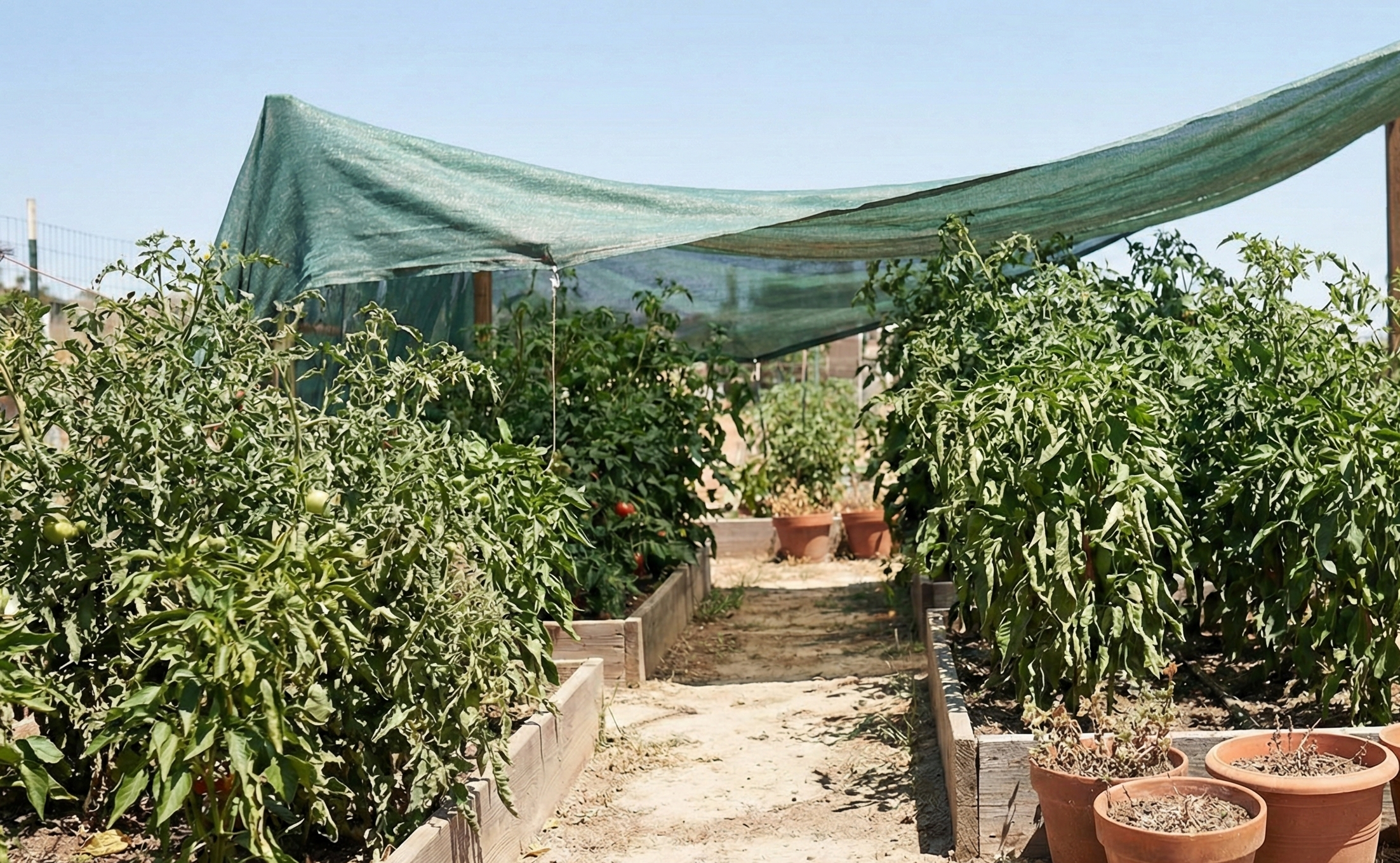
Shade cloth (30% to 50% shade rating) draped over hoops or a simple frame can protect lettuce, spinach, cilantro, and other cool-season crops from scorching. Even warm-season crops like tomatoes and peppers can suffer from sunscald on fruit when temperatures spike suddenly. A temporary shade structure is easy to set up and remove.
Do Not Panic About Wilting
Some plants (squash, cucumbers, and beans in particular) wilt during the heat of the afternoon even when they have adequate water. This is a self-protective mechanism. Check your soil moisture before adding more water. If the soil is moist at a 2-inch depth and the plant perks up by evening, it is fine. Overwatering in response to normal afternoon wilting can cause root rot.
What Pests and Diseases Should You Watch for in Summer?
Summer brings a predictable set of pest and disease challenges to Santa Cruz County gardens. Early identification and prevention are far more effective than reactive treatment.
Aphids
Aphid populations often peak in late spring and early summer before natural predators (ladybugs, lacewings, parasitic wasps) catch up. A strong blast of water from the hose knocks aphids off plants and is usually sufficient for managing light infestations. According to UC IPM, most healthy plants can tolerate moderate aphid populations without significant damage. Avoid broad-spectrum insecticides that kill the beneficial insects keeping aphids in check.
Tomato Hornworms
These large green caterpillars can defoliate a tomato plant seemingly overnight. Hand-pick them in the morning when they are easier to spot. If you see a hornworm covered in small white cocoons, leave it alone. Those cocoons are the pupae of parasitic wasps (braconid wasps), and the emerging wasps will control future hornworm populations in your garden.
Powdery Mildew
Powdery mildew is nearly unavoidable on squash, cucumbers, and melons in coastal gardens. The combination of fog moisture and moderate temperatures creates perfect conditions. UC IPM recommends planting resistant varieties when available, ensuring good air circulation, and removing heavily infected leaves promptly. Overhead watering can actually help wash mildew spores off leaves, but only if done early enough in the day for foliage to dry before evening.
Late Blight
Late blight (Phytophthora infestans) can devastate tomato and potato crops in cool, wet coastal conditions. Watch for dark, water-soaked spots on leaves that spread rapidly, often with a white fuzzy growth on the undersides. Remove and destroy (do not compost) affected plants immediately. According to UC ANR, late blight spores spread rapidly in cool, humid conditions and can destroy an entire planting within days if left unchecked.
Earwigs
Earwigs thrive in the moist conditions of coastal gardens and can cause significant damage to seedlings, soft fruits (especially strawberries), and flower petals. Trap them by placing rolled-up newspaper or short pieces of garden hose near affected plants in the evening. Earwigs crawl inside seeking dark, moist shelter and can be collected and disposed of each morning.
When and How Should You Harvest Summer Crops?
Knowing when to pick is just as important as knowing how to grow. Here are harvest guidelines for the most common summer crops in coastal gardens.
Tomatoes
On the coast, tomatoes often ripen later than gardeners expect. Do not worry if your plants are loaded with green fruit in July. Most coastal tomatoes begin ripening in earnest in August and September. Pick tomatoes when they are fully colored and give slightly to gentle pressure. If a heat wave or end-of-season frost is coming, you can pick tomatoes at the "breaker" stage (just beginning to show color) and ripen them indoors at room temperature. Do not refrigerate tomatoes, as cold temperatures destroy their flavor and texture.
Zucchini and Summer Squash
Pick zucchini when it is 6 to 8 inches long for the best flavor and texture. Check plants every day or two, as zucchini grows remarkably fast in warm weather. Oversized zucchini (the "baseball bat" stage) is still edible but has tougher skin, larger seeds, and less flavor. Regular harvesting encourages continued production.
Cucumbers
Harvest cucumbers when they are firm, dark green, and the size specified for the variety you planted. Overripe cucumbers turn yellow and become bitter. Like zucchini, check plants frequently and pick often to keep them producing.
Beans
Pick green beans when the pods are firm and snap cleanly. If you can see the outline of individual beans bulging through the pod, they are past their prime for fresh eating (though still fine for shell beans or dry beans). Regular picking, every 2 to 3 days during peak production, encourages the plant to keep flowering and setting new pods.
Peppers
All peppers start green and change color (red, yellow, orange) as they mature. You can harvest at the green stage for a milder, crisper flavor, or wait for full color for sweeter, more complex flavor. On the coast, peppers ripen slowly. Hot peppers develop more heat with more sun exposure, so coastal-grown hot peppers may be milder than their inland counterparts.
Can You Keep Planting Through Summer?
Absolutely. One of the great advantages of gardening on the California coast is that our moderate temperatures allow for succession planting well into summer. While inland gardeners are struggling with 100-degree heat that makes planting impossible, we can keep going.
What to Plant in June and July
Beans: Direct sow bush beans every 2 to 3 weeks for continuous harvest through fall.
Cucumbers: A June planting produces into October on the coast.
Summer squash: Replace spent plants with a fresh planting in mid-June or early July.
Basil and cilantro: Sow every 3 to 4 weeks for a steady supply. Cilantro bolts quickly in heat, so plant it in a part-shade location during the warmest months.
Lettuce: Choose heat-tolerant varieties (Jericho, Muir, Nevada) and plant in partial shade for summer salads.
Planning for Fall
By late July and early August, start planning your fall garden. This is the time to start cool-season crops from seed indoors or order transplants. Broccoli, cauliflower, cabbage, and Brussels sprouts should be started in July for transplanting in August or September. Peas, lettuce, spinach, and other quick-growing cool-season crops can be direct-sown starting in September.
The transition from summer to fall gardening is one of the most exciting times on the coast because our mild autumn weather (often the warmest and sunniest part of our year, as the fog retreats) is perfect for cool-season crops.
What Is the August Slump and How Do You Beat It?
Many coastal gardeners notice a lull in garden productivity during August. Plants look tired, production slows, and the garden feels like it is just waiting for something to change. This is the "August slump," and it is a normal part of the coastal growing cycle.
Here is what causes it and what to do about it.
Why It Happens
By August, many spring-planted crops have been producing for weeks or months and are beginning to decline naturally. Soil nutrients may be depleted. Pest and disease pressure has accumulated. And despite the calendar saying "summer," coastal temperatures in August are often not much warmer than June. Plants are tired, and the growing environment does not give them the heat boost they need to push through.
How to Respond
Side-dress with compost or a balanced organic fertilizer. Replenish soil nutrients to give producing plants a second wind. UC Master Gardeners of Napa County suggest side-dressing nitrogen in narrow bands or furrows once plants are 3 to 4 inches tall, watering it in well, and repeating with light applications every 3 to 4 weeks.
Remove spent plants. Do not let finished crops take up space and resources. Pull out bolted lettuce, finished pea vines, and any plant that has stopped producing. Compost them (unless they are diseased) and replant the space.
Focus on what is working. Your tomatoes, peppers, and beans are likely still producing. Give them attention with regular watering, feeding, and pest management.
Start planting for fall. Channel your energy into the fall garden rather than trying to squeeze more out of exhausted summer plants.
How Do You Keep Your Soil Healthy Through Summer?
Healthy soil is the foundation of a productive summer garden. The dry conditions and heavy production of summer can deplete soil if you are not actively maintaining it.
Feed the Soil, Not Just the Plants
Heavy-feeding crops like tomatoes, squash, and corn draw significant nutrients from the soil over the course of a growing season. Apply compost as a top-dressing (1 to 2 inches) around plants mid-season to replenish organic matter and feed soil biology. A liquid fish emulsion or kelp fertilizer applied every 2 to 3 weeks provides a quick nutrient boost during peak production.
Protect Soil Biology
The beneficial microorganisms in healthy soil (mycorrhizal fungi, nitrogen-fixing bacteria, decomposers) need moisture to survive. Bare, dry soil in summer sun can reach temperatures that kill these organisms near the surface. Mulching protects soil biology by keeping the soil surface cool and moist. UC Master Gardeners list mulch as protecting soil from compaction and temperature extremes, improving soil structure, feeding soil microbiology, holding moisture, and supporting the soil food web.
Avoid Compaction
Summer is when you are in the garden most often, and foot traffic compacts soil, especially when it is dry. Use permanent pathways between beds and avoid stepping in planting areas. If you garden in raised beds, this is one of their biggest advantages: the soil inside the bed stays loose because you never walk on it.
Month-by-Month Summer Garden Calendar
June
Monitor fog impact on warm-season crops. Add row covers or cloches if temperatures stay below 60 degrees consistently.
Begin regular deep watering on a schedule. Adjust for fog vs. sunny days.
Harvest spring-planted lettuce, peas, and radishes before they bolt.
Side-dress tomatoes and peppers with compost when first fruits appear.
Watch for aphids and begin hand-picking any tomato hornworms.
Succession-plant beans, cucumbers, and basil.
July
Peak harvest for many crops. Pick regularly to encourage continued production.
Start fall broccoli, cauliflower, and cabbage from seed indoors.
Refresh mulch where it has decomposed or thinned.
Watch for powdery mildew on squash and cucumbers. Remove heavily infected leaves.
Prune tomato suckers and remove lower leaves for better air circulation.
Apply liquid fertilizer to heavy-feeding crops.
August
Address the August slump: remove spent plants, side-dress active producers, and start fall plantings.
Sow cover crop seeds in any empty beds (buckwheat for a quick summer cover, or wait until September for winter cover crops like fava beans or crimson clover).
Prepare fall garden beds by adding compost and testing soil if you have not done so recently.
Continue harvesting tomatoes, peppers, beans, and squash.
Save seeds from your best-performing plants if you are interested in seed saving.
Take notes on what worked and what did not. This is the most valuable garden journaling you can do all year.
Frequently Asked Questions
Why are my tomatoes not ripening?
On the coast, this is almost always a temperature issue. Tomatoes need consistent daytime temperatures above 70 degrees and nighttime temperatures above 55 degrees for efficient ripening. In foggy coastal neighborhoods, these temperatures may not arrive consistently until late July or August. Cherry tomatoes ripen more reliably than large-fruited varieties in cool conditions. If the season is running out, you can pick green tomatoes and ripen them indoors at room temperature.
How often should I water in summer?
There is no single answer because it depends on your soil type, sun exposure, and whether it is a foggy week or a hot one. As a general starting point, water raised beds 2 to 3 times per week during warm, sunny periods and once or twice per week during cool, foggy stretches. Check soil moisture regularly and adjust. Drip irrigation with a timer is the most efficient and consistent approach.
Can I plant new vegetables in July?
Yes. Bush beans, cucumbers, summer squash, and fast-maturing herbs can all be planted in July on the coast and will produce into fall. Avoid starting slow-maturing crops like tomatoes or peppers from seed this late, but transplants of these crops can still go in if you have a warm microclimate.
What should I do about powdery mildew?
Powdery mildew is almost inevitable on squash family crops in coastal gardens. Plant resistant varieties when available, space plants for good air circulation, and remove heavily infected leaves to slow the spread. According to UC IPM, neem oil or potassium bicarbonate sprays can help manage early infections, but prevention through variety selection and spacing is more effective than treatment.
Is it too late to start a garden in summer?
Not at all. Our mild coastal climate allows planting well into summer. A June or early July planting of beans, cucumbers, squash, and herbs will produce into October and sometimes November. You can also begin fall garden planning in August, which extends your growing season through the winter months.
For more on efficient irrigation in Mediterranean climates, the UC ANR guide on summer plant watering provides research-based recommendations for California coastal gardens.
Related Reading
Interactive Planting Calendar (free tool)
For free printable planting guides and seasonal checklists, visit Your Garden Toolkit.
