

Growing Meyer Lemons in the Santa Cruz Coastal Fog Belt
A few of the product links in this guide are affiliate links. If you buy through one, Ambitious Harvest may earn a small commission at no extra cost to you, which helps keep these guides free. We only point to gear we would use in our own Santa Cruz garden. As an Amazon Associate, we earn from qualifying purchases. Read our full disclosure.
Along the Santa Cruz, Capitola, and Aptos coast, a Meyer lemon will live happily, but cool foggy summers and short sun slow ripening and thin the skin. It works here. It just asks for patience and a sunny spot.
Quick verdict: Workable but cool. The fog belt rarely freezes hard, so the tree survives easily, but low summer heat means fruit ripens slowly and tastes a touch less sweet than fruit grown a few miles inland. Give it the sunniest, most wind-sheltered corner you have, or grow it in a pot you can chase the sun with.
This page goes deep on Meyer lemons in one Santa Cruz County microclimate. For the bigger picture of which citrus suits which part of the county, start with our hub guide, best citrus varieties for Santa Cruz microclimates.
Why the fog belt is a mixed bag for Meyer lemons
The Meyer is a lemon-mandarin cross: sweeter, thinner-skinned, and a little more cold-tolerant than a true Eureka or Lisbon lemon. That tolerance is exactly what makes it the right lemon for the coast. Our winters here are mild and wet, and a hard freeze below the high twenties is rare, so the tree itself faces little real danger. The catch is heat, not cold. Citrus needs accumulated warmth to size and sweeten fruit, and the marine layer that keeps Santa Cruz summers gentle also caps the heat units a tree receives. The result is a healthy, green, slow tree that holds its fruit a long time before it finally colors up.
When to plant on the coast
Coastal frost note: the immediate shore almost never freezes, but a few hundred yards back from the water, on a clear still night, cold air can settle and dip to 30F. Plant in spring so the young tree establishes through the warm shoulder season rather than sitting in cold winter soil. A Meyer lemon is a long-lived tree, so siting matters far more than hitting an exact date.
Sun, salt, wind, and water
Sun: All of it. In the fog belt you cannot give a Meyer too much sun. Choose the brightest spot you have, ideally one that clears the morning fog earliest and faces south or west to bank afternoon warmth.
Salt and wind: Near the bluffs, onshore wind carries salt that can scorch leaf edges and dry the tree out. A fence, hedge, or the lee side of the house makes a real difference. The more exposed your lot, the more a sheltered pocket pays off.
Water: Far less than inland citrus. Our cool air and damp marine layer mean coastal Meyers need only modest, steady moisture. Let the top few inches dry between waterings and never leave roots sitting wet in our heavy winter rains, which is the fastest way to root rot here. Good drainage beats frequent watering.
The fog belt microclimate, up close
Two spots a mile apart can behave very differently here. A south wall in Capitola Village that traps reflected heat and clears fog by mid-morning will ripen lemons noticeably faster than an open yard in Live Oak that stays gray until noon. Read your own lot before you plant: notice where the sun lands longest, where fog lingers, and where wind funnels through. If your sunniest spot is still cool and slow, that is the strongest case for going to a container so you can move the tree onto a hot patio in summer and tuck it against the house in winter. Our companion article on gardening the coastal Aptos, Capitola, and Santa Cruz strip walks through reading these coastal pockets in detail.
What to expect from the fruit
- Slower to ripen than inland fruit; the tree may hold green lemons for months before they finally turn.
- Thinner, paler skin and slightly lower sugar than a Meyer grown in a hotter pocket, though still sweeter than a true lemon.
- Long harvest window. Coastal Meyers tend to ripen a few at a time over a long stretch rather than all at once.
- Reliable, generous yield once established. Cool does not mean unproductive here, just unhurried.
Common problems in the fog belt
- Slow or incomplete ripening: low heat, not a sick tree. Be patient, maximize sun, or move a potted tree to a hotter spot.
- Root rot and yellowing in winter: our heavy rain plus poor drainage. Plant on a slight mound and improve drainage rather than watering more.
- Salt-scorched leaf margins: onshore wind near the coast. Add a windbreak and rinse foliage after salty blows.
- Sooty mold and ants: ants farming aphids or scale in damp coastal air. Control the ants and clean the honeydew.
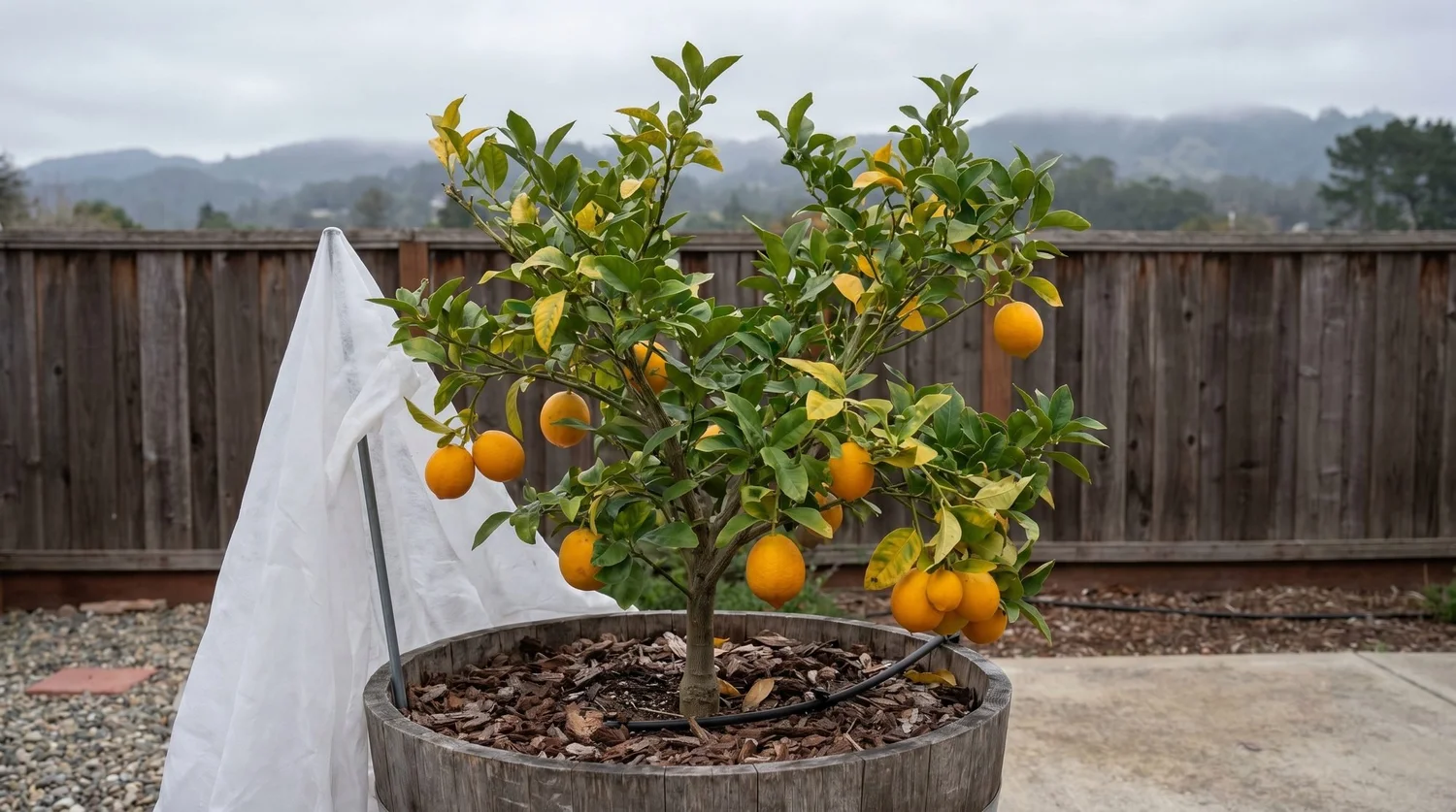
Local tip: If your fog burns off late, grow your Meyer in a half-barrel on casters rather than fighting your lot. Roll it into the sunniest spot through summer and back against a warm south wall for winter. A potted Meyer ripens better in the fog belt than an in-ground one stuck in shade, and it sidesteps our root-rot risk in wet soil entirely.
Frequently asked questions
Will a Meyer lemon actually ripen in foggy Santa Cruz?
Yes, just slowly. Cool coastal summers mean fruit takes longer to color and sweeten, often hanging into late winter or spring. Maximize sun and shelter and it will ripen; it simply will not be in a hurry.
Do I need frost protection right on the coast?
Usually not at the immediate shore, where it almost never freezes. A few hundred yards inland, on a clear still night, cold air can pool to around 30F, so keep frost cloth handy for the occasional cold snap, especially for a young tree.
Why is my coastal lemon's skin so thin and pale?
That is the fog belt signature. Lower heat means thinner, paler skin and slightly less sweetness than fruit grown in a warmer county pocket. The fruit is still good, just gentler in flavor.
Is a pot better than the ground here?
Often, yes. A container lets you chase summer sun, pull the tree out of cold wet winter soil, and avoid coastal root rot. If your sunniest in-ground spot is still shaded or foggy, go with a pot.
