

Is Compost Tea Really Better Than Compost?
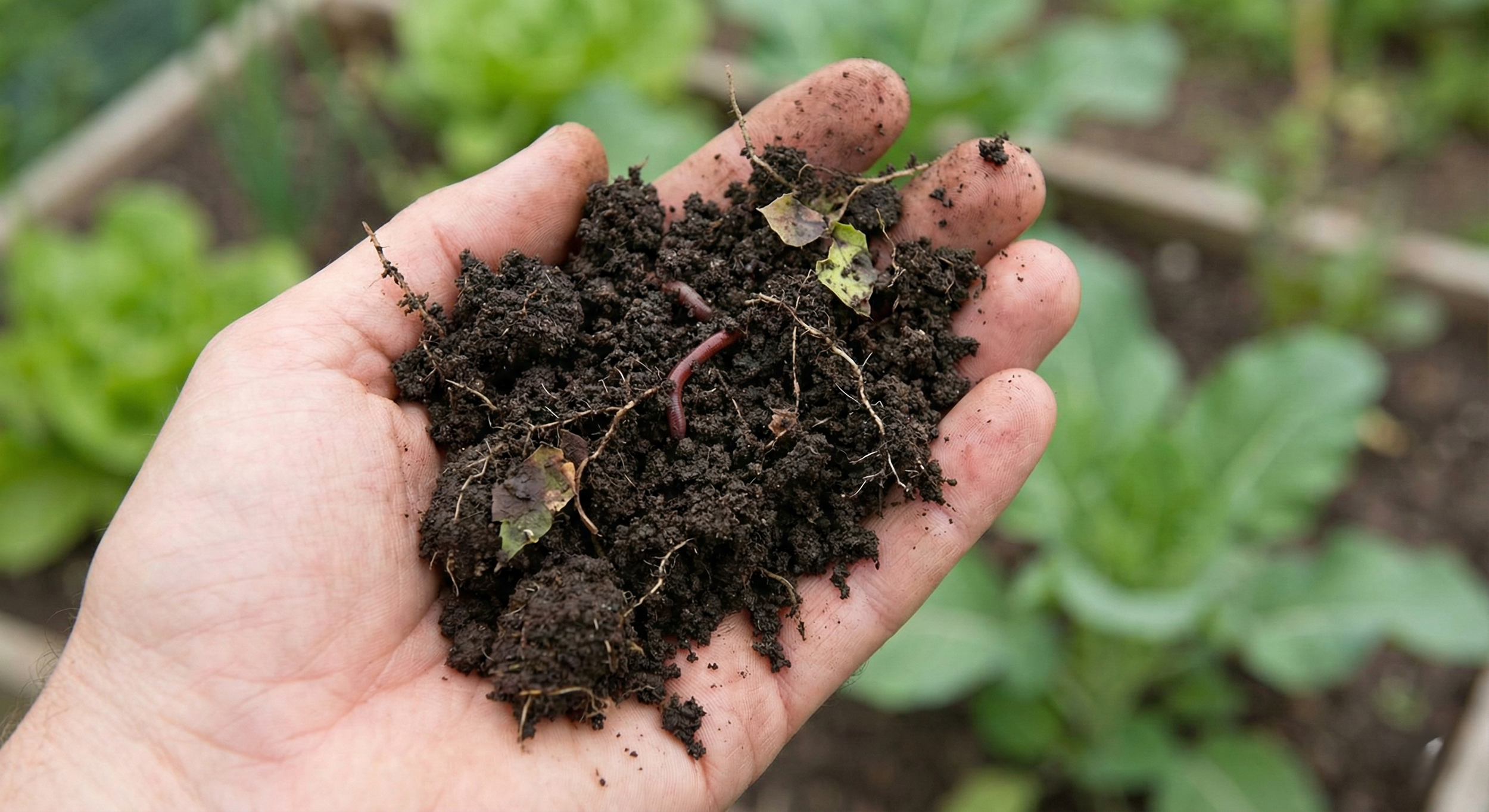
Compost tea is not a dependable upgrade to finished compost. It can contain soluble nutrients and microorganisms, but its composition and results vary. For improving a garden bed, applying suitable finished compost directly is usually the simpler choice. Don't spray an unverified homemade brew onto edible parts of food crops.
A bucket, an air pump, and a little patience can make brewing feel like the next step in caring for the soil. Before adding that job, decide what you want it to accomplish. Feeding a plant, building soil organic matter, and treating a disease are different goals, and a liquid extract doesn't automatically do all three.
What is in the bucket?
Compost tea is a water extract of compost. Some methods steep the material; others add air or ingredients intended to feed microorganisms. The starting compost, water, additives, and handling all influence the result. A batch described as rich in microbes doesn't tell you which organisms are present or whether they benefit the plant.
UC Master Gardeners of Contra Costa County discuss that uncertainty. Without knowing the material and process, you can't treat a home brew as a fertilizer with a predictable analysis.
Possible benefits are not a reliable disease treatment
The Washington State University fact sheet explains why differences between composts, brewing methods, application timing, and target diseases make results difficult to compare. Its cherry blossom brown-rot trial found no disease-control advantage over water. That is a result for a particular trial, not proof that every possible tea has no effect.
It also doesn't justify using an unspecified tea as a substitute for a proven disease-management plan. If a tomato has spots or a fruit tree is losing blossoms, identify the problem first. The right response depends on the cause and the crop.
For soil improvement, finished compost retains the solid organic material that a liquid application largely leaves behind. You can use that material as an amendment or surface dressing where appropriate, with the amount chosen for the bed rather than for the size of a brewing bucket.
Aeration does not establish food safety
Oregon State Extension explains that adding air changes dissolved oxygen and the microbial community. It is not a demonstration that a batch is free of harmful organisms.
Ingredients and handling matter, including whether the starting material contains manure and whether additives encourage microbial growth. Don't use bubbling, appearance, or a pleasant smell as proof that a brew is suitable for contact with food. Keep unverified homemade tea off edible leaves, fruit, and other harvestable parts.
USDA organic guidance distinguishes teas made from compliant compost from those made with uncomposted manure. In organic production, manure teas must follow the raw-manure restrictions, including incorporation into soil at least 120 days before harvest for crops whose edible portion has soil contact, or 90 days for other food crops. These are production requirements, not a universal recipe for making an unknown brew safe.
The linked 2006 National Organic Standards Board recommendation discusses potable water, equipment sanitation, and testing when additives are used. It is a recommendation document, not a stand-alone statement of every current rule. Commercial growers should confirm the applicable requirements with their certifier and food-safety adviser. For a home vegetable bed, there is no need to take on that uncertainty just to use compost.
Use finished compost where the soil needs it
Choose well-finished material from a source you can assess. Ask what it was made from and how it was processed, especially for use around food crops. Finished compost is not a license to ignore contamination or apply unlimited amounts.
For an established bed, review its condition and history before adding another layer. Soil testing can help if you've applied compost repeatedly or suspect a nutrient problem. Spread an appropriate amount without smothering plant crowns, and avoid working wet soil simply to incorporate an amendment.
Common questions about compost tea
Is compost tea better than ordinary compost?
There isn't a dependable general advantage that makes brewing necessary for a home garden. Finished compost is a practical way to add organic material directly. Choose the treatment for an identified soil or plant need rather than assuming that liquid means stronger or more effective.
Can it prevent plant diseases?
Don't rely on an unspecified tea to prevent or cure a disease. Results depend on the preparation and target organism, and the linked research review found inconsistent evidence. Identify the disease and use guidance specific to the crop.
Can I spray it on lettuce if I wait before picking?
Don't spray an unverified homemade brew onto lettuce or other edible portions. An arbitrary waiting period doesn't establish safety. Manure-related production intervals have specific conditions, and compliance depends on more than counting days.
What should I do with my compost instead?
Use suitable finished compost directly where an amendment or surface dressing is needed. Choose the amount for the soil, crop, and compost quality. You may find that a bed already receiving regular additions needs monitoring more than another application.
A useful job for this week
Look at one bed before reaching for the compost. Note what you've added recently, how water moves into the soil, and how the plants are growing. If an amendment is needed, choose finished compost and an appropriate application rate. If something looks wrong with a plant, identify that problem first.
Visit Your Garden Toolkit for soil-health planning resources. For related reading in the article library, look for Composting 101 for California Gardeners, Building Healthy Soil in Your Garden, and How to Use Compost in Raised Beds.
