

Growing Meyer Lemons in the Santa Cruz Banana Belt
A few of the product links in this guide are affiliate links. If you buy through one, Ambitious Harvest may earn a small commission at no extra cost to you, which helps keep these guides free. We only point to gear we would use in our own Santa Cruz garden. As an Amazon Associate, we earn from qualifying purchases. Read our full disclosure.
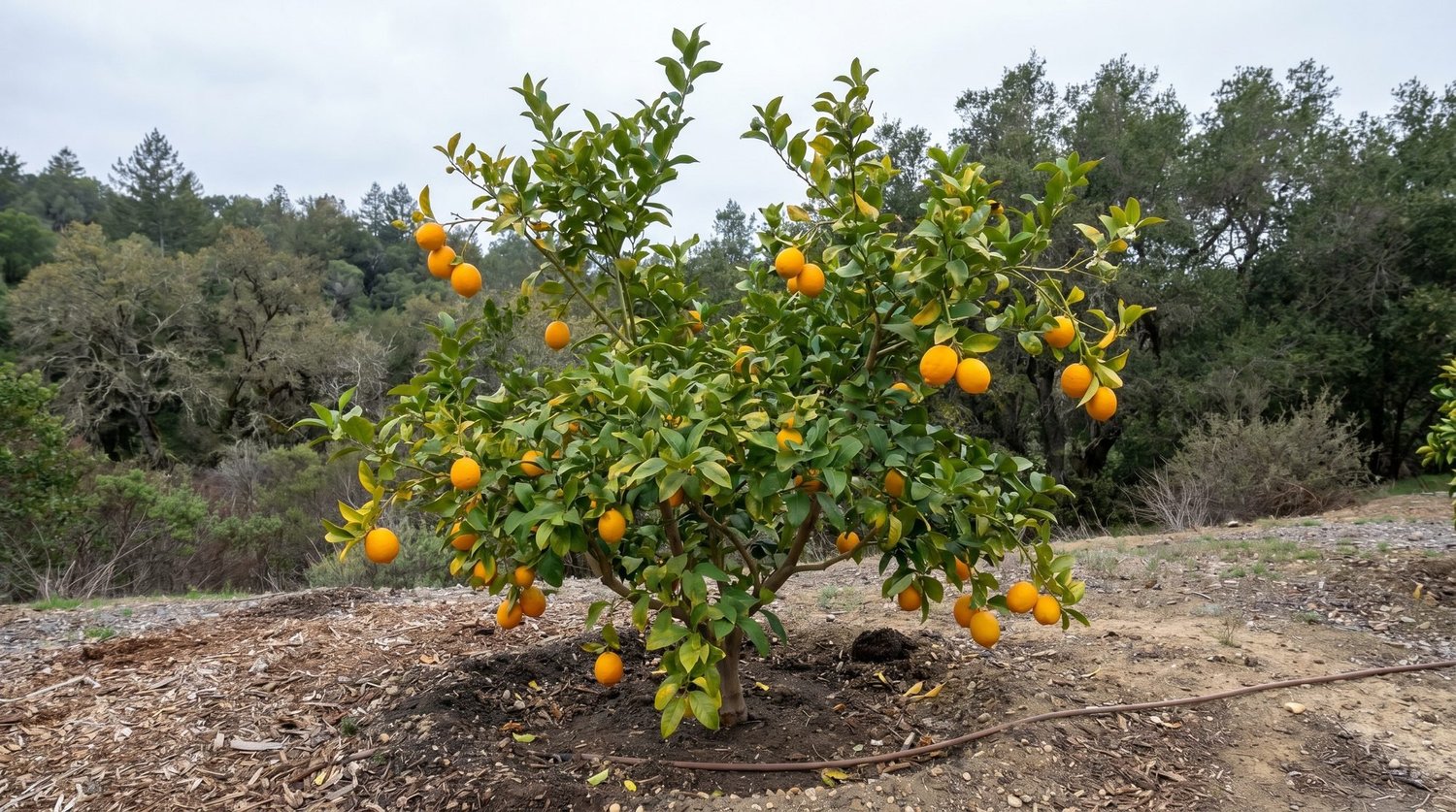
If you garden in the county's warm sunny pocket above the fog, you have the easiest place in Santa Cruz to grow a Meyer lemon. More heat, milder nights, and rare frost add up to sweet, well-sized fruit with very little fuss.
Quick verdict: This is where it thrives. The Banana Belt gives a Meyer lemon what citrus wants most: extra warmth, gentle nights, and few hard freezes. Plant it in good draining soil with full sun and you can mostly stand back. This is the prime citrus pocket of the county.
This page focuses on Meyer lemons in one Santa Cruz County microclimate. For how citrus performs across the whole county, start with the hub, best citrus varieties for Santa Cruz microclimates.
Why the Banana Belt is the county's best citrus ground
The Banana Belt is the band of warm sunny hillsides and thermal belts above Santa Cruz, Soquel, and Aptos that sit just over the summer fog and just above the cold-air drainage of the valleys. On a foggy July morning these slopes are already in sun while the coast is still gray, and on a clear winter night the cold air slides past them downhill instead of pooling around the tree. That combination, more daytime heat to sweeten and size fruit plus warmer nights and rare frost, is exactly the recipe citrus is looking for. A Meyer lemon, already the sweetest and most cold-tolerant lemon, is close to ideal here. If you have read our county overview, the Santa Cruz Banana Belt goldilocks microclimate, you already know why so much thrives in this pocket. Citrus is one of its clearest winners.
When to plant in the Banana Belt
Banana Belt frost note: the thermal belt rarely freezes because cold air drains downhill off these slopes, but the lowest part of a Banana Belt property, or a flat bench at the bottom of a slope, can still catch a cold pocket. Plant on the warm upper part of your lot, not in a dip. Spring planting lets the tree settle in through the warm season.
Sun, soil, and water
Sun: Full sun, which you have in abundance here. A Banana Belt Meyer gets the heat units a coastal one is starved of, so it ripens faster and sweeter. No need to chase the sun the way fog belt gardeners do.
Soil: Many of these hillsides have decent draining loam, which citrus loves. Plant on a slight mound if your soil holds water, and keep mulch a few inches off the trunk. Feed two or three times through the growing season with a citrus fertilizer.
Water: More than the foggy coast but far less than inland heat zones. Warmer days mean the tree drinks more than a fog belt tree, so water deeply and let the top few inches dry between soaks. Established trees settle into a comfortable rhythm once their roots reach down.
Reading your own slope
Even inside the Banana Belt, the warmest spot on your property is the upper-mid slope facing south or west, where it catches full sun and sheds cold air downhill. The bottom of the lot and any low flat bench are cooler and more frost-prone. A south-facing wall there banks even more heat and can push a Meyer to ripen earlier still. This is the rare Santa Cruz microclimate where you are choosing between good and great rather than fighting to make citrus work at all, so put the tree in your sunniest, best-drained, highest-and-warmest corner and let it run.
What to expect from the fruit
- Faster ripening and sweeter fruit than anywhere else in the county, thanks to the extra heat.
- Good size and proper deep-yellow-to-blush color, with the classic fragrant thin Meyer skin.
- Generous, dependable yields once the tree is a few years established.
- A possible second lighter flush of fruit in a warm year, given the Meyer's everbearing tendency.
Common problems in the Banana Belt
- Occasional frost in a low spot: rare but real at the bottom of a slope. Plant high on the lot and keep frost cloth for a young tree.
- Overwatering in good soil: the warmth tempts heavy watering, but soggy roots still rot. Deep and infrequent wins.
- Aphids and citrus leafminer on new flush: warm conditions push tender growth. Tolerable on mature trees; protect young flush.
- Skipped feeding: a fast-growing warm-pocket tree uses nutrients quickly. Yellowing often just means it is hungry, so keep up the citrus feed.
Local tip: You have the county's best citrus ground, so do not waste it on a cold low corner. Put your Meyer on the warmest upper part of your slope, ideally near a south or west wall, give it good drainage and steady feeding, and it will outperform the same tree planted a few miles toward the coast. This is the one Santa Cruz microclimate where citrus is genuinely easy.
Frequently asked questions
Is the Banana Belt really the best place in Santa Cruz for a Meyer lemon?
Yes. Its mix of extra daytime heat, mild nights, and rare frost is the closest the county comes to ideal citrus conditions. Fruit ripens faster and sweeter here than in the fog belt or the valley.
Do I still need to worry about frost up here?
Rarely, but watch your low spots. Cold air drains downhill off the thermal slopes, so the bottom of a Banana Belt lot can still catch a cold pocket. Plant high, and keep frost cloth handy for a young tree.
Why is my warm-pocket lemon yellowing if conditions are good?
In the Banana Belt it is usually hunger or overwatering rather than cold. A fast-growing warm tree uses nutrients quickly, so feed it on schedule and make sure the roots are not sitting wet.
Can I expect more than one harvest a year?
Sometimes. Meyers tend toward everbearing, and in a warm Banana Belt year you may see a main winter-into-spring crop plus a lighter second flush. The main harvest is the dependable one.
