

Can Hardpan Soil in California Be Fixed?
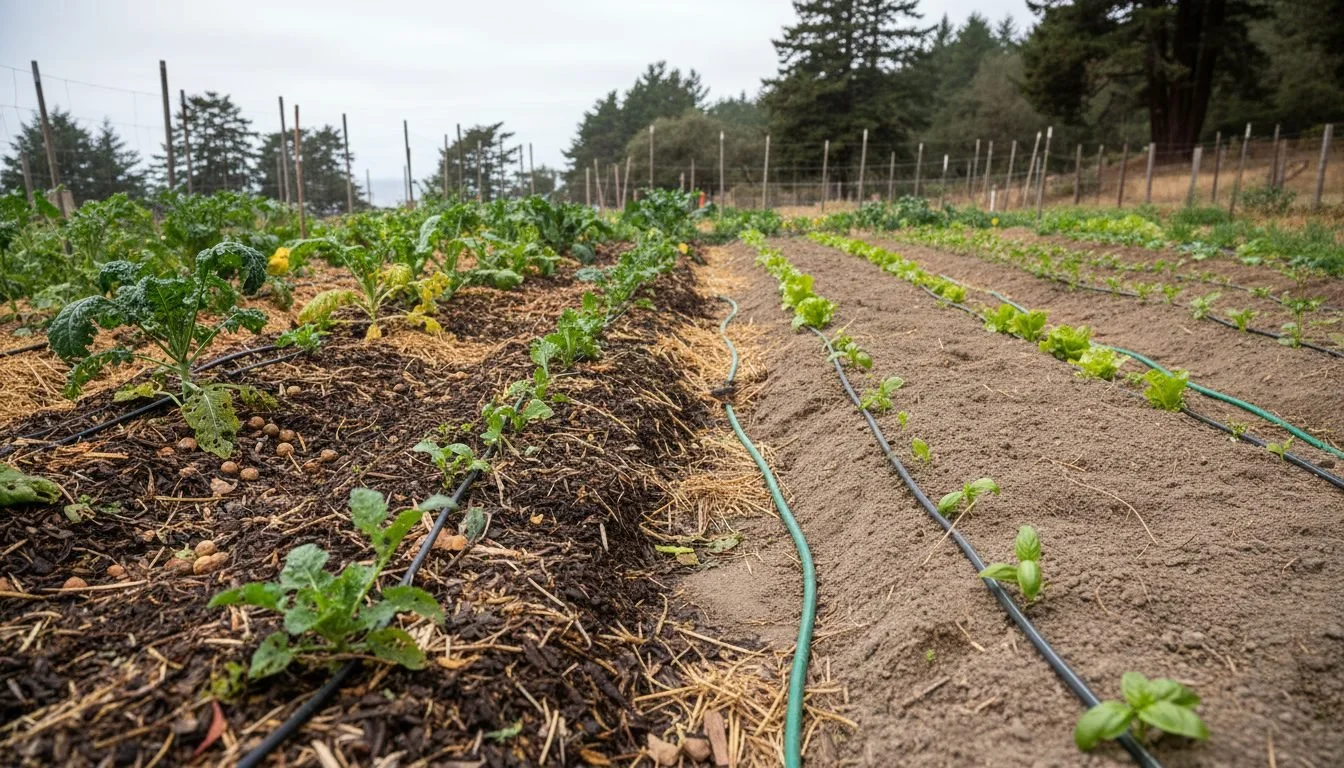
This guide contains an affiliate link. Purchases through it may earn Ambitious Harvest a commission at no extra cost to you. As an Amazon Associate, we earn from qualifying purchases. Read our full disclosure.
The shovel stops, but the planting hole is nowhere near finished. Hard ground can make a garden feel impossible. You may be able to improve the rooting conditions or garden above them, but first find out what is restricting the soil. Compaction, a dense clay layer and cemented hardpan are different problems. A bigger digging tool isn't always the answer.
Hard to dig doesn't identify the layer
Gardeners often use “hardpan” for any stubborn ground. Some layers form naturally; others result from traffic or repeated cultivation. Clay-rich soil can also become very hard as it dries without being a cemented pan.
UC's discussion of restrictive Central Coast soils describes several barriers to water and roots, including compacted layers, clay lenses and calcium-carbonate-rich layers. Their depth and thickness matter. A difficult patch in your yard doesn't establish that the whole neighborhood has the same soil.
Begin with observations: where water stands after rain, where plants struggle, and whether the problem follows a worn path or former construction area. Get help interpreting the soil profile before deep excavation. Avoid exploratory digging through established roots or near buried services; check utility locations before excavation.
Improve compaction without repeating its cause
UC’s soil-compaction guide explains that soil compaction reduces pore space and restricts water movement and roots. Keeping traffic off planting areas and avoiding work in wet soil are useful first steps. Compost and plant residues can support soil structure over time, but they don't dissolve a cemented layer. UC also distinguishes gypsum's use in sodium-affected soils from compaction treatment: it isn't a general hardpan fix.
The same source discusses mechanical loosening in farm fields and warns that repeated disturbance can worsen compaction. That is not a recipe for drilling compost-filled holes around garden plants. Before considering deep breaking, establish what lies below the barrier and where water would go. Existing trees, slopes and nearby structures make professional assessment especially useful.
Consider growing above the restriction
UC's hardpan guidance includes raised beds as one way to provide a better-drained growing area. For vegetables, raised beds may let you work with a suitable soil volume above difficult ground.
They still need a drainage plan. Adding a box doesn't remove a restrictive layer below it, and a fixed twelve-inch depth won't suit every crop or site. Choose bed depth and soil mix for what you want to grow and check how excess water will leave the area. Keep added soil away from established tree trunks and roots rather than burying them to level a bed.
What cover crops can and can't do
UC Cooperative Extension’s cover-crop article describes how cover-crop roots and residues can improve soil structure. Deep-rooted choices such as daikon radish may help with some compacted soil, where roots can establish and grow. That is different from a guarantee that they will drill through a cemented pan.
Choose a crop suited to your season, available water and next planting. Plan how to cut it down before it becomes an unwanted seed source. Cover crops are a soil-building practice to monitor over time, not a deadline for turning any hard layer into loose earth.
This week: Map the wet or difficult patches and note what you already know about the site's history. Bring those observations to a Master Gardener help desk or qualified soil professional. A useful diagnosis can save you from renting equipment that won't solve the problem.
Find free gardening resources at Your Garden Toolkit.
Frequently asked questions
Can California hardpan soil be fixed?
Some restrictions can be improved; others are better worked around. The aim is a usable root zone and appropriate water management, not necessarily removing the entire hard layer.
Are all hard layers the same?
No. Traffic compaction, clay-rich horizons and mineral-cemented layers differ. Caliche refers to carbonate accumulation; other cemented pans involve different minerals. Identify the condition before choosing an amendment or mechanical treatment.
Should I punch holes through shallow hardpan?
Not as a default garden treatment. Depth alone doesn't tell you the layer's thickness, what lies underneath or whether a hole would improve drainage. Have the site assessed before deep breaking, particularly around roots, utilities or structures.
Can cover crops break up compacted layers?
UC Cooperative Extension describes cover crops that help improve compacted garden soil. Their benefits depend on growth and site conditions. Don't assume a radish or grass will penetrate every cemented layer or solve persistent waterlogging.
