

Growing Strawflowers in Santa Cruz County: The Everlasting Cut Flower
A few of the product links in this guide are affiliate links. If you buy through one, Ambitious Harvest may earn a small commission at no extra cost to you, which helps keep these guides free. We only point to gear we would use in our own Santa Cruz garden. As an Amazon Associate, we earn from qualifying purchases. Read our full disclosure.
Why Are Strawflowers the Ultimate Everlasting Cut Flower for Santa Cruz County?
Strawflowers produce papery, jewel-toned blooms that hold their color and shape for months after drying, making them one of the most versatile flowers a Santa Cruz County gardener can grow. UC Integrated Pest Management identifies strawflowers as a commercially significant cut flower crop in California, and UC Cooperative Extension ranks them among the top everlasting flowers for home gardens, noting their exceptional drought tolerance once established and their ability to bloom continuously from early summer through frost. If you want flowers that last in the vase and then keep going as dried arrangements, strawflowers deliver like nothing else.
Native to Australia, strawflowers (Xerochrysum bracteatum, formerly Helichrysum bracteatum) feel right at home in our Mediterranean climate. They thrive in the same conditions that make Santa Cruz County great for so many edible and ornamental plants: mild winters, dry summers, and well-drained soil. Whether you grow them for fresh cutting, dried arrangements, or simply garden color, strawflowers are a low-water, low-maintenance addition that earns its space. If you are planning a broader cut flower garden in Santa Cruz County, strawflowers belong on every list.
What Strawflower Varieties Work Best in Our Climate?
Modern strawflower breeding has expanded well beyond the stiff, primary-colored flowers many people remember from old-fashioned dried arrangements. Today's varieties offer sophisticated colors, longer stems, and more graceful growth habits that look beautiful fresh or dried.
Tall cutting varieties. For cut flower production, the 'Silvery Rose' and 'Copper Red' selections produce stems 24 to 36 inches long on well-branched plants. These tall varieties are ideal for bouquets and dried arrangements. The 'Vintage' series offers muted, antique tones including apricot, white, and burgundy that blend beautifully in mixed arrangements. These are the workhorses of strawflower production in Santa Cruz County gardens.
The 'Granvia Gold' series. This vegetatively propagated variety has become a favorite for its exceptional garden performance and prolific blooming. Unlike seed-grown types, 'Granvia Gold' produces an almost continuous flush of bright golden flowers on bushy plants. It is more compact than traditional cutting types but still produces stems long enough for small arrangements.
Dwarf varieties. For containers and garden borders, the 'Mohave' and 'Bright Bikini' series grow 12 to 18 inches tall in neat, mounded shapes. These shorter varieties are less useful for cutting but provide months of color in beds and pots. They are also excellent for drying on shorter stems for wreaths and craft projects.
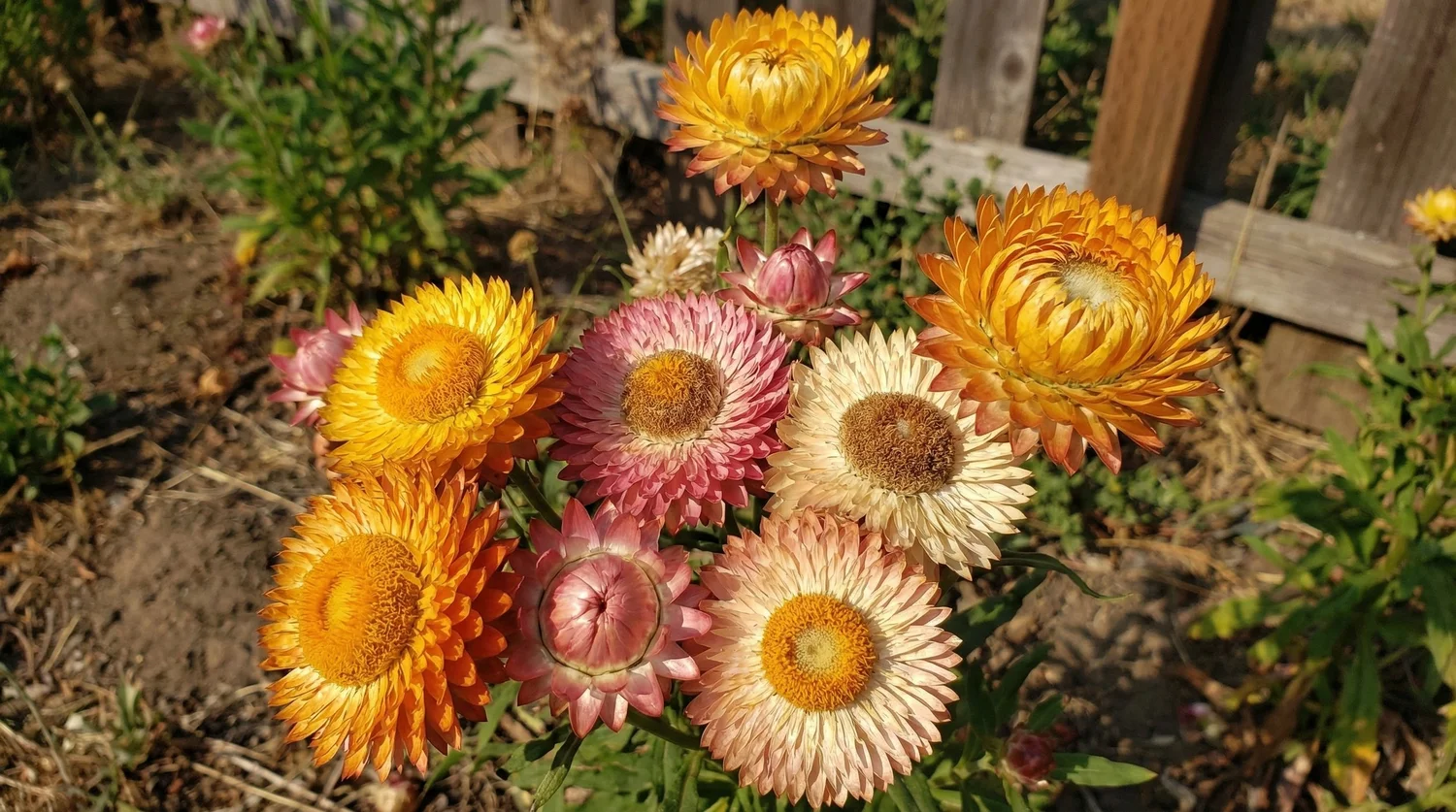
Color range. Strawflowers are available in an impressive range of colors: white, cream, yellow, gold, orange, salmon, pink, rose, red, burgundy, and purple. The papery bracts that make up the "petals" have a natural shimmer that catches light beautifully. Mix colors for vibrant arrangements or grow single colors for a more cohesive design statement.
How Do You Start Strawflowers From Seed?
Strawflowers are easy to grow from seed, germinating quickly and growing fast once temperatures warm. You can start them indoors for an earlier start or direct sow into the garden.
Indoor seed starting. Sow seeds indoors 6 to 8 weeks before your last expected frost date, which means late February through mid-March for most Santa Cruz County gardens. Press seeds lightly onto the surface of moist seed-starting mix. Strawflower seeds need light to germinate, so do not cover them with soil. Keep the soil temperature around 65 to 70 degrees. Germination takes 7 to 10 days under good conditions.
Direct sowing. After your last frost date, typically mid-April for coastal Santa Cruz and late March for sheltered inland areas, you can sow strawflower seeds directly in the garden. Scatter seeds on prepared soil and press lightly. Keep the seedbed moist until germination occurs. Thin seedlings to 10 to 12 inches apart once they develop their first true leaves. Direct-sown plants will bloom about 3 to 4 weeks later than transplants.
Transplanting. Move indoor-started seedlings to the garden after hardening them off for 7 to 10 days. Strawflowers are more cold-tolerant than many summer annuals and can handle light frost once established, so you can transplant a bit earlier than heat-loving flowers like celosia. Set transplants at the same depth they were growing in their pots and water well at planting.
Whether you start indoors or direct sow, strawflowers grow quickly once warm weather arrives. Expect first blooms about 10 to 12 weeks after germination, with continuous flowering thereafter until hard frost ends the show.
When Is the Right Planting Time for Santa Cruz County?
Strawflowers are flexible on timing, which is one of their strengths in our mild climate. You have a wider planting window than with many summer annuals, and you can even push for a fall planting in some situations.
Primary planting window. For most Santa Cruz County gardeners, the ideal transplant window is mid-April through mid-May. This timing allows plants to establish root systems during the mild spring weather and begin blooming by late June or early July. Inland gardens with warmer spring temperatures can plant as early as late March with row cover protection.
Succession planting. For continuous fresh blooms and a staggered supply of flowers for drying, succession plant with a second sowing in late May or early June. These later plants will begin blooming in August and carry through fall. In our coastal climate, where fall remains mild, a late planting of strawflowers often produces the best-quality blooms because the slightly cooler temperatures intensify flower colors.
Soil preparation. Strawflowers thrive in average to lean soil with excellent drainage. Do not over-amend with compost or use rich potting soils, as excessive fertility promotes soft, floppy growth and reduces flower production. If your soil is heavy clay, which is common in parts of the Santa Cruz area, raised beds or generous additions of perlite or coarse sand improve the drainage strawflowers need.
Spacing. Set plants 10 to 14 inches apart for cutting varieties and 8 to 10 inches apart for dwarf types. Slightly tighter spacing encourages taller, more upright growth with longer cutting stems. Wider spacing produces bushier plants with more lateral branches and shorter stems.
How Do You Care for Strawflowers During the Growing Season?
Strawflowers are among the most low-maintenance flowers you can grow in Santa Cruz County. Their Australian origins have equipped them for dry conditions and lean soils, which means they actually perform worse with too much attention than too little.
Watering. Once established, strawflowers need surprisingly little water. In coastal Santa Cruz, natural fog drip and occasional summer irrigation are often sufficient. Water deeply but infrequently, allowing the soil to dry between waterings. Overwatering is the most common mistake with strawflowers and leads to root rot, floppy stems, and reduced flowering. Inland gardens may need watering once or twice per week during the warmest months. Drip irrigation is ideal.
Fertilizing. Minimal fertilization produces the best results. A light application of balanced organic fertilizer at planting time is usually all that is needed. Avoid high-nitrogen fertilizers entirely. Research on cut flower production confirms that strawflowers grown in lean soil produce more blooms per plant with better stem quality than those given regular fertilization. In our naturally fertile coastal soils, you may need no supplemental feeding at all.
Staking. Tall cutting varieties may need support in windy coastal locations. A simple grid of horizontal netting or twine strung between posts at about 12 inches high keeps stems upright without visible supports. Install the support grid early, before plants grow through it, so the foliage conceals the structure. Dwarf varieties and plants grown in sheltered locations rarely need staking.
Deadheading. If you are not cutting flowers for fresh or dried use, remove spent blooms to encourage continuous flowering. Strawflowers are prolific seed producers, and allowing seeds to develop redirects energy away from new flower production. That said, if you want to save seeds for next year, let a few late-season flowers go to seed on the plant.
How Do You Harvest and Dry Strawflowers for Lasting Arrangements?
Drying strawflowers is remarkably simple because the flowers are already naturally papery and low in moisture content. UC Master Gardeners note that everlasting flowers composed of colorful, papery bracts dry successfully with minimal effort. The key to beautiful dried strawflowers is all about harvest timing.
Harvest timing is critical. For drying, harvest strawflowers when the outer 2 to 3 rows of bracts have opened but the center of the flower is still tightly closed. This is earlier than you might think. Flowers that are fully open when cut will continue opening during the drying process and end up looking overblown and flat. Flowers cut at the tight-bud stage will open to perfect form as they dry. This harvest timing takes some practice to get right, but after a few attempts you will recognize the ideal stage immediately.
Cutting technique. Cut stems as long as possible in the early morning after dew has dried. Use sharp, clean snips. Strip all foliage from the stems immediately after cutting, as leaves do not dry attractively and can trap moisture that leads to mold.
Air drying method. Bundle 5 to 8 stems together with a rubber band and hang upside down in a warm, dry, dark location with good air circulation. Darkness preserves color intensity during drying. A garage, attic, or covered porch works well. Strawflowers dry quickly, usually within 1 to 2 weeks, depending on humidity. You will know they are fully dry when the stems snap rather than bend.
Wire stem technique. For wreath-making and craft projects, some arrangers prefer to replace the natural stem with floral wire. Insert a piece of 22-gauge floral wire through the base of the flower head while it is still fresh, create a small hook at the top to anchor it, and then pull the wire down so the hook embeds in the flower center. Dry the wired flowers upside down as usual. This technique produces flexible, poseable stems that are easier to work with in wreaths and compact arrangements.
Color preservation. Dried strawflowers hold their color for 1 to 3 years when kept out of direct sunlight. Store dried stems upright in a vase or container away from windows. Deep colors like burgundy and red hold longest, while lighter shades like white and pale pink may fade to cream over time. Keeping dried arrangements out of humid rooms also helps maintain color and prevent mold.
What Are Some Design Ideas for Fresh and Dried Strawflower Arrangements?
Strawflowers are extraordinarily versatile in arrangements, working equally well fresh or dried and mixing beautifully with a wide range of other flowers and foliage.
Fresh arrangements. In a vase with clean water, fresh strawflowers last 7 to 10 days. They pair wonderfully with other summer cut flowers like celosia, zinnias, and cosmos. The papery texture of strawflowers creates an interesting contrast with softer, more perishable blooms. Use strawflowers as focal flowers in small arrangements or as accents in larger mixed bouquets.
Dried wreath making. Strawflowers are one of the easiest flowers to use in homemade wreaths. Wire individual flower heads (using the technique described above) and attach them to a straw or grapevine wreath form with hot glue or floral pins. Mix colors and sizes for a natural, abundant look. A wreath made with quality dried strawflowers will last for years with minimal care.
Mixed everlasting bouquets. Combine dried strawflowers with other dried materials like statice, lavender, wheat, grasses, and seed pods for arrangements that last through winter and beyond. These bouquets require no water and no maintenance, making them perfect for spaces where fresh flowers are impractical.
Single-stem display. Individual dried strawflower stems look striking displayed alone in small bud vases or narrow-necked bottles. Group several bud vases with different strawflower colors for a simple but effective display. This minimal approach highlights the sculptural quality of the individual flowers.
What Pests and Problems Affect Strawflowers in Santa Cruz County?
Strawflowers are remarkably pest-free and disease-resistant, especially when grown in appropriate conditions. Most problems trace back to too much water or too-rich soil rather than actual pests.
Powdery mildew. This is the most common disease issue on strawflowers in our area, particularly in coastal gardens where morning fog creates humid conditions. White, powdery patches appear on leaves and stems, weakening plants over time. Good air circulation through proper spacing is the best prevention. Remove and discard affected leaves promptly. In persistent cases, a spray of diluted neem oil or potassium bicarbonate can help.
Root rot. Overwatering or poorly drained soil leads to root rot, which causes sudden wilting and plant collapse. This is entirely preventable with proper watering practices and well-drained soil. If you lose a plant to root rot, improve drainage in that area before replanting.
Aphids. Occasionally appear on young growth and flower buds. Natural predators usually control them in our gardens. A strong spray of water dislodges most aphid colonies.
Slugs and snails. Young transplants can be damaged by slugs and snails, which are abundant in coastal Santa Cruz County gardens. Protect new plantings with iron phosphate bait or copper barriers until plants are well established. Once strawflowers are actively growing, slug damage is rarely significant because the plants become less palatable as they mature.
How Can You Use Strawflowers Beyond Traditional Arrangements?
The durable, papery quality of strawflowers opens up creative possibilities beyond standard bouquets and wreaths. Strawflowers are among the most reliable everlasting flowers for California home gardens.
Potpourri. Dried strawflower petals hold fragrance well when mixed with essential oils. Combine dried strawflower heads with lavender, rose petals, and a few drops of essential oil for homemade potpourri that looks and smells beautiful. The bright colors of strawflowers make potpourri visually appealing in clear containers.
Pressed flower art. Individual strawflower bracts press flat easily and retain their color exceptionally well. Use pressed strawflower petals in framed botanical art, greeting cards, or resin jewelry. The metallic sheen of the bracts translates beautifully to pressed flower projects.
Garden plant markers. Attach dried strawflower heads to wooden plant stakes with hot glue for decorative, durable garden markers. Label the stakes with plant names using a waterproof marker. These add color and personality to the garden while serving a practical purpose.
Gift toppers. A single dried strawflower attached to a wrapped gift replaces a traditional bow with something more personal and lasting. Recipients often keep the flower long after the gift is opened. Grow a variety of colors specifically for this purpose if you enjoy handmade gift wrapping.
Where to get flower seeds: For cut-flower and pollinator varieties that do well here, we like Seeds Now, a California company selling non-GMO, open-pollinated, and heirloom seed. (Affiliate link, see our disclosure.)
Frequently Asked Questions
Do strawflowers reseed themselves in Santa Cruz County?
Strawflowers can self-sow in Santa Cruz County gardens, especially in beds with bare, well-drained soil. Volunteer seedlings typically appear in spring and may be a different color than the parent plants if you grew a mix. To encourage reseeding, allow a few late-season flowers to go to seed and leave the soil undisturbed through winter. Volunteer plants are generally vigorous and bloom true to the species though not always to the variety.
Can you grow strawflowers year-round in Santa Cruz County?
Strawflowers are warm-season annuals that perform best from late spring through fall. While our mild winters sometimes allow plants to survive until December or January, quality declines significantly as days shorten and temperatures drop. For year-round enjoyment, dry your summer harvest and display the everlasting blooms through winter. Start new plants each spring for the freshest, most productive growth.
Are strawflowers drought tolerant?
Yes, strawflowers are among the most drought-tolerant annual flowers available. Their Australian origins have adapted them to dry conditions, and they actually flower more prolifically with moderate water stress than with abundant irrigation. Once established in Santa Cruz County gardens, they typically need watering only once per week in coastal areas and twice per week inland during summer. Overwatering is a more common problem than underwatering.
What is the best way to combine strawflowers with other cut flowers?
Strawflowers work well as accent flowers in mixed bouquets. Their papery texture contrasts beautifully with soft, lush blooms like roses and dahlias. In dried arrangements, pair them with statice, lavender, and ornamental grasses. For color harmony, warm-toned strawflowers (gold, orange, red) complement sunflowers and zinnias, while cool-toned varieties (pink, white, purple) pair well with dried lavender and blue globe thistle.
How long do dried strawflowers last?
Properly dried and stored strawflowers retain their color and shape for 1 to 3 years. Deep, saturated colors like burgundy, red, and gold last longest. Lighter shades may gradually fade to softer tones, which many people find equally attractive. Keep dried arrangements out of direct sunlight and humid environments to maximize their lifespan. Dusting gently with a soft brush or hair dryer on low keeps them looking fresh.
Do strawflowers attract pollinators?
Strawflowers are good pollinator plants, attracting bees, butterflies, and hoverflies. The open flower structure provides easy access to nectar and pollen. In Santa Cruz County, you will often see native sweat bees and honeybees visiting strawflowers throughout the blooming season. Growing strawflowers near your vegetable garden can help attract pollinators that also visit your food crops.
Can you grow strawflowers in containers?
Strawflowers are excellent container plants. Choose dwarf varieties like 'Mohave' or 'Bright Bikini' for pots, or grow tall varieties in large containers (at least 14 inches in diameter) for cutting. Use a well-draining potting mix and avoid overwatering. Container-grown strawflowers may need more frequent watering than in-ground plants, but the same principle applies: let the soil dry between waterings. A sunny patio or balcony is ideal.
What companion plants work well with strawflowers in Santa Cruz County?
Strawflowers pair well with other drought-tolerant, sun-loving plants. Good companions include lavender, rosemary, beans, salvia, and native California wildflowers. In a cut flower garden, grow strawflowers alongside zinnias, cosmos, and celosia for a diverse harvest. Avoid pairing them with moisture-loving plants, as the different watering needs can compromise one group or the other.
Add Everlasting Color to Your Garden
Strawflowers are one of the most rewarding flowers you can grow in Santa Cruz County. They ask for little, deliver bold color all season, and then keep giving through winter as dried arrangements. Start seeds in March, transplant in April, and by July you will have armloads of papery, shimmering blooms to enjoy fresh and preserve for months to come. It is hard to think of another flower that offers this kind of return on such a modest investment of time and water.
Ready to build your complete cut flower garden plan? Visit Your Garden Toolkit for planting guides, seasonal calendars, and more resources designed for Santa Cruz County gardeners.
