

15 Vegetables You Can Grow From Kitchen Scraps in California
A few of the product links in this guide are affiliate links. If you buy through one, Ambitious Harvest may earn a small commission at no extra cost to you, which helps keep these guides free. We only point to gear we would use in our own Santa Cruz garden. As an Amazon Associate, we earn from Read our full disclosure.
15 Vegetables You Can Grow From Kitchen Scraps
According to the USDA, an estimated 30 to 40 percent of the U.S. food supply is lost or wasted at the retail and consumer levels, and vegetable scraps are part of what gets thrown out (USDA Economic Research Service). Growing food from kitchen scraps is a free, satisfying way to reduce waste and produce fresh food, though not every scrap-grown plant is equally productive. Here are 15 vegetables you can regrow, with notes on which ones deliver real harvests and which are more fun than functional.
I have experimented with regrowing kitchen scraps in my Santa Cruz garden for years. Some of these methods genuinely produce food you can cook with. Others are wonderful learning projects (especially for kids) but will not replace a trip to the store. I will be upfront about which is which, because setting realistic expectations is part of good gardening advice.
1. Green Onions (Scallions)
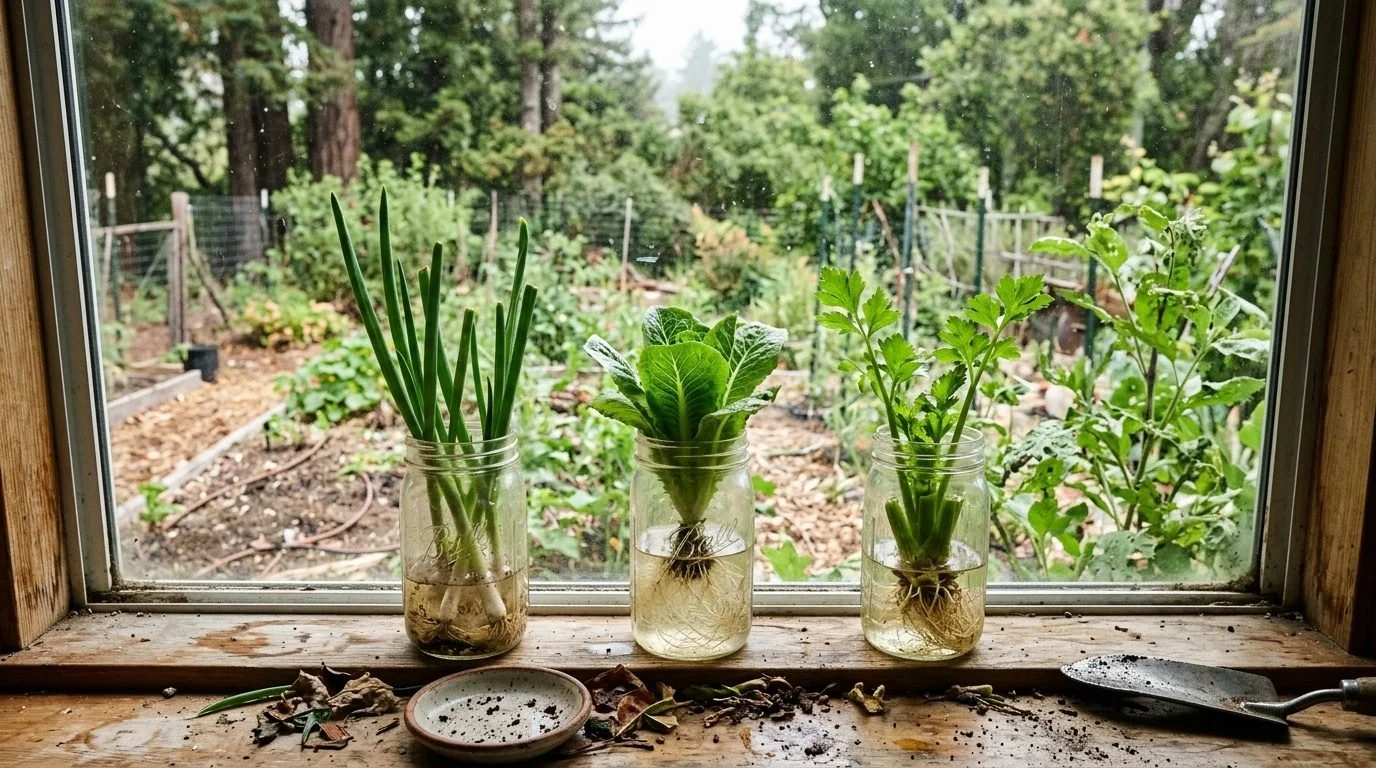
Green onions are the undisputed champion of scrap regrowing. This method is so effective that it genuinely replaces buying green onions from the store. Simply place the root ends (with about an inch of white stem attached) in a glass of water on a sunny windowsill, and new green shoots appear within two to three days.
How to do it: Cut the green tops for cooking and save the bottom inch with the roots. Stand them upright in a jar with half an inch of water. Change the water every two days to prevent slime. In about a week, you will have usable green onion tops. For continuous production, transplant rooted scraps into a pot of soil after a week in water.
Productivity rating: Excellent. According to the UC Master Gardener Program, green onions regrow reliably and can be harvested multiple times. Plants grown in soil produce bigger, more flavorful greens than those kept in water indefinitely. In California's mild climate, transplanted green onions can produce for months.
Tip: Water-only regrowing works for a few harvests, but flavor and nutrition decline. Plant them in soil for the best long-term results. growing onions in California
2. Lettuce and Romaine Hearts
Regrowing lettuce from the base of a head is one of the most popular kitchen scrap experiments, and it does work, with some caveats. The regrown leaves will be smaller and fewer than the original head, but they are perfectly edible and make a satisfying addition to a salad or sandwich.
How to do it: Cut the leaves off a romaine or butter lettuce about two inches from the base. Place the base cut-side up in a shallow dish with half an inch of water. Set it in a bright spot and change the water daily. New leaves will emerge from the center within three to five days. After a week, transplant into soil for better growth.
Productivity rating: Moderate. You will get a handful of tender leaves, not a full new head. UC Agriculture and Natural Resources notes that lettuce regrows best in cool weather, making fall and spring the ideal seasons for this in California. The regrown plant tends to bolt faster than a seed-grown one.
Tip: This works best with romaine and butter types. Iceberg lettuce rarely regrows well. For serious lettuce production, growing from seed is far more productive and nearly as easy. growing lettuce in California
3. Celery
Celery regrowing is a classic kitchen experiment that yields surprisingly good results. The base of a celery bunch will produce new stalks from the center, and when transplanted into soil, it can grow into a respectable plant over a few months.
How to do it: Cut the stalks about two inches from the base. Place the base in a shallow bowl of warm water, cut-side up. Set it in a sunny window and change the water every other day. In about a week, you will see tiny new leaves and stalks emerging from the center. Once they are a few inches tall, transplant into soil in a spot with afternoon shade.
Productivity rating: Good. Celery regrows into a usable plant, though the stalks will be thinner than store-bought. UC Cooperative Extension notes that celery prefers cool, consistent conditions, which coastal California (especially Santa Cruz) provides naturally. A regrown celery plant takes 3 to 4 months to produce full-sized stalks.
Tip: Celery is a heavy feeder and drinker. Keep the soil consistently moist and fertilize monthly with compost tea or a balanced organic fertilizer for the best results.
4. Potatoes
Growing potatoes from scraps is one of the most productive methods on this list. Any potato with visible "eyes" (the small dimpled buds on the skin) can be planted to grow a new crop. This method has fed people for centuries and genuinely works.
How to do it: Cut a potato into pieces so that each piece has at least two eyes. Let the cut pieces dry for 24 to 48 hours until the cut surfaces heal over (this prevents rot). Plant each piece 4 inches deep and 12 inches apart in loose, well-draining soil. In California, plant in February through April for a spring harvest, or in August through September for a fall crop.
Productivity rating: Excellent. Each seed piece can produce 3 to 5 pounds of new potatoes. According to UC ANR, potatoes grow well in California's coastal and inland zones and are one of the most calorie-dense crops you can produce at home. One sprouted potato from your kitchen can yield a meaningful harvest.
Tip: Use organic potatoes when possible, since conventionally grown potatoes are often treated with sprout inhibitors that prevent them from growing. Do not plant potatoes from the same spot in your garden year after year, as this builds up soil diseases. growing root vegetables in California
5. Sweet Potatoes
Sweet potatoes are grown from "slips," which are the leafy shoots that sprout from the tuber. You can produce your own slips from a store-bought sweet potato, and in California's long, warm growing season, they produce generously.
How to do it: Suspend a sweet potato halfway in a jar of water using toothpicks. Place it in a warm, sunny spot. Within two to four weeks, leafy shoots (slips) will emerge. When slips are 5 to 6 inches long, twist them off and place them in water to root. Once roots are an inch long, plant them in the garden 12 inches apart in loose, mounded soil.
Productivity rating: Excellent. Sweet potatoes love California heat and produce 3 to 5 pounds of tubers per plant. The UC Master Gardener Program recommends planting slips in late May or June in most California zones. They need 90 to 120 frost-free days to mature, which is easily achievable in all but mountain zones.
Tip: One sweet potato can produce 10 or more slips, giving you a substantial planting from a single kitchen scrap. Plant in full sun with well-drained soil for the best harvest.
6. Garlic
Any garlic clove can be planted to grow a full new head. This is not really "regrowing from scraps" so much as it is the traditional way garlic has always been propagated. If you have a few cloves sprouting in your kitchen, plant them instead of throwing them out.
How to do it: Separate individual cloves from the head, keeping the papery skin intact. Plant each clove pointed end up, 2 inches deep and 4 to 6 inches apart. In California, the best planting time is October through December. Water regularly through winter and spring, then stop watering when the lower leaves begin to yellow in late spring.
Productivity rating: Excellent. Each clove produces one full head of garlic. UC ANR recommends California softneck varieties for home gardens, but even a sprouted head from the grocery store will produce. Garlic is one of the most space-efficient and low-maintenance crops you can grow.
Tip: Grocery store garlic may be softneck varieties from China or California. Both will grow, but locally sourced seed garlic from a nursery or farmers market is better adapted to your specific climate. our fall planting guide
7. Ginger
Fresh ginger root from the grocery store can be planted to grow a beautiful tropical-looking plant that produces its own rhizomes. Ginger grows surprisingly well in coastal California, where mild temperatures and filtered light mimic its natural habitat.
How to do it: Look for a piece of ginger with visible growth buds (small, pointed nubs). Let it soak in water overnight, then plant it 1 to 2 inches deep in a wide, shallow pot filled with rich potting mix. Keep the soil consistently moist but not waterlogged. Place in a warm spot with bright, indirect light or dappled shade.
Productivity rating: Good. Ginger takes 8 to 10 months to produce harvestable rhizomes, so patience is required. Each piece of planted ginger can produce a half-pound to one pound of fresh rhizomes. Organic ginger sells for $6 to $10 per pound at California stores, so the savings are real if you are a regular ginger user.
Tip: Ginger does not like full sun or cold. In Santa Cruz, grow it in a container so you can move it to a protected spot if temperatures dip below 50 degrees F. It also makes a lovely houseplant with lush, reed-like foliage.
8. Lemongrass
If you buy fresh lemongrass stalks from the grocery store or Asian market, you can root them and grow your own supply. Lemongrass is a vigorous grower in California and, once established, produces more than most households can use.
How to do it: Trim the top of each stalk, leaving about 6 inches of the base. Place stalks in a glass of water with the root end submerged. Change water every few days. Roots will appear within one to three weeks. Once roots are a couple of inches long, plant in soil in a sunny spot. Space plants 2 to 3 feet apart.
Productivity rating: Excellent. Lemongrass is essentially a grass and grows vigorously in California's warm areas. A single rooted stalk can multiply into a large clump within one growing season. Fresh lemongrass costs $2 to $4 per small bundle at the store, and one plant can supply a household indefinitely.
Tip: Lemongrass is not cold-hardy below about 40 degrees F. In coastal California, it survives winter in most years but may die back. Planting against a south-facing wall provides extra warmth and protection.
9. Bok Choy and Other Asian Greens
Bok choy regrows from its base much like lettuce. The method is quick, easy, and produces tender new leaves within days. Other Asian greens like napa cabbage and tatsoi can also be regrown this way, though results vary.
How to do it: Cut the leaves about 2 inches from the base. Place the base in a shallow dish of water and set it in a bright spot. Change water daily. Within a few days, new leaves will sprout from the center. Transplant into soil after a week for larger, more robust leaves.
Productivity rating: Moderate. Like lettuce, you will get a small secondary harvest rather than a full new plant. The regrown leaves are tender and flavorful but come in smaller quantities. UC Master Gardeners note that Asian greens grow quickly from seed in California's cool seasons, which is a better approach for serious production.
Tip: Bok choy regrows best in cool weather. In California, try this from October through April for the best results. Summer heat causes regrown plants to bolt almost immediately.
10. Beet Greens
While you cannot regrow a full beet from a beet top, you can regrow the leafy greens, which are nutritious and delicious. Beet greens contain high levels of vitamins A and C, according to UC Davis Department of Nutrition, and they work beautifully in salads, sautees, and smoothies.
How to do it: Cut the top inch off a beet, keeping a bit of stem attached to the root crown. Place it cut-side down in a shallow dish of water. Within a few days, new leaves will sprout from the center. Harvest the greens when they are 3 to 4 inches tall, or transplant the top into soil for larger leaves.
Productivity rating: Low to moderate. You will get a modest crop of greens, not a new beet root. This is more of a bonus harvest from scraps you would otherwise compost. For growing full beets, direct sow seeds in fall or early spring in California. growing root vegetables in California
Tip: Golden and Chioggia beet tops tend to regrow more vigorously than standard red beet tops. The greens taste similar to Swiss chard, which is actually a close relative of the beet.
11. Carrot Tops (for Greens)
You cannot regrow a full carrot from a carrot top. The root will not regenerate. However, carrot tops will sprout lovely, feathery greens that are edible and quite flavorful, tasting something like a cross between parsley and carrots.
How to do it: Cut the top inch off a carrot, keeping the crown intact. Place it in a shallow dish of water and set it in a bright window. Change water every other day. Within a week, green shoots will appear. You can use these greens as a garnish, in pesto, or in salads.
Productivity rating: Low (novelty). Carrot top greens are a fun bonus, not a significant food source. This is one of the best kitchen scrap projects for children because results appear quickly and the feathery tops are attractive. For growing actual carrots, direct sow seeds in loose soil from September through March in California.
Tip: If you enjoy carrot top greens, consider growing carrots specifically for a dual harvest. Pull the roots for cooking and let a few plants bolt to enjoy the greens and attract beneficial insects with their umbrella-shaped flowers.
12. Basil
Fresh basil is one of the easiest herbs to propagate from cuttings. If you buy a bunch of fresh basil at the store, you can root several stems and grow them into full, productive plants. This is one of the most cost-effective entries on this list.
How to do it: Snip a 4-inch stem just below a leaf node. Remove the lower leaves, leaving two to three sets of leaves at the top. Place the cutting in a glass of water in a bright spot. Roots will appear within 5 to 10 days. Once roots are an inch long, transplant into a pot or garden bed.
Productivity rating: Excellent. Rooted basil cuttings grow into full plants that produce for months in California's warm season. Since a single clamshell of organic basil costs $3 to $5 at the store, and each cutting grows into a plant worth $60 to $100 over a season, this is one of the best returns on this list. UC Cooperative Extension confirms that basil roots readily from stem cuttings.
Tip: Take cuttings from the freshest basil you can find. Wilted or older stems root poorly. Farmers market basil tends to be fresher than grocery store basil and roots more reliably. our guide to growing herbs
13. Leeks
Leeks regrow from their root end in the same way green onions do, just on a larger scale. A leek base placed in water will produce new green growth within days, and transplanting into soil produces a usable crop over time.
How to do it: Save the bottom 2 to 3 inches of a leek, including the root plate. Place it in a glass of water with the roots submerged. Change water every two to three days. Once new green growth is visible (usually within a week), transplant into the garden about 4 inches deep. Leeks like rich soil and consistent moisture.
Productivity rating: Good. Regrown leeks will not get as thick as store-bought ones, but the green tops are fully usable and flavorful. In California, leeks grow best from fall through spring when temperatures are cool. UC Master Gardeners note that leeks take 90 to 120 days to mature fully, so be patient.
Tip: Mound soil around the base of the leek as it grows (called "blanching") to produce a longer white section, which is the most prized part for cooking.
14. Fennel
Fennel can be regrown from the base of a bulb, producing new fronds and eventually a small new bulb. It grows well in California's Mediterranean climate and is far more expensive to buy than to grow.
How to do it: Cut the stalks about an inch above the base of the bulb, keeping the root plate intact. Place the base in a shallow dish of water. Within days, new green fronds will sprout from the center. Once new growth is well established, transplant into the garden in a sunny spot with well-drained soil.
Productivity rating: Moderate. The regrown bulb will be smaller than the original, but the fronds are usable as an herb and the bulb adds flavor to dishes. Florence fennel grows beautifully in coastal California's cool, mild conditions. UC ANR notes that fennel is well-adapted to Mediterranean climates and often naturalizes in California landscapes.
Tip: Fennel attracts swallowtail butterflies, whose caterpillars feed on its foliage. If you notice striped caterpillars on your fennel, consider leaving them. They will become beautiful butterflies and rarely cause significant damage to a healthy plant.
15. Turmeric
Fresh turmeric root (technically a rhizome) can be planted to grow a beautiful tropical plant that produces its own harvest of golden rhizomes. Like ginger, turmeric grows well in containers and thrives in California's mild coastal climate.
How to do it: Find a piece of fresh turmeric with visible buds. Plant it 2 inches deep in a wide pot filled with rich, well-draining potting mix. Keep the soil consistently moist and place in a warm spot with bright, indirect light. Turmeric grows slowly at first, then produces lush, canna-like foliage.
Productivity rating: Good. Turmeric takes 8 to 10 months to mature, but each planted piece can produce half a pound to a pound of fresh rhizomes. Organic fresh turmeric sells for $8 to $12 per pound in California, so the savings are real for regular users. Harvest when the leaves begin to yellow and dry down in late fall.
Tip: Turmeric stains everything it touches a deep golden yellow. Wear gloves when harvesting and handling fresh rhizomes. The plant is also attractive enough to grow as an ornamental, with broad, glossy leaves.
Which Kitchen Scraps Actually Produce Enough Food to Matter?
To be straightforward, the kitchen scrap vegetables that genuinely produce meaningful harvests are: green onions, potatoes, sweet potatoes, garlic, basil, ginger, lemongrass, and turmeric. These are all crops where the scrap or cutting grows into a fully productive plant.
The lettuce, bok choy, celery, and beet top regrowing methods produce small secondary harvests. They are fun, they reduce waste, and they are great teaching tools, but they will not significantly reduce your grocery bill. For serious production of these crops, growing from seed is more effective.
Carrot tops are purely novelty in terms of food production, though the greens are edible and the project is wonderful for getting kids excited about gardening. Think of it as a gateway to growing real carrots from seed. the best vegetables for California beginners
Do Kitchen Scraps Grow Better in Water or Soil?
Starting scraps in water is the easiest way to get roots going, but transplanting into soil produces significantly better results. UC Cooperative Extension research confirms that plants grown in soil develop stronger root systems, produce more foliage, and have better flavor and nutritional content than those kept in water indefinitely.
Water is a starting medium, not a permanent growing environment. Most scraps should be moved to soil within one to two weeks of rooting. The exception is green onions, which will continue to produce usable greens in water for several weeks, though even they benefit from soil eventually.
Use a quality potting mix for container-grown scraps and amend garden soil with compost before transplanting. In California, most scrap-grown plants do well outdoors year-round, though tropical crops like ginger and turmeric need protection from temperatures below 50 degrees F.
Frequently Asked Questions
Can you really grow vegetables from kitchen scraps?
Yes, many vegetables can be regrown from kitchen scraps, though productivity varies significantly. Green onions, potatoes, garlic, and basil cuttings all grow into fully productive plants. Lettuce, celery, and bok choy produce modest secondary harvests from their bases. UC Cooperative Extension confirms that vegetative propagation (growing plants from plant parts rather than seeds) is a well-established horticultural practice that works for many common vegetables.
Which kitchen scrap vegetable is the easiest to regrow?
Green onions are the easiest and most reliable vegetable to regrow from scraps. Simply place the root ends in water and new shoots appear within two to three days. According to the UC Master Gardener Program, green onions regrow multiple times and produce best when eventually transplanted into soil. The entire process requires no gardening experience, no special equipment, and no outdoor space, making it perfect for apartment dwellers and complete beginners.
How long does it take to regrow vegetables from scraps?
Timelines vary by crop. Green onions and lettuce show new growth within two to five days. Celery and bok choy take about a week. Potatoes take 2 to 3 months to produce a harvest. Garlic takes 6 to 8 months. Ginger and turmeric take 8 to 10 months. The fastest results come from water-based regrowing, while soil-based growing takes longer but produces more substantial harvests, according to UC Agriculture and Natural Resources.
Do scrap-grown vegetables taste as good as seed-grown ones?
For crops like green onions, potatoes, garlic, and herbs, scrap-grown vegetables taste identical to seed-grown ones because the growing method does not affect the plant's genetics or flavor compounds. Regrown lettuce and celery may be slightly less robust than seed-grown crops because the parent plant has already used much of its stored energy. UC Davis food science research confirms that flavor is primarily determined by variety, soil quality, and growing conditions, not propagation method.
Is regrowing kitchen scraps worth it or just a novelty?
It depends on the crop. Regrowing green onions, potatoes, garlic, and basil from scraps provides genuine food production and real grocery savings. These methods are the traditional way many of these crops have been propagated for centuries. Regrowing lettuce bases and carrot tops is more educational than productive. UC Master Gardeners recommend scrap regrowing as a great entry point that often inspires people to start a more comprehensive garden.
Can I regrow vegetables from scraps in an apartment with no outdoor space?
Several vegetables can be regrown entirely indoors. Green onions, lettuce, celery, and bok choy all regrow on a sunny windowsill in glasses of water. Basil cuttings root easily in water and grow well in a sunny window. Herbs generally need at least 4 to 6 hours of direct sunlight indoors. UC Cooperative Extension notes that south-facing windows in California typically provide enough light for these crops, though a small grow light extends your options significantly.
Ready to turn your kitchen scraps into a thriving garden? Sign up for our free weekly newsletter for practical growing tips, seasonal planting reminders, and California-specific gardening advice delivered to your inbox.
